Sirdalud
Poland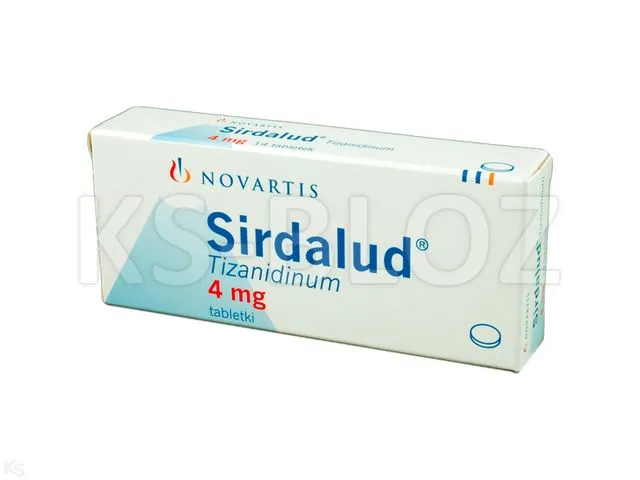
Table of Contents
Patient Information Leaflet
Warning! Keep this leaflet! Information on the immediate packaging in a foreign language.
Sirdalud
4 mg, tablets
Tizanidinum
Please read this leaflet carefully before using the medicine, as it contains
important information for the patient.
- Keep this leaflet so that you can read it again if necessary.
- If you have any doubts, please consult your doctor, pharmacist, or nurse.
- This medicine has been prescribed for a specific individual only. Do not pass it on to others. The medicine may harm another person, even if their symptoms are the same.
- If you experience any adverse reactions, including any not listed in this leaflet, inform your doctor, pharmacist, or nurse. See section 4.
Table of contents:
- What Sirdalud is and what it is used for
- What you need to know before taking Sirdalud
- How to take Sirdalud
- Possible side effects
- How to store Sirdalud
- Contents of the pack and other information
1. What Sirdalud is and what it is used for
What Sirdalud is
The active substance in Sirdalud is tizanidine in the form of tizanidine hydrochloride, which reduces increased muscle tone.
What Sirdalud is used for
Sirdalud is a centrally-acting skeletal muscle relaxant. It acts primarily on the spinal cord and reduces excessive muscle tension.
Sirdalud is used for:
- treatment of painful muscle spasms
- associated with spinal disorders, e.g. lower back pain, neck spasm
- resulting from surgery, e.g. herniated intervertebral disc or hip joint inflammation
- treatment of increased muscle tone in neurological diseases, e.g. multiple sclerosis, chronic spinal cord disorders, degenerative spinal cord diseases, after stroke, and in cerebral palsy*.
*in adults previously diagnosed with cerebral palsy.
2. Important information before using Sirdalud
Strictly follow your doctor's instructions.
When not to use Sirdalud:
- if the patient is allergic (hypersensitive) to Sirdalud (tizanidine) or to any of the other ingredients of the medicine (listed in section 6),
- if the patient has significant liver function disorders, persistent threefold increase in aminotransferase activity above the upper limit of normal,
- if the patient is taking medicines containing fluvoxamine (a medicine used in the treatment of depression),
- if the patient is taking medicines containing ciprofloxacin (an antibiotic used to treat infections). If any of these points apply to the patient, Sirdalud must not be taken and the patient should inform their doctor.
Warnings and precautions
Before starting treatment with Sirdalud, discuss this with your doctor or pharmacist, especially:
- in case of kidney function disorders,
- in case of liver function disorders. Inform your doctor if symptoms of liver dysfunction occur, such as unexplained nausea, loss of appetite (anorexia), fatigue. Your doctor may recommend liver function tests, based on which a decision will be made about continuing or discontinuing treatment. If the patient is taking doses of Sirdalud of 12 mg per day or higher, the doctor should monitor liver function,
- in elderly patients,
- if symptoms of hypotension (low blood pressure) occur, including loss of consciousness and vascular collapse. These symptoms may occur as a result of treatment with Sirdalud,
- do not discontinue treatment without consulting your doctor (see also section 3 How to use Sirdalud). If any of these points apply to the patient, inform your doctor.
Children and adolescents
Sirdalud is not recommended for use in children.
Sirdalud with other medicines
Tell your doctor or pharmacist about all medicines the patient is currently taking or has recently taken, as well as any medicines the patient plans to use.
It is especially important to inform your doctor if the patient is taking any of the following medicines:
- medicines that lower blood pressure and diuretics,
- medicines used to treat depression (fluvoxamine),
- medicines that cause drowsiness or strong analgesic effects,
- antiarrhythmic medicines (medicines used to treat irregular heartbeat, e.g. amiodarone, mexiletine, propafenone) or other medicines that have an adverse effect on heart function, known as "QT interval prolongation",
- cimetidine (a medicine used in peptic ulcer disease of the stomach and/or duodenum),
- fluoroquinolones (e.g. ciprofloxacin) and rifampicin (antibiotics used to treat infections),
- rofecoxib (a medicine used to reduce pain and inflammation),
- oral contraceptives,
- ticlopidine (a medicine used to reduce the risk of stroke),
- if the patient smokes cigarettes (more than 10 cigarettes per day).
Sirdalud and alcohol
Alcohol may enhance the sedative effect of the medicine; therefore, alcohol consumption should be avoided during treatment with Sirdalud.
Pregnancy and breastfeeding
During pregnancy, during breastfeeding, if pregnancy is suspected, or if the woman plans to become pregnant, consult your doctor before using Sirdalud. Sirdalud may have harmful effects on the unborn child.
Sirdalud must not be used during pregnancy.
Sirdalud must not be used during breastfeeding.
In sexually active women of childbearing potential, a pregnancy test is recommended before starting treatment with Sirdalud, and effective contraception should be used during treatment and for at least one day after stopping Sirdalud.
Discuss with your doctor the choice of a suitable contraceptive method during this period.
Driving and operating machinery
If drowsiness, dizziness or other symptoms of hypotension (e.g. cold sweats, "feeling of emptiness in the head") occur during treatment with Sirdalud, do not drive or operate machinery.
Sirdalud contains lactose
If the patient has previously been diagnosed with intolerance to certain sugars (e.g. lactose), the patient should contact their doctor before taking this medicine.
3. How to use Sirdalud
The following is the standard dosage regimen for Sirdalud. This medicine should always be used
according to the doctor's instructions. If in doubt, consult a doctor or pharmacist. Do not
change the prescribed dose or stop taking the medicine without consulting your doctor.
Sirdalud tablets can be taken regardless of meals.
What dose of Sirdalud should be used
Relief of painful muscle spasms
Sirdalud tablets are recommended at a dose of 2 mg to 4 mg, three times daily. In
severe cases, an additional dose of 2 mg or 4 mg may be taken before bedtime to
minimize sedative effects.
Increased muscle tension in neurological disorders
The doctor will adjust the dose individually for each patient.
Initially, no more than 6 mg/day should be administered, with the daily dose divided into three
separate doses. The daily dose may be gradually increased by 2 mg to 4 mg at intervals of
half-weekly or weekly.
Optimal patient response is usually achieved with a daily dose of 12 mg to
24 mg, administered in 3 or 4 equal doses. A daily dose exceeding 36 mg should not be used.
If the effect of the medicine seems too strong or too weak, consult a doctor or
pharmacist.
Use of a higher than recommended dose of Sirdalud
If a higher than recommended dose of Sirdalud is accidentally taken, contact a doctor or the nearest
poison control center immediately, or go to the nearest hospital emergency department.
Missed dose of Sirdalud
If a dose of Sirdalud is missed, take it as soon as possible. However, if less than 2 hours remain
before the next scheduled dose, do not take the missed dose; instead, take the next dose at the
usual time.
Do not take a double dose to make up for a missed dose.
Stopping the use of Sirdalud
Do not stop using Sirdalud without first consulting your doctor. The doctor may recommend
gradually reducing the dose before completely discontinuing the medicine, thereby reducing the risk of withdrawal symptoms. Withdrawal symptoms may include arterial hypertension (increased blood pressure, headache, dizziness) or
tachycardia (increased heart rate).
If you have any further doubts regarding the use of this medicine, consult your
doctor or pharmacist.
4. Possible adverse reactions
Like all medicines, this medicine can cause adverse reactions, although not everybody will experience them.
After administration of lower doses, recommended, among others, to relieve painful muscle spasms, adverse reactions such as drowsiness, fatigue, dizziness, dryness of the oral mucosa, decreased arterial blood pressure, nausea, gastrointestinal disturbances, and increased aminotransferase activity were usually mild and transient.
After administration of higher doses, recommended for the treatment of increased muscle tension, adverse reactions observed with lower doses occurred more frequently and were more pronounced. However, they rarely became so severe as to necessitate discontinuation of the medicine. In addition, the following adverse reactions may occur: QT interval prolongation and torsade de pointes, arterial hypotension, bradycardia, muscle weakness, insomnia, sleep disturbances, hallucinations, and acute hepatitis.
If any of the above symptoms or any other adverse reactions occur, inform your doctor.
Some adverse reactions may be serious:
- hepatitis, liver failure, hallucinations, confusion, severe allergic reactions including breathing difficulties, dizziness (anaphylaxis), and swelling, mainly of the face and throat (angioedema). If any of the above-mentioned serious adverse reactions worsen, inform your doctor immediately.
Other possible adverse reactions
Other adverse reactions include those listed below. If any of the adverse reactions listed below worsen, inform your doctor, pharmacist, or nurse.
Adverse reactions occurring:
Very commonly (may affect more than 1 in 10 people):
- drowsiness, fatigue, dizziness, gastrointestinal disturbances, dryness of the oral mucosa, muscle weakness.
Commonly (may affect up to 1 in 10 people):
- insomnia, sleep disturbances, decreased arterial blood pressure (including marked decrease), nausea, increased aminotransferase activity.
Uncommonly (may affect up to 1 in 100 people):
- bradycardia (reduced heart rate).
Frequency not known (cannot be estimated from the available data):
- fainting, blurred vision, rash, skin redness (erythema), skin inflammation, asthenia, withdrawal symptoms (such as hypertension and increased heart rate – so-called tachycardia), abdominal pain, vomiting, itching, speech disorders, allergic reactions, loss of energy.
Reporting of adverse reactions
If any adverse reactions occur, including any adverse reactions not listed in this leaflet, inform your doctor, pharmacist, or nurse. Adverse reactions can be reported directly to the Department of Monitoring of Adverse Drug Reactions of the Office for Registration of Medicinal Products, Medical Devices and Biocidal Products: Al. Jerozolimskie 181C, 02-222 Warsaw, tel.: +48 22 4921301, fax: +48 22 4921309, website: https://smz.ezdrowie.gov.pl.
By reporting adverse reactions, additional information on the safety of the medicine can be collected.
Adverse reactions may also be reported to the marketing authorisation holder or the parallel importer.
5. How to store Sirdalud
Keep this medicine out of sight and reach of children.
Do not store above 25°C.
Do not use Sirdalud after the expiry date stated on the container.
The expiry date refers to the last day of the stated month.
Medicines should not be disposed of via wastewater or household waste. Ask your pharmacist
how to dispose of medicines no longer required. These measures will help protect
the environment.
6. Contents of the packaging and other information
What Sirdalud contains
- The active substance is tizanidine in the form of tizanidine hydrochloride.
- Other ingredients are: colloidal anhydrous silica, stearic acid, microcrystalline cellulose, lactose.
What Sirdalud looks like and contents of the pack
1 tablet (with a cross-shaped groove on one side and code RL on the other) contains 4 mg of tizanidine (as tizanidine hydrochloride 4.576 mg). The pack contains 10 or 30 tablets.
For more detailed information, please contact the responsible party or the parallel importer.
Marketing Authorisation Holder in Latvia, country of export:
Sandoz d.d.
Verovškova 57
SI-1000 Ljubljana
Slovenia
Manufacturer:
Novartis Pharma GmbH
Roonstrasse 25
90429 Nuremberg
Germany
Parallel Importer:
Allpharm Sp. z o.o. sp.k.
M. Zdziechowskiego 11/4
02-659 Warsaw
Poland
Repackaged in:
CEFEA Sp. z o.o. Sp. Synoptis Industrial Sp. z o.o. Shiraz Productions Sp. z o.o.
sp. k. ul. Forteczna 35-37 ul. Tymiankowa 24/28
ul. Działkowa 56 87-100 Toruń 95-054 Ksawerów
02-234 Warsaw
Marketing Authorisation Number in Latvia, country of export: 00-0449
Parallel Import Authorisation Number: 35/25