Silodosin accord
Poland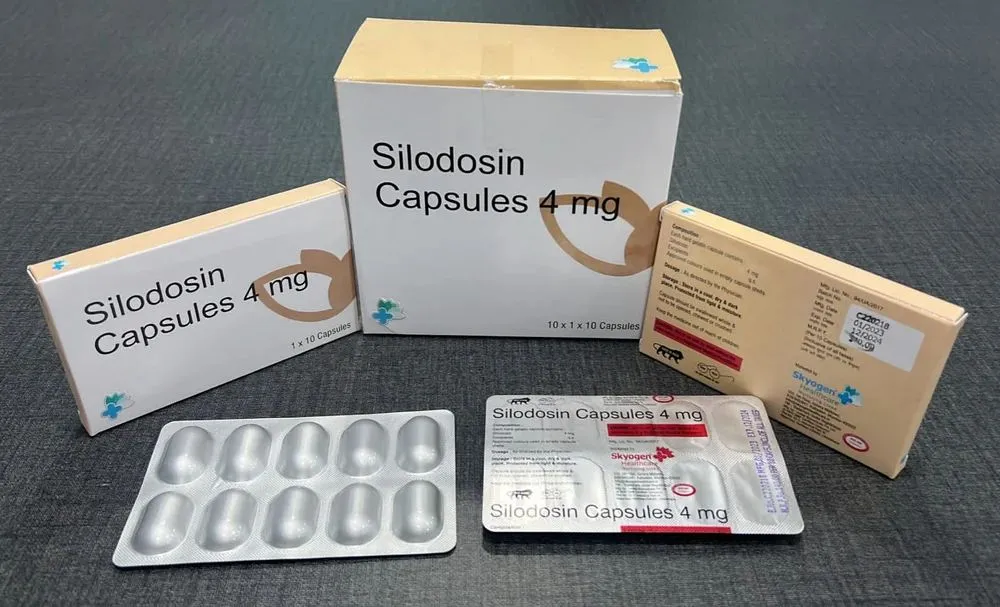
Table of Contents
Package leaflet: Information for the patient
Silodosin Accord, 8 mg, hard capsules
Silodosin Accord, 4 mg, hard capsules
Silodosinum
Please read all of this leaflet carefully before taking this medicine, as it contains important information for you.
- Keep this leaflet. You may need to read it again.
- If you have any further questions, ask your doctor or pharmacist.
- This medicine has been prescribed for you personally. Do not pass it on to others. It may harm them, even if their symptoms are the same as yours.
- If you experience any side effects, including any not listed in this leaflet, tell your doctor or pharmacist. See section 4.
Contents of the leaflet
- What Silodosin Accord is and what it is used for
- What you need to know before taking Silodosin Accord
- How to take Silodosin Accord
- Possible side effects
- How to store Silodosin Accord
- Contents of the pack and other information
1. What Silodosin Accord is and what it is used for
What Silodosin Accord is
Silodosin Accord belongs to a group of medicines called alpha-adrenergic receptor blockers.
Silodosin Accord selectively acts on receptors located in the prostate gland, bladder, and urethra.
By blocking these receptors, it causes relaxation of the smooth muscle in these tissues.
This makes it easier for the patient to pass urine and relieves symptoms of the condition.
What Silodosin Accord is used for
Silodosin Accord is used in adult men to treat urinary symptoms associated with benign enlargement of the prostate gland (benign prostatic hyperplasia), such as:
- difficulty starting urination,
- feeling of incomplete bladder emptying,
- increased frequency of urination, including during the night.
2. Important information before taking Silodosin Accord
When not to take Silodosin Accord
If the patient is allergic to silodosine or any of the other ingredients of this medicine (listed in section 6).
Warnings and precautions
Before starting Silodosin Accord, discuss this with your doctor or pharmacist.
-
If the patient is scheduled for eye surgery due to cataract (cataract surgery), it is important to immediately inform the ophthalmologist about current or past use of Silodosin Accord, as some patients treated with drugs of this type have experienced loss of
muscle tone in the iris (the coloured, circular part of the eye) during such surgery. The specialist doctor
may take appropriate precautions regarding medications and surgical techniques used. Ask your doctor whether you should delay or temporarily discontinue taking Silodosin Accord if undergoing cataract surgery. -
If the patient has ever fainted or experienced dizziness when standing up quickly, they should inform their doctor before starting Silodosin Accord. Dizziness upon standing may occur during treatment with Silodosin Accord, and occasionally fainting, especially at the beginning of treatment or when taking other medicines that lower blood pressure. If these symptoms occur, the patient should sit or lie down immediately until symptoms subside and contact their doctor as soon as possible (see also section "Driving and using machines").
-
If the patient has severe liver disease, they should not take Silodosin Accord, as this medicine has not been studied in such conditions.
-
If the patient has kidney disease, they should consult their doctor. If the patient has moderately severe kidney disease, the doctor will start treatment with Silodosin Accord cautiously and may use a lower dose (see section 3 "How to take Silodosin Accord"). If the patient has severe kidney disease, they should not take Silodosin Accord.
-
Since benign prostatic hyperplasia and prostate cancer may cause similar symptoms, the doctor will perform tests to rule out prostate cancer before starting treatment with Silodosin Accord. Silodosin Accord does not treat prostate cancer.
-
Use of Silodosin Accord may lead to abnormal ejaculation (reduced amount of semen during sexual intercourse), which may temporarily affect male fertility. This effect resolves after stopping Silodosin Accord. Inform your doctor if you plan to have children.
Sodium
This medicine contains less than 1 mmol (23 mg) of sodium per capsule, i.e. the medicine is considered "sodium-free".
Children and adolescents
Do not give this medicine to children or adolescents under 18 years of age, as there is no indication for use of this medicine in this age group.
Silodosin Accord with other medicines
Tell your doctor or pharmacist if you are taking, have recently taken or might take any other medicines.
In particular, inform your doctor if you are taking any of the following medicines:
- Medicines that lower blood pressure (especially drugs known as alpha1-blockers, such as prazosin or doxazosin), as there is a risk that their effect may be enhanced when taking Silodosin Accord.
- Antifungal medicines (such as ketoconazole or itraconazole), medicines used in HIV/AIDS infections (such as ritonavir), or medicines used after organ transplantation to prevent organ rejection (such as cyclosporine), as these medicines may increase the concentration of Silodosin Accord in the blood.
- Medicines used to treat difficulties in achieving or maintaining an erection (such as sildenafil or tadalafil), as concomitant use with Silodosin Accord may lead to a slight decrease in blood pressure.
- Medicines used for epilepsy, or rifampicin (an anti-tuberculosis medicine), as the effect of Silodosin Accord may be reduced.
Pregnancy, breastfeeding and fertility
Silodosin Accord is not intended for use in women.
Effect on fertility
Silodosin Accord may cause reduced sperm volume and therefore may temporarily affect the ability to father a child. If the patient plans to have children, they should consult their doctor or pharmacist before using this medicine.
Driving and using machines
The patient should not drive or operate machinery if they feel they might faint, experience dizziness, feel sleepy, or have blurred vision.
3. How to take Silodosin Accord
This medicine should always be taken exactly as directed by your doctor or pharmacist. If in doubt, consult your doctor or pharmacist.
The recommended dose is one 8 mg Silodosin Accord capsule taken once daily by mouth.
The capsule should always be taken with food, preferably at the same time each day.
Do not break or chew the capsule; swallow it whole, preferably with a glass of water.
Patients with kidney disease
If the patient has moderately severe kidney disease, the doctor may prescribe a different dose. For this purpose, Silodosin Accord 4 mg hard capsules are available.
Taking more Silodosin Accord than recommended
If more than one capsule has been taken, contact your doctor immediately. If the patient experiences dizziness or feels weak, medical advice should be sought without delay.
If you miss a dose of Silodosin Accord
If a dose is missed, it may be taken later on the same day. However, if it is almost time for the next dose, do not take the missed dose. Do not take a double dose to make up for a forgotten capsule.
Stopping Silodosin Accord treatment
If treatment is stopped, symptoms of the condition may return.
If you have any further questions about the use of this medicine, consult your doctor or pharmacist.
4. Possible adverse effects
Like all medicines, this medicine can cause adverse effects, although not everyone experiences them.
The patient should seek immediate medical advice if they notice any of the following
allergic reactions: swelling of the face or throat, difficulty in breathing, fainting, itching or urticaria, due to the possibility of severe consequences.
The most common adverse effect is reduced semen volume during ejaculation.
This effect resolves after discontinuation of Silodosin Accord. The patient should inform their doctor if they are planning to have children.
Dizziness may occur, including dizziness upon standing, and occasionally fainting.
If the patient feels unwell or experiences dizziness, they should immediately sit or lie down and remain lying until symptoms resolve. If dizziness upon standing or fainting occurs, the patient should inform their doctor as soon as possible.
Silodosin Accord may cause complications during cataract surgery (eye surgery due to lens opacity, see section "Warnings and precautions").
It is important that the patient immediately informs their ophthalmologist about current or previous use of Silodosin Accord.
Possible adverse effects are listed below:
Very common adverse effects (may occur in more than 1 in 10 patients)
- abnormal ejaculation (reduced or no semen during sexual intercourse, see section "Warnings and precautions")
Common adverse effects (may occur in up to 1 in 10 patients)
- dizziness, including dizziness upon standing (also see above in this section)
- nasal congestion or runny nose
- diarrhoea
Uncommon adverse effects (may occur in up to 1 in 100 patients)
- decreased sexual desire
- nausea
- dry mouth
- difficulty in achieving or maintaining an erection
- faster heartbeat
- skin allergic reactions such as rash, itching, urticaria and drug eruption
- abnormal liver function test results
- low blood pressure
Rare adverse effects (may occur in up to 1 in 1,000 patients)
- rapid or irregular heartbeat (palpitations)
- fainting and (or) loss of consciousness
Very rare adverse effects (may occur in up to 1 in 10,000 patients)
- other allergic reactions with swelling of the face or throat
Frequency not known (frequency cannot be estimated from available data)
- floppy iris during cataract surgery (also see above in this section)
If the patient experiences any impact on sexual life, they should inform their doctor.
Reporting of adverse effects
If any adverse effects occur, including any not listed in this leaflet, the patient should inform their doctor or pharmacist. Adverse effects can be reported directly to the Department for Monitoring Adverse Drug Reactions of the Office for Registration of Medicinal Products, Medical Devices and Biocidal Products
Al. Jerozolimskie 181C
02-222 Warsaw
tel.: +48 22 49 21 301
fax: +48 22 49 21 309
website: https://smz.ezdrowie.gov.pl
Adverse effects can also be reported to the marketing authorisation holder.
Reporting adverse effects helps to provide more information on the safety of this medicine.
5. How to store Silodosin Accord
Keep this medicine out of the sight and reach of children.
Do not use this medicine after the expiry date stated on the outer carton and on the blister after "EXP". The expiry date refers to the last day of the stated month.
Do not store above 30 °C.
Store blisters in the outer packaging to protect from light.
Do not use this medicine if you notice that the packaging is damaged or shows signs of tampering.
Medicines must not be disposed of via wastewater or household waste. Ask your pharmacist how to dispose of medicines no longer required. These measures help protect the environment.
6. Contents of the pack and other information
What Silodosin Accord contains
Silodosin Accord 4 mg
The active substance is silodosin. Each capsule contains 4 mg of silodosin.
The other ingredients are: pregelatinised starch, maize starch, mannitol, magnesium stearate,
sodium lauryl sulphate, gelatin, titanium dioxide (E 171), brilliant blue (E 133), erythrosine (E 127).
Silodosin Accord 8 mg
The active substance is silodosin. Each capsule contains 8 mg of silodosin.
The other ingredients are: pregelatinised starch, maize starch, mannitol, magnesium stearate,
sodium lauryl sulphate, gelatin, titanium dioxide (E 171).
What Silodosin Accord looks like and contents of the pack
Silodosin Accord 4 mg is a hard gelatin capsule with a white body and a blue cap (size 3) containing a white powder. Each capsule is approximately 15.6 mm in length.
Silodosin Accord 8 mg is a hard gelatin capsule with a white body and cap (size 1) containing a white powder. Each capsule is approximately 18.8 mm in length.
Silodosin Accord is available in PVC/PVDC/Aluminium foil blisters, packed in cardboard boxes.
Pack sizes contain 10, 30, 50, and 100 capsules.
Not all pack sizes may be marketed.
Marketing Authorisation Holder
Accord Healthcare Polska Sp. z o.o.
ul. Taśmowa 7
02-677 Warsaw
Manufacturer/Importer
Accord Healthcare Polska Sp. z o.o.
ul. Lutomierska 50
95-200 Pabianice
| Pharmadox Healthcare Ltd. | |
| KW20A Kordin Industrial Park | |
| Paola, PLA3000 | |
| Malta | |
LABORATORI FUNDACIÓ DAU
C/ C, 12-14 Pol. Ind. Zona Franca
08040 Barcelona
Spain
| Delorbis Pharmaceuticals LTD | |
| 17 Anthinon Street, Ergates Industrial Area | |
| P.O. Box 28629, 2081 Lefkosia | |
| 2643 Ergates | |
| Cyprus | |
This medicinal product is authorised for marketing in the Member States of the European Economic Area under the following names:
Country Name Brand Name
Bulgaria Silodosin Accord 4/8 mg hard capsules
France SILODOSINE ACCORD 4/8 mg, gélule
Spain Silodosina Accord 4/8 mg hard capsules EFG
Netherlands Silodosin Accord 4/8 mg harde capsules
Ireland Silodosin Accord 4/8 mg hard capsules
Germany Silodosin Accord 4/8 mg Hartkapseln
Poland Silodosin Accord
Portugal Silodosin Accord 4/8 mg capsules
Romania Silodosin Accord 4/8 mg capsules
Slovakia Silodosin Accord 8 mg tvrdé kapsuly
Italy Silodosin Accord