Rifampicin tzf
Poland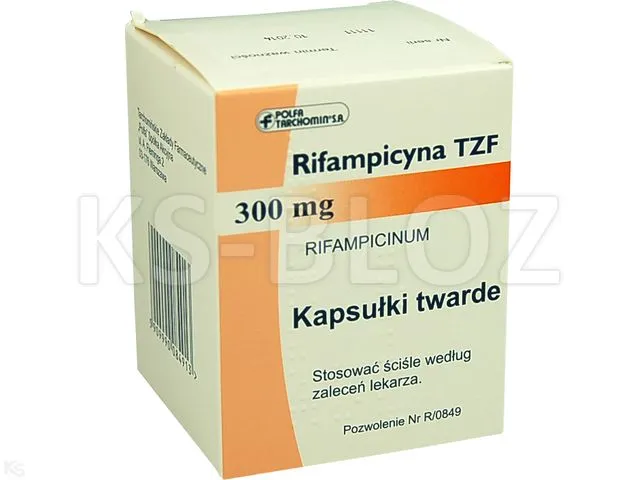
Table of Contents
Package leaflet: Information for the patient
Rifampicin TZF, 150 mg, hard capsules
Rifampicin TZF, 300 mg, hard capsules
Rifampicinum
Please read the entire leaflet carefully before using the medicine, as it contains
important information for the patient.
- Keep this leaflet, so that you can read it again if necessary.
- If you have any doubts, please consult your doctor, pharmacist, or nurse.
- This medicine has been prescribed for a specific individual. Do not pass it on to others. This medicine may harm other people, even if their symptoms are the same.
- If you experience any adverse reactions, including any not listed in this leaflet, inform your doctor, pharmacist, or nurse. See section 4.
Table of contents
- What Rifampicin TZF is and what it is used for
- Important information before taking Rifampicin TZF
- How to take Rifampicin TZF
- Possible side effects
- How to store Rifampicin TZF
- Contents of the pack and other information
1. What Rifampicin TZF is and what it is used for
Rifampicin TZF is a medicine containing rifampicin as the active substance. Rifampicin is
a bactericidal antibiotic used against tuberculosis.
Indications
Rifampicin is used in the treatment of the following infections:
- Tuberculosis; used in combination with other antituberculosis medicines for the treatment of all forms of tuberculosis, including newly diagnosed, advanced chronic, and drug-resistant cases;
- Leprosy;
- Brucellosis, legionellosis, severe infections caused by Staphylococcus species, used in combination with other appropriate antibiotics for the given infection.
Rifampicin may also be used in:
- Prevention of meningococcal meningitis in asymptomatic carriers of Neisseria meningitidis;
- Treatment of asymptomatic carriers of Haemophilus influenzae and prevention of infection development in children aged 4 years or younger who are exposed to contact with this bacterium.
2. Important information before using Rifampicyna TZF
When not to use Rifampicyna TZF
- If the patient is allergic (hypersensitive) to rifampicin or to any of the other ingredients of this medicine (listed in section 6).
Symptoms of hypersensitivity reactions include: rash, difficulty swallowing or breathing,
swelling of the lips, face, throat or tongue.
- If the patient has jaundice (yellowing of the skin and whites of the eyes).
- If the patient is being treated with saquinavir or ritonavir (medicines used in HIV infection; see "Rifampicyna TZF and other medicines"). ➢ If any of the above conditions apply to the patient, Rifampicyna TZF must not be taken. If in doubt, consult the treating physician or pharmacist before starting treatment with Rifampicyna TZF.
Warnings and precautions
Before starting treatment with Rifampicyna TZF, discuss this with your doctor.
Special caution is required when using Rifampicyna TZF if:
- the patient has impaired liver function; the doctor will determine the dosage of Rifampicyna TZF depending on the degree of liver insufficiency and will order liver function tests before starting treatment;
- the patient has symptoms indicating kidney function disorders and the dose used is higher than 600 mg per day;
- the patient has diabetes; maintaining proper blood glucose levels may be more difficult during treatment with rifampicin;
- the patient experiences numbness and muscle weakness in arms and legs (peripheral neuropathy);
- the patient has low body weight or is malnourished;
- the patient has porphyria (a rare metabolic disorder related to blood); symptoms of the disease may worsen under the influence of the medicine;
- the patient wears soft contact lenses; these may become discolored, as during treatment with Rifampicyna TZF, saliva, sputum, tears, and urine may turn red or orange;
- the patient is a child;
- the patient is 65 years of age or older;
- the patient is treated on an intermittent regimen (the medicine is administered 2 to 3 times per week); in such cases, severe adverse reactions occur more frequently, especially those affecting the immune system, including anaphylactic shock (see section 4).
Laboratory tests
- The doctor will order blood tests before starting treatment. Based on these tests, the doctor will determine whether the medicine causes any changes in the patient's blood and, if necessary, will order regular liver function tests.
- Before undergoing laboratory tests, inform the doctor about taking rifampicin, because:
- rifampicin may cause false-positive opioid screening tests;
- rifampicin may mask results of serum microbiological tests used to measure folic acid and vitamin B levels;
- rifampicin may interfere with biliary excretion of contrast agents used in gallbladder imaging; therefore, bilirubin concentration, alkaline phosphatase activity, aminotransferase activity, and contrast gallbladder imaging in patients taking rifampicin should be performed in the morning, before taking the medicine.
Rifampicyna TZF and other medicines
Inform the doctor about all medicines currently taken or recently used,
as well as any medicines the patient plans to use.
Rifampicin may enhance or reduce the effects of other medicines taken concomitantly. In
some cases, the doctor may adjust the dosage of medicines the patient must take
simultaneously with antituberculosis drugs. After discontinuation of Rifampicyna TZF, the doctor may readjust the doses of other medicines.
Do not take Rifampicyna TZF if the patient is taking:
- saquinavir or ritonavir (medicines used in HIV infection).
Inform the doctor if the patient is taking any of the following medicines.
Medicines used in the treatment of heart and blood vessel diseases:
- medicines used for hypertension (e.g. losartan, bisoprolol, propranolol, isradipine, diltiazem, nilvadipine, nicardipine, isradipine, enalapril),
- medicines used for heart diseases and cardiac rhythm disorders (e.g. mexiletine, quinidine, tocainide, propafenone, disopyramide, cardiac glycosides, nifedipine, verapamil),
- medicines that reduce blood clotting (e.g. warfarin),
- medicines that lower cholesterol levels (e.g. clofibrate, simvastatin),
- diuretic medicines (e.g. eplerenone),
- nimodipine.
Medicines used in the treatment of psychiatric disorders, epilepsy and nervous system disorders:
- medicines used for disorders of thinking, feeling and behavior, antipsychotic medicines (e.g. haloperidol, aripiprazole),
- medicines used to treat anxiety and tension (e.g. diazepam, other benzodiazepine derivatives, zolpidem, zopiclone),
- sleeping medicines (barbiturates),
- antiepileptic medicines (e.g. phenytoin),
- some medicines used to treat depression (e.g. amitriptyline, nortriptyline),
- riluzole – used in neurological disorders leading to muscle weakness, atrophy and paralysis.
Medicines used in infections and treatment of immune system disorders:
- some medicines used to treat viral infections (e.g. zidovudine, saquinavir, indinavir, nelfinavir, atazanavir, lopinavir, nevirapine, efavirenz, amprenavir),
- medicines used for fungal infections (e.g. fluconazole, itraconazole, ketoconazole, voriconazole),
- medicines used to treat bacterial infections – antibiotics (e.g. chloramphenicol, doxycycline, clarithromycin, dapsone, fluoroquinolones, telithromycin),
- medicines used to suppress immune system activity, i.e. immunosuppressive medicines (e.g. cyclosporine, tacrolimus, sirolimus), usually used in organ transplant patients,
- praziquantel (an antiparasitic medicine used in tapeworm infection),
- atovaquone (an antimalarial medicine used in the treatment of pneumonia),
- medicines used to treat tuberculosis (para-aminosalicylic acid – PAS, isoniazid).
Medicines used in hormonal therapy and cancer treatment:
- some hormonal medicines (e.g. estrogen, progestagenic hormonal contraceptives); Rifampicyna TZF may reduce the effectiveness of oral contraceptives,
- some hormonal medicines (anti-estrogens) used in endometriosis (endometrial tissue overgrowth) or breast cancer (e.g. tamoxifen, toremifene, gestrinone),
- some medicines used in cancer treatment – cytotoxic medicines (e.g. imatinib),
- medicines used to treat thyroid function disorders (e.g. levothyroxine – thyroid hormone),
- irinotecan used in cancer treatment, for advanced colorectal cancer.
Painkillers, anti-inflammatory medicines and medicines used in gout:
- painkillers (e.g. methadone, narcotic painkillers),
- corticosteroids used in inflammatory conditions (e.g. hydrocortisone, betamethasone, prednisolone).
Other medicines
- medicines used for diabetes (e.g. chlorpropamide, tolbutamide, glyburide, gliclazide, glipizide, glimepiride, rosiglitazone),
- medicines used to relax muscles before surgery, anesthetics (e.g. halothane),
- some medicines used to prevent and control nausea and vomiting (e.g. aprepitant, ondansetron),
- quinine used in the treatment of malaria,
- theophylline used in the treatment of asthma and other lung diseases,
- medicines that neutralize hydrochloric acid (e.g. sodium bicarbonate, aluminum hydroxide, magnesium trisilicate) reduce the absorption of rifampicin; it is recommended to take these medicines no earlier than one hour after taking rifampicin.
Pregnancy and breastfeeding
If the patient is pregnant or breastfeeding, suspects she may be pregnant, or plans to have a child, she should consult her doctor or pharmacist before using this medicine.
Rifampicyna TZF may be administered to pregnant women only if the benefit to the mother outweighs the risk to the fetus.
There are no data or only limited data on the use of rifampicin during pregnancy.
Animal studies using high doses of rifampicin have shown harmful effects on reproduction.
Rifampicin used in the last months of pregnancy may cause postpartum bleeding in both the mother and the newborn. In such cases, vitamin K administration is recommended.
Rifampicin passes into human milk. If treatment with this medicine is necessary for a breastfeeding woman, breastfeeding should be discontinued.
Driving and operating machinery
The effect of Rifampicyna TZF on the ability to drive motor vehicles and operate machinery has not been studied. However, if adverse reactions occur that reduce concentration (e.g. pain, dizziness) or visual disturbances (see section 4. Possible adverse effects), the patient should not drive motor vehicles or operate machinery.
Rifampicyna TZF 150 mg or 300 mg contains sodium.
Rifampicyna TZF 150 mg or 300 mg contains less than 1 mmol (23 mg) of sodium per capsule, meaning the medicine is considered "sodium-free".
3. How to use Rifampicyna TZF
This medicine should always be used as directed by the physician. If in doubt, consult your doctor or pharmacist.
Recommended dosage
Tuberculosis
Adults
The usual dose is 10 mg/kg body weight per day.
For patients with body weight below 50 kg, the dose is 450 mg per day.
For patients with body weight above 50 kg, the dose is 600 mg per day.
Children
The usual dose is 10 to 20 mg/kg body weight per day. The dose should not exceed 600 mg/day.
Leprosy
The usual dose is 600 mg once a month or 10 mg/kg body weight once daily.
For patients with body weight below 50 kg, the dose is 450 mg per day.
For patients with body weight above 50 kg, the dose is 600 mg per day.
In the treatment of leprosy, rifampicin must always be used in combination with at least one other anti-leprosy drug.
Brucellosis, legionellosis, severe infections caused by Staphylococci:
Adults
The usual dose is 600 to 1200 mg per day, divided into 2–4 doses, administered in combination with another appropriate antibiotic to prevent the emergence of resistant bacterial strains causing the infection.
Prophylaxis of meningococcal meningitis
Adults
600 mg twice daily for 2 days.
Children
Children aged 1 to 12 years: 10 mg/kg body weight twice daily for 2 days.
Children aged 3 to 12 months: 5 mg/kg body weight twice daily for 2 days.
Prophylaxis of infections caused by Haemophilus influenzae
Adults and children
If Haemophilus influenzae infection occurs in a household with a child aged 4 years or younger, rifampicin is recommended for all household members (including the child) at a dose of 20 mg/kg body weight once daily (maximum 600 mg per day) for 4 days.
Administration of the drug should begin before discharge of the infected person from hospital.
Newborns (first month of life)
10 mg/kg body weight per day for 4 days.
Patients with impaired liver function
The dose should not exceed 8 mg/kg body weight per day.
Patients with impaired renal function
Caution is advised if the dose exceeds 600 mg per day.
Elderly patients
Caution is advised when using rifampicin in this patient group, particularly if liver insufficiency is present.
Duration of treatment
The decision to discontinue treatment will be made by the physician.
Treatment may only be stopped after completion of full anti-mycobacterial chemotherapy and confirmation of negative bacteriological test results for mycobacteria.
Method of administration
Rifampicyna TZF should be used in combination with other anti-mycobacterial drugs.
The medicine should be taken on an empty stomach, with a glass of water, at least half an hour before a meal or 2 hours after a meal.
Overdose of Rifampicyna TZF
Shortly after an overdose of rifampicin, nausea, vomiting, and even coma may occur.
In case of overdose of Rifampicyna TZF, unabsorbed drug should be promptly removed from the body or gastrointestinal absorption reduced (induced vomiting, gastric lavage, administration of activated charcoal – if the patient is conscious), and medical help should be sought immediately.
In case of ingestion of a dose higher than recommended, contact a doctor immediately or go to the nearest hospital emergency department. The medicine should be brought in its original packaging so that medical staff can clearly identify which drug was taken.
Missed dose of Rifampicyna TZF
If a dose is missed at the usual scheduled time, the medicine should be taken as soon as possible, provided there is sufficient time before the next dose, or regular dosing should be continued.
Do not take a double dose to make up for a missed dose.
Discontinuation of Rifampicyna TZF
It is important that the medicine is used according to the recommended treatment schedule. Do not interrupt treatment even if the patient feels better. Premature interruption of treatment may result in recurrence of infection.
If the patient feels worse during treatment or does not feel well after completion of the recommended treatment course, they should contact their treating physician.
If in doubt about how to use the medicine, consult your doctor.
4. Possible side effects
Like all medicines, this medicine can cause side effects, although not everybody gets them.
The side effects listed below occur during daily or intermittent dosing regimens of the medicine.
If any of the following symptoms occur, stop taking the medicine immediately and go urgently to the nearest hospital emergency department:
- allergic reaction: rash, swelling of the lips, face, tongue or throat, and difficulty breathing or swallowing;
- fever, yellowing of the skin or whites of the eyes, loss of appetite, nausea, vomiting, fatigue; these may be early signs of liver problems (including jaundice);
- small red spots, peeling skin, bleeding, blisters, including fluid-filled blisters, appearing on the skin of the face, mouth, eyes, nose, hands, feet and genital organs; these may indicate severe skin reactions;
- tendency to bruise easily, painful skin rashes, spots, partially fading under pressure (purpura); these may be symptoms of thrombocytopenia, a serious blood disorder;
- chills, dizziness, fatigue, extremely pale skin, rapid heartbeat, dark-coloured urine; these may be symptoms of anemia;
- blood in the urine, increased or decreased urine volume, swelling, particularly in the legs, ankles or feet; these may indicate serious kidney problems;
- sudden, severe headache; this may be a sign of bleeding into the brain;
- shortness of breath, wheezing;
- confusion, drowsiness, difficulty concentrating, cold and clammy skin, shallow breathing, rapid heartbeat, pale skin; these may be symptoms of shock;
- increased susceptibility to infections, sore throat, mouth ulcers; these may indicate reduced white blood cell count;
- bleeding from nose, ear, gums, throat, skin or stomach, as well as tenderness and swelling of the stomach, purple spots on the skin, black tarry stools.
If any of the following symptoms occur, contact your doctor immediately:
- psychiatric disturbances, unusual thoughts, hallucinations (seeing, hearing or feeling things that are not real);
- severe, watery diarrhoea lasting for a prolonged period and accompanied by fever; this may be a sign of a serious bowel inflammation (called pseudomembranous colitis);
- flu-like symptoms, including chills, headache, dizziness, bone pain.
If any of the following symptoms occur, contact your doctor as soon as possible:
- fluid retention (oedema), which may cause swelling of the face, abdomen, arms, or legs;
- muscle weakness, pain, loss of muscle reflexes;
- dizziness, weakness, fainting, especially upon sudden change in position (standing up, sitting down);
- swelling of fingers and toes and ankles;
- difficulty concentrating, nervousness, irritability, depression;
- severe fatigue, weakness, difficulty sleeping (insomnia);
- temporary memory loss, restlessness, reduced reaction speed, decreased alertness;
- wasting of muscles and other body tissues;
- weight loss, night sweats; these may be symptoms of eosinophilia (increased number of eosinophils in blood smear);
- nausea or vomiting.
If any of the following symptoms worsen or persist for more than a few days, inform your doctor or pharmacist:
- redness or itching of the skin;
- menstrual cycle disturbances;
- diarrhoea or stomach discomfort;
- loss of appetite (anorexia);
- headache.
Other side effects that should be reported to your doctor
- Red or orange discolouration of urine, sweat, tears and saliva. This is a harmless effect caused by taking rifampicin, but it should be noted that soft contact lenses may become permanently stained red. Discolouration of tears may persist for some time after stopping treatment with Rifampicyna TZF.
Blood tests
- Blood test results may show changes in liver function parameters.
Reporting of side effects
If you experience any side effects, including any not listed in this leaflet, tell your doctor, pharmacist or nurse. Side effects can be reported directly to the Department of Monitoring Adverse Drug Reactions of the Office for Registration of Medicinal Products, Medical Devices and Biocidal Products.
Al. Jerozolimskie 181C
02-222 Warsaw
Tel.: + 48 22 49 21 301
Fax: + 48 22 49 21 309
Website: https://smz.ezdrowie.gov.pl
Side effects can also be reported to the marketing authorisation holder.
Reporting side effects helps provide more information on the safety of this medicine.
5. How to store Rifampicyna TZF
Keep the medicine out of sight and reach of children.
Store at a temperature not exceeding 25 °C. Protect from light and moisture.
Do not use this medicine after the expiry date stated on the packaging. The expiry date refers to the last day of the stated month.
Medicines must not be disposed of via the sewage system or household waste. Ask your pharmacist how to properly dispose of medicines no longer in use. This will help protect the environment.
6. Contents of the packaging and other information
What Rifampicyna TZF contains
The active substance is rifampicin.
Rifampicyna TZF, 150 mg – one hard capsule contains 150 mg of rifampicin.
Rifampicyna TZF, 300 mg – one hard capsule contains 300 mg of rifampicin.
Other components are: talc, magnesium stearate, sodium lauryl sulfate, iron oxide red (E 172), titanium dioxide (E 171), gelatin.
What Rifampicyna TZF looks like and contents of the pack
Hard gelatin capsule, red in colour.
Packaging: 100 capsules in a container, in a cardboard box.
Marketing Authorisation Holder and Manufacturer
Tarchomin Pharmaceutical Works "Polfa" Joint Stock Company
A. Fleminga 2 Street
03-176 Warsaw
Phone number: 22-811-18-14
For further information about this medicinal product, please contact the representative of the Marketing Authorisation Holder.