Rifamazid
Poland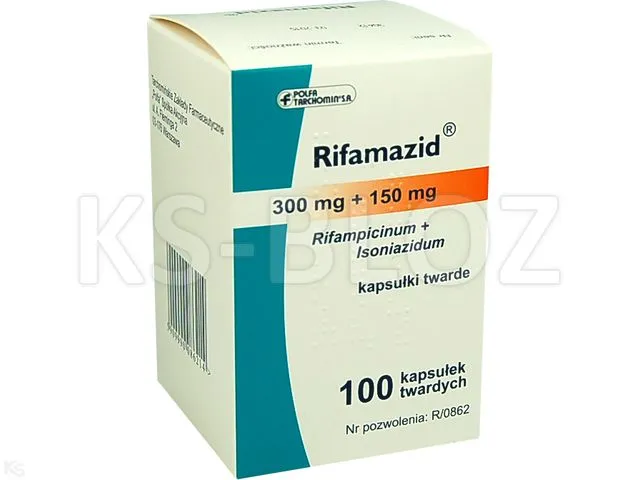
Table of Contents
Package leaflet: Information for the patient
Rifamazid, 150 mg + 100 mg, hard capsules
Rifamazid, 300 mg + 150 mg, hard capsules
Rifampicin (Rifampicinum) + Isoniazid (Isoniazidum)
Please read this leaflet carefully before using the medicine, as it contains
important information for the patient.
- Keep this leaflet so that you can read it again if necessary.
- If you have any questions, please consult your doctor or pharmacist.
- This medicine has been prescribed for a specific individual. Do not pass it on to others. The medicine may harm another person, even if their symptoms are the same.
- If the patient experiences any adverse reactions, including any not listed in this leaflet, inform a doctor or pharmacist immediately. See section 4.
Table of contents of the leaflet
- What Rifamazid is and what it is used for
- Important information before taking Rifamazid
- How to take Rifamazid
- Possible side effects
- How to store Rifamazid
- Contents of the pack and other information
1. What Rifamazid is and what it is used for
Rifamazid is a medicine containing two active substances: rifampicin and isoniazid. It is used in the treatment of tuberculosis. Combining these two substances in a single medicine helps prevent the development of resistance of mycobacteria (the bacteria causing tuberculosis) to the drugs.
Indications
All forms of pulmonary and extrapulmonary tuberculosis, both newly diagnosed and recurrent cases, where mycobacteria remain sensitive to rifampicin and isoniazid.
2. Important information before using Rifamazid
Before starting treatment with Rifamazid and several times during treatment, your doctor
may order a test to determine the sensitivity of tuberculosis bacteria to rifampicin and isoniazid.
If it turns out that the bacteria are resistant to rifampicin and/or isoniazid, and the patient does not respond to treatment,
the doctor will change the treatment regimen.
When not to use Rifamazid:
- if the patient is allergic to rifampicin, isoniazid, or any of the other ingredients of this medicine (listed in section 6).
- if the patient has severe liver failure or jaundice (yellowing of the skin and whites of the eyes).
- if the patient is being treated with saquinavir or ritonavir (medicines used in HIV-infected patients; see "Rifamazid and other medicines").
- if the patient has ever experienced the following after taking Rifamazid: severe skin rash or skin peeling, blisters, or oral ulcers.
If any of the above conditions apply to the patient, Rifamazid must not be taken.
If in doubt, consult your doctor or pharmacist before starting treatment with Rifamazid.
Warnings and precautions
Before starting treatment with Rifamazid, discuss this with your doctor or pharmacist.
- During treatment, the patient should remain under the supervision of a pulmonologist or another appropriately specialized doctor.
- Prior to initiating Rifamazid, the doctor will order liver function tests and blood tests for each patient.
- In patients with normal liver function, liver function tests should be repeated if symptoms such as fever, vomiting, jaundice, or other worsening conditions occur. If any of these symptoms occur during treatment with Rifamazid, inform your doctor immediately.
- For patients with liver impairment, the doctor will adjust the dose of Rifamazid depending on the degree of liver dysfunction and will order liver function tests before starting treatment, then weekly for the first 2 weeks, and subsequently every 2 weeks throughout the treatment period.
- If serious symptoms indicating liver failure occur during treatment, Rifamazid should be discontinued. The doctor will consider an alternative treatment for tuberculosis. Once liver test results return to normal, the doctor may consider re-introducing Rifamazid, with daily laboratory monitoring (liver function parameters).
- In patients with normal liver function, an increase in bilirubin levels or liver enzyme activity (alkaline phosphatase or aminotransferases) at the beginning of treatment is not a reason to discontinue the medicine. These symptoms are usually transient. The doctor will recommend repeating the tests during treatment.
- In patients treated with an intermittent regimen (medicine administered less frequently than 2–3 times per week), severe adverse reactions occur more frequently, especially those affecting the immune system (see section 4 "Possible side effects"). Patients treated this way should remain under close medical supervision. The doctor will also recommend frequent monitoring to prevent complications associated with this dosing regimen.
- Particular caution is required when treating elderly, debilitated patients, or those predisposed to neuropathy (a peripheral nerve disorder, typically causing numbness and pain in the hands and feet).
- During treatment with Rifamazid, saliva, sputum, tears, and urine may turn red-brown or orange. Soft contact lenses may also become stained.
- Alcohol must not be consumed during treatment with Rifamazid, as it increases the risk of liver damage.
- Regular eye examinations are recommended during treatment with Rifamazid, especially in patients with pre-existing eye diseases.
- If the patient has porphyria (a rare metabolic disorder related to blood), they should inform their doctor before starting Rifamazid, as the medicine may worsen symptoms of the disease.
- Special caution is required if the following occur during treatment with Rifamazid:
- Severe skin reactions, such as blistering affecting limbs, eyes, mouth, throat, and genital organs.
- Cases of toxic epidermal necrolysis (TEN), drug reaction with eosinophilia and systemic symptoms (DRESS),
and acute generalized exanthematous pustulosis (AGEP) have been reported with Rifamazid.
If any of the symptoms listed in section 4 occur, treatment with Rifamazid must be stopped immediately and medical help sought without delay. - Consult your doctor, even if the above warnings refer to conditions experienced in the past.
- If in doubt whether any of the above conditions apply, consult your doctor or pharmacist before starting Rifamazid.
Rifamazid and other medicines
Inform your doctor about all medicines currently or recently taken, as well as any medicines planned for future use.
Rifampicin and isoniazid may enhance or reduce the effects of other medicines taken concomitantly.
In most cases, the doctor will need to adjust the dose of medicines that must be taken together with antituberculosis drugs.
After discontinuation of Rifamazid, the doctor will readjust the doses of other medicines.
The following are examples of medicines that interact with rifampicin and/or isoniazid:
- Medicines for heart conditions [e.g. mexiletine, quinidine, disopyramide, lorcainide, tocainide, verapamil, bisoprolol, cardiac glycosides (digitoxin, digoxin)].
- Antiepileptic medicines (phenytoin, carbamazepine, ethosuximide).
- Medicines for psychiatric disorders (e.g. haloperidol).
- Anticoagulant medicines (e.g. acenocoumarol, warfarin).
- Medicines for fungal infections (fluconazole, itraconazole, ketoconazole).
- Medicines for anxiety and tension (diazepam, other benzodiazepine derivatives, hexobarbital).
- Medicines for bacterial infections (chloramphenicol, doxycycline).
- Dapsone (a medicine with anti-inflammatory and antibacterial properties).
- Sulfonamide medicines with anti-inflammatory and antirheumatic effects (sulfasalazine).
- Medicines used in HIV-infected patients (zidovudine).
- Medicines for lowering arterial blood pressure (nifedipine, losartan).
- Corticosteroids used in inflammatory conditions (e.g. hydrocortisone, betamethasone, prednisolone).
- Medicines for lowering cholesterol (clofibrate).
- Oral antidiabetic medicines (chlorpropamide, tolbutamide, oral sulfonylurea derivatives).
- Immunosuppressive medicines usually used in organ transplant recipients (cyclosporine, azathioprine).
- Analgesic medicines (methadone, narcotic analgesics).
- Quinine used in the treatment of malaria.
- Theophylline used in the treatment of asthma and other lung diseases.
- Triazolam (a medicine used for insomnia).
- Oral contraceptives: Rifamazid may reduce their effectiveness. To avoid unintended pregnancy, a non-hormonal contraceptive method should be used additionally.
- Cimetidine (a medicine used for peptic ulcer disease, gastroesophageal reflux disease).
- Antacids (sodium bicarbonate, aluminium hydroxide, magnesium trisilicate) may reduce the absorption of rifampicin and isoniazid. If these medicines are necessary during tuberculosis treatment, Rifamazid should be taken at least 1 hour before the antacid.
- Concomitant use of p-aminosalicylic acid (PAS) and rifampicin reduces the blood concentration of rifampicin. Therefore, an 8-hour interval between doses of these two medicines is recommended.
Effect on laboratory test results
Rifamazid may alter the results of laboratory tests. If any laboratory test is required during treatment with Rifamazid, inform your doctor.
Pregnancy and breastfeeding
If the patient is pregnant or breastfeeding, suspects she may be pregnant, or is planning to have a baby, she should consult her doctor before using this medicine.
A pregnant woman may take Rifamazid only if she has active tuberculosis and, in the doctor's opinion, the benefit to the mother outweighs the potential risk to the fetus.
Rifampicin used in the last months of pregnancy may cause postpartum bleeding in both mother and newborn. In such cases, the doctor may recommend vitamin K supplementation.
Rifampicin and isoniazid pass into human milk. If treatment with Rifamazid is necessary in a breastfeeding woman, breastfeeding should be discontinued.
Driving and operating machinery
No effects of Rifamazid on the ability to drive or operate machinery have been observed.
However, if adverse effects impairing concentration occur (e.g. pain, dizziness), or visual disturbances (see section 4 "Possible side effects"), driving or operating machinery is not recommended.
Rifamazid contains Azorubine (E 122) and sodium
- Rifamazid 150 mg + 100 mg capsules contain azorubine (E 122), which may cause allergic reactions.
- Rifamazid 300 mg + 150 mg capsules contain azorubine (E 122), which may cause allergic reactions.
- Rifamazid 150 mg + 100 mg capsules contain less than 1 mmol (23 mg) of sodium per capsule, meaning the medicine is considered "sodium-free".
- Rifamazid 300 mg + 150 mg capsules contain less than 1 mmol (23 mg) of sodium per capsule, meaning the medicine is considered "sodium-free".
3. How to use Rifamazid
This medicine should always be used according to the doctor's instructions.
In case of any doubts, consult your doctor.
Recommended dose
Adults
Patients with body weight below 50 kg: 3 capsules of 150 mg + 100 mg once daily as a single dose.
Patients with body weight above 50 kg: 2 capsules of 300 mg + 150 mg once daily as a single dose.
Use of the medicine in patients with renal and/or hepatic impairment
If the patient has kidney and/or liver dysfunction, they should inform their physician before starting treatment with Rifamazid. In such patients, the physician will individually determine the dosage based on the degree of renal and/or hepatic impairment.
Elderly patients
Elderly patients, especially those with liver dysfunction, should remain under close medical supervision during treatment with Rifamazid.
Duration of treatment
The decision to discontinue treatment will be made by the physician.
Treatment may only be stopped after completion of full anti-tuberculosis chemotherapy and confirmation of negative bacteriological test results for mycobacteria.
Method of administration
Rifamazid should be taken once daily, with a glass of water, 1 hour before or 2 hours after a meal.
Use of a higher than recommended dose of Rifamazid
Shortly after overdosing on Rifamazid, symptoms such as nausea, vomiting, dizziness, slurred speech, blurred and hazy vision, visual hallucinations, liver disturbances, jaundice, and coma may occur. After a significant overdose, respiratory and nervous system depression, as well as epileptic seizures, may develop. Laboratory tests may reveal metabolic acidosis, ketonuria, and high blood glucose levels. Depending on the dose, orange or reddish-brown discoloration of the skin, saliva, sputum, urine, tears, and sweat may appear.
In case of Rifamazid overdose, unabsorbed drug should be promptly removed from the body or its absorption from the gastrointestinal tract reduced (by inducing vomiting, gastric lavage, or administering activated charcoal – if the patient is conscious), and immediate contact with a physician should be established.
If an excessive amount of medicine has been taken (overdose), consult a doctor or go directly to the hospital. The medicine packaging should be shown.
Missed dose of Rifamazid
If a dose is missed at the usual scheduled time, the medicine should be taken as soon as possible, provided that sufficient time remains before the next scheduled dose; otherwise, continue regular dosing.
Do not take a double dose to make up for a missed dose.
Interrupting treatment with Rifamazid
It is important that the medicine is used according to the recommended treatment schedule. Do not interrupt treatment, even if the patient feels better. Premature interruption of treatment may cause the infection to recur.
If the patient feels worse during treatment or does not feel well after completing the recommended treatment course, they should contact their treating physician.
If you have any further questions concerning the use of this medicine, consult your doctor.
4. Possible adverse reactions
Like any medicine, this medicine can cause adverse reactions, although not everyone will experience them.
If any of the following serious adverse symptoms occur, stop taking the medicine immediately
and contact your doctor or go to the nearest emergency department of a hospital without delay.
- Sudden shortness of breath and chest tightness, swelling of the eyelids, face or lips.
- Severe skin rashes, which may be accompanied by blisters affecting limbs, eyes, mouth, throat and genital organs.
- Loss of consciousness (fainting).
- Flu-like symptoms (fever, chills, headache and muscle pain, dizziness), shortness of breath, wheezing, low blood pressure, increased granulocyte count.
- Small skin hemorrhages on the lower limbs and trunk, less frequently on the face and on the mucous membranes inside the mouth (bleeding gums). These may be signs of thrombocytopenia. These symptoms mainly affect patients treated with intermittent regimens. Symptoms resolve after discontinuation of the medicine.
- Loss of appetite, nausea, vomiting, fatigue, weakness – these may be signs of serious liver function disorders.
- Severe, watery diarrhoea, often with blood and mucus, persisting for a prolonged period, accompanied by abdominal pain and (or) fever. This may be a sign of severe intestinal inflammation (called pseudomembranous colitis), which may occur after antibiotic use.
- Red, scaly, widespread rash with subcutaneous nodules and blisters, accompanied by fever. Symptoms usually appear at the beginning of treatment (acute generalized exanthematous pustulosis), (frequency unknown).
- Lupus-like syndrome causing symptoms such as joint swelling, fatigue and rashes (frequency unknown).
If any of the following adverse reactions occur, contact your doctor as soon as possible:
- Inflammation of the pancreas causing severe abdominal and back pain (pancreatitis, frequency unknown).
- Serious, extensive skin damage (detachment of the epidermis and surface mucous membranes) (toxic epidermal necrolysis [TEN], may occur in less than 1 in 1,000 people).
- Drug reaction causing rash, fever, internal organ inflammation, hematological abnormalities and systemic disease (DRESS syndrome, may occur in less than 1 in 1,000 people).
- Yellowing of the skin or whites of the eyes, or dark urine and pale stools, accompanied by fatigue, weakness, malaise, loss of appetite, nausea or vomiting due to liver disease (hepatitis, may occur in less than 1 in 100 people).
Other adverse reactions that may occur during treatment
changes in blood cell counts (reduction in red blood cells, white blood cells or platelets),
abnormal breakdown of red blood cells (hemolytic anemia); these disorders may cause symptoms such as fever, nosebleeds, pale skin;
menstrual disturbances (in women treated long-term with rifampicin);
headache and dizziness, drowsiness and fatigue, coordination disorders, confusion, difficulty concentrating, pain and numbness in limbs;
visual disturbances;
heartburn, upper abdominal pain, decreased appetite, nausea, vomiting, bloating, diarrhoea;
yellowing of the skin or whites of the eyes or passing dark urine and pale stools: these may be signs of liver function disorders;
mild skin reactions that resolve spontaneously, such as redness, itching, occasionally rash;
muscle weakness;
blood in urine, increased or decreased volume of urine – may indicate kidney function disorders;
orange or reddish-brown discoloration of saliva, urine, tears, sweat, faeces;
inflammation of blood vessels, frequency unknown.
Reporting of adverse reactions
If any adverse reactions occur, including any not listed in this leaflet, inform your doctor, pharmacist or nurse. Adverse reactions can be reported directly to the Department of Monitoring Adverse Reactions of Medicinal Products at the Office for Registration of Medicinal Products, Medical Devices and Biocidal Products
Al. Jerozolimskie 181C, 02-222 Warsaw
Tel.: + 48 22 49 21 301;
Fax: + 48 22 49 21 309
website: https://smz.ezdrowie.gov.pl
Adverse reactions can also be reported to the marketing authorization holder.
Reporting adverse reactions helps provide more information on the safety of the medicine.
5. How to store Rifamazid
Keep the medicine out of the sight and reach of children.
Store at a temperature not exceeding 25 °C. Keep the container tightly closed to protect from light and moisture.
Do not use the medicine after the expiry date (EXP) stated on the packaging. The expiry date refers to the last day of the stated month.
Medicines should not be disposed of via wastewater or household waste. Ask your pharmacist how to dispose of medicines no longer required. This will help protect the environment.
6. Contents of the pack and other information
What Rifamazid contains
- The active substances are rifampicin and isoniazid. Rifamazid, 150 mg + 100 mg – one hard capsule contains 150 mg of rifampicin and 100 mg of isoniazid. Rifamazid, 300 mg + 150 mg – one hard capsule contains 300 mg of rifampicin and 150 mg of isoniazid.
- The other ingredients (excipients) are: colloidal anhydrous silica, sodium lauryl sulphate, magnesium stearate, talc, sodium carboxymethyl starch (type A), and azorubine (E 122), indigo carmine (E 132), titanium dioxide (E 171), gelatin.
What Rifamazid looks like and contents of the pack
Cherry-coloured capsules.
Pack: 100 hard capsules in a container, in a cardboard box.
Marketing Authorisation Holder and Manufacturer
Tarchomin Pharmaceutical Works "Polfa" Joint Stock Company
ul. A. Fleminga 2
03-176 Warsaw
Phone number: 22 811-18-14
For further information on this medicinal product, please contact the representative of the Marketing Authorisation Holder.