Relanium
Poland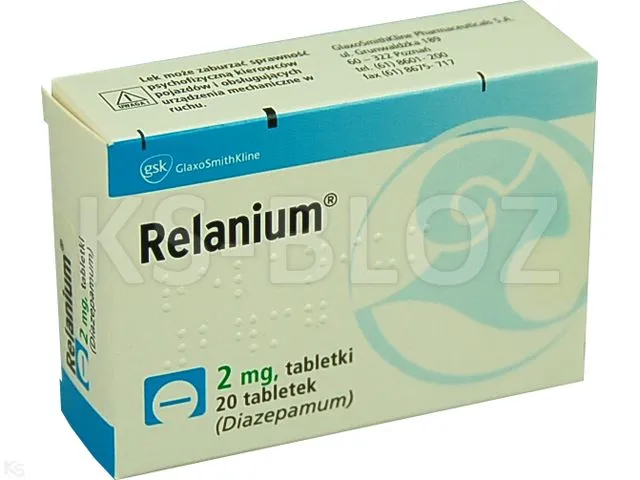
Table of Contents
Package leaflet: Information for the patient
Warning! Keep this leaflet! Information on the immediate packaging in a foreign language.
Relanium, 5 mg, tablets
Diazepamum
Please read this leaflet carefully before using the medicine, as it contains
important information for the patient.
- Keep this leaflet, so that you can read it again if necessary.
- If you have any doubts, please consult your doctor or pharmacist.
- This medicine has been prescribed for a specific individual. Do not pass it on to others. The medicine may harm another person, even if their symptoms are the same.
- If the patient experiences any adverse reactions, including any adverse reactions not listed in this leaflet, inform your doctor or pharmacist. See section 4.
Table of contents of the leaflet:
- What Relanium is and what it is used for
- Important information before taking Relanium
- How to take Relanium
- Possible side effects
- How to store Relanium
- Contents of the pack and other information
1. What Relanium is and what it is used for
Relanium contains the active substance diazepam, which belongs to a group of medicines called benzodiazepine derivatives.
The medicine has anxiolytic, sedative, hypnotic, and anticonvulsant effects. It also reduces skeletal muscle tension.
Indications for use:
- Treatment of anxiety states.
- Treatment of insomnia associated with anxiety (only in cases of severe disturbances that impair normal daily functioning or cause extreme discomfort to the patient).
- Control of muscle spasms, including those related to increased central nervous system-mediated muscle tension.
- Pharmacological preparation of the patient prior to minor surgical procedures (premedication).
- Treatment of symptoms of acute alcohol withdrawal.
2. Information before using Relanium
When not to use Relanium
- if the patient is allergic (hypersensitive) to the active substance, other benzodiazepines, or any of the other ingredients of the medicine (listed in section 6),
- if the patient has excessive muscle weakness (called muscle fatigue – myasthenia gravis),
- if the patient has severe respiratory insufficiency,
- if the patient has sleep apnoea syndrome (repeated breathing pauses during sleep causing hypoxia),
- if the patient has severe hepatic insufficiency.
Warnings and precautions
Before starting treatment with Relanium, discuss this with your doctor.
- Diazepam is not recommended for the treatment of chronic psychoses or conditions with phobias or obsessions.
- Do not take Relanium together with alcohol, sleeping medicines, or sedatives, as Relanium may enhance their effects (see section: Relanium with other medicines).
- If the patient is dependent on alcohol or drugs, avoid using Relanium. This does not apply to the treatment of acute withdrawal symptoms. In such cases, the doctor will monitor the patient regularly and prescribe the lowest effective dose.
- If the patient has previously abused alcohol or drugs, Relanium should be used with particular caution.
- If Relanium is used for several weeks, tolerance to the medicine may develop (reduced effectiveness).
- Long-term use of Relanium, especially in high doses, may lead to physical and psychological dependence. The risk of dependence increases with dose and duration of treatment. It is higher in patients who have previously abused alcohol or drugs and in patients with personality disorders.
- If the patient is dependent on Relanium, abrupt discontinuation may cause withdrawal symptoms such as: headache, muscle pain, extreme anxiety, tension, restlessness, confusion, irritability. In more severe cases, the following may occur: loss of reality, personality disturbances, numbness and tingling in limbs, hallucinations, seizures, hypersensitivity to light, sound, or touch.
- Withdrawal symptoms may also occur when switching from Relanium to benzodiazepines with a short duration of action.
- During or after discontinuation of Relanium, a temporary worsening of the symptoms of the condition for which the medicine was prescribed may occur. To prevent this, the medicine should be discontinued gradually, strictly according to the doctor's instructions (see section: Discontinuing Relanium).
- Relanium may cause anterograde amnesia (inability to learn and remember new information, see section 4: Possible side effects). To reduce the risk of anterograde amnesia, it is important that the patient has uninterrupted sleep for 7 to 8 hours.
- In children and elderly patients, there is an increased risk of adverse psychiatric and paradoxical reactions (see section 4: Possible side effects).
- In elderly and weakened patients, the doctor may prescribe a lower dose (see section 3: How to take Relanium). The medicine reduces muscle tone, increasing the risk of falls and consequently hip fractures in elderly patients.
- In patients with chronic respiratory insufficiency, the doctor may prescribe a lower dose, as breathing disturbances may occur.
- Caution is required when using Relanium in patients with heart failure.
- In patients with epilepsy, abrupt discontinuation of treatment should be avoided due to the risk of seizures.
- If the patient has severe hepatic insufficiency, Relanium should not be used due to the risk of neurological dysfunction (hepatic encephalopathy).
- In patients with impaired liver and/or kidney function, the doctor may decide to reduce the dose. During long-term treatment with Relanium, the doctor may order blood tests to closely monitor blood cell counts and liver function.
- Relanium should not be used in patients with psychotic disorders (e.g. schizophrenia).
- If the patient has depression or anxiety states associated with depression, Relanium should not be used as the sole treatment, as it may increase the risk of suicide.
- Use of Relanium in individuals experiencing bereavement (after loss of a loved one) does not improve well-being.
Children and adolescents
Use of Relanium in children: the doctor will determine the dose and duration of treatment (see section 3: How to take Relanium).
Use of Relanium for the treatment of anxiety states and insomnia in children is not recommended.
Relanium should not be used in children under 6 years of age, as the safety and efficacy of the medicine have not been established in this age group. Only when alternative treatments are not possible, the doctor may decide to administer Relanium, but under strict supervision by a specialist (paediatrician, neurologist, psychiatrist, anaesthesiologist, or intensive care specialist), who will determine the dose.
Relanium with other medicines
Inform your doctor or pharmacist about all medicines currently or recently taken, as well as any medicines the patient plans to take.
Especially inform your doctor about the following medicines, as they may enhance the effects of Relanium:
- atazanavir and ritonavir – used in the treatment of HIV infection and hepatitis C,
- cimetidine – used in the treatment of peptic ulcer disease,
- ketoconazole – used in the treatment of fungal infections,
- medicines used to treat depression, for example fluvoxamine, fluoxetine,
- omeprazole – a medicine that reduces gastric acidity,
- cisapride – used in gastro-oesophageal reflux disease,
- disulfiram – used in the treatment of alcoholism,
- isoniazid – used in the treatment of tuberculosis,
- propranolol – used in the treatment of high blood pressure and irregular heartbeat,
- rifampicin – used in the treatment of bacterial infections,
- antipsychotic medicines,
- anxiolytic and sedative medicines,
- sleeping medicines,
- medicines used to treat epilepsy,
- medicines used for general anaesthesia,
- sedating antihistamines – used, for example, in the treatment of allergies.
- opioid analgesics. Concurrent use of Relanium and opioids (strong painkillers, medicines used in substitution therapy for addiction, and some cough medicines) increases the risk of drowsiness, breathing difficulties (respiratory depression), coma, and may be life-threatening. Therefore, concurrent use of these medicines should only be considered when no other treatment options are available. If the doctor prescribes Relanium together with opioids, the dose and duration of combined treatment should be limited. Inform the doctor about all opioid medicines being taken and strictly follow dosing instructions. It may be helpful to inform friends or family members to be aware of the above-mentioned symptoms. If such symptoms occur, contact the doctor immediately. Relanium may affect the action of phenytoin used as an antiepileptic. Theophylline – used in the treatment of asthma – may reduce the effect of benzodiazepines. Avoid concurrent use of buprenorphine with Relanium (or other benzodiazepines), as it may cause death due to respiratory centre depression. Concurrent use of valproic acid increases the risk of developing psychosis.
Relanium with food, drink and alcohol
Do not consume any alcoholic beverages while taking this medicine. Alcohol enhances the sedative effect of Relanium.
Pregnancy and breastfeeding
If the patient is pregnant, breastfeeding, suspects she may be pregnant, or plans to become pregnant, she should consult her doctor before using this medicine.
Relanium should not be used during pregnancy, especially in the first and third trimesters.
Use of Relanium during pregnancy is acceptable only if the doctor considers it absolutely necessary and will monitor the patient closely.
If a woman takes Relanium during the last three months of pregnancy or during delivery, the newborn may experience lowered body temperature, reduced muscle tone, irregular heartbeat, difficulty sucking, and breathing disturbances.
In infants of mothers who have taken diazepam long-term during late pregnancy, physical dependence may develop, and there is a risk of neonatal withdrawal syndrome after birth.
The medicine passes into breast milk; therefore, it should not be used during breastfeeding.
If the patient is breastfeeding, she must consult her doctor before starting treatment with Relanium.
Driving and operating machinery
Relanium may impair psychomotor performance. Do not drive motor vehicles or operate machinery while taking this medicine.
Relanium contains monohydrate lactose.
If the patient has previously been diagnosed with intolerance to certain sugars, the patient should consult a doctor before taking the medicine.
Relanium contains sodium (present in quinoline yellow).
The medicine contains less than 1 mmol (23 mg) of sodium per tablet, meaning the medicine is considered "sodium-free".
Relanium contains the colouring agent quinoline yellow (E 104).
Due to the presence of quinoline yellow, the medicine may cause allergic reactions.
3. How to use Relanium
Relanium must always be used as directed by the physician. If in doubt, consult your doctor or pharmacist.
Treatment with diazepam should be as short as possible and should not exceed 4 weeks for insomnia or 8–12 weeks for anxiety disorders, including the time required for gradual withdrawal of the drug. Do not extend treatment beyond the times indicated above without re-evaluation of the patient's condition by the physician.
Relanium is available in the following strengths: 2 mg and 5 mg.
Dosage in adults
- Anxiety and insomnia
- Anxiety: the usual dose is 2 mg three times daily; the maximum dose used in the treatment of anxiety disorders is 30 mg per day in divided doses.
- Insomnia associated with anxiety: 5 mg to 15 mg once daily before bedtime. The physician will determine the lowest effective dose providing symptom control.
- Conditions associated with muscle spasm
- Muscle spasms: 2 mg to 15 mg per day in divided doses.
- Control of increased muscle tension of central origin: 2 mg to 60 mg per day in divided doses.
- Premedication prior to general anaesthesia
- 5 mg to 20 mg.
- Treatment of symptoms of acute alcohol withdrawal
- Usually 10 mg, 3 to 4 times during the first 24 hours, then the physician may reduce the dose to 5 mg, 3 to 4 times daily.
Dosage in children
- Anxiety and insomnia
- Relanium is not recommended for the treatment of anxiety disorders and insomnia in children.
- Conditions associated with muscle spasm
- Control of irritability and increased muscle tension of central origin: 5 mg to 40 mg per day in divided doses.
- Children aged 6 to 12 years: initial dose is 5 mg twice daily.
- Children aged 12 to 18 years: initial dose is 10 mg twice daily; maximum dose is 40 mg per day.
- Premedication prior to general anaesthesia
- Children aged 6 to 18 years: 2 mg to 10 mg.
Dosage in children under 6 years of age
Diazepam tablets are not intended for use in children under 6 years of age.
Dosage in elderly and debilitated patients
The dose should not exceed half of the usual adult dose.
Patients with renal and/or hepatic impairment
In patients with impaired renal and/or liver function, the physician will decide whether to reduce the dose.
Method of administration
- The medicine should be taken orally.
- Do not use for longer than 4 weeks in the case of insomnia or 8 to 12 weeks in the case of anxiety disorders (including the time required for gradual withdrawal of the drug).
Use of a higher than recommended dose of Relanium
If an overdose is taken, seek immediate medical help from a doctor or the nearest hospital.
Overdose with Relanium is rarely life-threatening when the drug is taken alone.
Symptoms of overdose may include: drowsiness, ataxia (loss of coordination), slurred speech, nystagmus, areflexia (absence of reflexes), apnoea, hypotension, circulatory and respiratory depression, and coma.
Coma, if it occurs, usually lasts several hours but may be prolonged and may recur periodically, especially in elderly patients.
Missed dose of Relanium
If a dose is missed, take the medicine as soon as possible. If it is almost time for the next dose, skip the missed dose. Take the next dose according to your doctor's instructions. Do not take a double dose to make up for a missed dose.
Stopping Relanium treatment
The medicine should be withdrawn gradually. Abrupt discontinuation of Relanium may transiently worsen the symptoms of the condition for which the medicine was prescribed. Other symptoms may also occur, such as: headache, muscle pain, extreme anxiety, tension, agitation, confusion, irritability, mood changes, sleep disturbances, and restlessness. In more severe cases, the following symptoms may occur: depersonalisation, personality disturbances, hypersensitivity to sound, numbness and tingling of the extremities, hypersensitivity to light, noise and touch, hallucinations, and epileptic seizures.
Always follow your doctor's instructions. If you have any doubts about how to use the medicine, consult your doctor or pharmacist.
4. Possible adverse effects
Like all medicines, this medicinal product may cause adverse effects, although not everyone experiences them.
Most commonly occurring adverse effects are:
- fatigue,
- drowsiness,
- muscle weakness. These effects occur particularly at the beginning of treatment and diminish after repeated administration.
Frequency unknown (cannot be estimated from available data):
- paradoxical reactions: anxiety, restlessness, irritability, aggressive behaviour, anger, rage, hallucinations,
- nightmares, illusions, psychoses,
- changes in behaviour, including inappropriate behaviour,
- disturbances in thought process, disorientation in time, place, situation or self (confusion),
- emotional blunting (emotional flattening),
- reduced alertness,
- depression,
- decreased or increased sexual drive (libido),
- motor incoordination (difficulty maintaining balance) – may lead to falls and dangerous bone fractures, especially in elderly individuals,
- impaired speech, slurred speech,
- headache, dizziness,
- tremor,
- inability to learn and remember new information (so-called anterograde amnesia); to prevent this, the patient should have uninterrupted 7–8 hours of sleep,
- double vision, blurred vision,
- heart failure, cardiac arrest, irregular heartbeat,
- low blood pressure, slowed heart rate,
- slowed and shallow breathing, apnoea,
- nausea, constipation, gastrointestinal disturbances (e.g. bloating),
- dry mouth or excessive salivation,
- jaundice (yellowing of the skin and whites of the eyes), increased liver enzyme activity (aminotransferases and alkaline phosphatase) in blood,
- skin reactions,
- urinary incontinence or inability to urinate (strong urge to urinate, pain in the lower abdomen),
- blood morphology disorders (dyscrasia). Long-term use (even at therapeutic doses) may lead to physical dependence; abrupt discontinuation of the medicine may result in withdrawal symptoms or rebound phenomena (see section Warnings and precautions). Psychological dependence may occur. Cases of benzodiazepine abuse have been reported.
Reporting of adverse effects
If any adverse effects occur, including any adverse effects not listed in this leaflet, inform your doctor or pharmacist. Adverse effects can be reported directly to the Department of Monitoring Adverse Drug Reactions at the Office for Registration of Medicinal Products, Medical Devices and Biocidal Products, Al. Jerozolimskie 181C, 02-222 Warsaw, tel.: +48 22 49 21 301, fax: +48 22 49 21 309, website: https://smz.ezdrowie.gov.pl.
Reporting adverse effects helps to provide more information on the safety of the medicine.
3. How to store Relanium
Keep this medicine out of sight and reach of children.
Do not store above 25°C. Store in the original packaging to protect from light and moisture.
Do not use this medicine after the expiry date stated on the container. The expiry date refers to the last day of the stated month.
Medicines must not be disposed of via wastewater or household waste. Ask your pharmacist how to dispose of medicines no longer in use. This will help protect the environment.
4. Contents of the packaging and other information
What Relanium contains
The active substance is diazepam.
Each tablet contains 5 mg of diazepam.
The other ingredients are: monohydrate lactose, potato starch, talc, magnesium stearate,
anhydrous colloidal silicon dioxide, quinoline yellow (E 104).
What Relanium looks like and contents of the pack
Relanium is a yellow, round, biconvex tablet with a smooth surface.
The pack contains 20 tablets in PVC/Aluminium blisters, packed in a cardboard box.
For further detailed information, please contact the responsible party or the parallel importer.
Responsible party in Lithuania, country of export:
GlaxoSmithKline Trading Services Limited
12 Riverwalk, Citywest Business Campus, Dublin 24, Ireland
Manufacturer:
GlaxoSmithKline Pharmaceuticals S.A.
Grunwaldzka 189
60-322 Poznań
Poland
Parallel importer:
InPharm Sp. z o.o.
Strumykowa 28/11
03-138 Warsaw
Repackaged in:
Prodlekpol Sp. z o.o.
Chełmżyńska 249
04-458 Warsaw
InPharm Sp. z o.o. Services sp. k.
Chełmżyńska 249
04-458 Warsaw
Marketing authorisation number in Lithuania, country of export: LT/1/94/1933/001
Parallel import authorisation number: 448/15