Prinivil
Poland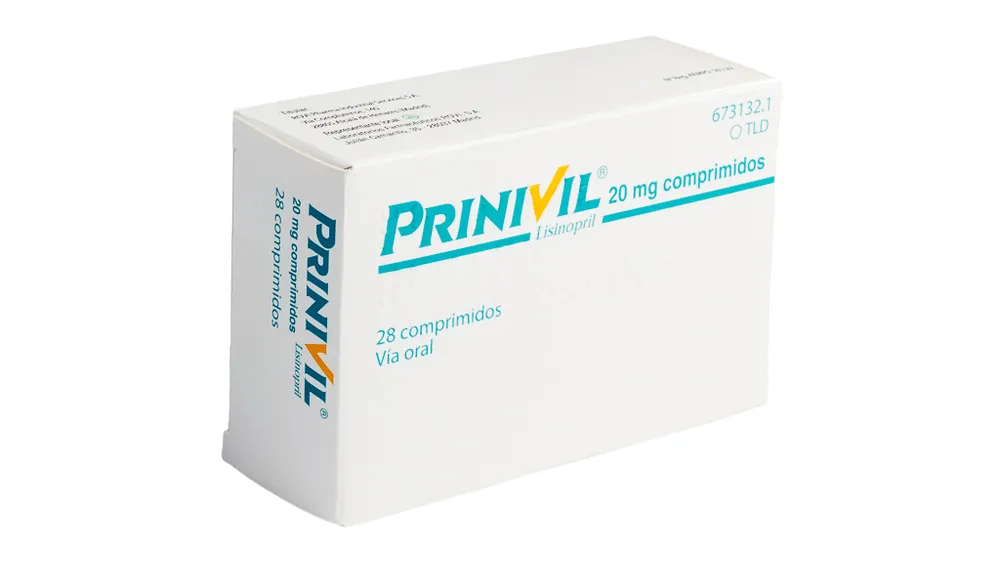
Table of Contents
Package leaflet: Information for the user
Warning! Keep this leaflet. Information on the immediate packaging is in a foreign language.
PRINIVIL, 5 mg, tablets
Lisinoprilum
Please read the entire leaflet carefully before using this medicine, as it contains
important information for the patient.
- Keep this leaflet, as you may need to read it again.
- If you have any questions, please consult your doctor or pharmacist.
- This medicine has been prescribed for a specific individual. Do not pass it on to others. This medicine may harm others, even if their symptoms are identical.
- If you experience any adverse effects, including any not listed in this leaflet, inform your doctor, pharmacist, or nurse. See section 4.
DO NOT USE IN PREGNANT WOMEN
Contents of the leaflet
- What PRINIVIL is and what it is used for
- Important information before taking PRINIVIL
- How to take PRINIVIL
- Possible side effects
- How to store PRINIVIL
- Contents of the package and other information
1. What PRINIVIL is and what it is used for
PRINIVIL contains lisinopril (an angiotensin-converting enzyme inhibitor – ACE inhibitor), which inhibits
the activity of the enzyme that converts angiotensin I into angiotensin II, a substance that causes vasoconstriction and increases
blood pressure.
Inhibition of angiotensin-converting enzyme leads to a reduction in angiotensin II concentration in blood plasma,
decreased aldosterone secretion, lowering of blood pressure in patients with hypertension, and reduction of symptoms of heart failure. Lisinopril is absorbed orally by approximately 25%; food does not affect drug absorption. Maximum serum concentration occurs after 6–8 hours. The elimination half-life of the drug is approximately 12 hours. Long-term administration of therapeutic doses of PRINIVIL does not result in drug accumulation in plasma. The drug is not metabolized in the body and is excreted unchanged in urine.
PRINIVIL is indicated for:
- treatment of essential and renovascular hypertension, both as monotherapy and in combination with antihypertensive drugs from other classes;
- treatment of heart failure, either as monotherapy or in combination with diuretics and digitalis glycosides;
- treatment of hemodynamically stable patients in the early (24 h) phase following myocardial infarction, to prevent the development of left ventricular dysfunction and heart failure;
- treatment of patients with diabetes and hypertension, and concomitant renal complications with microalbuminuria.
2. Important information before using the medicine PRINIVIL
When not to use PRINIVIL:
- if the patient is allergic to lisinopril or any of the other ingredients of this medicine (listed in section 6);
- if the patient has ever experienced angioedema while taking angiotensin-converting enzyme (ACE) inhibitors, characterized by swelling of the face, lips, tongue and (or) throat, difficulty swallowing or breathing (feeling of breathlessness);
- if the patient has hereditary or idiopathic angioedema;
- in pregnant or breastfeeding women;
- if the patient has diabetes or impaired kidney function and is being treated with a blood pressure-lowering medicine containing aliskiren;
- if the patient is taking a medicine containing a neprilysin inhibitor (e.g. sacubitril). PRINIVIL must not be used within 36 hours before or after treatment with sacubitril + valsartan, which contains a neprilysin inhibitor.
Warnings and precautions
Before starting treatment with PRINIVIL, discuss this with your doctor or pharmacist.
PRINIVIL should be taken at doses prescribed by the doctor throughout the treatment period,
even if this period is very long.
Do not change the dose or manner of taking the medicine on your own, without doctor's advice,
especially in cases of increased risk of kidney function disorders or in patients with heart failure.
Inform your doctor if the patient is taking any of the following medicines used to treat high blood pressure:
- an angiotensin II receptor antagonist (AIIRA), also known as a sartan – for example, valsartan, telmisartan, irbesartan, especially if the patient has kidney dysfunction related to diabetes,
- aliskiren.
Your doctor may recommend regular monitoring of kidney function, blood pressure, and blood electrolyte levels (e.g. potassium).
See also the section "When not to use PRINIVIL".
Inform your doctor about any other medicines you are taking, including those available without a prescription.
Inform your doctor especially about taking antidiabetic medicines – oral or insulin, lithium salts (used, among others, in the treatment of depression), gold salts (used in the treatment of a particular type of joint pain or inflammation).
Due to the increased risk of hypotension, which may manifest as dizziness, visual disturbances, or fainting, inform your doctor before taking PRINIVIL if you are using diuretics.
Also inform your doctor about any symptoms or disorders, particularly those affecting the kidneys, vomiting and diarrhea, dialysis, or a salt-free diet, or other medicines that may increase serum potassium levels (e.g. trimethoprim-containing medicines).
Inform your doctor about any history of hypersensitivity (allergic) reactions, especially if they involved swelling of the face, lips, tongue and (or) throat, or difficulty breathing or swallowing.
If hypotension occurs, manifesting as visual disturbances, dizziness, or fainting, lie down with your legs elevated. If symptoms do not resolve within a few minutes, contact your doctor.
Exercise caution when using potassium-containing preparations (including dietary supplements) and potassium-sparing diuretics during PRINIVIL therapy.
In patients with ischemic heart disease or significant narrowing of arteries supplying the brain, excessive lowering of blood pressure may lead to myocardial infarction or cerebral ischemia.
While taking PRINIVIL or another ACE inhibitor, angioedema may occur [swelling of the face, limbs, lips, tongue, larynx and (or) throat]. In such a case, discontinue the medicine immediately and consult your doctor.
In patients taking ACE inhibitors and undergoing dialysis with high-flux dialysis membranes, a pseudoallergic reaction may occur. Inform your doctor about lisinopril use before dialysis. Similar reactions have occurred during low-density lipoprotein apheresis using dextran sulfate. This method should not be used in patients taking ACE inhibitors.
In patients taking lisinopril and undergoing desensitization to insect venom (Hymenoptera), a life-threatening pseudoallergic reaction may occur. Your doctor may advise discontinuing the medicine during desensitization or avoiding the desensitization procedure.
Inform your doctor about taking PRINIVIL before undergoing general anesthesia for surgical procedures.
At the beginning of PRINIVIL treatment, excessive lowering of blood pressure may occur transiently, manifesting as excessive fatigue and dizziness. If such symptoms occur, lie down with your legs elevated, and if symptoms do not resolve within a few minutes, contact your doctor.
To assess treatment efficacy and determine the lowest effective dose, your doctor may recommend frequent blood pressure measurements, especially at the beginning of treatment and after dose adjustments.
Your doctor may recommend frequent monitoring of serum electrolyte levels, especially in patients at increased risk of kidney dysfunction or those taking potassium-sparing diuretics.
If symptoms such as fever, swollen lymph nodes, tonsillitis, nosebleeds, gum bleeding, or excessive tendency to develop skin bruising occur, contact your doctor immediately, as they may be related to excessive reduction in white blood cell or platelet counts.
Inform your doctor if you are taking a medicine containing a neprilysin inhibitor (e.g. sacubitril).
Inform your doctor if you are taking a medicine containing vildagliptin.
Children and adolescents
PRINIVIL has been studied in children. For additional information, contact your doctor.
Lisinopril is not recommended for children under 6 years of age or in children with severe kidney dysfunction.
PRINIVIL and other medicines
Generally, PRINIVIL can be taken with other medicines. However, inform your doctor or pharmacist about all medicines currently used, recently used, or planned for use, as some medicines may affect the action of others.
Your doctor may recommend dose adjustments and (or) additional precautions:
- if the patient is taking an angiotensin II receptor antagonist (AIIRA) or aliskiren (see also sections "When not to use PRINIVIL" and "Warnings and precautions").
To prescribe the appropriate dose of PRINIVIL, it is particularly important that your doctor knows if you are taking: other blood pressure-lowering medicines, diuretics, potassium-containing preparations (including salt substitutes), or other medicines that may increase serum potassium levels (e.g. trimethoprim-containing medicines), antidiabetic medicines (including oral antidiabetics or insulin), lithium (a medicine used to treat certain types of depression), and certain medicines used to treat pain and joint diseases. Inform your doctor if you are taking an mTOR inhibitor (e.g. temsirolimus, sirolimus, everolimus) or a medicine containing a neprilysin inhibitor (e.g. sacubitril) or vildagliptin (an antidiabetic medicine), as concomitant use with PRINIVIL may increase the risk of an allergic reaction called angioedema.
PRINIVIL used together with diuretics may enhance the blood pressure-lowering effect.
Indomethacin and other nonsteroidal anti-inflammatory drugs (e.g. acetylsalicylic acid) reduce the antihypertensive effect of PRINIVIL.
Concomitant administration of PRINIVIL and lithium salts may reduce lithium excretion. Your doctor will recommend regular monitoring of serum lithium levels and, if necessary, lower doses of lithium.
Concomitant use of potassium supplements, potassium-containing salt substitutes, or potassium-sparing diuretics (spironolactone, eplerenone, amiloride, triamterene) may lead to hyperkalemia (increased serum potassium levels).
Pregnancy and breastfeeding
If the patient is pregnant or breastfeeding, suspects she may be pregnant, or plans to become pregnant, she should consult her doctor or pharmacist before using this medicine.
Pregnancy
PRINIVIL must not be used in pregnant women.
ACE inhibitors, including PRINIVIL, may cause fetal injury or death when administered during the second or third trimester of pregnancy (i.e. from the fourth month of pregnancy until delivery). If pregnancy is detected during treatment, discontinue the medicine, contact your doctor, and change the treatment according to the doctor's recommendation.
Women who are pregnant or planning to become pregnant should inform their doctor before starting PRINIVIL.
Women of childbearing potential taking lisinopril should use effective contraception.
Breastfeeding
It is not known whether lisinopril passes into human milk. If breastfeeding or planning to breastfeed, discuss this with your doctor.
Driving and operating machinery
Individual response to the medicine may vary. Some adverse effects reported during PRINIVIL treatment may affect the ability to drive or operate machinery (see section 4).
3. How to use PRINIVIL
This medicine should always be taken exactly as directed by your doctor. If in doubt, consult your doctor or pharmacist.
PRINIVIL is available in the following strengths: 5 mg, 10 mg, 20 mg.
PRINIVIL should be taken once daily, at the same time each day. Tablets may be taken before, during, or after meals. Food does not affect the action of the medicine.
Essential hypertension
For essential hypertension, the usual initial dose is 10 mg once daily, with a maintenance dose of 20 mg once daily. The maximum recommended daily dose is 80 mg. In patients receiving diuretics, the physician will usually recommend discontinuation or reduction of the diuretic dose 2–3 days before starting PRINIVIL. The recommended initial dose in such cases is 5 mg once daily.
Renovascular hypertension
For patients with renovascular hypertension, or with bilateral renal artery stenosis, or stenosis of the artery to a single kidney, the initial dose is 2.5 mg to 5 mg once daily. The physician may subsequently recommend a higher dose.
Heart failure
In heart failure, the initial dose is 2.5 mg once daily, with a maintenance dose ranging from 5 mg to 20 mg once daily.
In patients who cannot discontinue diuretics, or in dehydrated patients, patients with hyponatremia, or patients with renal impairment, the physician should prescribe a lower dose of lisinopril, adjusted according to the severity of renal impairment (creatinine clearance).
Acute phase of myocardial infarction
In the acute phase of myocardial infarction, in hemodynamically stable patients (without cardiogenic shock), the physician should prescribe the first dose of 5 mg within 24 hours of the infarction. After another 24 hours, the same dose (5 mg) should be administered, and after 48 hours from the onset of infarction, the dose should be increased to 10 mg of lisinopril. Treatment should then continue with a once-daily dose of 10 mg for 6 weeks. If there are no contraindications, the physician may also recommend concomitant use of other drugs commonly used in the treatment of myocardial infarction (anticoagulants, antiplatelet agents, and beta-blockers).
Patients with low systolic blood pressure (≤ 120 mmHg) should receive a lower initial dose of 2.5 mg of lisinopril once daily during the first days of treatment and for the following three days. If hypotension occurs (systolic blood pressure below 100 mmHg), the physician may recommend reducing the maintenance dose to 5 mg or 2.5 mg. If prolonged hypotension occurs (systolic blood pressure below 90 mmHg lasting longer than 1 hour), the physician should recommend discontinuation of PRINIVIL.
Diabetic nephropathy
In patients with hypertension and non-insulin-dependent (type 2) diabetes, the usual initial dose of PRINIVIL is 10 mg once daily. The maintenance dose should be adjusted to achieve the currently recommended target diastolic blood pressure in seated position for these patients.
Renal impairment
Dosage in patients with impaired renal function should be adjusted according to the severity of impairment based on creatinine clearance, as shown in the table below:
| Creatinine clearance [ml/min] | Initial dose [mg/day] | |-------------------------------|------------------------| | ≤ 70 > 30 ml/min | 5 – 10 mg/day | | ≤ 30 ≥ 10 ml/min | 2.5 – 5 mg/day | | < 10 ml/min | 2.5 mg/day |
The physician will usually recommend gradual dose escalation thereafter. The maximum recommended daily dose of lisinopril is 40 mg.
Use in children aged 6 to 16 years with hypertension
The physician will determine the appropriate dose for the child, based on body weight. For children weighing 20 to < 50 kg, the recommended initial dose is 2.5 mg once daily. For children weighing ≥ 50 kg, the recommended initial dose is 5 mg once daily.
Taking more PRINIVIL than prescribed
If too much PRINIVIL is taken, the patient should contact a doctor immediately. Medical observation is necessary. The most likely symptom of overdose is excessive lowering of blood pressure, associated with dizziness.
Missed dose of PRINIVIL
The medicine should be taken at the dose prescribed by the doctor. If a dose is missed at the usual time, do not take an extra dose. Resume regular dosing the next day as prescribed by the doctor.
4. Possible adverse reactions
Like all medicines, this medicine can cause adverse reactions, although not everyone will experience them.
PRINIVIL is generally well tolerated. Common adverse reactions include dizziness, headache, diarrhoea, vomiting, renal function disorders, cough, and dizziness associated with sudden drop in blood pressure upon rapid standing (orthostatic symptoms).
Other adverse reactions occurring not very frequently include myocardial infarction or stroke, probably secondary to excessive hypotension in patients at high risk, sensation of rapid heartbeat (palpitations), fast heartbeat (tachycardia), reduced blood flow in the fingers and toes, manifesting as colour change, accompanied by cold sensation or numbness (Raynaud's phenomenon), nasal mucosal inflammation, abdominal pain, indigestion, nausea, rash, itching, loss of strength (weakness), mood disturbances, sleep disorders, tingling, tickling sensation, pricking sensation or burning sensation (paresthesia), impotence, fatigue, dizziness, taste disturbances, increased blood urea concentration, increased serum creatinine concentration, increased liver enzyme activity, elevated blood potassium levels (hyperkalemia).
Other adverse reactions occurring rarely include: decreased haemoglobin concentration, reduced number of red blood cells (decreased haematocrit value), disorientation, dryness of the oral mucosa, hypersensitivity/angioedema (swelling of the face, limbs, lips, tongue, glottis and (or) larynx), urticaria, hair loss (alopecia), excessive levels of urea, creatinine and other nitrogenous end products of protein and amino acid metabolism in blood (azotemia), acute renal failure, gynaecomastia, increased serum bilirubin concentration, low blood potassium levels (hyponatremia).
Other adverse reactions may occur very rarely and some of them may be severe.
Examples of such adverse reactions include yellowing of the skin and (or) eyes (jaundice), oliguria or anuria, and severe abdominal pain. Other adverse reactions occurring very rarely include: bone marrow suppression, anaemia, low platelet count (thrombocytopenia), reduced total number of white blood cells (leukopenia), low count of one type of white blood cells - neutrophils (neutropenia), marked reduction in one type of white blood cells - granulocytes (agranulocytosis), haemolytic anaemia, enlarged lymph nodes (lymphadenopathy), autoimmune disease, low blood sugar concentration (hypoglycaemia), airway constriction (bronchospasm), sinusitis, pancreatitis, intestinal wall swelling (intestinal angioedema), liver inflammation (hepatocellular or cholestatic), liver failure, excessive sweating, blistering of the skin and mucous membranes (bullous eruption), blistering and peeling of the skin (toxic epidermal necrolysis), Stevens-Johnson syndrome, erythema multiforme.
The following adverse reactions have also been reported, but their frequency cannot be estimated from the available data (frequency not known): gout, decreased libido, depression, somnolence, stroke, fainting, angina pectoris, cardiac arrhythmia, shortness of breath, pulmonary infiltrates, laryngitis, bronchitis, nasal mucosal congestion, sore throat, anorexia, constipation, bloating, photosensitivity, pseudolymphoma of the skin, urinary tract infection, chest pain, redness, syndrome of inappropriate antidiuretic hormone secretion (SIADH), blurred vision, back pain, joint pain, muscle cramps and shoulder pain.
A syndrome involving one or more of the following symptoms has been reported: fever, vasculitis, muscle pain, joint pain or joint inflammation, positive antinuclear antibody (ANA) titre, increased erythrocyte sedimentation rate (ESR), eosinophilia and leukocytosis, rash, photosensitivity or other skin symptoms.
For additional information on adverse reactions, please consult your doctor or pharmacist.
If any adverse reactions or worrying symptoms occur, inform your doctor or pharmacist.
You should stop taking PRINIVIL and seek immediate medical advice from a doctor in any of the following cases:
- if swelling of the face, lips, tongue, glottis and (or) throat occurs, which may cause difficulty in breathing or swallowing,
- if swelling of the hands, ankles or feet occurs,
- if urticaria occurs.
A greater reduction in blood pressure may occur after the first dose of the medicine than with subsequent doses. This may manifest as fainting or dizziness. If this occurs, the patient should lie down. In case of doubt, contact your doctor.
Reporting of adverse reactions
If any adverse symptoms occur, including any adverse reactions not listed in this leaflet, inform your doctor, pharmacist or nurse. Adverse reactions can be reported directly to the Department of Monitoring Adverse Reactions of Medicinal Products at the Office for Registration of Medicinal Products, Medical Devices and Biocidal Products: Al. Jerozolimskie 181C, 02-222 Warsaw, tel.: + 48 22 49-21-301, fax: + 48 22 49-21-309, website: https://smz.ezdrowie.gov.pl
Reporting adverse reactions helps to provide more information on the safety of the medicine.
5. How to store the medicine PRINIVIL
Keep this medicine out of sight and reach of children.
Store below 30°C.
Do not use this medicine after the expiry date stated on the packaging. The expiry date refers to the last day of the stated month.
Medicines must not be disposed of via wastewater or household waste. Ask your pharmacist how to dispose of medicines no longer required. Such measures help protect the environment.
6. Contents of the pack and other information
What Prinivil contains
- The active substance is lisinopril (in the form of lisinopril dihydrate). Each tablet contains 5 mg of lisinopril.
- Other ingredients are: mannitol, calcium hydrogen phosphate dihydrate, maize starch, pregelatinized starch, magnesium stearate.
What Prinivil looks like and contents of the pack
Pack sizes available: Prinivil is available in packs containing 30 tablets.
For further information, please contact the marketing authorisation holder or the parallel importer:
Marketing authorisation holder in Spain, country of export:
ROVI Pharma Industrial Services, S.A.
Vía Complutense 140
28805 Alcalá de Henares (Madrid)
Spain
Manufacturer:
ROVI Pharma Industrial Services, S.A.
Vía Complutense 140
28805 Alcalá de Henares (Madrid)
Spain
Parallel importer:
Delfarma Sp. z o.o.
ul. Św. Teresy od Dzieciątka Jezus 111
91-222 Łódź
Repackaged in:
Delfarma Sp. z o.o.
ul. Św. Teresy od Dzieciątka Jezus 111
91-222 Łódź
Marketing authorisation number in Spain, country of export: 673131.4
Parallel import licence number: 567/13