Polfilin
Poland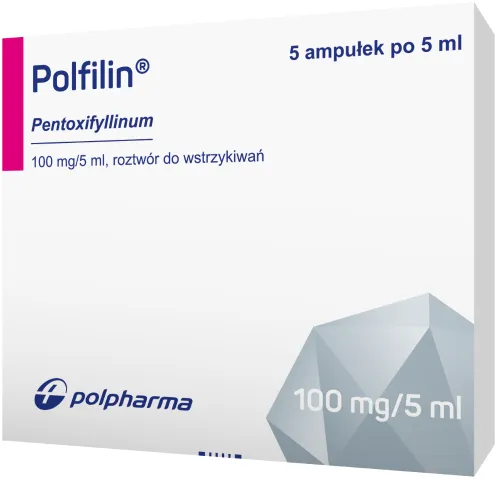
Table of Contents
Patient Information Leaflet
Polfilin, 20 mg/ml (100 mg/5 ml), solution for injection
Polfilin, 20 mg/ml (300 mg/15 ml), concentrate for solution for infusion
Pentoxifyllinum
Please read all of this leaflet carefully before using this medicine, as it contains important information for you.
- Keep this leaflet. You may need to read it again.
- If you have any further questions, please consult your doctor or nurse.
- This medicine has been prescribed for a specific individual. Do not pass it on to others. It may harm them, even if their symptoms are the same.
- If you experience any side effects, including any not listed in this leaflet, please inform your doctor or nurse. See section 4.
Table of contents
- What Polfilin is and what it is used for
- Important information before using Polfilin
- How to use Polfilin
- Possible side effects
- How to store Polfilin
- Contents of the pack and other information
1. What Polfilin is and what it is used for
Pentoxifylline, the active substance in Polfilin, is a synthetic xanthine derivative. It improves blood flow in capillaries by reducing blood viscosity and increasing the flexibility of red blood cells. As a result, it may enhance blood supply to ischemic tissues, including the brain and lower limbs.
The indications for use of Polfilin are:
- Intermittent claudication;
- Circulatory disorders in the eyeball (acute and chronic circulatory disturbances in the retina and choroid);
- Inner ear function disorders (e.g. hearing impairments, sudden hearing loss, etc.) caused by circulatory changes;
- Cerebral ischemia (e.g. post-stroke conditions, vascular-origin brain dysfunction with symptoms such as lack of concentration, dizziness, memory disturbances).
2. Information before using Polfilin
When not to use Polfilin:
- if the patient is allergic to pentoxifylline, methylxanthine derivatives (caffeine, theophylline, theobromine), or any of the other ingredients of this medicine (listed in section 6);
- if the patient has recently suffered a myocardial infarction or stroke;
- if the patient has severe bleeding or a disease with a high risk of haemorrhage;
- if the patient has retinal haemorrhage.
Warnings and precautions
Before starting treatment with Polfilin, discuss this with your doctor or nurse.
Special caution is required when using Polfilin in patients:
- with advanced atherosclerosis of the coronary and cerebral vessels, with high blood pressure, or with severe cardiac arrhythmias. Patients with severe cardiac arrhythmias or a history of myocardial infarction should be carefully monitored;
- at high risk of sudden drop in blood pressure;
- diagnosed with certain autoimmune diseases (systemic lupus erythematosus and mixed connective tissue diseases).
In patients with impaired renal function (creatinine clearance less than 30 ml/min), the daily dose of pentoxifylline should be reduced to prevent drug accumulation. The dose should also be reduced in patients with severe hepatic impairment (see section 3).
Polfilin with other medicines
Inform your doctor about all medicines currently used or recently used, as well as any medicines the patient plans to take.
Pentoxifylline may enhance the effect of antihypertensive drugs.
Concomitant use with theophylline may increase theophylline blood levels and thus intensify the adverse effects of theophylline.
Oral anticoagulants, coumarins or indandione derivatives, heparin, and other drugs affecting blood coagulation may interact with pentoxifylline. Concurrent use of pentoxifylline with these drugs increases the risk of bleeding.
When used concomitantly with oral antidiabetic drugs or insulin, the effect of antidiabetic agents may be enhanced, leading to hypoglycaemic reactions.
Pregnancy and breastfeeding
If the patient is pregnant or breastfeeding, suspects she might be pregnant, or is planning to have a child, she should consult her doctor before using this medicine.
Pregnancy
As there are insufficient data on the use of pentoxifylline in pregnant women, the use of this medicine during pregnancy is not recommended.
Breastfeeding
Pentoxifylline passes into breast milk.
Driving and operating machinery
In some patients, adverse effects such as dizziness have been observed, which may impair psychomotor performance. If such adverse effects occur, driving or operating machinery should be avoided.
Polfilin contains sodium
Polfilin, injection solution contains 17.7 mg of sodium (main component of table salt) in each 5 ml ampoule. This corresponds to 0.89% of the maximum recommended daily dietary intake of sodium for adults.
Polfilin, concentrate for solution for infusion contains 53.17 mg of sodium (main component of table salt) in each 15 ml ampoule. This corresponds to 2.66% of the maximum recommended daily dietary intake of sodium for adults.
Polfilin, injection solution, and Polfilin, concentrate for solution for infusion, must be diluted before administration – see below "Information intended exclusively for healthcare professionals". The sodium content originating from the diluent should be considered when calculating the total sodium content in the prepared diluted medicine.
For accurate information on the sodium content in the diluent used for dilution of the medicine, refer to the package leaflet of the diluent used.
In patients with impaired renal function and in patients on a controlled sodium diet, the sodium content in the final ready-to-administer solution should be taken into account.
3. How to use Polfilin
This medicine should always be used according to the doctor's instructions. In case of doubt, consult
your doctor.
This medicine may be administered only by qualified medical personnel.
Detailed dosage instructions, as well as directions for use and preparation of the medicine for administration,
are provided at the end of this leaflet under the section "Information intended exclusively for healthcare professionals".
Use in children
The safety and efficacy of this medicine in children have not been established.
Use of a higher than recommended dose of Polfilin
If the patient suspects that an excessive dose of Polfilin has been administered, they should immediately inform
the doctor or nurse, as symptomatic treatment for overdose may be necessary.
The following symptoms may occur: dizziness, nausea, frothy vomiting, decreased blood pressure,
accelerated heart rate, cardiac arrhythmia, sudden facial flushing, tonic-clonic seizures, loss of consciousness,
fever, agitation, absence of reflexes.
Missed dose of Polfilin
If the patient suspects that a dose of Polfilin has been missed, they should inform the doctor or nurse as soon as possible.
If there are any further doubts regarding the use of this medicine, consult your doctor or nurse.
4. Possible adverse reactions
Like all medicinal products, this medicine can cause adverse reactions, although not everyone experiences them.
Many adverse reactions associated with parenteral administration of the drug can be prevented by reducing the infusion rate.
The following adverse reactions have been reported during the use of this medicine:
Rare (occur in fewer than 1 in 1,000 patients):
- hypersensitivity reactions such as itching, erythema, urticaria (characterized by wheals and itching);
- cardiac arrhythmias (e.g. increased heart rate);
- dizziness and headache.
Very rare (occur in fewer than 1 in 10,000 patients):
- bleeding (e.g. skin, mucous membranes, stomach, intestines). In isolated cases, thrombocytopenia (reduced number of platelets in peripheral blood) has been observed;
- severe hypersensitivity reactions within the first minutes after administration (angioedema, bronchospasm, anaphylactic shock);
- hypotension, sudden onset of angina symptoms; these occur primarily when high doses of pentoxifylline are used;
- intrahepatic cholestasis (bile stasis), increased liver enzyme activity (aminotransferases, alkaline phosphatase);
- restlessness, sleep disturbances, aseptic meningitis – patients with so-called autoimmune disorders (systemic lupus erythematosus, mixed connective tissue diseases) are predisposed.
Flushing (facial redness, sensation of warmth), gastrointestinal disturbances such as nausea, vomiting, bloating, feeling of fullness, and diarrhea may occasionally occur.
Reporting of adverse reactions
If any adverse symptoms occur, including any adverse reactions not listed in this leaflet, inform your doctor, pharmacist, or nurse. Adverse reactions can be reported directly to the Department of Monitoring Adverse Drug Reactions, Office for Registration of Medicinal Products, Medical Devices and Biocidal Products
Al. Jerozolimskie 181C
02-222 Warsaw
Tel.: +48 22 49 21 301
Fax: +48 22 49 21 309
Website: https://smz.ezdrowie.gov.pl
Adverse reactions can also be reported to the marketing authorization holder.
Reporting adverse reactions enables better assessment of the benefit-risk profile of the medicine.
5. How to store Polfilin
Store below 25°C.
Keep in the original packaging to protect from light.
Store the medicine in a place out of sight and reach of children.
Do not use this medicine after the expiry date stated on the packaging. The expiry date refers to the last day of the stated month.
The marking on the packaging with the abbreviation EXP indicates the expiry date, and with the abbreviation Lot indicates the batch number.
Medicines must not be disposed of via wastewater or household waste. Ask your pharmacist how to dispose of medicines no longer in use. This will help protect the environment.
6. Contents of the package and other information
What Polfilin contains
- The active substance is pentoxifylline. Each ml of injection solution or concentrate for infusion solution contains 20 mg of pentoxifylline.
- Other components: sodium chloride, water for injections.
What Polfilin looks like and contents of the pack
Polfilin is a clear, colourless or almost colourless solution in glass ampoules.
One pack of injection solution contains 5 ampoules of 5 ml each, each ampoule containing 100 mg of pentoxifylline.
One pack of concentrate for infusion solution contains 10 ampoules of 15 ml each, each ampoule containing 300 mg of pentoxifylline.
Marketing Authorisation Holder and Manufacturer
Zakłady Farmaceutyczne POLPHARMA SA
ul. Pelplińska 19
83-200 Starogard Gdański
tel. + 48 22 364 61 01
Information intended exclusively for medical professionals:
The patient should lie down during administration of the drug. Polfilin must be administered only as an intravenous infusion.
Recommended dose in adults:
100 to 600 mg of pentoxifylline per day in 1 or 2 divided doses, diluted in 100 to 500 ml of infusion solution such as 0.9% sodium chloride solution or Ringer's solution (in other cases, pharmaceutical compatibility with the diluent used should be checked).
The infusion should be administered at a rate of 100 mg pentoxifylline per 60 minutes. The recommended infusion duration must be observed.
In advanced disease states, especially in patients with severe rest pain, gangrene or ulceration, continuous 24-hour infusion of pentoxifylline may be indicated. The dose should be calculated based on an infusion rate of 0.6 mg/kg body weight/hour. However, in adults of average body weight, the total daily dose should not exceed 1200 mg. The volume of infusion should be determined according to the indication. Generally, an infusion volume of 1 to 1.5 liters per day is used.
The intravenous dose of pentoxifylline may be supplemented with oral therapy. However, the total daily dose of pentoxifylline administered by both parenteral and oral routes combined should not exceed 1200 mg.
Dosage adjustment of the drug may be necessary in patients with low or fluctuating arterial blood pressure.
In patients with renal impairment (creatinine clearance less than 30 ml/min), the dose should be reduced to 50–70% of the standard dose.
In patients with severe hepatic insufficiency, dose reduction is required. The treating physician determines the dose according to the severity of disease symptoms and drug tolerance.
In patients with hypotension or unstable cardiovascular function, the infusion should be initiated with a low dose of pentoxifylline, as transient, sudden drops in arterial blood pressure with a tendency toward syncope may occur; in rare cases, symptoms of angina pectoris may develop.
Appropriate precautions are also necessary in patients with circulatory insufficiency. In these patients, administration of large-volume infusions should be avoided.