Polcrom
Poland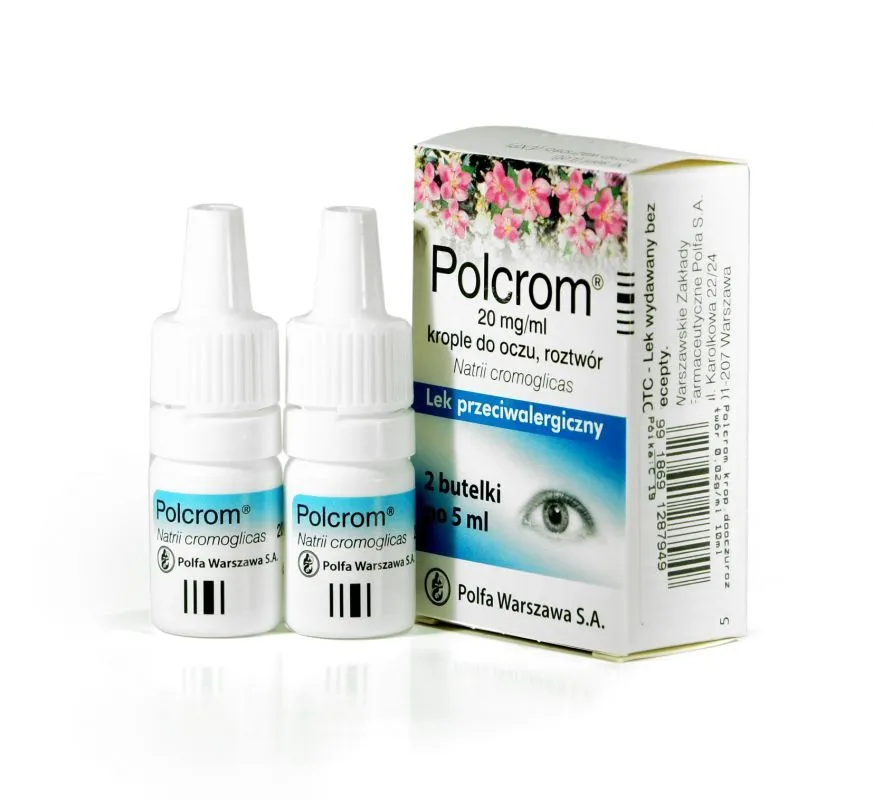
Table of Contents
Patient Information Leaflet
POLCROM, 20 mg/ml, eye drops, solution
Sodium cromoglicate
Please read all of this leaflet carefully before using the medicine, as it contains important information for you.
This medicine should always be used exactly as described in this patient leaflet or as directed by your doctor or pharmacist.
- Keep this leaflet, as you may need to read it again.
- If you need advice or further information, please consult your pharmacist.
- If you experience any side effects, including any possible side effects not listed in this leaflet, tell your doctor or pharmacist. See section 4.
- If your symptoms do not improve or if you feel worse, consult your doctor.
Contents of the leaflet
- What Polcrom is and what it is used for
- Important information before using Polcrom
- How to use Polcrom
- Possible side effects
- How to store Polcrom
- Contents of the pack and other information
1. What Polcrom is and what it is used for
Polcrom is an anti-allergic medicine containing sodium cromoglicate. It inhibits the release of histamine and other substances involved in allergic reactions (so-called cellular mediators). As a result, allergic reactions are prevented. The medicine is very well tolerated because the pH of the eye drops is the same as that of natural tears.
Polcrom is used:
- in allergic conjunctivitis and keratitis (including vernal and seasonal forms).
2. Important information before using Polcrom
When not to use Polcrom
- if the patient is allergic to sodium cromoglicate or any of the other ingredients of this medicine (listed in section 6).
Warnings and precautions
Before starting treatment with Polcrom, discuss this with your doctor or pharmacist.
Polcrom and other medicines
Tell your doctor or pharmacist about all medicines you are currently using, have recently used, or plan to use.
No interactions between Polcrom and other medicines are expected.
Pregnancy and breastfeeding
If you are pregnant, breastfeeding, think you may be pregnant, or are planning to have a baby, you should consult your doctor or pharmacist before using this medicine.
Pregnancy
This medicine may be used during pregnancy only if clearly necessary.
Breastfeeding
It is not known whether sodium cromoglicate passes into human milk. However, caution should be exercised, although it is unlikely that the medicine passes into breast milk and causes adverse effects in a breastfed infant.
Driving and operating machinery
Sodium cromoglicate does not affect the ability to drive or operate machinery. However, as with other eye medicines, temporary visual disturbances (transient blurred vision) may occur after instillation.
Polcrom contains benzalkonium chloride and phosphates
The medicine contains 0.05 mg of benzalkonium chloride per ml of solution.
Benzalkonium chloride may be absorbed by soft contact lenses and may change their colour. Contact lenses must be removed before instillation and at least 15 minutes should be waited before reinserting them.
Benzalkonium chloride may also cause eye irritation, especially in patients with dry eye syndrome or corneal disorders (the transparent layer at the front of the eye). If abnormal eye sensations, stinging or eye pain occur after using the medicine, contact your doctor.
The medicine contains 2.30 mg of phosphates per ml of solution.
In patients with severe damage to the transparent front part of the eye (cornea), phosphates may very rarely cause corneal clouding during treatment due to calcium accumulation.
3. How to use Polcrom
This medicine should always be used exactly as described in this patient information leaflet or as directed by a
physician or pharmacist. If in doubt, consult your doctor or pharmacist.
Dosage
- Instill 1 or 2 drops into the conjunctival sac four times daily at regular intervals.
Note:
- Treatment should be started during the symptom-free period before exposure to the allergen and continued throughout the entire season.
- This medicine must be used regularly over a prolonged period.
Method of administration
This medicine is intended for external use only – locally into the conjunctival sac.
Do not let the dropper tip touch the eye, eyelid, surrounding areas of the eye, or any other surface. This may lead to
contamination of the drops. Using contaminated drops may result in serious complications, including potential loss of vision.
- Wash hands thoroughly before instilling the drops.
- Remove the cap.
- Tilt the head backward. Gently pull down the lower eyelid with a clean finger to form a "pocket" between the eyeball and the eyelid; the drop should be placed into this pocket.
- Instill the medicine into the eye, preferably in front of a mirror to ensure proper administration. If the drop misses the eye, instill another one.
- Gently press with a finger on the inner corner of the eye near the nose and close the eye. Do not blink or open the eye for approximately 2 minutes to allow absorption of the medicine. This helps prevent the medicine from draining into the systemic circulation.
- If treating both eyes, repeat the above procedure to instill drops into the second eye.
- Afterwards, wash hands to remove any residual medicine and close the bottle.
Missed dose of Polcrom
- If a dose is missed, instill it as soon as possible.
- If it is almost time for the next dose, skip the missed dose and continue with the regular dosing schedule.
- Do not instill a double dose to make up for a missed dose.
Discontinuation of Polcrom
If you have any further questions about the use of this medicine, consult your doctor or pharmacist.
4. Possible adverse reactions
Like all medicines, this medicine can cause adverse reactions, although not everyone experiences them.
Transient burning or stinging of the conjunctiva may occur infrequently. Other symptoms of local
irritation have been reported rarely.
In patients with significantly damaged anterior transparent layer of the eye (cornea), corneal opacities
due to calcium deposits have been very rarely observed during treatment.
Reporting of adverse reactions
If any adverse reactions occur, including any adverse reactions not listed in this leaflet, inform your
doctor, pharmacist or nurse. Adverse reactions can be reported directly to the Department for Monitoring Adverse Reactions of Medicinal Products at the Office for Registration of Medicinal Products, Medical Devices and Biocidal Products
Al. Jerozolimskie 181C
02-222 Warsaw
Tel.: +48 22 49 21 301
Fax: +48 22 49 21 309
Website: https://smz.ezdrowie.gov.pl
Adverse reactions can also be reported to the marketing authorization holder.
Reporting adverse reactions helps provide more information on the safety of this medicine.
5. How to store Polcrom medicine
Keep out of the sight and reach of children.
Store below 25 °C.
Keep the bottle tightly closed in the outer packaging.
Do not use this medicine after the expiry date stated on the packaging.
The expiry date refers to the last day of the stated month.
After first opening the bottle, do not use the drops for longer than 4 weeks.
Medicines must not be disposed of via the sewage system or household waste. Ask a pharmacist how to dispose of medicines no longer in use. This will help protect the environment.
6. Contents of the pack and other information
What Polcrom contains
- The active substance is sodium cromoglicate. Each ml of solution contains 20 mg of sodium cromoglicate.
- The other ingredients are: sorbitol; disodium phosphate dodecahydrate; monosodium dihydrogen phosphate monohydrate; edetate disodium; sodium chloride; benzalkonium chloride, solution; purified water.
What Polcrom looks like and contents of the pack
Polcrom is a sterile eye drop solution. The pack contains 2 polyethylene bottles with a capacity of 5 ml, in a cardboard box.
Marketing Authorisation Holder
Zakłady Farmaceutyczne POLPHARMA S.A.
ul. Pelplińska 19, 83-200 Starogard Gdański
tel. + 48 22 364 61 01
Manufacturer
Jadran-Galenski Laboratorij d.d.
Svilno 20, 51000 Rijeka
Croatia