Phenazolinum
Poland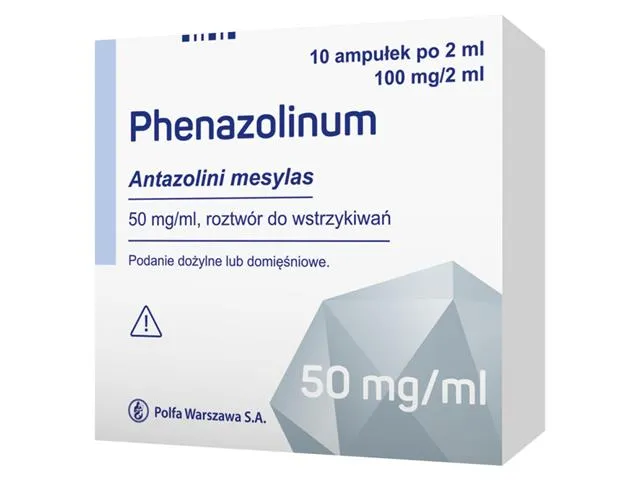
Table of Contents
Package leaflet: Information for the patient
PHENAZOLINUM, 50 mg/ml, solution for injection
Antazolini mesylas
Please read this leaflet carefully before using the medicine, as it contains important information for the patient.
- Keep this leaflet for future reference.
- If you have any questions, consult your doctor or pharmacist.
- This medicine has been prescribed for a specific individual. Do not pass it on to others. The medicine may harm others, even if their symptoms are the same.
- If any adverse reactions occur, including any adverse reactions not listed in this leaflet, inform your doctor or pharmacist. See section 4.
Table of contents of the leaflet
- What Phenazolinum is and what it is used for
- Important information before using Phenazolinum
- How to use Phenazolinum
- Possible side effects
- How to store Phenazolinum
- Contents of the pack and other information
1. What Phenazolinum is and what it is used for
Phenazolinum contains antazoline, which is an antihistamine. It inhibits allergic symptoms, particularly those related to histamine release, and also has antiarrhythmic properties.
The medicine is used:
- as an adjunct in acute allergic conditions, including anaphylactic shock in combination with adrenaline,
- in paroxysmal supraventricular arrhythmias, including tachyarrhythmia in atrial fibrillation, unresponsive to standard antiarrhythmic treatment.
2. Important information before using Phenazolinum
When not to use Phenazolinum
- if the patient is allergic to antazoline mesilate or any of the other ingredients of this medicine (listed in section 6),
- if the patient has glaucoma,
- in children under 12 years of age.
Warnings and precautions
Before starting treatment with Phenazolinum, consult your doctor or pharmacist.
Avoid using antazoline in patients with epilepsy due to reports of seizures occurring during treatment with antihistamines.
Caution is advised when using antazoline in patients with arterial hypertension, established cardiac arrhythmias, diabetes mellitus, hyperthyroidism, and benign prostatic hyperplasia.
Antazoline should be avoided if the patient is taking monoamine oxidase inhibitors (MAOIs) or cholinolytic drugs (phenothiazine neuroleptics, hydroxyzine, tricyclic antidepressants).
Concomitant use of antazoline and central nervous system depressants, as well as alcohol consumption, may result in additive effects and cause dangerous symptoms.
Children
This medicine must not be used in children under 12 years of age.
Phenazolinum and other medicines
Inform your doctor or pharmacist about all medicines the patient is currently taking or has recently taken, as well as any medicines the patient plans to use.
The action and toxicity of antazoline are increased by concomitant use of barbiturates, monoamine oxidase inhibitors (MAOIs), tricyclic antidepressants, noradrenaline, adrenaline, and alcohol.
Antazoline reduces the effectiveness of phenytoin, oral anticoagulants, and steroids.
Pregnancy and breastfeeding
If the patient is pregnant or breastfeeding, suspects she may be pregnant, or is planning to become pregnant, she should consult a doctor or pharmacist before using this medicine.
This medicine may be used during pregnancy only if, in the opinion of the physician, the benefit to the mother outweighs the potential risk to the fetus.
Breastfeeding must not be performed during treatment with antazoline.
Driving and operating machinery
This medicine may impair psychophysical performance; therefore, driving vehicles or operating machinery should be avoided during treatment.
Phenazolinum contains sodium
The medicine contains less than 1 mmol (23 mg) of sodium per 2 ml of solution, meaning the medicine is considered "sodium-free".
3. How to use Phenazolinum
This medicine should always be used as directed by a physician or pharmacist. In case of doubt,
consult a physician or pharmacist.
Each ampoule contains 100 mg of antazoline mesylate.
Allergic reactions
Adults
Intramuscularly, 200 mg to 300 mg (2 to 3 ampoules) per day.
Adolescents over 12 years of age
Single dose, intramuscularly, 50 mg to 100 mg (half to one ampoule).
Atrial fibrillation attack
Adults
Administer intravenously under strict monitoring of arterial blood pressure and cardiac function (ECG), at a dose of 100 mg to 300 mg (1 to 3 ampoules) over 3–10 minutes. Injections should be discontinued once sinus rhythm is restored.
Higher doses should be administered in an intensive care unit.
Instructions for opening the ampoule
Before opening the ampoule, ensure that all the solution is in the lower part of the ampoule.
Gently shake the ampoule or tap it with your finger to help the solution flow down.
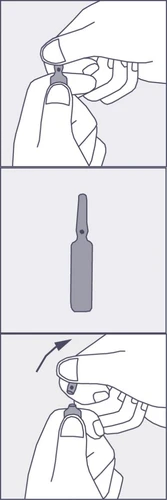
Each ampoule has a coloured dot (see Figure 1) indicating the score line located beneath it.
- To open the ampoule, hold it vertically with both hands, with the coloured dot facing towards you – see Figure 2. The upper part of the ampoule should be held so that the thumb is positioned above the coloured dot.
- Press according to the arrow shown in Figure 3. Ampoules are intended for single use only and should be opened immediately before use. Any unused portion of the product must be destroyed in accordance with applicable regulations. Figure 1 Figure 2 Figure 3
Use of a higher than recommended dose of Phenazolinum
Increased difficulty in breathing leading to respiratory depression, disturbances of consciousness, coma, decreased body temperature (in children), tremors, and convulsions may occur. Treatment is symptomatic.
4. Possible adverse reactions
Like all medicines, this medicinal product can cause adverse reactions, although not everybody will experience them.
Antazoline may cause gastrointestinal disturbances (nausea, vomiting, diarrhoea),
increased blood pressure, cardiac rhythm disturbances, weakness, drowsiness, fatigue, concentration disturbances, restlessness.
Rarely, haemolytic anaemia, presence of haemoglobin in urine (red discolouration of urine), and acute renal failure may occur as a result of immunological disturbances following antazoline.
Mental confusion, motor coordination disturbances, dryness of the oral mucosa, visual disturbances, and difficulty in urination may also occur.
Reporting of adverse reactions
If any adverse reactions occur, including any adverse reactions not listed in this leaflet, inform your doctor or pharmacist. Adverse reactions can be reported directly to the Department of Monitoring of Adverse Drug Reactions at the Office for Registration of Medicinal Products, Medical Devices and Biocidal Products
Al. Jerozolimskie 181C
02-222 Warsaw
Tel.: +48 22 49 21 301
Fax: +48 22 49 21 309
Website: https://smz.ezdrowie.gov.pl
Adverse reactions can also be reported to the marketing authorisation holder.
Reporting adverse reactions helps to provide more information on the safety of the medicine.
5. How to store Phenazolinum
Store below 25°C. Do not freeze.
Keep in the original packaging to protect from light.
Keep the medicine out of the sight and reach of children.
Do not use this medicine after the expiry date stated on the packaging. The expiry date refers to the last day of the stated month.
The marking on the packaging following the abbreviation EXP indicates the expiry date, and following the abbreviation Lot indicates the batch number.
Medicines must not be disposed of via wastewater or household waste. Ask your pharmacist how to dispose of medicines no longer required. Such measures help protect the environment.
6. Contents of the package and other information
What the medicine Phenazolinum contains
- The active substance is antazoline mesilate. Each ml of solution contains 50 mg of antazoline mesilate.
- Other ingredients: disodium edetate, calcium sodium edetate, water for injections.
One ampoule (2 ml solution) contains 100 mg of antazoline mesilate.
What Phenazolinum looks like and contents of the pack
Ampoules made of colourless glass, in a PVC insert within a cardboard box.
10 ampoules of 2 ml each
Marketing Authorisation Holder and Manufacturer
Zakłady Farmaceutyczne POLPHARMA S.A.
ul. Pelplińska 19, 83-200 Starogard Gdański
tel. + 48 22 364 61 01