Perazin 25 mg
Poland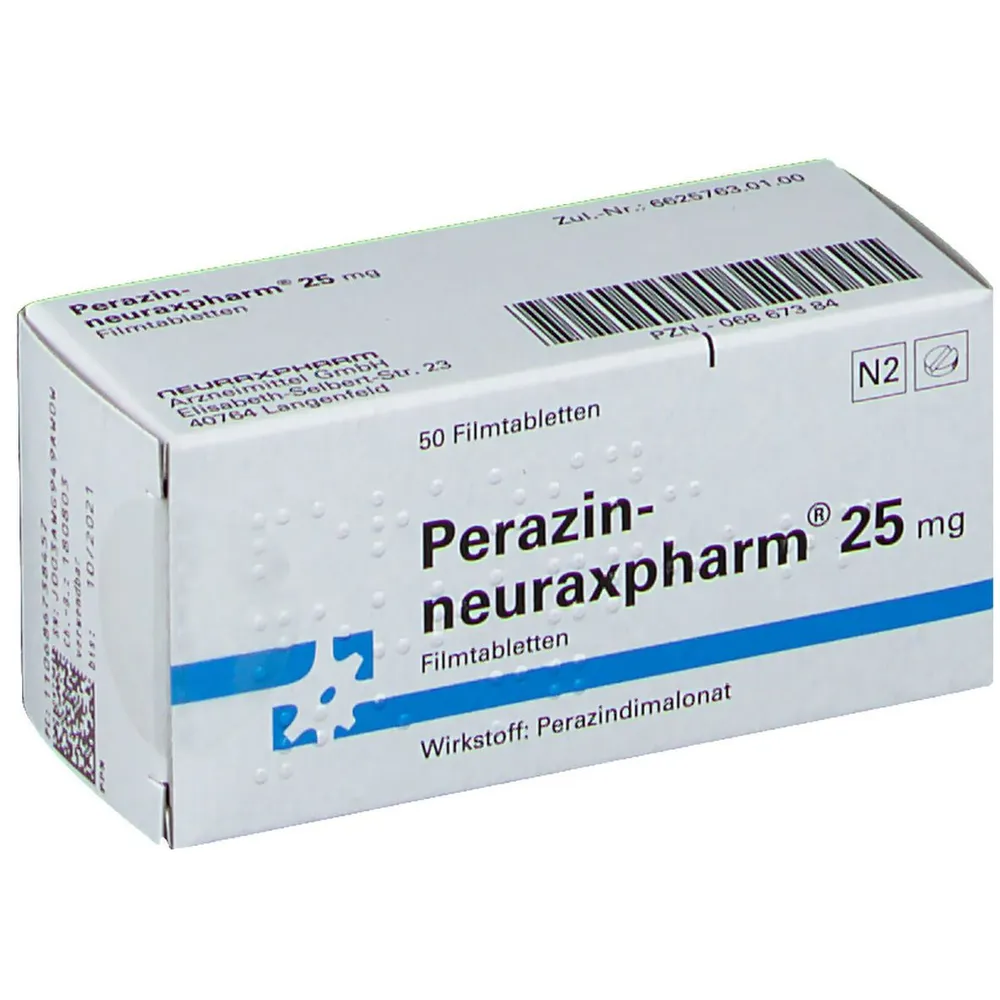
Table of Contents
- Package leaflet: Information for the patient
- 1. What Perazin 25 mg and Perazin 100 mg are and what they are used for
- 2. Important information before taking Perazin 25 mg and Perazin 100 mg
- 3. How to use Perazin 25 mg and Perazin 100 mg
- 4. Possible adverse reactions
- 5. How to store Perazin 25 mg and Perazin 100 mg
- 6. Contents of the pack and other information
Package leaflet: Information for the patient
PERAZIN 25 mg
25 mg, tablets
Perazinum
PERAZIN 100 mg
100 mg, tablets
Perazinum
Please read carefully all of this leaflet before taking the medicine, because it contains
important information for the patient.
- Keep this leaflet, so that you can read it again if necessary.
- If you have any doubts, please consult your doctor, pharmacist, or nurse.
- This medicine has been prescribed for a specific individual. Do not pass it on to others. The medicine may harm another person, even if their symptoms are the same.
- If the patient experiences any adverse effects, including any not listed in this leaflet, inform your doctor, pharmacist, or nurse. See section 4.
Table of contents of the leaflet
- What Perazin 25 mg and Perazin 100 mg are and what they are used for
- Important information before taking Perazin 25 mg and Perazin 100 mg
- How to take Perazin 25 mg and Perazin 100 mg
- Possible side effects
- How to store Perazin 25 mg and Perazin 100 mg
- Contents of the pack and other information
1. What Perazin 25 mg and Perazin 100 mg are and what they are used for
The active substance in Perazin 25 mg and Perazin 100 mg is perazine, which has antipsychotic and sedative effects, and reduces hallucinations and delusions.
Indications for use include various forms of schizophrenia and acute psychotic disorders (including catatonic forms) associated with psychomotor agitation, mania, and delusions.
Catatonia is a syndrome characterized by motor disturbances, manifesting either as slowing down or complete suppression of movements, or as sudden psychomotor agitation.
2. Important information before taking Perazin 25 mg and Perazin 100 mg
When not to use Perazin 25 mg or Perazin 100 mg
- if the patient is allergic to perazine or any of the other ingredients of this medicine (listed in section 6), or to other antipsychotic medicines, particularly phenothiazine derivatives,
- if the patient has a history of neuroleptic malignant syndrome,
- in case of severe bone marrow or blood cell damage,
- if the patient is in a comatose state,
- during pregnancy and breastfeeding,
- in case of acute intoxication with any of the following: hypnotics, opioids, other neuroleptics, sedatives, antidepressants, or alcohol,
- if the patient has prolactin-dependent tumours, due to increased prolactin secretion caused by perazine,
- in case of liver failure,
- if the patient suffers from depressive states.
Consult your doctor, even if the above warnings relate to conditions from the past.
Warnings and precautions
Before starting treatment with Perazin 25 mg or Perazin 100 mg, discuss it with your doctor, pharmacist, or nurse.
In case of impaired liver function, doses should be appropriately reduced (see section 3).
After administration of maximum doses, severe liver damage may occur.
Exercise caution in patients with renal insufficiency, as phenothiazine derivatives may cause hypotension.
Particular caution is required when treating patients with perazine who have:
- reduced white blood cell count (leukopenia) or other blood-forming system disorders,
- a history of myocardial damage,
- severe hypotension, sudden drop in blood pressure upon rapid change from lying to standing position (orthostatic hypotension),
- a history of seizures,
- Parkinson's disease,
- narrow-angle glaucoma,
- urinary retention, pyloric stenosis, or prostate hypertrophy,
- excessive mobility with involuntary movements or reduced mobility, muscle stiffness, and tremors (extrapyramidal system disorders),
- movement disorders, including choreic movements (dyskinesias),
- myasthenia gravis (characterized by rapid fatigue and weakness of skeletal muscles),
- active peptic ulcer disease and chronic liver diseases,
- pyloric stenosis,
- hyperthyroidism,
- pheochromocytoma,
- impaired blood cell formation (hematopoiesis),
- acute anemia,
- breast tumours.
During treatment with perazine, the following is necessary:
- continuous monitoring of blood glucose levels in diabetic patients,
- monitoring of cardiovascular function: blood pressure control and observation of possible cardiac arrhythmias; frequent blood pressure measurements and ECG examinations should be performed for this purpose; this is particularly important in elderly patients; ECG monitoring is recommended in patients with heart diseases or defects,
- liver function tests (laboratory blood tests) at the beginning of treatment and then after 6 months.
If neuroleptic malignant syndrome is suspected, immediate discontinuation of the medicine and prompt consultation with a doctor are recommended. Neuroleptic malignant syndrome, which occurs in isolated cases, is characterized, among others, by elevated body temperature up to 40°C and muscle rigidity.
Reduction of dose or discontinuation of the medicine and immediate blood tests are recommended if the following occur after administration of the medicine:
- changes in blood picture (reduced number of leukocytes, reduced number of platelets),
- nosebleeds,
- disturbances of consciousness accompanied by illusions, visual, auditory, tactile, and other hallucinations (delirium),
- depression,
- skin changes resembling urticaria or irritation,
- increased liver enzyme activity and jaundice.
If a significant decrease in leukocyte count occurs, or changes in peripheral blood smear are observed, the doctor may decide to discontinue perazine treatment and prescribe another medicine.
During long-term treatment with perazine, blood tests should be performed every 6 months.
If movement disorders (early dyskinesia or parkinsonism symptoms) such as choreic movements, involuntary movements, excessive mobility or reduced mobility, stiffness, and muscle tremors occur, the doctor may recommend dose reduction or initiation of anti-parkinsonian treatment.
During perazine treatment, cases of photosensitivity have been reported. Avoid intense sunlight and reduce light sensitivity by using protective creams containing ultraviolet (UV) radiation filters.
Perazine may cause skin allergic reactions.
Children and adolescents
There are insufficient data to assess the safety of the medicine in children and adolescents under 16 years of age; therefore, perazine is intended exclusively for adult treatment.
Elderly patients
Elderly patients should receive perazine doses reduced by half.
Perazin 25 mg or Perazin 100 mg and other medicines
Inform your doctor or pharmacist about all medicines currently taken or recently used, as well as any medicines the patient plans to use.
Administration of perazine together with:
- levodopa results in mutual neutralization of their effects,
- cimetidine increases perazine availability in the body,
- lithium carbonate increases the risk of nervous system damage and elevated blood glucose levels,
- beta-blocking agents (lower blood pressure) may lead to excessive drop in blood pressure,
- anticholinergic drugs (atropine, trihexyphenidyl) increases the risk of delirium and reduces antipsychotic efficacy,
- ethanol, hypnotics, and sedatives increases sedative effects and risk of respiratory complications (respiratory centre paralysis),
- anticonvulsant drugs (e.g. phenytoin, carbamazepine) reduces perazine's antipsychotic effect and weakens anticonvulsant action,
- oral anticoagulants weakens anticoagulant effect,
- MAO inhibitors and contraceptive agents results in reduced sedative effect of perazine and intensification of its adverse effects,
- antidiabetic drugs reduces their efficacy,
- narcotic analgesics and other analgesics and antipyretics intensifies their analgesic and sedative effects,
- tricyclic antidepressants (TCA, e.g. imipramine, amitriptyline) results in weaker drug effects (mutual inhibition of drug uptake by tissues occurs),
- selective serotonin reuptake inhibitors (SSRI, e.g. fluoxetine, fluvoxamine, sertraline) causes mutual inhibition of drug uptake by tissues and significant increase in perazine blood concentration,
- drugs impairing bone marrow function (myelotoxic drugs) such as phenylbutazone, aminophenazone, chloramphenicol, increases the risk of bone marrow dysfunction and blood count abnormalities.
False results in pregnancy tests have been observed during perazine therapy.
Use of Perazin 25 mg and Perazin 100 mg with alcohol
During treatment with perazine, the patient should not consume products containing alcohol.
Pregnancy and breastfeeding
If the patient is pregnant or breastfeeding, suspects she may be pregnant, or plans to have a child, she should consult her doctor or pharmacist before using this medicine.
Perazine crosses the placental barrier; therefore, its use in pregnant women is contraindicated.
Perazine passes into breast milk. If perazine treatment is necessary, breastfeeding should be discontinued.
Driving and operating machinery
The medicine may significantly impair psycho-physical performance. During treatment with perazine, do not drive vehicles or operate machinery.
Perazin 25 mg contains lactose
If the patient has previously been diagnosed with intolerance to certain sugars, inform the doctor before taking the medicine.
3. How to use Perazin 25 mg and Perazin 100 mg
This medicine should always be taken exactly as directed by the physician or pharmacist. In case of doubt,
consult your physician or pharmacist.
This medicine is taken orally.
Initially, a dose of 50 to 100 mg per day should be used, gradually increasing in the further course of treatment
to 300 to 600 mg per day in divided doses. The maximum therapeutic dose is 800 mg per day in divided doses.
The maintenance dose ranges from 75 to 300 mg per day.
Outpatient treatment should be initiated with the lowest effective doses, which may then be increased until
the desired therapeutic response is achieved.
Sudden changes in dosage are not recommended, as they increase the risk of adverse reactions.
Maximum antipsychotic effect is achieved after one to three weeks of treatment.
Patients with renal impairment
Dosage adjustment is not necessary in patients with renal impairment.
Patients with hepatic impairment
In patients with impaired liver function, a reduced dose of perazine is recommended. A half-adult dose is advised,
and in cases of severe hepatic impairment, treatment should be discontinued.
Elderly patients
Elderly patients should receive reduced doses of the medicine. A half-adult dose is recommended. Such dosing
usually ensures the desired therapeutic effect in elderly patients.
Use in children and adolescents
There is insufficient data available to assess the safety of perazine in children and adolescents under 16 years of age;
therefore, perazine is intended exclusively for use in adults.
Use of a higher than recommended dose of Perazin 25 mg or Perazin 100 mg
Symptoms
Accidental or intentional overdose (ingestion of several or even tens of grams of perazine) typically manifests as
difficulty speaking, lack of motor coordination, visual disturbances, muscle tremors, confusion, cardiac and
circulatory arrest, shortness of breath, apnea, and disturbances in thermoregulation (the ability to maintain a constant body temperature).
Management in case of overdose
If a significantly higher than recommended dose has been taken, seek immediate advice from a physician or pharmacist.
Missed dose of Perazin 25 mg or Perazin 100 mg
Take the missed dose as soon as possible, unless it is almost time for the next scheduled dose. Do not take a double dose to make up for a missed dose.
Discontinuation of Perazin 25 mg or Perazin 100 mg
Treatment of psychotic disorders is long-term. After satisfactory improvement has been achieved, the dose should not be reduced too quickly.
Doses should be tapered gradually over several to several months. Discontinuation of the medicine may only occur under medical supervision and strictly according to the physician's instructions.
If you have any further questions about the use of this medicine, consult your physician, pharmacist, or nurse.
4. Possible adverse reactions
Like all medicines, this medicine can cause adverse reactions, although not everyone will experience them.
If malignant neuroleptic syndrome occurs, characterised by an increase in body temperature to 40°C and muscular rigidity accompanied by elevated blood levels of myoglobin and creatine kinase activity, immediate medical advice should be sought.
Very common (in 1 out of 10 patients):
galactorrhea
Common (in 1 to 10 out of 100 patients):
intraocular pressure changes, nasal mucosal swelling, constipation, difficulty in urination, weight gain, dryness of oral mucous membranes, increased thirst, sexual dysfunction (e.g. erectile dysfunction, ejaculation disorders).
Uncommon (in 1 to 10 out of 1,000 patients):
movement disorders (dyskinesias, parkinsonism syndrome) manifesting as choreiform movements, involuntary movements, excessive mobility or reduced mobility, muscle stiffness and tremor, sleep disturbances, general restlessness, increased occurrence of nightmares, disorientation and mental dullness.
Rare (in 1 to 10 out of 10,000 patients):
sensory disturbances in hands and feet, seizures, photosensitivity, severe light sensitivity reactions associated with pigment deposition, vascular collapse, gynecomastia in males, disturbances of consciousness accompanied by illusions, visual, auditory, tactile and other hallucinations, disturbances of thinking and memory.
Very rare (in less than 1 out of 10,000 patients):
oedema, decreased granulocyte levels in blood, extrapyramidal symptoms manifesting as inability to remain still in a seated position, often associated with depression usually occurring after a manic phase of psychosis, malignant neuroleptic syndrome occurring in isolated cases, breathing difficulties, gastrointestinal disorders, nausea, necrotising colitis leading to intestinal necrosis, skin changes of a lupus erythematosus type (erythema), biliary stasis (cholestasis).
Frequency not known
false positive pregnancy test results, cardiac rhythm disturbances, hypotension, decreased white blood cell count, decreased platelet count, skin reactions such as urticaria or irritation, nosebleeds, increased liver enzyme activity and jaundice, menstrual disorders, breast enlargement in females.
Reporting of adverse reactions
If any adverse reactions occur, including any possible adverse reactions not listed in the leaflet, inform a doctor, pharmacist or nurse. Adverse reactions can be reported directly to the Department of Monitoring of Adverse Drug Reactions at the Office for Registration of Medicinal Products, Medical Devices and Biocidal Products:
Aleje Jerozolimskie 181C, 02-222 Warsaw, tel.: +48 22 49 21 301, fax: +48 22 49 21 309,
e-mail: [email protected]
Adverse reactions can also be reported to the marketing authorisation holder.
Reporting adverse reactions helps to provide more information on the safety of the medicine.
5. How to store Perazin 25 mg and Perazin 100 mg
Keep this medicine out of sight and reach of children.
Store below 25°C. Keep in the original packaging.
Do not use this medicine after the expiry date stated on the packaging. The expiry date refers to the last day of the stated month.
Medicines must not be disposed of via wastewater or household waste. Ask your pharmacist how to dispose of medicines no longer required. Such measures help protect the environment.
6. Contents of the pack and other information
What Perazin 25 mg or Perazin 100 mg contains
- The active substance is perazine. One tablet contains 25 mg or 100 mg of perazine.
- Other ingredients (excipients) are:
Perazin 25 mg
monohydrate lactose, potato starch, methylcellulose, colloidal anhydrous silica,
sodium carboxymethyl starch, magnesium stearate.
Perazin 100 mg
heavy magnesium carbonate, povidone K-30, sodium croscarmellose, magnesium stearate.
What Perazin 25 mg or Perazin 100 mg looks like and contents of the pack
Perazin 25 mg is an uncoated tablet, yellow, biconvex, with uniform, smooth surface.
One pack of Perazin 25 mg contains 20, 30 or 50 tablets.
Perazin 100 mg is an uncoated tablet, yellow, oval-shaped, biconvex, with smooth surface and a division line.
One pack of Perazin 100 mg contains 30 tablets.
Marketing Authorisation Holder and Manufacturer
„PRZEDSIĘBIORSTWO PRODUKCJI FARMACEUTYCZNEJ HASCO-LEK” S.A.
51-131 Wrocław, ul. Żmigrodzka 242 E
Medicines Information
tel. (22) 742 00 22
e-mail: [email protected]