Penicillin procaine l tzf
Poland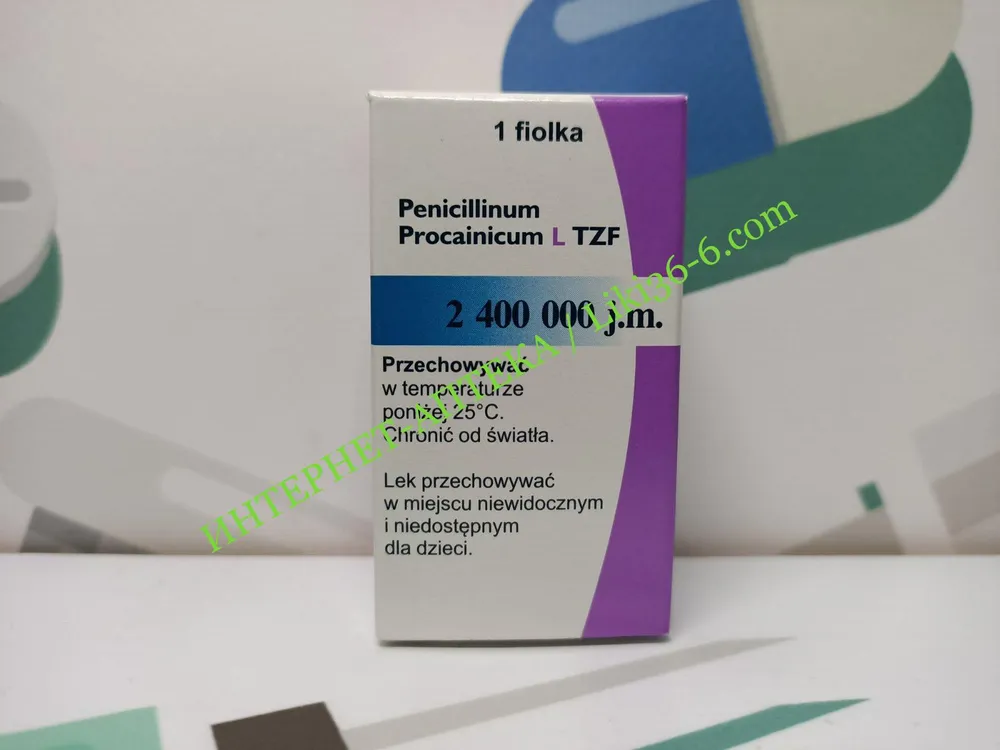
Table of Contents
Package leaflet: Information for the patient
Penicillinum Procainicum L TZF, 1 200 000 IU, powder for the preparation of a suspension for injection
Penicillinum Procainicum L TZF, 2 400 000 IU, powder for the preparation of a suspension for injection
Benzylpenicillinum procainicum
Please read all of this leaflet carefully before using the medicine, as it contains
important information for the patient.
Keep this leaflet, as you may need to read it again.
If you have any doubts, please consult your doctor.
This medicine has been prescribed for a specific individual. Do not pass it on to others. The medicine may harm another person, even if their symptoms are the same.
If you experience any adverse effects, including any not listed in this leaflet, inform your doctor. See section 4.
Contents of the leaflet:
- What Penicillinum Procainicum L TZF is and what it is used for
- Important information before using Penicillinum Procainicum L TZF
- How to use Penicillinum Procainicum L TZF
- Possible side effects
- How to store Penicillinum Procainicum L TZF
- Contents of the package and other information
1. What is Penicillinum Procainicum L TZF and what is it used for
Penicillinum Procainicum L TZF contains benzylpenicillin procaine as the active substance, which is a natural penicillin. Benzylpenicillin exerts bactericidal activity against many species of Gram-negative and Gram-positive bacteria.
Penicillinum Procainicum L TZF is used in the treatment of infections that are or may be caused by bacteria sensitive to benzylpenicillin. This medicine is used to treat the following infections:
- Infections caused by streptococci and pneumococci, without bacteremia (blood infection), such as upper respiratory tract infections, lower respiratory tract infections (e.g. pneumonia – only caused by Streptococcus pneumoniae strains sensitive or moderately sensitive to penicillin), endocarditis (inflammation affecting the lining of the heart chambers and valves, as well as large blood vessels of the chest and foreign bodies in the heart), pericarditis (inflammation of the pericardium), scarlet fever, streptococcal skin and subcutaneous tissue infections (erysipelas);
- Acquired or congenital syphilis (caused by Treponema pallidum);
- Endemic treponematoses caused by Treponema pallidum endemicum (endemic syphilis, bejel), Treponema pallidum pertenue (pinta, yaws), Treponema pallidum carateum (pinta);
- Gonorrhoea without bacteremia – blood infection (caused by Neisseria gonorrhoeae – β-lactamase-negative strains);
- Mixed infections of the throat, lower respiratory tract, and genital organs caused by fusobacteria and spirochetes;
- Erysipeloid (caused by Erysipelothrix rhusiopathiae; a serious infectious and contagious disease of pigs and poultry);
- Anthrax (caused by Bacillus anthracis);
- Rat-bite fever (caused by Streptobacillus moniliformis, Streptobacillus minor);
- And for the prevention of diphtheria (caused by Corynebacterium diphtheriae) in combination with antitoxin.
2. Important information before using Penicillinum Procainicum L TZF
Before starting penicillin treatment, if indicated, a susceptibility test of the isolated microorganism causing the infection should be performed. Treatment may be initiated before the susceptibility results are available; however, once the antibiogram results are obtained, a change in therapy may be necessary.
When not to use Penicillinum Procainicum L TZF
Do not use this medicine if you are allergic (hypersensitive) to penicillin or other beta-lactam antibiotics, or to procaine.
Warnings and precautions
Before starting treatment with Penicillinum Procainicum L TZF, discuss the following with your doctor.
- If you have previously experienced an allergic reaction, regardless of the cause, including to any antibiotics belonging to the penicillin, cephalosporin, or other drug groups. Severe hypersensitivity reactions may occur in patients treated with penicillin, especially in those allergic to multiple allergens or suffering from asthma. If benzylpenicillin administration is necessary and the patient reports a history of allergic reactions (regardless of the triggering agent), the doctor should perform a skin sensitivity test.
- If you have kidney disease, your doctor may recommend appropriate monitoring tests to assess kidney function and adjust the dose accordingly. In patients with severe renal impairment, the doctor may consider reducing the dose, as benzylpenicillin concentrations in the central nervous system may lead to cerebral irritation, seizures, or coma.
- In elderly patients, the doctor will consider the proper functioning of the kidneys, liver, and heart. The doctor may order kidney function tests.
During treatment, you must inform your doctor immediately if:
- The first symptoms suggesting an allergic reaction occur (e.g. urticaria, skin itching, rash, breathing difficulties, or swelling of the face, lips, throat, or tongue), including anaphylactic shock (confusion, pallor, drop in blood pressure, sweating, reduced urine output, rapid breathing, weakness, and fainting). In such cases, discontinue the medicine and contact your doctor immediately.
- During treatment for syphilis, particularly early syphilis, headache, fever, and general malaise may occur. These may be symptoms of the Jarisch-Herxheimer reaction, which requires medical consultation. The occurrence of these symptoms during early syphilis treatment does not constitute a danger. In patients with late-stage disease and organ involvement, the Jarisch-Herxheimer reaction is very rare, but its occurrence at this stage may exacerbate the disease and lead to severe complications.
- Administration of antibiotics may lead to overgrowth of organisms resistant to the antibiotic used. If symptoms of fungal infections or new bacterial infections occur during penicillin treatment, discontinue the medicine and contact your doctor.
- Patients who develop diarrhoea during or shortly after antibiotic treatment should not self-treat but should consult a doctor. Do not use drugs that inhibit intestinal motility or have constipating effects. Penicillins are broad-spectrum antibiotics and may disrupt the normal intestinal bacterial flora.
This may allow overgrowth of Clostridium difficile, whose toxins cause clinical symptoms of pseudomembranous colitis. In case of severe, persistent diarrhoea and confirmed pseudomembranous colitis, the doctor will immediately discontinue penicillin and initiate appropriate treatment.
- In some patients, especially when a high single dose (4 800 000 IU) is administered, a sudden reaction to procaine may occur, known as Hoigne's syndrome. This syndrome manifests with psychiatric disturbances such as anxiety, disorientation, agitation, motor excitement, depression, restlessness, fear of death, behavioural disturbances, as well as weakness, seizures, and visual or auditory hallucinations. These symptoms usually resolve within approximately 15 to 30 minutes. A previous occurrence of Hoigne's syndrome is not a contraindication to re-administration of penicillin.
- Accidental intravascular injection of penicillin in the form of powder for preparation of a suspension for injection or other penicillin-containing products directly into an artery or into tissue adjacent to an artery may cause serious damage, including necrotizing myelitis with permanent paralysis, tissue necrosis requiring surgical removal and partial limb amputation, necrosis, and skin sloughing around the injection site. Intravenous administration may also cause serious complications: sudden pallor, purpura, cyanosis of the limbs, followed by blister formation, and severe swelling requiring surgical fasciotomy of the anterior and/or posterior compartments of the lower limb. These severe adverse effects and complications have been reported after injections administered into the buttocks, thighs, and deltoid area. They occur in infants and young children. Immediate consultation with an appropriate specialist is required if blood circulation is impaired proximally or distally to the injection site.
In cases where concomitant syphilis is suspected, serological tests should be performed monthly for at least four months.
If you are receiving penicillin, inform your doctor before blood tests, as penicillin may cause a false-positive Coombs test result, used in blood transfusions, anaemia detection, and bacterial infection testing.
In elderly patients, who are more susceptible to kidney dysfunction, the risk of adverse effects is increased; the doctor will assess the need for kidney function tests.
In patients receiving high doses of penicillin for prolonged periods, the doctor will usually recommend monitoring kidney, liver, and blood function.
Interaction of Penicillinum Procainicum L TZF with other medicines
Inform your doctor or pharmacist about all medicines you are currently taking, have recently taken, or plan to take.
In particular, inform your doctor if you are taking any of the following medicines:
- Probenecid (a medication used in gout);
- Other bacteriostatic antibiotics (e.g. tetracycline, chloramphenicol, erythromycin, sulfonamides);
- Oral contraceptives – during penicillin treatment, it is recommended to use an additional, non-hormonal method of contraception. To avoid unintended pregnancy, an additional non-hormonal contraceptive method should be used.
Pregnancy and breastfeeding
If you are pregnant, breastfeeding, suspect you may be pregnant, or are planning to have a child, consult your doctor before using this medicine.
Pregnancy
Consult your doctor before using this medicine.
This medicine may be administered to pregnant women only if clearly necessary.
Breastfeeding
Consult your doctor before using this medicine.
The medicine passes into breast milk in small amounts; therefore, caution should be exercised when administering benzylpenicillin to women during breastfeeding.
Driving and operating machinery
There is no data on the effect of this medicine on the ability to drive or operate machinery. However, in some patients, adverse effects may occur that impair the ability to drive.
3. How to use Penicillinum Procainicum L TZF
Penicillinum Procainicum L TZF should always be used according to the doctor's instructions. If in doubt, contact your doctor.
Penicillinum Procainicum L TZF is administered by a doctor or nurse. The dose depends on the severity of the infection, the type of microorganism causing the infection, the patient's age, and body weight.
Adults and children aged 4 years and older
In most infections, depending on severity, procaine penicillin is administered at doses ranging from 600 000 IU to 1 200 000 IU per day, divided into two doses.
Treatment for streptococcal infections should continue for at least 10 days.
Gonorrhoea – 4 800 000 IU per day. The penicillin dose should be divided into two parts and administered at two separate injection sites. Additionally, 1 g of probenecid should be administered orally.
Syphilis – 600 000 IU per day. In tertiary neurosyphilis – 2 400 000 IU per day, and 2.5 g of probenecid orally.
Warning! In severe infections, when high blood concentrations of the drug are required, intramuscular or intravenous administration of potassium or sodium benzylpenicillin is recommended.
Children under 4 years of age
Procaine penicillin is not recommended for children under 4 years of age.
Patients with renal impairment
In patients with severe renal impairment, the dose should be reduced according to creatinine clearance.
Method of administration
Procaine penicillin must be administered only by intramuscular injection.
Intramuscular injections of procaine penicillin must be performed with great care to avoid puncturing a blood vessel, intra-arterial injection, or damaging peripheral nerves or blood vessels. The penicillin suspension should be administered immediately after preparation. Inject with great caution to avoid direct injection into an artery or into tissue adjacent to nerves or arteries.
Accidental intravascular injection of penicillin in the form of powder for preparation of a suspension for injection or other penicillin-containing products directly into an artery or into tissue adjacent to an artery may cause severe neurovascular damage, including necrotizing transverse myelitis with permanent paralysis, tissue necrosis requiring surgical removal and partial limb amputation, necrosis, and skin sloughing around the injection site. These severe adverse effects have been reported after injections administered into the buttocks, thighs, and deltoid area. Other serious complications, possibly related to intravenous administration, include sudden pallor, purpura, cyanosis of the limbs (distally and proximally to the injection site), followed by blister formation, and severe swelling requiring surgical fasciotomy of the anterior and/or posterior compartments of the lower limb. These severe adverse effects and complications occur in infants and young children. Immediate consultation with an appropriate specialist is required if blood circulation is impaired proximally or distally to the injection site.
For instructions on preparing the suspension and pharmaceutical incompatibilities, see "Information intended exclusively for healthcare professionals" at the end of this leaflet.
If during treatment the patient feels that the effect of the medicine is too strong or too weak, they should consult their doctor.
Use of a higher than recommended dose of Penicillinum Procainicum L TZF
Since Penicillinum Procainicum L TZF is administered by a doctor or nurse, the likelihood of an incorrect dose being given is low.
If you have received an overdose, contact your doctor immediately or go to the nearest hospital emergency department. Bring the medicine in its original packaging so that medical staff can identify exactly which medicine was administered.
Missing a dose of Penicillinum Procainicum L TZF
Do not take a double dose to make up for a missed dose.
Stopping treatment with Penicillinum Procainicum L TZF
It is important to use the medicine exactly as prescribed. Do not stop treatment just because you feel better. If treatment is stopped too early, the infection may recur.
4. Possible adverse reactions
Like all medicines, Penicillinum Procainicum L TZF may cause adverse reactions, although they do not
occur in everyone.
Serious adverse reactions
Adverse reactions occurring rarely (in 1 to 10 out of 10,000 patients):
severe allergic reactions, including anaphylactic shock;
sudden difficulty in breathing, speaking or swallowing;
swelling of lips, tongue, face or neck;
severe dizziness or collapse, significant drop in blood pressure;
fever, chills, general malaise, headache (Jarisch-Herxheimer reaction; see also
"Warnings and precautions" in section 2).
Adverse reactions occurring with unknown frequency (frequency cannot be estimated from
available data):
- severe skin reactions (erythema multiforme, Stevens-Johnson syndrome, toxic epidermal necrolysis): blistering rash over the entire body, erosions in the mouth, eyes, genital organs and on the skin, red spots on the trunk, often with blisters in the center, rupturing giant blisters, peeling off large sheets of epidermis, weakness, fever and joint pain; seizures as severe toxic symptoms – observed in patients receiving high doses of penicillin and (or) in patients with severe renal impairment; severe, prolonged or bloody diarrhoea, abdominal pain, fever: may indicate a serious intestinal inflammation – pseudomembranous colitis;
- If any of the serious adverse symptoms described above occur, the medicine should be discontinued immediately and the attending physician should be informed without delay or the patient should go to the nearest hospital emergency department.
Other adverse reactions that may occur during treatment
Adverse reactions occurring rarely (in 1 to 10 out of 10,000 patients):
- reduction in certain types of white blood cells, thrombocytopenia, anaemia (shortened lifespan of red blood cells) – particularly observed in patients who have received high doses of the medicine for a prolonged period;
- muscle pain, joint pain;
- fever, chills.
Adverse reactions occurring very rarely (in less than 1 out of 10,000 patients):
- Candida fungal infections.
Adverse reactions with unknown frequency (frequency cannot be estimated from
available data):
- transient increase in blood urea and creatinine levels;
- transient increase in liver enzyme activity (alkaline phosphatase and aminotransferases);
- rash, urticaria, purpura (dark red rash, allergic vasculitis);
- pain at the injection site; repeated injections into the same muscle may lead to fibrosis and muscle atrophy;
- anxiety, disorientation, agitation, motor restlessness, depression, restlessness, fear of death, behavioural disturbances, weakness, seizures, visual and auditory hallucinations (Hoigne syndrome, see also "Warnings and precautions" in section 2).
Reporting of adverse reactions
If any adverse reactions occur, including any not listed in this leaflet, inform your doctor, pharmacist or nurse. Adverse reactions can be reported directly to the Department of Monitoring Adverse Drug Reactions of the Office for Registration of Medicinal Products, Medical Devices and Biocidal Products
Al. Jerozolimskie 181C, 02-222 Warsaw
Tel.: +48 22 49 21 301; fax: +48 22 49 21 309
e-mail: [email protected]
Adverse reactions can also be reported to the marketing authorization holder.
Reporting adverse reactions helps to provide more information on the safety of the medicine.
5. How to store Penicillinum Procainicum L
The medicine should be stored out of sight and reach of children.
Do not use the medicine after the expiry date stated on the packaging.
Store below 25 °C. Protect from light.
Do not use the medicine after the expiry date stated on the packaging. The expiry date refers to the last day of the specified month.
Medicines must not be disposed of via wastewater or household waste. Ask your pharmacist how to dispose of medicines no longer required. Such measures help protect the environment.
6. Contents of the packaging and other information
What Penicillinum Procainicum L TZF contains
The active substance is procaine benzylpenicillin lecithinated.
Penicillinum Procainicum L TZF, 1 200 000 IU
One vial contains 1 200 000 IU of lecithinated procaine benzylpenicillin.
Penicillinum Procainicum L TZF, 2 400 000 IU
One vial contains 2 400 000 IU of lecithinated procaine benzylpenicillin.
The medicine does not contain any other ingredients.
What Penicillinum Procainicum L TZF looks like and contents of the pack
Penicillinum Procainicum L TZF, 1 200 000 IU
White or almost white crystalline powder.
Penicillinum Procainicum L TZF, 2 400 000 IU
White or almost white crystalline powder.
Packaging: 1 vial with a capacity of 20 ml in a cardboard box.
Marketing Authorisation Holder and Manufacturer
Tarchomin Pharmaceutical Works "Polfa" Joint Stock Company
A. Fleminga Street 2
03-176 Warsaw
Telephone number: 22 811-18-14
For further information, please contact the representative of the Marketing Authorisation Holder.
Information intended exclusively for healthcare professionals
Please review the detailed information about this product (Summary of Product Characteristics), available on the website of the Office for Registration of Medicinal Products, Medical Devices and Biocidal Products.
Management in patients with hypersensitivity
Severe hypersensitivity reactions may occur in patients treated with penicillin, particularly in those who are allergic to multiple allergens or suffer from asthma. It is essential to determine whether the patient is allergic to penicillin, cephalosporins, or other drugs, and to obtain a history of any previous allergic reactions, regardless of their cause. The absence of reported hypersensitivity to β-lactam antibiotics in the patient's history does not rule out the possibility of such hypersensitivity.
If administration of benzylpenicillin is necessary, and the patient has a history of previous allergic reactions (regardless of the triggering agent), and a diagnostic test kit for hypersensitivity to this drug is available, a test dose should be performed according to the instructions for use of the diagnostic preparation. Performing a test dose using penicillin itself is not recommended, as administration of too high a dose may lead to anaphylactic shock or even patient death.
In the event of anaphylactic shock or angioedema, epinephrine should be administered first, followed by an antihistamine, and corticosteroids as the last step. Basic vital functions (respiration, pulse, blood pressure) should also be monitored.
Treatment of severe infections
In severe infections, when high drug concentrations in the blood are required, potassium or sodium benzylpenicillin should be administered intramuscularly or intravenously.
Infections caused by bacteria of the genus Streptococcus
When infection caused by bacteria of the genus Streptococcus is suspected, appropriate diagnostic tests should be performed, including antimicrobial susceptibility testing of the isolated microorganism responsible for the infection.
Pharmaceutical incompatibilities
Benzylpenicillin is inactivated in acidic and alkaline environments; it should not be mixed in the same syringe with other drugs.
Preparation of the suspension
To the vial containing 1,200,000 IU or 2,400,000 IU, add approximately 5 ml or 8 ml, respectively, of 0.9% sodium chloride solution or water for injections.
The procaine penicillin suspension should be administered immediately after preparation.