Oxydolor fast
Poland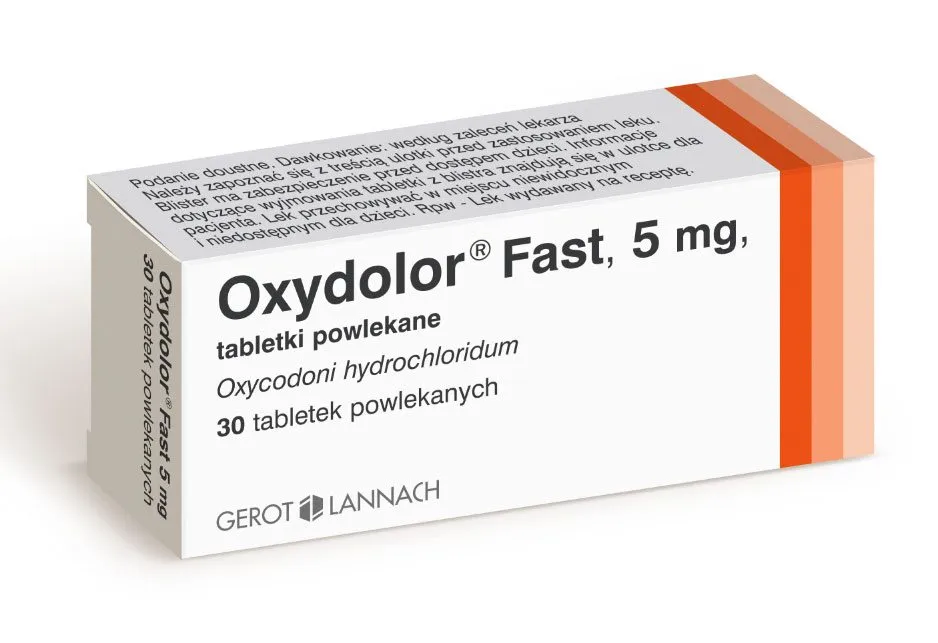
Table of Contents
Oxydolor Fast, 5 mg, film-coated tablets
Oxydolor Fast, 10 mg, film-coated tablets
Oxydolor Fast, 20 mg, film-coated tablets
Oxycodoni hydrochloridum
Please read this leaflet carefully before taking this medicine, as it contains important information for you.
- Keep this leaflet, as you may need to read it again.
- If you have any questions, please consult your doctor or pharmacist.
- This medicine has been prescribed for a specific individual. Do not pass it on to others. This medicine may harm others, even if their symptoms are the same.
- If you experience any side effects, including any not listed in this leaflet, inform your doctor or pharmacist. See section 4.
Contents of the leaflet
- What Oxydolor Fast is and what it is used for
- Important information before taking Oxydolor Fast
- How to take Oxydolor Fast
- Possible side effects
- How to store Oxydolor Fast
- Contents of the pack and other information
1. What Oxydolor Fast is and what it is used for
Oxydolor Fast is a strong analgesic medicine belonging to the opioid group.
Oxydolor Fast is used in adults and adolescents aged 12 years and older for the treatment of severe pain that can only be adequately managed with opioid analgesics.
2. Information before using Oxydolor Fast
When not to use Oxydolor Fast:
- if the patient is allergic to oxycodone hydrochloride, soy, peanuts or any of the excipients of this medicine listed in section 6
- if the patient has breathing disorders such as abnormally slow or shallow breathing ( respiratory depression )
- if the patient has abnormally high levels of carbon dioxide in the blood
- if the patient has chronic lung disease associated with airway obstruction (chronic obstructive pulmonary disease)
- if the patient has certain heart disorders known as pulmonary heart syndrome
- if the patient has asthma
- if the patient has a type of intestinal obstruction called paralytic ileus
- if the patient has acute and severe stomach pain or delayed gastric emptying
Warnings and precautions
Before starting treatment with Oxydolor Fast, discuss this with your doctor or
pharmacist
- in the case of elderly or weakened patients
- in case of severe impairment of lung, liver or kidney function
- in case of certain thyroid disorders (myxedema) or if the thyroid gland does not produce enough hormones (hypothyroidism)
- if the patient has adrenal gland disorders (adrenal glands not functioning properly), for example Addison's disease
- in case of prostate enlargement
- in case of a mental disorder caused by alcohol or other substance dependence
- in case of gallbladder disorders
- in case of pancreatitis, which may cause severe abdominal or back pain
- in case of difficulty or pain during urination
- if the doctor suspects paralytic ileus in the patient (a condition in which the intestines stop working)
- in case of inflammatory bowel disease
- in case of head injury with severe headache or discomfort – signs of increased intracranial pressure
- in case of low blood pressure or feeling faint when standing up
- in case of low blood volume (hypovolemia)
- in case of epilepsy or a tendency to seizures
- when taking MAO inhibitors (used in the treatment of depression or Parkinson's disease ) or if they have been taken within the last two weeks
Sleep-related breathing disorders
Oxydolor Fast may cause sleep-related breathing disorders such as sleep apnea (pauses in breathing during sleep) and associated hypoxemia (low blood oxygen levels). Symptoms may include breathing pauses during sleep, nocturnal awakenings due to breathlessness, difficulty maintaining sleep, or excessive daytime sleepiness. If the patient or another person observes these symptoms, contact a doctor. The doctor may consider reducing the dose.
The most serious risk associated with opioid overdose is shallow and slowed breathing (respiratory depression). This occurs most frequently in elderly and weakened patients. It may also lead to reduced blood oxygen levels, potentially causing fainting.
Tolerance, dependence and addiction
This medicine contains oxycodone, which is an opioid. It may cause dependence and/or addiction. If Oxydolor Fast is used for long-term treatment, tolerance to the medicine may develop. This means that increasing doses may be required to control pain. Do not change the dosage without consulting your doctor.
This medicine contains oxycodone, an opioid analgesic. Repeated use of opioid painkillers may lead to reduced effectiveness of the medicine (the patient's body becomes accustomed to it, known as tolerance). Repeated use of Oxydolor Fast may lead to dependence, misuse and addiction, which may result in life-threatening overdose. The risk of these adverse effects may be higher when higher doses are used for longer periods.
Dependence or addiction may cause the patient to lose control over how much medicine to take or how often to take it. The patient may feel a need to take the medicine even if it does not relieve pain.
The risk of dependence or addiction varies among individuals. The risk may be higher if:
- the patient or a family member has ever misused or been addicted to alcohol, prescription medicines or drugs ("addiction");
- the patient is a smoker;
- the patient has ever had mood disorders (depression, anxiety or personality disorder) or has been treated by a psychiatrist for other mental disorders.
If the patient experiences any of the following symptoms while taking Oxydolor Fast, this may indicate developing dependence or addiction:
- need to take the medicine longer than prescribed by the doctor;
- need to take a higher dose than recommended;
- using the medicine for reasons other than prescribed, e.g., "to calm down" or "to help fall asleep";
- repeated unsuccessful attempts to stop or reduce medicine use;
- feeling unwell after stopping the medicine and improvement after restarting (withdrawal effect).
If the patient observes any of these symptoms, they should contact their doctor to discuss the best treatment plan, including the appropriate time and safe method of discontinuing treatment (see section 3 "Stopping treatment with Oxydolor Fast").
Oxydolor Fast has addictive properties. If treatment is stopped abruptly, withdrawal symptoms may occur, such as yawning, dilated pupils, tearing, runny nose, tremors, sweating, anxiety, restlessness, seizures, insomnia or muscle pain. If the medicine is no longer needed, the doctor will gradually reduce the dose.
The doctor will assess the possible risks compared to the benefits of using this medicine.
Consult your doctor if you have any further questions on this matter.
The active substance of this medicine, oxycodone hydrochloride, like other potent opioids (strong painkillers), has potential for misuse. Psychological dependence may also develop. Oxydolor Fast should be used with particular caution in patients who have previously misused or currently misuse alcohol, drugs or medicines.
When high doses are used, increased sensitivity to pain (hyperalgesia) may occur, which does not respond to further increases in the dose of Oxydolor Fast. In such cases, the doctor will decide whether to reduce the dose or switch to another strong opioid analgesic.
If the patient is to undergo surgery, inform the doctor about taking Oxydolor Fast.
Contact a doctor if the patient develops severe upper abdominal pain radiating to the back, nausea, vomiting or fever, as these may be symptoms of pancreatitis or biliary tract inflammation.
Like other opioids, oxycodone may affect hormone production in the body (such as cortisol and sex hormones), especially when high doses are taken for prolonged periods.
Children
The safety and efficacy of Oxydolor Fast in children under 12 years of age have not been established. Therefore, use of Oxydolor Fast in this age group is not recommended.
Doping warning
Athletes should be aware that this medicine may cause a positive result in anti-doping tests.
Using Oxydolor Fast as a doping agent may pose a health risk.
Oxydolor Fast and other medicines
Tell your doctor or pharmacist about all medicines currently taken or recently taken, as well as any medicines the patient plans to take.
Concomitant use of Oxydolor Fast and sedative medicines such as benzodiazepines or related drugs increases the risk of drowsiness, breathing difficulties (respiratory depression), coma and may be life-threatening. Therefore, concomitant use should only be considered if other treatment methods are not possible.
If the doctor prescribes Oxydolor Fast together with sedative medicines, the dose and duration of concomitant use should be limited by the doctor.
Inform the doctor about all sedative medicines being taken and strictly follow the doctor's dosing instructions. It may be helpful to inform friends or relatives about the signs and symptoms listed above. If such symptoms occur, contact a doctor.
Adverse effects of Oxydolor Fast may occur more frequently or be more severe if used concomitantly with medicines affecting brain function or medicines used to treat allergies, motion sickness or vomiting. Adverse effects may include shallow and slowed breathing (respiratory depression), constipation, dry mouth or difficulty urinating.
Medicines affecting brain function:
- sleeping or sedative medicines (including benzodiazepines)
- medicines used to treat depression (e.g., paroxetine or amitriptyline), including MAO inhibitors (such as tranylcypromine, phenelzine, isocarboxazid, moclobemide or linezolid)
- medicines used to treat allergies, motion sickness or vomiting (antihistamines, antiemetics)
- medicines used for mental or psychiatric disorders (such as psychotropic medicines, phenothiazines or neuroleptics)
- medicines used to treat epilepsy, pain and anxiety states, e.g., gabapentin and pregabalin
The risk of adverse effects increases if the patient takes antidepressants (such as citalopram, duloxetine, escitalopram, fluoxetine, fluvoxamine, paroxetine, sertraline, venlafaxine). These medicines may interact with oxycodone, causing the following symptoms in the patient: involuntary rhythmic muscle contractions, including muscles controlling eye movements, agitation, excessive sweating, tremors, increased reflexes, increased muscle tension, elevated body temperature above 38°C. If these symptoms occur, contact a doctor.
Inform your doctor or pharmacist if the patient is taking any of the following medicines:
- muscle relaxants used to treat muscle spasms (such as tizanidine)
- medicines used to treat Parkinson's disease
- other strong painkillers (opioids)
- cimetidine (used for stomach ulcers, indigestion or heartburn)
- medicines used for fungal infections (such as ketoconazole, voriconazole, itraconazole or posaconazole)
- medicines used for bacterial infections (such as clarithromycin, erythromycin or telithromycin)
- protease inhibitors used in HIV treatment (e.g., boceprevir, ritonavir, indinavir, nelfinavir or saquinavir)
- rifampicin used to treat tuberculosis
- carbamazepine (used to treat epilepsy or seizures and certain types of pain)
- phenytoin (used to treat epilepsy or seizures)
- St. John's wort ( Hypericum perforatum )
- quinidine (used for irregular heartbeat)
- certain medicines preventing blood clotting or thinning the blood (such as phenprocoumon)
Oxydolor Fast, alcohol and drinking
Do not take Oxydolor Fast with alcohol. Alcohol consumption may worsen adverse effects of oxycodone such as drowsiness, sedation and slow, shallow breathing.
Avoid using Oxydolor Fast in patients who currently or previously misused alcohol or medicines.
Grapefruit juice may increase oxycodone blood levels. Discuss this with your doctor if the patient regularly drinks grapefruit juice.
Pregnancy and breastfeeding
If the patient is pregnant or breastfeeding, suspects she may be pregnant, or plans to have a child, she should consult a doctor or pharmacist before using this medicine.
Pregnancy
Avoid using Oxydolor Fast during pregnancy.
Long-term use of oxycodone during pregnancy may cause withdrawal symptoms in the newborn. If oxycodone is administered during childbirth, breathing disorders (respiratory depression) may occur in the child.
Breastfeeding
Breastfeeding should be discontinued during treatment with Oxydolor Fast. Oxycodone hydrochloride passes into human milk and may cause sedation, shallow and slowed breathing (respiratory depression) in the breastfed child. Therefore, risk to the breastfed child cannot be excluded, especially after taking multiple doses of Oxydolor Fast.
Driving and operating machinery
Oxydolor Fast may impair the ability to drive and operate machinery. This should be expected especially at the beginning of treatment, after increasing the dose or changing treatment, as well as when Oxydolor Fast interacts with alcohol or medicines that may impair brain function. Once therapy is stabilized, a general ban on driving is not necessary. The treating doctor must assess the individual patient's situation.
Oxydolor Fast contains lactose
Oxydolor Fast contains lactose. If the patient has been informed by a doctor that they have an intolerance to certain sugars, consult a doctor before using this medicine.
Oxydolor Fast contains soy
Oxydolor Fast contains soy. If the patient is allergic to peanuts or soy, this medicine should not be used.
Oxydolor Fast 5 mg contains carmine red, aluminium lake
Oxydolor Fast 5 mg coated tablets contain the colouring agent carmine red, aluminium lake (E 124), which may cause allergic reactions.
3. How to take Oxydolor Fast
This medicine should always be taken exactly as prescribed by the doctor. If in doubt, consult your doctor or pharmacist.
Before starting treatment and regularly during treatment, the doctor will discuss with the patient what to expect from using Oxydolor Fast, when and for how long to take it, when to contact the doctor, and when to stop taking it (see also "Stopping treatment with Oxydolor Fast").
Recommended dose
For doses not achievable with this strength, other strengths of this medicine are available.
The doctor will determine the dose based on pain intensity and individual response to treatment.
Do not change the dosage without consulting your doctor.
The smallest effective dose sufficient to relieve pain should be administered.
If the patient has previously been treated with opioids, the doctor may start therapy with a higher dose.
Gradual dose increase may be necessary if pain relief is insufficient or if pain intensifies.
Inform the doctor if the effect of Oxydolor Fast is too strong or too weak.
If the doctor does not advise otherwise, the recommended dose is:
- Adults and adolescents (aged 12 years and older): The usual starting dose is 5 mg every 6 hours. If needed, the interval between doses of Oxydolor Fast may be reduced to 4 hours. Oxydolor Fast should not be used more than 6 times a day. The doctor will prescribe the dose required to treat pain. If the patient still feels pain while taking these tablets, discuss this with the doctor.
- Elderly patients (65 years and older): Elderly patients with normal liver and/or kidney function may take the same doses as adults.
- Patients with kidney and/or liver disorders: If the patient has kidney or liver disorders and has not previously taken opioids, treatment should start with half the recommended adult dose. The doctor may prescribe a lower starting dose.
- Other risk groups: In patients with low body weight or patients whose bodies metabolize medicines more slowly, the starting dose should be half the recommended adult dose.
- Children under 12 years of age: The safety and efficacy of Oxydolor Fast have not been sufficiently studied in children under 12 years of age. Therefore, treatment of children under 12 years of age with Oxydolor Fast is not recommended.
For patients who previously used other strong painkillers (opioids), the doctor may prescribe a higher starting dose.
The doctor will decide on the total daily dose and how to divide it into individual morning and evening doses. The doctor will also decide on any dose adjustments during treatment.
If the patient experiences pain between doses of Oxydolor Fast, this may indicate a need for higher doses. In such cases, consult the doctor.
If the patient requires long-term treatment for severe pain, the form of the medicine should be changed to oxycodone hydrochloride prolonged-release tablets.
Method of administration
Oral administration
The medicine should be taken with an adequate amount of liquid (e.g., ½ glass of water) every 4–6 hours, as prescribed by the doctor. The medicine may be taken with food or independently of meals.
Duration of treatment
The doctor will inform the patient how long to take Oxydolor Fast.
Do not stop taking Oxydolor Fast without consulting your doctor (see section "Stopping treatment with Oxydolor Fast").
In case of long-term use of Oxydolor Fast, the patient should monitor their treatment and regularly discuss it with the doctor. This is necessary to achieve optimal pain therapy, i.e., to enable early management of adverse effects and decisions on dose adjustment and continuation of treatment.
Consult your doctor or pharmacist if you feel the effect of Oxydolor Fast is too strong or too weak.
Instructions for opening the blister pack:
This medicine is in child-resistant packaging. Press firmly on the tablet to remove it from the blister.
Taking more than the recommended dose of Oxydolor Fast
Contact a doctor immediately if more tablets are taken than recommended.
Overdose may cause:
- constricted pupils
- shallow and slowed breathing (respiratory depression)
- drowsiness up to loss of consciousness (narcosis-like state)
- reduced skeletal muscle tone
- slowed pulse
- low blood pressure
- brain disorders (known as toxic leukoencephalopathy)
In severe cases, loss of consciousness (coma), pulmonary edema and circulatory failure may occur, potentially leading to death.
Under no circumstances should you expose yourself to situations requiring high concentration, e.g., driving.
Missing a dose of Oxydolor Fast
If a lower dose of Oxydolor Fast than prescribed is taken or a dose is missed, pain relief may not be achieved.
If the patient forgets to take a dose, they may take it as soon as they remember.
Remember that this medicine should be taken every 4–6 hours.
Do not take a double dose to make up for a missed dose.
Stopping treatment with Oxydolor Fast
Do not stop taking the medicine without consulting your doctor.
Stopping treatment with Oxydolor Fast may cause withdrawal symptoms (e.g., yawning, dilated pupils, tearing, runny nose, tremors, sweating, anxiety, restlessness, seizures, insomnia or muscle pain). For this reason, it may be advisable for the doctor to gradually reduce the dose.
If you have any further questions about using this medicine, consult your doctor or pharmacist.
4. Possible adverse effects
Like all medicines, this medicine may cause adverse effects, although not everyone gets them.
Very common: occurs in more than 1 in 10 people
- drowsiness to somnolence, dizziness, headache
- constipation – this adverse effect can be counteracted by preventive measures (such as drinking plenty of fluids and a high-fiber diet)
- nausea, vomiting. Your doctor will prescribe appropriate medicines to treat these symptoms.
- itching
Common: occurs in less than 1 in 10 people
- mood and personality changes (anxiety, confusion, depression, nervousness, sleep disturbances, unusual thoughts), reduced activity, restlessness, increased activity
- uncontrollable shaking of one or more parts of the body, feeling of weakness
- difficulty breathing or wheezing
- dry mouth, hiccups, general gastrointestinal disturbances such as stomach pain, diarrhoea, heartburn
- skin reactions, rash, sweating
- weakness
- decreased appetite up to complete loss of appetite
- painful urination, increased need to urinate
Uncommon: occurs in less than 1 in 100 people
- need to take increasingly higher doses of Oxydolor Fast to achieve the same level of pain relief (tolerance)
- injuries resulting from accidents due to reduced alertness
- allergic reactions
- increased secretion of antidiuretic hormone (ADH) in the blood
- insufficient fluid in the body (dehydration)
- restlessness, mood changes, euphoric mood
- perceptual disturbances (e.g. hallucinations)
- seizures (especially in people with epilepsy or a tendency to seizures)
- decreased libido
- memory loss, concentration difficulties, migraine
- increased or decreased muscle tension, tics, tingling and numbness (in hands and feet)
- speech disturbances, reduced sensitivity to pain or touch, coordination disturbances, taste disturbances
- visual disturbances, constricted pupils
- hearing disturbances, sensation of spinning (dizziness)
- unpleasant sensation of irregular and/or strong heartbeat, rapid pulse
- dilation of blood vessels leading to low blood pressure
- increased coughing, sore throat, nasal inflammation, voice changes
- difficulty swallowing, oral ulcers, gum pain
- bloating (excessive gas in stomach or intestines), belching, intestinal obstruction
- increased blood levels of certain liver enzymes
- dry skin
- difficulty urinating
- reduced sexual perception and inability to achieve or maintain an erection during sexual intercourse
- decreased levels of sex hormones affecting sperm production in men or menstrual cycle in women (menstruation)
- chills
- pain (e.g. chest pain), nausea
Rare: occurs in less than 1 in 1000 people
- feeling of weakness, especially when standing up
- lymph node disease
- muscle cramps
- low blood pressure
- bleeding gums, dark stools, tooth decay
- itchy rash, skin and mucosal blisters (cold sores, i.e. "cold sore" or herpes infection)
- changes in body weight (increase or decrease in body weight)
Frequency not known: cannot be estimated from available data
- aggression
- increased sensitivity to pain
- sleep apnoea (pauses in breathing during sleep)
- severe allergic reactions
- tooth decay or dental caries
- bile stasis, biliary colic (causing abdominal pain)
- absence of menstruation
- prolonged use of Oxydolor Fast during pregnancy may cause life-threatening withdrawal syndrome in the newborn; symptoms to watch for in the child include: irritability, hyperexcitability and abnormal sleep pattern, high-pitched crying, tremors, vomiting, diarrhoea, and failure to gain weight
- disorder affecting the valve in the intestine, possibly causing severe upper abdominal pain (Oddi sphincter dysfunction)
Reporting of adverse effects
If you experience any adverse effects, including any not listed in this leaflet, you should inform your doctor or pharmacist. Adverse effects can be reported directly to:
Department of Monitoring Adverse Drug Reactions, Office for Registration of Medicinal Products, Medical Devices and Biocidal Products, Al. Jerozolimskie 181C, 02-222 Warsaw, tel.: +48 22 4921301, fax: +48 22 4921309, website: https://smz.ezdrowie.gov.pl
Adverse effects can also be reported to the marketing authorization holder.
Reporting adverse effects helps to provide more information on the safety of the medicine.
5. How to store Oxydolor Fast
The medicine should be stored in a place inaccessible and out of sight of children. This medicine must be stored in a closed and secure place to which others do not have access. It may be highly harmful and may cause death in a person for whom it has not been prescribed.
Do not use this medicine after the expiry date stated on the blister and carton following: EXP.
The expiry date refers to the last day of the stated month.
This medicine does not require any special storage conditions.
Medicines must not be disposed of via wastewater or household waste. Ask your pharmacist how to dispose of medicines no longer in use. This will help protect the environment.
6. Contents of the packaging and other information
What Oxydolor Fast contains
The active substance is oxycodone hydrochloride.
Oxydolor Fast, 5 mg, coated tablets
Each coated tablet contains 5 mg of oxycodone hydrochloride, equivalent to 4.48 mg of oxycodone.
Oxydolor Fast, 10 mg, coated tablets
Each coated tablet contains 10 mg of oxycodone hydrochloride, equivalent to 8.97 mg of oxycodone.
Oxydolor Fast, 20 mg, coated tablets
Each coated tablet contains 20 mg of oxycodone hydrochloride, equivalent to 17.93 mg of oxycodone.
Other ingredients are:
Tablet core:
Sodium carboxymethyl starch (type A)
Lactose monohydrate
Microcrystalline cellulose
Anhydrous colloidal silicon dioxide
Magnesium stearate
Tablet coating:
Polyvinyl alcohol
Talc
Titanium dioxide (E 171)
Macrogol 3350
Soybean lecithin (E 322)
Indigo carmine, aluminium lake (E 132)
Carmine red, aluminium lake (E 124) (for 5 mg coated tablets)
Yellow iron oxide (E 172) (for 20 mg coated tablets)
What Oxydolor Fast looks like and contents of the pack
Oxydolor Fast, 5 mg, coated tablets
Dark blue, round, biconvex coated tablets.
Oxydolor Fast, 10 mg, coated tablets
Blue, convex, oblong coated tablets with a score line on both sides.
The tablet can be divided into two equal doses.
Oxydolor Fast, 20 mg, coated tablets
Light blue, convex, oblong coated tablets with a score line on both sides.
Length: 12.1 mm, thickness: 3.5 mm, width: 5.2 mm.
The tablet can be divided into two equal doses.
Oxydolor Fast is available in PVC/PVDC/Aluminium blisters containing 10, 20, 30, 56 or 60 coated tablets.
Not all pack sizes may be marketed.
Marketing Authorisation Holder and Manufacturer
G.L. Pharma GmbH
Schloßplatz 1
8502 Lannach
Austria
For further information about this medicinal product, contact the representative of the Marketing Authorisation Holder:
G.L. PHARMA POLAND Sp. z o.o.
Al. Jana Pawła II 61/313
01-031 Warsaw, Poland
Tel: 022/ 636 52 23; 636 53 02
[email protected]
This medicinal product is authorised in the Member States of the European Economic Area under the following names:
Germany: Oxycodon G.L. 5/10/20 mg Filmtabletten
Hungary: Codoxy Rapid 10mg filmtabletta
Poland: Oxydolor Fast