Olanzapine stada
Poland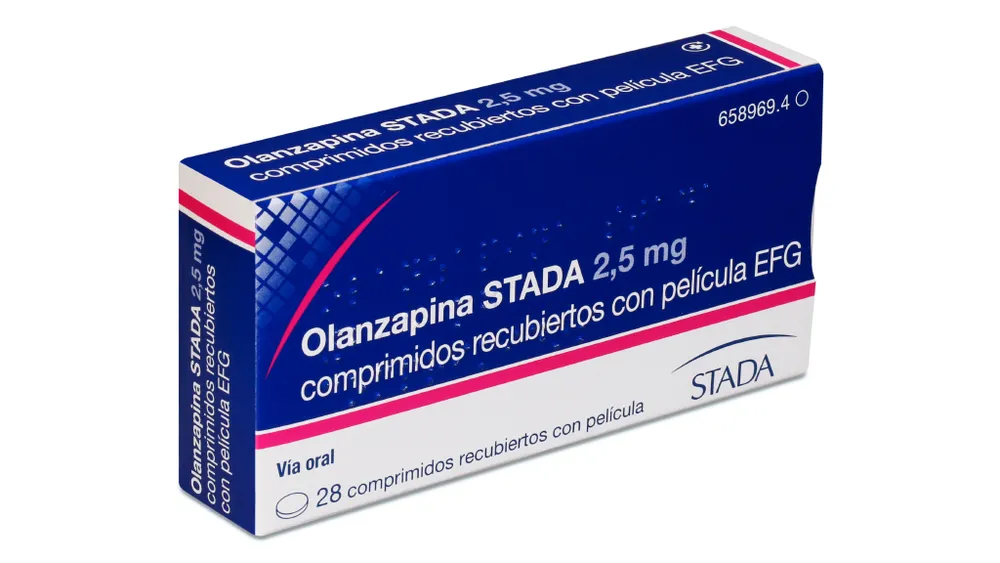
Table of Contents
Patient Information Leaflet
Olanzapina Stada, 5 mg, film-coated tablets
Olanzapina Stada, 10 mg, film-coated tablets
Olanzapinum
Please read this leaflet carefully before taking this medicine, because it contains
important information for you.
- Keep this leaflet so that you can read it again if necessary.
- If you have any questions, please consult your doctor or pharmacist.
- This medicine has been prescribed for a specific individual. Do not pass it on to others. This medicine may harm other people, even if their symptoms are the same.
- If you experience any adverse reactions, including any not listed in this leaflet, inform your doctor or pharmacist. See section 4.
Table of contents
- What Olanzapina Stada is and what it is used for
- Important information before taking Olanzapina Stada
- How to take Olanzapina Stada
- Possible side effects
- How to store Olanzapina Stada
- Contents of the pack and other information
1. What Olanzapina Stada is and what it is used for
Olanzapina Stada contains the active substance olanzapine. Olanzapina Stada belongs to a group of medicines called antipsychotics and is used to treat the following conditions:
- Schizophrenia: a disorder in which the patient hears, sees or feels things that do not exist in reality, has beliefs that are not based on reality, is excessively suspicious and withdraws from contact with others. The patient may also experience depression, anxiety or tension.
- Moderate to severe manic episodes, a disorder characterized by symptoms of excitement or euphoria.
It has been shown that Olanzapina Stada prevents recurrence of these symptoms in patients with bipolar affective disorder who have responded well to olanzapine treatment during a manic episode.
2. Important information before taking Olanzapina STADA
When not to take Olanzapina STADA
- if the patient is allergic to olanzapine, peanuts, soya, or any of the other ingredients of this medicine (listed in section 6). An allergic reaction may manifest as rash, itching, facial swelling, swollen lips, or breathing difficulties. If such symptoms occur, the patient should inform their doctor immediately.
- if the patient has previously been diagnosed with eye disorders such as certain types of glaucoma (increased pressure in the eye).
Warnings and precautions
Before starting treatment with Olanzapina STADA, discuss this with your doctor or pharmacist.
- Olanzapina STADA is not recommended for elderly patients with dementia, as it may cause serious adverse effects.
- Medicines of this class may cause abnormal movements, particularly of the face or tongue. If such symptoms occur after taking Olanzapina STADA, inform your doctor.
- Very rarely, medicines of this type may cause a group of symptoms including fever, rapid breathing, sweating, muscle stiffness, and drowsiness or lethargy. If any of these symptoms occur, contact your doctor immediately.
- Weight gain has been observed in patients taking Olanzapina STADA. The patient's body weight should be monitored regularly. If necessary, consider consulting a dietitian or seek help in establishing an appropriate diet.
- Elevated levels of blood sugar and lipids (triglycerides and cholesterol) have been observed in patients taking Olanzapina STADA. Before starting and during ongoing treatment with Olanzapina STADA, your doctor should perform blood tests to monitor blood glucose and certain lipid levels.
- Inform your doctor if the patient has, or if there is a family history of, blood clots, as use of this type of medicine has been associated with their development.
Inform your doctor immediately if the patient has any of the following conditions:
- stroke or "mini" stroke (transient ischaemic attack – temporary stroke-like symptoms),
- Parkinson's disease,
- prostate gland problems,
- intestinal obstruction (paralytic ileus),
- liver or kidney disease,
- blood disorders,
- heart disease,
- diabetes,
- seizures,
- if the patient knows they may have lost body salts due to prolonged, severe diarrhoea and vomiting (nausea with vomiting), or due to use of diuretics (water tablets).
If the patient has dementia and has ever had a stroke or "mini" stroke, the patient or caregiver should inform the doctor.
As a routine precaution, doctors may regularly monitor blood pressure in patients over 65 years of age.
Children and adolescents
Olanzapina STADA is not intended for use in patients under 18 years of age.
Olanzapina STADA and other medicines
The patient should take other medicines only with the approval of their doctor while using Olanzapina STADA.
Concomitant use of Olanzapina STADA with antidepressants, sedatives, or sleep-inducing medicines (hypnotics) may cause drowsiness.
Inform your doctor about all medicines the patient is currently taking or has recently taken, as well as any medicines the patient plans to take.
In particular, inform your doctor if the patient is taking:
- medicines used for Parkinson's disease,
- carbamazepine (an antiepileptic and mood-stabilizing medicine), fluvoxamine (an antidepressant), or ciprofloxacin (an antibiotic) – a dose adjustment of Olanzapina STADA may be necessary.
Taking Olanzapina STADA with alcohol
Do not drink alcohol while taking Olanzapina STADA, as alcohol in combination with this medicine may increase drowsiness.
Pregnancy and breastfeeding
If the patient is pregnant, breastfeeding, thinks she may be pregnant, or is planning to become pregnant, she should consult her doctor or pharmacist before using this medicine. Do not take this medicine if breastfeeding, as small amounts of Olanzapina STADA may pass into breast milk.
Newborns whose mothers took Olanzapina STADA during the third trimester (last 3 months of pregnancy) may experience the following symptoms: tremors, muscle stiffness and/or weakness, drowsiness, agitation, breathing difficulties, and feeding problems.
If you observe any of these symptoms in your newborn, contact your doctor.
Driving and operating machinery
If the patient is taking Olanzapina STADA, there is a risk of drowsiness. If the patient feels drowsy, they should not drive or operate any vehicles or machinery. Inform your doctor about this.
Olanzapina STADA contains lactose.
If the doctor has informed the patient of an intolerance to certain sugars, the patient should consult their doctor before taking this medicine.
Olanzapina STADA contains soya lecithin.
Do not use if the patient has been diagnosed with hypersensitivity to peanuts or soya.
3. How to take Olanzapina Stada
This medicine should always be taken exactly as prescribed by your doctor. If in doubt, consult your doctor or pharmacist.
Your doctor will decide how many tablets and for how long you should take Olanzapina Stada. The daily dose of Olanzapina Stada ranges from 5 mg to 20 mg. If symptoms of the illness recur, inform your doctor. However, do not stop taking Olanzapina Stada unless instructed by your doctor.
Olanzapina Stada should be taken once daily, as directed by your doctor. Try to take the medicine at the same time each day. It does not matter whether the tablets are taken during or apart from meals.
Olanzapina Stada tablets are taken orally. Swallow the tablets whole with water.
Taking more than the recommended dose of Olanzapina Stada
In patients who have taken more than the recommended dose of Olanzapina Stada, the following symptoms have been reported: rapid heartbeat, agitation or aggressive behavior, difficulty speaking, abnormal movements (especially of the face and tongue), and reduced consciousness. Other symptoms include: acute confusion (disorientation), seizures (epilepsy), coma, concurrent occurrence of fever, faster breathing, sweating, muscle stiffness, and drowsiness or sleepiness, decreased breathing rate, choking, high or low blood pressure, and irregular heart rhythm. If any of these symptoms occur, contact your doctor immediately or go to the hospital. Show the doctor the medicine packaging.
Missed dose of Olanzapina Stada
Take the tablet as soon as you remember. Do not take a double dose on the same day to make up for a missed dose.
Stopping treatment with Olanzapina Stada
Do not stop taking the tablets, even if you feel better. It is important to continue taking Olanzapina Stada for as long as your doctor has prescribed.
If treatment with Olanzapina Stada is stopped abruptly, the following symptoms may occur: sweating, insomnia, tremor, anxiety, or nausea and vomiting. Your doctor may recommend gradually reducing the dose before stopping treatment completely.
If you have any further questions about the use of this medicine, consult your doctor, pharmacist, or nurse.
4. Possible adverse effects
Like all medicines, this medicine can cause adverse effects, although not everyone will experience them.
You should contact your doctor immediately if any of the following symptoms occur:
- abnormal movements, especially of the face or tongue (a commonly reported adverse effect, which may affect up to 1 in 10 people);
- blood clots in the veins (a not very common adverse effect, which may affect up to 1 in 100 people), particularly in the legs (symptoms include swelling, pain, redness of the leg), which may travel through the blood vessels to the lungs, causing chest pain and difficulty breathing. If any of these symptoms are observed, medical advice should be sought immediately;
- occurrence of fever, rapid breathing, sweating, muscle stiffness, and drowsiness or lethargy at the same time (the frequency of this adverse effect cannot be determined from the available data).
Very rare adverse effects include severe allergic reactions, such as drug reaction with eosinophilia and systemic symptoms (DRESS syndrome). In DRESS syndrome, initial symptoms are influenza-like with a rash on the face, followed by widespread rash, high fever, swollen lymph nodes, increased liver enzyme activity evident in blood tests, and increased levels of a specific type of white blood cells (eosinophilia).
Very common adverse effects (may affect more than 1 in 10 people) include:
- weight gain;
- drowsiness;
- increased prolactin levels in the blood. At the beginning of treatment, dizziness or fainting (with slow heart rate) may occur in some people, especially when rising from a lying or sitting position. These symptoms usually resolve spontaneously, but if they do not, you should inform your doctor.
Common adverse effects (may affect up to 1 in 10 people) include:
- changes in the count of certain blood cells and lipid levels in the blood, transient increase in liver enzyme activity at the beginning of treatment;
- increased blood and urine glucose levels;
- increased levels of uric acid and creatine phosphokinase activity in the blood;
- increased appetite, dizziness;
- restlessness, tremor;
- movement disorders (dyskinesias), constipation;
- dry mouth, rash;
- loss of strength;
- extreme fatigue;
- fluid retention causing swelling of the hands, ankles or feet;
- fever, joint pain;
- sexual disorders such as decreased libido in men and women, or erectile dysfunction in men.
Uncommon adverse effects (may affect up to 1 in 100 people) include:
- hypersensitivity (e.g. swelling of the mouth and throat, itching, rash);
- diabetes or worsening of diabetes, sometimes associated with ketoacidosis (presence of ketone bodies in blood and urine) or coma;
- seizures, usually in patients who previously had seizures (epilepsy);
- muscle stiffness or spasms (including eye movements);
- restless legs syndrome;
- speech disorders;
- stuttering;
- slow heart rate;
- photosensitivity;
- nosebleeds;
- abdominal distension;
- drooling;
- memory loss or confusion;
- urinary incontinence;
- difficulty urinating;
- hair loss;
- absence or reduction of menstruation;
- breast changes in men and women, such as milk secretion outside the breastfeeding period or unusual breast enlargement.
Rare adverse effects (may affect up to 1 in 1000 people) include:
- decreased body temperature;
- heart rhythm disturbances;
- sudden, unexplained death;
- pancreatitis causing severe abdominal pain, fever, and nausea;
- liver disease manifesting as yellowing of the skin and whites of the eyes;
- muscle disease manifesting as unexpected muscle pain;
- prolonged and/or painful erection.
During treatment with Olanzapina Stada in elderly patients diagnosed with dementia, the following may occur: stroke, pneumonia, urinary incontinence, falls, extreme fatigue, visual hallucinations, elevated body temperature, skin redness, and walking difficulties.
Several fatal cases have been reported in this specific patient group.
In patients with Parkinson's disease, Olanzapina Stada may worsen disease symptoms.
Reporting of adverse effects
If any adverse symptoms occur, including any adverse effects not listed in this leaflet, you should inform your doctor, pharmacist, or nurse. Adverse effects can be reported directly to the Department of Monitoring Adverse Drug Reactions of the Office for Registration of Medicinal Products, Medical Devices and Biocidal Products:
Al. Jerozolimskie 181C, 02-222 Warsaw
Tel.: +48 22 49 21 301
Fax: +48 22 49 21 309
Website: https://smz.ezdrowie.gov.pl
Adverse effects can also be reported to the marketing authorization holder.
Reporting of adverse effects helps to provide more information on the safety of the medicine.
5. How to store Olanzapina STADA
Keep the medicine out of sight and reach of children.
Do not use this medicine after the expiry date stated on the packaging after "EXP".
The expiry date refers to the last day of the specified month.
Blisters:
Store in the original packaging to protect from light and moisture.
Containers:
Store in the original packaging. Keep the container tightly closed to protect from light and moisture.
Medicines must not be disposed of via wastewater or household waste. Ask your pharmacist how to dispose of medicines no longer required. Such measures help protect the environment.
6. Contents of the pack and other information
What Olanzapina STADA contains
- The active substance is olanzapine. Each Olanzapina STADA tablet contains either 5 mg or 10 mg of the active substance.
- Other ingredients are: (tablet core) anhydrous lactose, microcrystalline cellulose, crospovidone (type A), magnesium stearate; and (tablet coating) partially hydrolysed polyvinyl alcohol, titanium dioxide (E171), talc, soya lecithin, xanthan gum.
What Olanzapina STADA looks like and contents of the pack
5 mg film-coated tablet: round, biconvex, white film-coated tablet with a diameter of 8 mm,
with the imprint “O1” on one side.
10 mg film-coated tablet: round, biconvex, white film-coated tablet with a diameter of 10 mm,
with the imprint “O3” on one side.
Available pack sizes: 28 and 30 film-coated tablets.
Marketing Authorisation Holder:
STADA Arzneimittel AG, Stadastrasse 2-18, 61118 Bad Vilbel, Germany
Manufacturers:
Centrafarm Services B.V., Nieuwe Donk 9, 4879 Etten-Leur, Netherlands
Clonmel Healthcare Ltd., Waterford Road, Clonmel, Co. Tipperary, Ireland
LAMP SAN PROSPERO S.p.A., Via della Pace, 25/A, 41030 San Prospero (Modena), Italy
PharmaCoDane ApS., Marielundvej 46A, 2730 Herlev, Denmark
STADA Arzneimittel AG, Stadastrasse 2 – 18, 61118 Bad Vilbel, Germany
Stada Arzneimittel GmbH, Muthgasse 36, 1190 Wien, Austria
Eurogenerics N.V., Heizel Esplanade B 22, B-1020 Brussels, Belgium
Sanico N.V., Industriezone, Veedijk 59, BE - 2300 Turnhout, Belgium
Coripharma ehf., Reykjavikurvegur 78, IS-220 Hafnarfjordur, Iceland
This medicinal product is authorised in the Member States of the European Economic Area under the following names:
Denmark Olanzapin STADA
Austria Olanzapin STADA 5 mg, 10 mg, Filmtabletten
Belgium Olanzapine EG 5 mg, 10 mg, filmomhulde tabletten
Bulgaria Olanzapin STADA
Ireland Olanzapine 5 mg, 10 mg, Film-coated Tablets
Italy Olanzapina EG 5 mg and 10 mg compresse rivestite con film
Luxembourg Olanzapine EG 5 mg, 10 mg, comprimés pelliculés
Poland Olanzapina STADA
Sweden Olanzapin STADA 5 mg, 10 mg filmdragerade tabletter