Nutryelt pediatric
Poland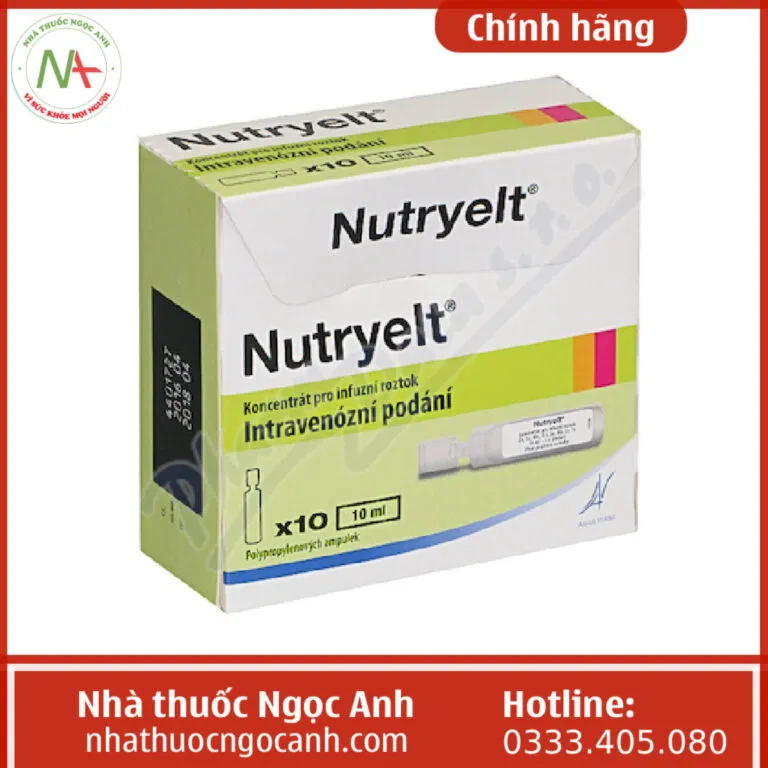
Table of Contents
- Package leaflet: Information for the user
- 1. What N P is and what it is used for
- 2. Important information before using Nutryelt Pediatric
- 3. How to administer Nutryelt Pediatric
- 4. Possible adverse reactions
- 5. How to store N P medicine
- 6. Contents of the pack and other information
- Information intended exclusively for medical professionals:
Package leaflet: Information for the user
NUTRYELT PEDIATRIC, concentrate for solution for infusion
(for preterm infants, newborns, infants and children)
Please read all of this leaflet carefully before this medicine is given to you, because it contains
important information for you.
- Keep this leaflet, as you may need to read it again.
- If you have any further questions, ask your doctor, pharmacist or nurse.
- This medicine has been prescribed for a specific individual. Do not pass it on to others. It may harm others, even if their symptoms are the same.
- If you experience any adverse reactions, including any not listed in this leaflet, tell your doctor, pharmacist or nurse. See section 4.
The full name of this medicinal product is N P, concentrate for solution for infusion, but it will be referred to as medicine N P throughout this leaflet.
Leaflet contents
- What N P is and what it is used for
- What you must know before being given N P
- How N P is given
- Possible side effects
- How to store N P
- Contents of the pack and other information
1. What N P is and what it is used for
N P is a concentrate for solution for infusion, specially formulated for preterm infants, newborns, infants and children.
It contains five essential trace elements (zinc, copper, manganese, iodine, selenium), which are considered essential because the body cannot produce them on its own, but they are required in very small amounts for normal body function.
Trace elements are usually supplied through a balanced diet.
N P is intended to provide trace elements to preterm infants and newborns, infants and children who cannot eat normally and require parenteral nutrition.
2. Important information before using Nutryelt Pediatric
When the child should not take Nutryelt Pediatric:
- if he or she is allergic (hypersensitive) to any of the components of this medicine (see section 6 of this leaflet);
- if he or she has Wilson's disease (an inherited disorder characterized by excessive accumulation of copper in the body);
- if he or she has abnormally high blood levels of any of the components of this medicine. (If in doubt, consult a doctor.)
Warnings and precautions
Before administering Nutryelt Pediatric, discuss with a doctor or pharmacist if the child:
- has impaired liver or kidney function;
- has thyroid dysfunction.
During treatment, the doctor will regularly monitor trace element levels in the blood and adjust the dosage of Nutryelt Pediatric accordingly.
Nutryelt Pediatric and other medicines
Tell the doctor about all medicines the child is currently taking or has recently taken, as well as any medicines the child may need in the future, including those available without a prescription.
Nutryelt Pediatric contains sodium and potassium
This medicine contains less than 1 mmol (23 mg) of sodium per ampoule, meaning the medicine is considered "sodium-free". This medicine contains less than 1 mmol (39 mg) of potassium per ampoule, meaning the medicine is considered "potassium-free".
3. How to administer Nutryelt Pediatric
Nutryelt Pediatric will be administered to the child intravenously (into a vein) as an infusion (intravenous drip) by a nurse or doctor. They will decide the appropriate dose for the child.
Dosage
Premature infants, newborns, infants, and children (with body weight of 20 kg or less):
The dose of 1 ml of Nutryelt Pediatric per kg of body weight per day, up to a maximum daily dose of 20 ml, covers the basic requirement for trace elements contained in the product.
Children (with body weight above 20 kg):
A daily dose of 20 ml of Nutryelt Pediatric should cover the basic requirement for trace elements.
In the treatment of premature infants, Nutryelt Pediatric should be supplemented with an injection solution containing zinc only, in order to achieve a total parenteral zinc supply of 450–500 µg/kg/day.
In cases of prolonged parenteral nutrition (lasting longer than 3 weeks) in premature infants, daily administration of an iron-containing infusion is recommended, and molybdenum should be added if parenteral nutrition lasts longer than 4 weeks.
Nutryelt Pediatric must be diluted before use; it must not be administered to the patient without dilution.
Administration of a higher than recommended dose of Nutryelt Pediatric to the child
It is very unlikely that the child would receive a higher amount of the medicine in the infusion than intended, as the child will be monitored by a doctor or nurse during treatment. However, if there is suspicion that the child has received a higher dose of Nutryelt Pediatric than recommended, the doctor or nurse must be informed immediately.
The doctor will discontinue administration of Nutryelt Pediatric and perform necessary laboratory tests if overdose is suspected.
If you have any further doubts regarding the use of this medicine, please consult your doctor or pharmacist.
4. Possible adverse reactions
Like all medicines, this medicine can cause adverse reactions, although not everyone will experience them.
If any of the following symptoms occur, a doctor should be informed immediately:
Frequency unknown (cannot be estimated from available data): pain at the injection site.
Reporting of adverse reactions
If any adverse effects occur, including any adverse effects not listed in this leaflet, inform your doctor or pharmacist. Adverse reactions can be reported directly to the Department of Monitoring Adverse Drug Reactions of the Office for Registration of Medicinal Products, Medical Devices and Biocidal Products
Al. Jerozolimskie 181C,
02-222 Warsaw
Tel.: + 48 22 49 21 301
Fax: + 48 22 49 21 309
e-mail: [email protected]
Adverse reactions may also be reported to the marketing authorization holder.
Reporting adverse reactions helps to provide more information on the safety of the medicine.
Adverse reactions can be reported directly to the marketing authorization holder.
5. How to store N P medicine
It has been demonstrated that after dilution, the product maintains chemical and physical stability for 48 hours at a temperature of 25°C.
From a microbiological standpoint, the product should be used immediately after dilution. If the product is not used immediately, the responsibility for the storage period and conditions prior to use lies with the user.
Keep the medicine out of sight and reach of children.
Do not use this medicine after the expiry date stated on the packaging following: EXPIRY DATE. The expiry date refers to the last day of the stated month.
Do not freeze.
Do not use this medicine if signs of deterioration are visible.
Medicines must not be disposed of via wastewater or household waste. Ask your pharmacist how to dispose of medicines no longer in use. Such measures help protect the environment.
6. Contents of the pack and other information
What Nutryelt Pediatric contains
The active substances in the medicine are:
in 10 ml (1 ampoule)
zinc (Zn) 1000 µg (as zinc gluconate)
copper (Cu) 200 µg (as copper gluconate)
manganese (Mn) 5 µg (as manganese gluconate)
iodine (I) 10 µg (as potassium iodide)
selenium (Se) 20 µg (as sodium selenite)
The other components are: hydrochloric acid (for pH adjustment) and water for injections.
What Nutryelt Pediatric looks like and contents of the pack
Nutryelt Pediatric is a clear, colourless concentrate for solution for infusion in 10 ml ampoules,
packed in cardboard boxes containing 10 or 50 ampoules.
Not all pack sizes may be marketed.
Marketing Authorisation Holder and Manufacturer
Marketing Authorisation Holder
Laboratoire AGUETTANT
1 rue Alexander Fleming
69007 Lyon
France
Manufacturer
Laboratoire AGUETTANT
Lieu-dit Chantecaille
07340 CHAMPAGNE
France
Information intended exclusively for medical professionals:
Pharmaceutical form:
Density 1.0
pH 2.7 to 3.3
Osmolality 15 mosmol/kg
Osmolarity 15 mosmol/L
Pharmaceutical incompatibilities:
Do not use medicinal product N P as a vehicle for other drugs.
Do not mix the medicinal product with other medicinal products except 0.9% sodium chloride and 5% glucose.
Shelf life:
3 years.
It has been demonstrated that after dilution, the product maintains chemical and physical stability for 48 hours at 25°C.
From a microbiological standpoint, the product should be used immediately after dilution. If not used immediately, the user is responsible for the storage duration and conditions prior to use.
Special precautions for storage:
Do not freeze.
Instructions for use and handling:
Before use, ensure that the concentrate for solution for infusion is homogeneous, the ampoule is undamaged, and the solution contains no solid particles.
Medicinal product N P is not intended for administration in undiluted form.
Medicinal product N P must be diluted or added to other solutions by gently mixing under strictly aseptic conditions, immediately before administration by infusion.
Medicinal product N P should be diluted taking into account the appropriate final osmolarity of the solution.
For example:
- 5 or 10 mL of medicinal product N P may be diluted by adding at least 50 mL of 0.9% sodium chloride solution for infusion or 5% glucose solution for infusion;
- 10 or 20 mL of medicinal product N P may be diluted by adding at least 100 mL of 0.9% sodium chloride solution for infusion or 5% glucose solution for infusion.
After dilution, the pH value is approximately 3.5 to 4.5.
The reconstituted infusion solution should be visually inspected before use. Only clear solution free of particulate matter should be used.
Do not store partially emptied containers, and dispose of all equipment after use.
Check compatibility with solutions administered simultaneously through the same cannula.
For further information on dosage, refer to section 3 of this leaflet.