Norprolac
Poland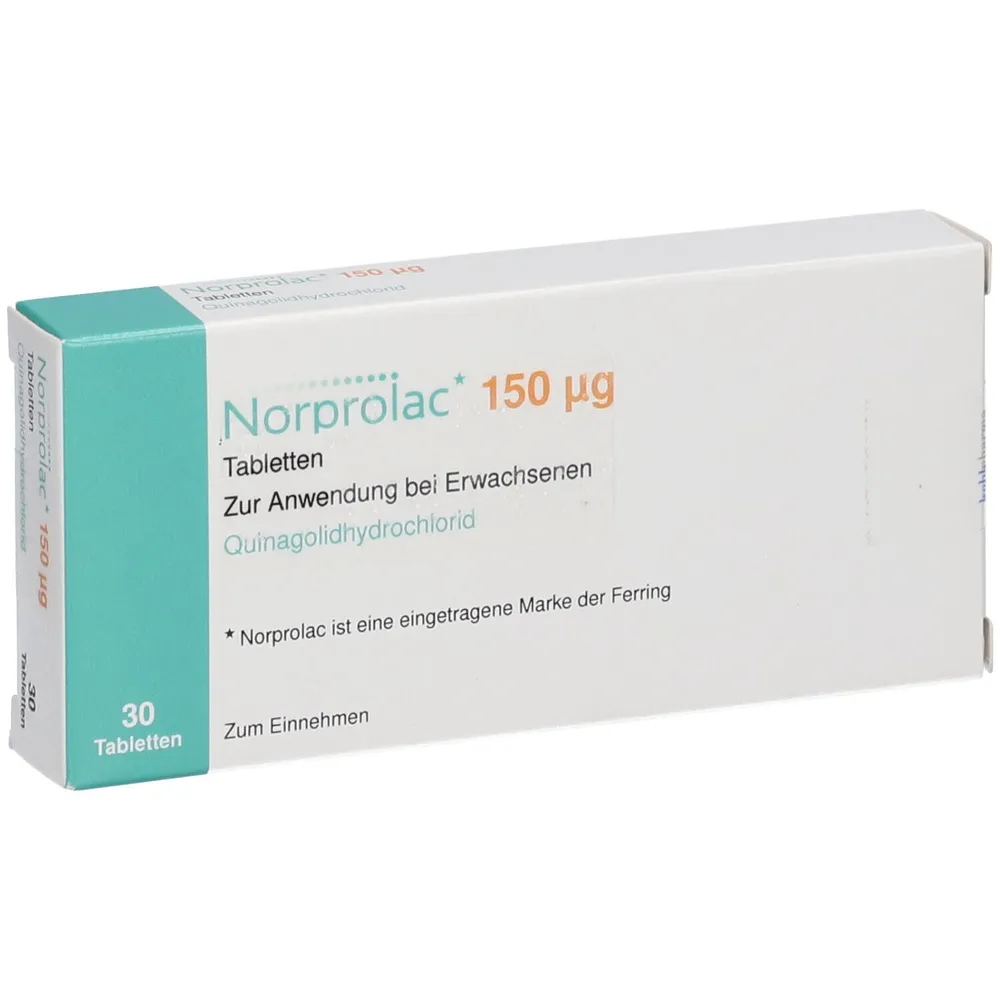
Table of Contents
Page 1 of 6
Package leaflet: Information for the patient
NORPROLAC, 25 micrograms, 50 micrograms, tablets
NORPROLAC, 75 micrograms, tablets
Quinagolidum
Please read the entire leaflet carefully before using this medicine, as it contains
important information for the patient.
- Keep this leaflet for future reference.
- If you have any doubts, consult your doctor.
- This medicine has been prescribed for a specific individual. Do not pass it on to others.
- This medicine may harm another person, even if their symptoms appear identical.
- If you experience any adverse effects, including any not listed in this leaflet, inform your doctor. See section 4.
Table of contents:
- What Norprolac is and what it is used for
- Important information before taking Norprolac
- How to take Norprolac
- Possible side effects
- How to store Norprolac
- Contents of the pack and other information
1. What Norprolac is and what it is used for
Norprolac inhibits the release of a hormone called prolactin from the pituitary gland. Under normal
conditions, prolactin levels in the blood increase after childbirth, stimulating milk production in the
mammary gland. However, prolactin levels may sometimes become very high in both men and women
who have not given birth. This may lead to unwanted milk production, infrequent or absent menstrual
periods, infertility, and reduced libido.
Elevated prolactin levels may be caused by the presence of a pituitary gland tumor ( Prolactinoma ).
Norprolac is indicated for the treatment of hyperprolactinemia (either idiopathic or caused by a prolactin-
secreting micro- or macroadenoma of the pituitary gland).
2. Important information before using Norprolac
When not to use Norprolac
If the patient is allergic to chinoergoline or any of the other ingredients of this medicine
(listed in section 6).
If the patient has severe liver or kidney function disorders.
Warnings and precautions
Before starting treatment with Norprolac, discuss this with your doctor.
Dizziness is a common side effect of Norprolac, especially during the first few days of treatment. Therefore, the dose should be increased gradually using the "starter pack".
Page 2 of 6
Since lowering of blood pressure may cause fainting, it is advisable to monitor blood pressure in the lying and standing position during the first few days of treatment and after any dose increase.
The medicine may cause dizziness; therefore it should be taken before going to bed. This is particularly important when taking the first few doses of the medicine.
Inform your doctor if you have liver or kidney function disorders.
In women with infertility related to prolactin, treatment with Norprolac may restore fertility. Therefore, women of childbearing age who do not wish to become pregnant should use an effective method of contraception.
Extreme caution is required in patients with a history of psychotic episodes.
Inform your doctor if the patient or their family members notice unusual behaviors resulting from irresistible impulses, compulsions, or obsessive performance of certain actions, harmful to the patient or others. These behaviors are called impulse control disorders and may include gambling addiction, compulsive or binge eating, increased sexual drive, or intensified sexual thoughts and feelings. The doctor may decide to adjust the treatment or discontinue the medicine.
Patients experiencing somnolence must not drive or operate machinery. In addition, the doctor may consider reducing the dose or discontinuing treatment.
Alcohol may reduce tolerance to Norprolac.
Children and adolescents
Experience with the use of Norprolac in children is limited.
Elderly patients
Experience with the use of Norprolac in elderly patients is limited.
Norprolac with other medicines
Tell your doctor about all medicines the patient is currently taking or has recently taken, as well as any medicines the patient plans to take.
Norprolac with food, drink and alcohol
Norprolac should be taken once daily before bedtime with a small amount of food.
Consumption of alcohol during treatment with Norprolac may increase the risk of adverse reactions or intensify them.
Pregnancy and breastfeeding
If the patient is pregnant or breastfeeding, suspects she may be pregnant, or is planning to have a child, she should consult her doctor before using this medicine.
Pregnancy:
Inform your doctor if you are pregnant or planning pregnancy. Experience with the use of Norprolac in pregnant women is very limited. If pregnancy occurs, the medicine should be discontinued unless otherwise advised by the doctor. There has been no observed increase in the frequency of miscarriages following discontinuation of the medicine.
Breast-feeding:
Women taking Norprolac must not breastfeed, as the medicine inhibits milk production. If milk production is not completely suppressed, breastfeeding is not recommended because it is unknown whether chinoergoline passes into breast milk.
Page 3 of 6
Driving and operating machinery
Norprolac may cause drowsiness and/or sudden sleep attacks, especially during the first few days of treatment.
The patient should not drive or engage in activities (e.g., operating machinery) where impaired performance could expose themselves or others to the risk of serious injury or death.
Norprolac contains monohydrate lactose
If the patient has an intolerance to certain sugars, consult your doctor before using this medicine.
3. How to use Norprolac
This medicine should always be taken exactly as your doctor has told you. If you are unsure, you should consult your doctor.
Norprolac should be taken once daily before bedtime with a small amount of food.
Treatment usually starts with a "starter pack", taking one 25 microgram tablet for the first 3 days and one 50 microgram tablet for the next 3 days.
From the seventh day, the recommended dose is 75 micrograms per day. If necessary, your doctor may advise gradually increasing the dose until a satisfactory therapeutic effect is achieved. The usual daily dose is 75 micrograms or 150 micrograms.
Some patients may require daily doses of up to 300 micrograms or more.
Taking more Norprolac than prescribed
If you take more Norprolac than prescribed, you should inform your doctor immediately.
The main symptoms of overdose may include: nausea, vomiting, stomach pain and dizziness, drowsiness, low blood pressure, and sometimes fainting. Hallucinations (seeing, hearing or feeling things that are not there) may also occur.
If you forget to take Norprolac
If you miss a dose, take it as soon as possible. However, do not take the medicine if there are less than 4 hours before your next scheduled dose. In that case, take the next dose at the usual time.
Do not take a double dose to make up for a missed dose.
4. Possible adverse effects
Like any medicine, this medicine can cause adverse effects, although not everyone will experience them.
Most adverse effects are dose-dependent and transient in nature. Adverse effects are rarely so severe as to require discontinuation of treatment.
The following very common adverse effects occur in more than 10 out of every 100 treated patients:
dizziness,
headache,
nausea,
vomiting,
feeling of fatigue.
The following common adverse effects occur in 1 to 10 out of every 100 treated patients:
Page 4 of 6
loss of appetite,
insomnia,
orthostatic hypotension (decrease in blood pressure upon changing from lying to standing position),
nasal congestion,
abdominal pain,
constipation,
diarrhea,
muscle weakness.
The following rare adverse effects occur in 1 to 10 out of every 10,000 treated patients:
transient acute psychosis,
drowsiness.
Frequency not known – cannot be estimated based on available data:
The following adverse effects may occur:
inability to resist an impulse, urge or compulsion to perform an action that may be harmful to the patient or others; this includes:
a strong impulse towards uncontrollable gambling, despite serious personal or family consequences,
altered or increased sexual interests and behaviors of significance to the patient or others, e.g. activities related to increased sexual drive,
compulsive, uncontrolled spending or shopping,
binge eating (consuming large amounts of food within a short period of time) or compulsive eating (consuming larger amounts of food than normal and more than needed to satisfy hunger).
You should inform your doctor if the patient exhibits any of these behaviors, so that ways of managing or reducing these symptoms can be discussed.
Orthostatic hypotension may rarely lead to fainting.
A risk of hypersensitivity reactions cannot be excluded.
Taking the medicine before bedtime reduces the risk of adverse effects.
Reporting of adverse effects
If any adverse symptoms occur, including any adverse symptoms not listed in this leaflet, you should inform your doctor. Adverse effects can be reported directly to the Department of Monitoring Adverse Drug Reactions at the Office for Registration of Medicinal Products, Medical Devices and Biocidal Products: Aleje Jerozolimskie 181C, 02-222 Warsaw, Phone: +48 22 49 21 301, Fax: +48 22 49 21 309, website: https://smz.ezdrowie.gov.pl. Reporting adverse effects helps to collect more information on the safety of the medicine.
5. How to store Norprolac
Keep the medicine out of sight and reach of children.
Store at a temperature not exceeding 25°C.
Do not use this medicine if you notice that the packaging is damaged or shows signs of tampering.
Do not use this medicine after the expiry date stated on the packaging after the words "Expiry date". The expiry date refers to the last day of the stated month.
Page 5 of 6
Medicines must not be disposed of via wastewater or household waste. Ask your pharmacist how to dispose of medicines no longer required. Such measures help protect the environment.
6. Contents of the pack and other information
What Norprolac contains
- The active substance is cabergoline, in the form of cabergoline hydrochloride. Each tablet contains 25, 50, or 75 micrograms of cabergoline.
- The other ingredients are: monohydrate lactose, microcrystalline cellulose, corn starch, hypromellose, magnesium stearate, anhydrous colloidal silicon dioxide. The 25 microgram tablets additionally contain iron oxide red. The 50 microgram tablets additionally contain indigotine.
What Norprolac looks like and contents of the pack
The 25 microgram tablets are light pink. On one side there is a circular inscription "NORPROLAC",
and on the other side a linear inscription "25".
The 50 microgram tablets are light blue. On one side there is a circular inscription "NORPROLAC",
and on the other side a linear inscription "50".
The 75 microgram tablets are white. On one side there is a circular inscription "NORPROLAC", and on the other side
a linear inscription "75".
One pack of Norprolac 25 micrograms, 50 micrograms ("starter pack") contains 3 tablets of 25 micrograms and 3 tablets of 50 micrograms.
One pack of Norprolac 75 micrograms contains 30 tablets.
Not all pack sizes may be marketed.
Marketing Authorisation Holder and Manufacturer:
Ferring GmbH
Wittland 11
D-24109 Kiel
Germany
For further information, please contact the representative of the Marketing Authorisation Holder:
Ferring Pharmaceuticals Poland Sp. z o.o.
Szamocka 8 Street
01-748 Warsaw
Phone: +48 22 246 06 80, Fax: +48 22 246 06 81
Page 6 of 6