Niquitin fruit
Poland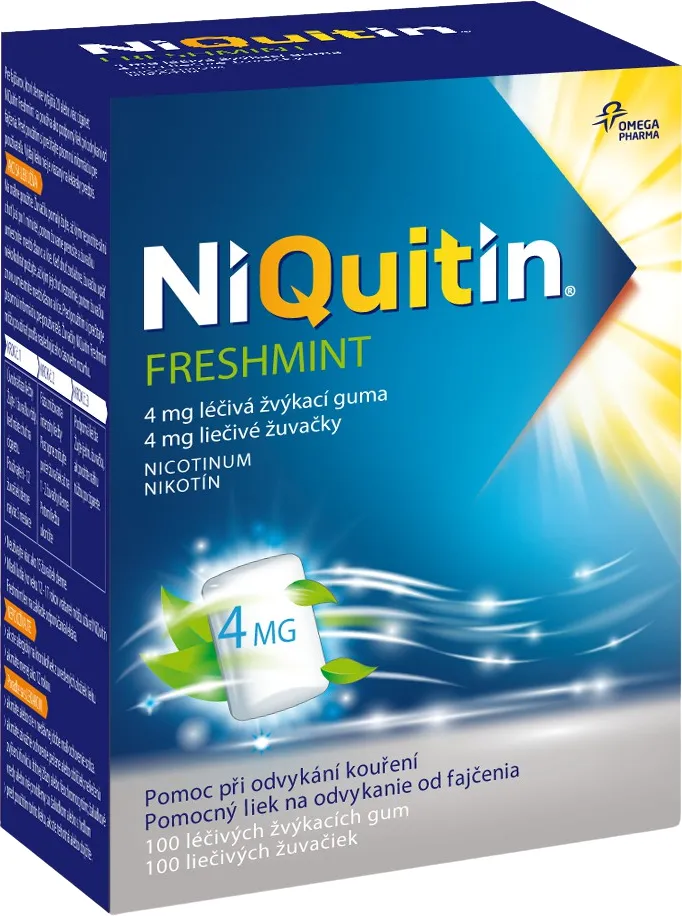
Table of Contents
Package leaflet: Information for the user
NiQuitin Fruit
2 mg, chewing gum, medicinal
Nicotinum
NiQuitin Fruit
4 mg, chewing gum, medicinal
Nicotinum
Please read this leaflet carefully before using the medicine, as it contains
important information for the patient.
This medicine should always be used exactly as described in this patient leaflet or as directed by a
doctor, pharmacist, or nurse.
- Keep this leaflet so that you can read it again if necessary.
- If you need advice or further information, please consult your pharmacist.
- If you experience any adverse reactions, including any possible adverse reactions not listed in this leaflet, inform your doctor, pharmacist, or nurse. See section 4.
- If after 9 months of treatment you have not been able to stop smoking, you should contact your doctor.
Contents of the leaflet
- What NiQuitin Fruit is and what it is used for
- What you need to know before using NiQuitin Fruit
- How to use NiQuitin Fruit
- Possible side effects
- How to store NiQuitin Fruit
- Contents of the pack and other information
1. What NiQuitin Fruit is and what it is used for
NiQuitin Fruit chewing gums help you stop smoking. Using this type of medicine is called
nicotine replacement therapy (NRT).
Nicotine in tobacco causes physical dependence on cigarette smoking.
- NiQuitin Fruit chewing gums help you quit smoking by replacing part of the nicotine obtained from cigarettes.
- The delivered nicotine reduces some of the unpleasant symptoms caused by stopping smoking, such as low mood and irritability.
- The delivered nicotine also reduces nicotine withdrawal symptoms and helps resist the urge to smoke a cigarette.
NiQuitin Fruit chewing gums eliminate the risks associated with smoking tobacco, as they do not
contain tar, carbon monoxide, or other toxins found in tobacco smoke.
Some patients may be concerned about becoming addicted to nicotine gum after quitting smoking.
Such dependence is very rare, and even if it occurs, it is less harmful to health and easier to overcome than smoking tobacco.
The chances of breaking the habit can be increased by participating in a psychological support program to help quit smoking. For information about psychological support programs to help quit smoking, please contact your doctor, pharmacist, or nurse.
Smoking tobacco brings no health benefits. Therefore, it is far better to break the habit. Using Nicotine Replacement Therapy (NRT), such as NiQuitin Fruit chewing gums, can help achieve this. Remember that the health risks associated with smoking tobacco are greater than any possible adverse effects that may occur during NRT use.
2. Important information before using NiQuitin Fruit
When not to use NiQuitin Fruit:
- if the patient is allergic to nicotine or any of the ingredients of this medicine (listed in section 6),
- in children under 12 years of age,
- in non-smokers or occasional smokers.
Warnings and precautions
Before starting to use NiQuitin Fruit, consult a doctor, pharmacist, or nurse:
- if the patient has recently suffered a myocardial infarction or stroke, has severe cardiac arrhythmias, unstable or worsening angina pectoris (chest pain), uncontrolled hypertension, or nocturnal angina, the patient should attempt to quit smoking without using nicotine replacement therapy (NRT), unless a doctor authorizes the use of NRT,
- if the patient has experienced seizures,
- if the patient has diabetes, blood glucose levels should be monitored more frequently than usual while using NiQuitin Fruit chewing gum. Dosage recommendations for insulin or antidiabetic medications may need to be adjusted,
- if the patient has ever had an allergic reaction such as swelling of the lips, face, or throat (angioedema) or itchy skin rash (urticaria), caution is advised. NRT may occasionally cause such reactions,
- if the patient wears dental prostheses, as chewing may cause problems,
- chewing nicotine gum may loosen dental fillings or dental implants.
- Nicotine Replacement Therapy (NRT) should not be used in children under 12 years of age. Nicotine has a stronger effect on a child's body than on an adult's and may cause severe poisoning in children, which could be fatal.
When attempting to quit smoking, do not interchangeably use NiQuitin Fruit chewing gum
and nicotine-containing lozenges.
Consult a doctor, pharmacist, or nurse if:
- the patient has severe or moderately severe liver or kidney function disorders, due to an increased risk of adverse effects,
- the patient has uncontrolled hyperthyroidism or a pheochromocytoma (a tumor of the adrenal gland affecting blood pressure), as symptoms of the disease may worsen—this should be discussed with the doctor,
- the patient has peptic ulcer disease of the stomach or duodenum, or esophagitis (inflammation of the esophagus, the part of the digestive tract between the mouth and stomach), as swallowed nicotine may worsen symptoms and may also cause oral ulceration. If symptoms worsen, consult a doctor. It may be necessary to switch from oral nicotine replacement therapy to transdermal patches.
Children (under 12 years of age)
Even a dose appropriate for adults may cause severe poisoning or death in young children. Therefore, it is essential to always store NiQuitin Fruit out of sight and reach of children.
NiQuitin Fruit and other medicines
Inform the doctor, pharmacist, or nurse about all medicines currently used or recently used, as well as any medicines the patient plans to use.
Quitting smoking may affect the action of other medicines taken by the patient.
If there are any questions or doubts, consult a doctor or pharmacist.
This is particularly important when using medicines containing:
- theophylline (used in the treatment of asthma),
- tacrine (used in the treatment of Alzheimer's disease),
- clozapine (used in the treatment of schizophrenia),
- ropinirole (used in the treatment of Parkinson's disease).
Taking NiQuitin Fruit with food and drink
Do not eat or drink while chewing NiQuitin Fruit gum.
Beverages that lower the pH in the oral cavity (e.g. fruit juices, coffee, carbonated drinks) may affect the absorption of nicotine in the mouth. To achieve optimal effectiveness, avoid consuming such beverages within 15 minutes before taking NiQuitin Fruit.
Pregnancy, breastfeeding, and fertility
If the patient is pregnant, breastfeeding, suspects she may be pregnant, or is planning to have a child, she should consult a doctor or pharmacist before using this medicine.
Smoking during pregnancy is dangerous for the child. It may cause delayed fetal growth, premature birth, or stillbirth. Stopping smoking is the only effective way to improve the health of both the pregnant woman and the child. The sooner smoking cessation occurs, the better.
Pregnant women should try to quit smoking without using NRT. However, if this is unsuccessful, a doctor, pharmacist, or nurse may recommend using NRT to support smoking cessation, as this would be more beneficial for the child's development than continuing to smoke. The decision to use NRT during pregnancy should be made as early as possible. NRT treatment is recommended for only 2 to 3 months. It is important to remember that the most crucial goal is quitting smoking. Medicines such as chewing gum may be preferable to patches, which release nicotine continuously throughout the day. Patches may be more suitable if nausea or vomiting occurs.
Exposure of breastfed infants to tobacco smoke causes breathing difficulties and other health problems. Women who are breastfeeding should try to quit smoking without using NRT. However, if this is unsuccessful, a doctor, pharmacist, or nurse may recommend using NRT. When a breastfeeding woman uses NRT, the amount of nicotine the infant receives through breast milk is small.
It is most beneficial to use NRT that delivers single doses of nicotine during the day (e.g. chewing gum or lozenges, rather than patches). It is best to breastfeed the baby just before using the chewing gum, as this will minimize the infant's exposure to nicotine.
Driving and using machines
There are no known effects of NiQuitin Fruit on the ability to drive or operate machinery. However, remember that quitting smoking may cause behavioral changes that could affect the ability to drive or operate machinery.
NiQuitin Fruit contains:
- Sodium – The medicine contains less than 1 mmol (23 mg) of sodium per dose, meaning the medicine is considered "sodium-free".
- Sorbitol (E420) – The medicine contains 112.60 mg of sorbitol in each 2 mg gum and 101.48 mg of sorbitol in each 4 mg gum. Sorbitol is a source of fructose. If the patient has previously been diagnosed with intolerance to certain sugars or hereditary fructose intolerance, a rare genetic disorder in which the body cannot break down fructose, the patient should consult a doctor before taking this medicine.
- Butylated hydroxytoluene (E321) – The medicine may cause local skin reactions (e.g. contact dermatitis) or irritation of the eyes and mucous membranes.
3. How to use NiQuitin Fruit
This medicine should always be used according to the instructions in the patient information leaflet or as directed by a doctor, pharmacist, or nurse. If in doubt, consult a doctor, pharmacist, or nurse.
During treatment with NiQuitin Fruit, you must stop smoking. However, if you do smoke a cigarette, do not discontinue treatment.
If you continue to have difficulty quitting smoking, consult your doctor, pharmacist, or nurse.
NiQuitin Fruit 2 mg chewing gums are intended for people who smoke fewer than 20 cigarettes per day.
NiQuitin Fruit 4 mg chewing gums are intended for people who smoke 20 or more cigarettes per day.
Do not chew NiQuitin Fruit gums like ordinary chewing gum continuously and rapidly, as this may cause too rapid release of nicotine, potentially leading to discomfort (e.g. heartburn or hiccups).
To use NiQuitin Fruit, remove the paper covering and take the gum out of the blister. Place the gum in the mouth and chew slowly until you notice a taste (approximately 1 minute), then stop chewing and place the gum between your gum and cheek. Start chewing again when the taste fades. Repeat this process several times over 30 minutes, until the gum loses its flavour. Avoid eating or drinking while chewing the gum, as this may reduce nicotine absorption. Do not use more than 15 gums per day.
If you feel the need to use this medicine for longer than 9 months, consult your doctor, pharmacist, or nurse.
NiQuitin Fruit should be used according to the following dosing schedule:
Adults (aged over 18 years)
- At the beginning of treatment, use 8 to 12 gums per day. Chew a gum whenever you feel the urge to smoke.
- Within no more than 3 months, gradually reduce the number of gums used (see table below).
- Treatment should be discontinued when the number of gums used decreases to 1 or 2 per day.
Even after completing treatment, you may still experience urges to smoke. In such cases, you may use the medicine as needed.
| Level 1 | Level 2 Level 3 | |
| Initial treatment period. Chew 1 gum when craving to smoke arises. Use 8–12 gums per day for up to 3 months. | Treatment period with dose reduction. Gradually reduce the number of gums used to 1–2 gums per day. Complete treatment. | Maintenance therapy. Chew 1 gum if cigarette craving occurs. |
Use in children and adolescents
Adolescents aged 12 to 17 years
NiQuitin Fruit may be used in adolescents aged 12 to 17 years only on the advice of a doctor.
Do not use a higher dose than recommended. Smoking cigarettes or using nicotine in any other form must be avoided during treatment. The product should be used according to the instructions and no more than 15 pieces should be used per day.
Children under 12 years of age
NiQuitin Fruit must not be used in children under 12 years of age.
If the patient is concerned about relapse into smoking
If the patient is concerned about relapse into smoking or has difficulties discontinuing the use of the product, they should speak to their doctor, pharmacist or nurse. If smoking resumes, the doctor, pharmacist or nurse will advise on how best to use the next nicotine replacement therapy (NRT).
Use of a higher than recommended dose of NiQuitin Fruit
If a higher than recommended dose of NiQuitin Fruit is used, symptoms such as nausea, dizziness and malaise may occur. In this case, use of the product should be stopped immediately and medical advice should be sought promptly from a doctor or hospital emergency department. The package leaflet or container should be brought along to show the doctor.
The product is not suitable for children under 12 years of age. If accidentally ingested by a child, symptoms of nicotine overdose may occur, such as headache, vomiting, abdominal pain and diarrhoea.
Any child who has used or eaten the product should be taken immediately to a hospital emergency department or a doctor should be contacted. If possible, the package leaflet or container should be shown to the doctor.
If there are any further doubts regarding the use of this medicine, consult a doctor, pharmacist or nurse.
4. Possible adverse effects
Like all medicines, this product may cause adverse effects, although not everyone experiences them.
No serious adverse effects have been observed with the recommended dosage of NiQuitin Fruit.
Simply stopping smoking may cause symptoms such as dizziness, headache, sleep disturbances, cough, and flu-like symptoms. Symptoms such as depression, irritability, anxiety, restlessness, increased appetite, and insomnia may also be due to stopping smoking.
You should consult a doctor and discontinue use of NiQuitin Fruit if any of the following symptoms of an allergic reaction occur:
Very rare adverse effects (may occur in fewer than 1 in 10,000 people)
- swelling of the face, tongue or throat,
- difficulty swallowing,
- hives and breathing difficulties,
- heart rhythm disturbances,
- severe allergic reactions with symptoms such as sudden wheezing or feeling of chest tightness, skin rash or feeling faint.
Other adverse effects listed below are grouped according to the likelihood of their occurrence.
Very common: may occur in more than 1 in 10 people
- nausea
Common: may occur in fewer than 1 in 10 people
- stomach discomfort,
- sore throat, pain and/or dryness in the mouth, irritation or ulceration of the oral mucosa, sore throat, cough,
- sleep disturbances, headache, irritability, dizziness,
- vomiting, hiccups, indigestion, bloating, diarrhoea, constipation,
- jaw pain.
The listed adverse effects are mild in nature and often resolve spontaneously within a few days of treatment.
Uncommon: may occur in fewer than 1 in 100 people
- increased heart rate, palpitations (awareness of strong heart beat),
- difficulty breathing, chest pain,
- disturbance of taste,
- skin redness, hives, excessive sweating,
- joint and/or muscle pain or swelling,
- inflammation of the oral mucosa,
- tremor,
- general malaise.
Frequency not known (cannot be estimated from available data)
- Seizures, difficulty swallowing, belching, increased salivation, weakness (lack of energy), fatigue (tiredness), flu-like illnesses (flu-like symptoms), hypersensitivity, unusual dreams, itching or rash, numbness or tingling around the mouth.
Reporting of adverse effects
If any adverse effects occur, including any not listed in this leaflet, inform your doctor, pharmacist or nurse.
Adverse effects can be reported directly to the Department of Monitoring of Adverse Drug Reactions at the Office for Registration of Medicinal Products, Medical Devices and Biocidal Products, Al. Jerozolimskie 181C, 02-222 Warsaw, tel.: +48 22 49 21 301, fax: +48 22 49 21 309, e-mail: [email protected]
Adverse effects can also be reported to the marketing authorization holder.
Reporting adverse effects helps to provide more information on the safety of the medicine.
5. How to store NiQuitin Fruit
- Keep the medicine out of the sight and reach of children.
- Do not use this medicine after the expiry date stated on the blister pack and outer packaging. The expiry date refers to the last day of the month.
- Do not store above 25 °C.
- Store in the original packaging to protect from moisture.
- Medicines should not be disposed of via wastewater or household waste. Ask your pharmacist how to dispose of medicines no longer in use. This will help protect the environment.
6. Contents of the pack and other information
What NiQuitin Fruit contains
- The active substance is nicotine. Each chewing gum contains 2 mg or 4 mg of nicotine (in the form of nicotine with cationite).
- The other ingredients are: butylated hydroxytoluene (E321), sorbitol (E420), xylitol (E967), calcium carbonate (E170), anhydrous sodium carbonate (E500), glycerol (E422), acesulfame potassium (E950), sucrose, mannitol (E421), gum arabic (E414), titanium dioxide (E171), carnauba wax, talc, and flavourings: Optacool, Lewomenthol, Optamint Tropical flavour (containing glyceryl triacetate (E1518), alpha-tocopherol (E307)), Optamint Tropical SD flavour (containing gum arabic (E414) and sorbitol (E420)), Microcandy Fruit Cocktail flavour (containing mannitol (E421), glyceryl triacetate (E1518), and mono- and diglycerides of fatty acids (E471)), and Optamint Grapefruit flavour.
What NiQuitin Fruit looks like and contents of the pack
NiQuitin Fruit is in the form of white or almost white rectangular chewing gums.
Each blister contains 4 or 10 chewing gums.
The pack contains 4, 10, 30, 100 or 200 chewing gums. Not all pack sizes may be marketed.
Marketing Authorisation Holder:
Perrigo Poland Sp. z o.o.
Al. Niepodległości 18
02-653 Warsaw
Tel. (22) 489 54 51
Manufacturer:
Fertin Pharma A/S
Dandyvej 19
7100 Vejle
Denmark
This medicinal product is authorised in the Member States of the European Economic Area under the following trade names:
Belgium: NiQuitin Tropisch Fruit – Fruits tropicaux - Tropische Früchte 2mg/4 mg Gomme à mâcher médicamenteuse
Croatia: NiQuitin GUM Tropical Fruit 2 mg & 4mg ljekovita guma za žvakanje
Denmark: NiQuitgum Tropical
Estonia: NiQuitin Fruit
Finland: NiQuitin Tropical 2mg & 4mg lääkepurukumi
Hungary: NiQuitin trópusi gyümölcs 2mg & 4mg gyógyszeres rágógumi
Ireland: NiQuitin Tropical Fruit 2mg & 4mg medicated chewing gum
Latvia: NiQuitin Fruit 2mg & 4mg ārstnieciskā košļājamā gumija
Lithuania: NiQuitin Fruit 2mg & 4mg vaistinė kramtomoji guma
Luxembourg: NiQuitin Tropisch Fruit – Fruits tropicaux - Tropische Früchte 2 mg/4 mg Gomme à mâcher médicamenteuse
Netherlands: NiQuitin Fruit en Mint 2 mg & 4 mg kauwgom
Norway: Nicabate, 2 mg/4 mg medisinsk tyggegummi Tropisk frukt
Poland: NiQuitin Fruit
Portugal: NiQuitin Tropical 2mg & 4mg gomas para mascar medicamentosas
Slovakia: NiQuitin Tropické ovocie 2mg & 4mg liečivé žuvačky
Spain: NiQuitin Fruit 2mg & 4mg chicles medicamentosos
Sweden: NiQuitin Tropisk frukt 2mg & 4mg medicinskt tuggummi
United Kingdom: Nicabate Tropical Flavour 2mg & 4mg Medicated Chewing Gum
Other sources of information
Detailed information about this medicinal product is available on the website of the Polish Office for Registration of Medicinal Products, Medical Devices and Biocidal Products.