Nicorette fruit
Poland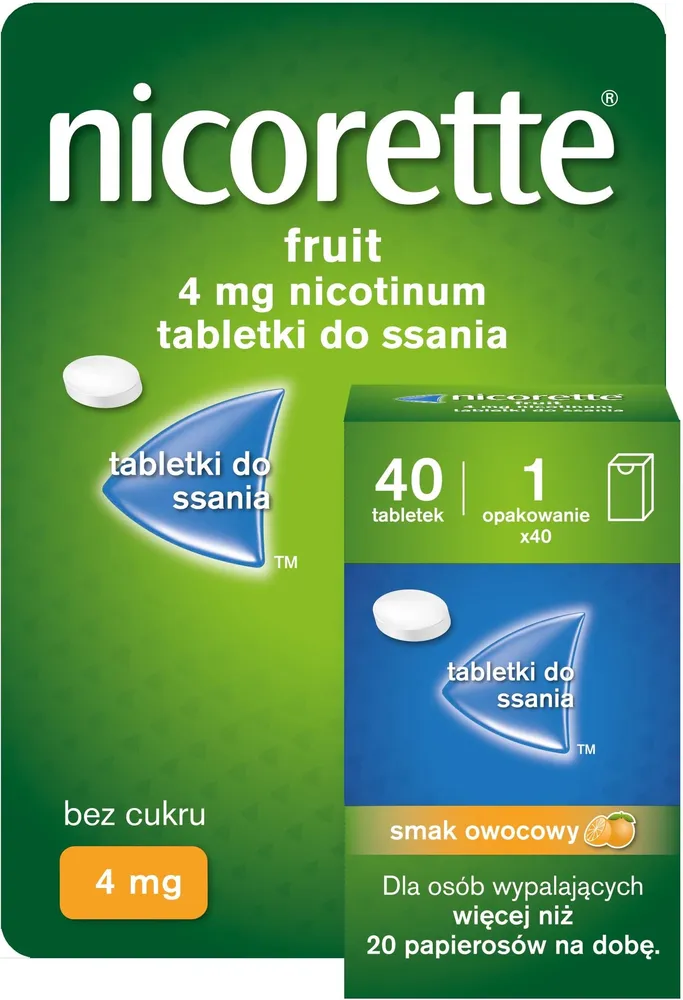
Table of Contents
Patient Information Leaflet
Nicorette Fruit, 2 mg, lozenges
Nicorette Fruit, 4 mg, lozenges
Nicotinum
Please read this leaflet carefully before taking this medicine, as it contains important information for you.
This medicine should always be taken exactly as described in this patient leaflet or as directed by your doctor or pharmacist.
- Keep this leaflet so that you can read it again if necessary.
- If you need advice or further information, please consult your pharmacist.
- If you experience any side effects, including any not listed in this leaflet, tell your doctor or pharmacist. See section 4.
- If after 9 months you still have difficulty refraining from smoking without the help of Nicorette Fruit, you should consult your doctor.
Table of Contents
- What Nicorette Fruit is and what it is used for
- Important information before using Nicorette Fruit
- How to use Nicorette Fruit
- Possible side effects
- How to store Nicorette Fruit
- Contents of the pack and other information
1. What Nicorette Fruit is and what it is used for
This medicine is used to relieve withdrawal symptoms and reduce nicotine cravings that occur when trying to stop smoking or reduce the number of cigarettes smoked. This treatment is intended for adult smokers aged 18 years and older.
Nicorette Fruit, 2 mg lozenges are suitable for use in individuals with low nicotine dependence, i.e. those who smoke their first cigarette more than 30 minutes after waking up or who smoke 20 or fewer cigarettes per day.
Nicorette Fruit, 4 mg lozenges are suitable for use in individuals with high nicotine dependence, i.e. those who smoke their first cigarette within 30 minutes of waking up or who smoke more than 20 cigarettes per day.
This medicine can help you to quit smoking immediately or to reduce the number of cigarettes smoked before quitting completely. If you feel you can stop smoking immediately, you should do so. However, if you think this would be too difficult, you may wish to reduce the number of cigarettes smoked as a first step towards complete abstinence. Further details are provided in section 3, "How to use Nicorette Fruit".
Nicorette Fruit helps relieve withdrawal symptoms that occur after stopping smoking, including nicotine cravings. When nicotine from tobacco is suddenly no longer supplied to the body, various unpleasant sensations, known as withdrawal symptoms, may develop, such as irritability, feelings of anger or depression, anxiety, restlessness, difficulty concentrating, increased appetite or weight gain, strong desire to smoke (craving), waking up at night or sleep disturbances. The nicotine contained in Nicorette Fruit can prevent these unpleasant sensations from occurring or reduce their intensity, and also reduce the urge to smoke.
To increase the chances of successfully quitting smoking, it is also recommended to seek counselling and psychological support.
2. Important information before using Nicorette Fruit
When not to use Nicorette Fruit:
- if the patient is allergic to nicotine or to any of the other ingredients of this medicine (listed in section 6);
- if the patient is under 12 years of age;
- if the patient has never smoked.
Warnings and precautions
Contact a doctor if the patient has any of the conditions listed below. The patient may still be able to use Nicorette Fruit, but should first consult a doctor in case of:
- recent myocardial infarction or stroke;
- chest pain (unstable angina) or symptoms of angina at rest;
- heart disease affecting the heart rate or rhythm (arrhythmia);
- high blood pressure that is not controlled by medication;
- history of allergic reactions, such as swelling of the lips, face and throat (angioedema) or itchy rash (urticaria); use of NRT may sometimes provoke such reactions;
- severe or moderately severe liver disease;
- severe kidney disease;
- diabetes;
- hyperthyroidism;
- adrenal gland tumour (pheochromocytoma);
- peptic ulcer disease of the stomach or duodenum;
- oesophagitis;
- history of epilepsy or seizures.
Nicorette Fruit should not be used by non-smokers.
Lozenges may pose a choking risk. Use with caution if the patient has difficulty swallowing solids or liquids, or frequently coughs while or after swallowing.
Children
The adult dose of this medicine may cause serious poisoning or even death in children. It is therefore essential to store Nicorette Fruit out of sight and reach of children.
Other medicines and Nicorette Fruit
Inform your doctor or pharmacist about all medicines currently used or recently used, as well as any medicines planned for future use. This is particularly important if taking medicines containing:
- theophylline for asthma;
- tacrine for Alzheimer's disease;
- clozapine for schizophrenia;
- ropinirole for treatment of Parkinson's disease.
Nicorette Fruit with food and drink
Do not eat or drink while using the lozenges.
Pregnancy, breastfeeding and fertility
It is very important to stop smoking during pregnancy, as smoking may impair fetal development and may lead to miscarriage or stillbirth. Ideally, a pregnant woman should stop smoking without using nicotine-containing medicines. However, if she is unable to do so, she may use Nicorette Fruit, but only after consultation with her obstetrician, general practitioner, or a specialist centre for treatment of tobacco addiction.
Nicorette Fruit should not be used during breastfeeding, as nicotine passes into breast milk and may affect the infant. If a doctor recommends using Nicorette Fruit, the lozenge should be taken immediately after breastfeeding and no later than 2 hours before the next breastfeeding session.
Smoking increases the risk of infertility in both women and men. The effect of nicotine on fertility is unknown.
Driving and operating machinery
No effects of the medicine on the ability to drive or operate machinery have been observed.
Nicorette Fruit contains less than 1 mmol of sodium (23 mg) per tablet, meaning the medicine is considered "sodium-free". The medicine also contains small amounts of sulphites derived from flavouring, which may rarely cause severe hypersensitivity reactions and bronchospasm. Nicorette Fruit contains polysorbate, which may cause allergic reactions.
3. How to use Nicorette Fruit
This medicine should always be taken in accordance with the instructions provided in the leaflet or as directed by a doctor or pharmacist. If in doubt, consult a doctor or pharmacist.
The way to use Nicorette Fruit depends on whether the patient:
(a) is quitting smoking immediately
(b) is quitting smoking gradually
Adults (18 years and older)
(a) Immediate smoking cessation
This applies to immediate cessation of smoking and using the lozenges to reduce nicotine cravings.
- Begin treatment by using 8 to 12 lozenges per day. As soon as the urge to smoke arises, place one lozenge in the mouth and allow it to dissolve.
- Use the lozenges in this way for up to 6 weeks, then gradually reduce the number of lozenges taken per day.
- When the patient is using only 1 or 2 lozenges per day, they should stop using them completely. After completely stopping smoking, the patient may occasionally experience a strong urge to smoke. In such cases, a lozenge may be used again.
(b) Gradual smoking cessation
This involves gradually replacing some cigarettes with lozenges. Once this goal is achieved, the patient completely stops smoking cigarettes and continues using the lozenges. Eventually, the use of lozenges is also discontinued.
Whenever the patient feels a strong urge to smoke, a Nicorette Fruit lozenge should be used instead of a cigarette to control nicotine cravings. The number of cigarettes smoked per day should be reduced to the lowest possible number. If the patient is unable to reduce the number of daily cigarettes after 6 weeks, they should consult an appropriate healthcare professional.
As soon as the patient feels ready, they should completely stop smoking. At this point, follow the instructions for immediate smoking cessation described above. This should be done as quickly as possible. If the attempt to quit smoking completely is unsuccessful within 6 months of starting treatment, consult an appropriate healthcare professional.
Do not exceed the recommended dose. Follow the instructions carefully and do not use more than 15 lozenges per day (24 hours).
If the patient feels the need to use the medicine for longer than 9 months in total, they should consult a doctor.
Children and adolescents
Adolescents aged 12–17 years
Nicorette Fruit should only be used on the advice of a doctor.
Children under 12 years of age
This medicine must not be given to children under 12 years of age.
Instructions for use
[Polypropylene container]
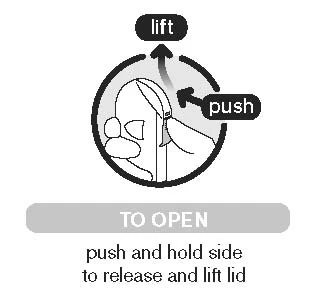
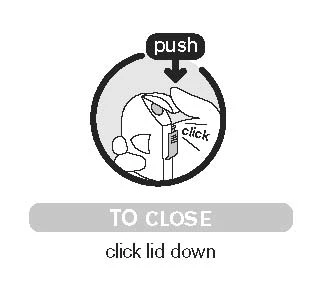
OPEN CLOSE
[Cardboard box]
Opening:
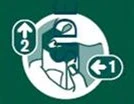
1- Gently press the tab marked "Press here"
2- Simultaneously pull the top part of the box firmly
Closing: Press the top part of the box down.
This medicine is intended for administration to the oral mucosa. It should be placed in the mouth and allowed to dissolve, releasing nicotine which is absorbed into the body through the lining of the mouth.
Place one lozenge in the mouth and move it from time to time from one side of the mouth to the other until it dissolves completely. This should take less than 20 minutes. The lozenges must not be chewed or swallowed whole. Do not eat or drink while the lozenge is in the mouth.
What to do if you feel the urge to return to smoking
If the patient:
- is worried about possibly starting to smoke again,
- has difficulty completely stopping the use of lozenges,
they should consult an appropriate healthcare professional. If the patient starts smoking again despite treatment, the healthcare professional can advise on how to achieve the best results with further courses of nicotine replacement therapy (NRT).
Accidental overdose of Nicorette Fruit
Smoking while using Nicorette Fruit may lead to nicotine overdose.
If the medicine is taken by a child or if the patient takes more Nicorette Fruit than recommended, immediately contact a doctor or go to the nearest hospital. Nicotine doses tolerated during treatment in adult smokers may cause severe poisoning and may be fatal in children.
Symptoms of overdose include: nausea, vomiting, increased salivation, abdominal pain, diarrhoea, excessive sweating, headache, dizziness, hearing disturbances, and marked weakness. After large doses, the following symptoms may occur: low blood pressure, weak and irregular pulse, breathing difficulties, exhaustion, circulatory collapse, and generalized seizures.
If you have any further questions about the use of this medicine, consult your doctor or pharmacist.
4. Possible adverse reactions
Like all medicines, this medicine can cause adverse reactions, although not everyone experiences them.
Symptoms associated with quitting smoking (withdrawal from nicotine)
Some of the adverse symptoms occurring when quitting smoking may be withdrawal symptoms caused by reducing the dose of nicotine administered. Possible symptoms include:
- irritability, aggression, impatience or frustration,
- feeling anxious, restlessness or difficulty concentrating,
- waking up at night or sleep disturbances,
- increased appetite or weight gain,
- malaise,
- craving for a cigarette (nicotine craving),
- decreased heart rate,
- bleeding gums or oral ulceration,
- dizziness or feeling of emptiness in the head,
- cough, sore throat, nasal congestion or runny nose,
- constipation. If the patient notices any of the following severe adverse reactions, they should stop using Nicorette Fruit and contact a doctor immediately, as these may be signs of a severe allergic reaction (frequency is unknown: frequency cannot be determined based on available data):
- urticaria (a skin condition characterized by itchy, raised or red patches),
- swelling of the face, tongue or throat,
- difficulty breathing,
- difficulty swallowing.
Most adverse reactions occur in the early phase of treatment. During the first few days of therapy, irritation in the mouth and throat may occur; however, most patients adapt to the treatment, and this symptom subsides during continued therapy.
Other possible adverse reactions:
Very common: may occur in more than 1 in 10 patients:
- cough,
- headache,
- hiccups,
- nausea,
- throat, oral cavity and tongue irritation.
Common: may occur in no more than 1 in 10 patients:
- local reactions such as burning sensation, oral inflammation, altered taste perception,
- sensation of cold, heat or tingling in the skin,
- dry mouth or increased salivation,
- indigestion,
- abdominal pain or discomfort,
- vomiting, flatulence or diarrhoea,
- heartburn,
- feeling of fatigue,
- hypersensitivity (allergy).
Uncommon: may occur in no more than 1 in 100 patients:
- nasal symptoms such as congestion, sneezing,
- wheezing (bronchospasm) or feeling of increased effort during breathing compared to normal (dyspnoea), throat tightness,
- skin redness or increased sweating,
- oral cavity reactions such as oral tingling, glossitis, oral ulceration, damage to the oral mucosa or voice changes, oral and throat pain, belching,
- palpitations, increased heart rate, arterial hypertension,
- rapid and irregular heartbeat, which may require appropriate treatment,
- rash and/or skin itching.
Rare: may occur in no more than 1 in 1,000 patients:
- difficulty swallowing, reduced sensation in the oral cavity,
- vomiting reflex.
Not known: frequency cannot be determined from available data:
- blurred vision, increased tear production,
- dry throat, gastric discomfort, lip pain,
- skin redness,
- convulsions.
Reporting of adverse reactions
If any adverse reactions occur, including those not listed in this leaflet, inform a doctor or pharmacist.
Adverse reactions can be reported directly to the Department of Monitoring Adverse Drug Reactions at the Office for Registration of Medicinal Products, Medical Devices and Biocidal Products: Al. Jerozolimskie 181C, 02-222 Warsaw, tel.: 22 49-21-301, fax: 22 49-21-309, website: https://smz.ezdrowie.gov.pl.
Adverse reactions can also be reported to the marketing authorization holder.
Reporting adverse reactions helps to provide more information on the safety of the medicine.
5. How to store Nicorette Fruit
- Keep the medicine out of the sight and reach of children.
- Do not use this medicine after the expiry date stated on the container and outer packaging. The expiry date refers to the last day of the specified month.
- Polypropylene container: store in the original packaging to protect from moisture.
- Cardboard box: store in the original packaging to protect from moisture. Use within 3 months after removing the protective foil.
- Do not reuse the medicine container to store anything else, as residue from the tablets may remain and could coat other items placed in the container.
- Medicines must not be disposed of via wastewater or household waste. Ask your pharmacist how to dispose of medicines no longer in use. This will help protect the environment.
6. Contents of the pack and other information
What Nicorette Fruit contains
The active substance is nicotine. Each lozenge contains 2 mg or 4 mg of nicotine (as nicotine cation exchange resin).
The other ingredients are:
- Lozenge core: mannitol (E 421), xanthan gum, Tutti Frutti flavour (containing trace amounts of sulphites), arabic gum (E 414), anhydrous sodium carbonate (E 500)(i), sucralose (E 955), potassium acesulfame (E 950), magnesium stearate (E 470b);
- Coating: hypromellose (E 464), Tutti Frutti flavour, titanium dioxide (E 171), sucralose (E 955), microcrystalline cellulose (E 460), potassium aluminium silicate (E 555), potassium acesulfame (E 950), polysorbate 80 (E 433).
Nicorette Fruit lozenges do not contain sugar.
What Nicorette Fruit looks like and contents of the pack
Oval lozenge, white to almost white, marked with “n” on one side and “2” or “4” on the other side, approximately 14 x 9 x 7 mm in size.
Pack sizes: Each PP container contains 20 lozenges. Packs may contain 1 container, 4 containers or 8 containers.
Each cardboard box contains 40 lozenges. Packs may contain 1 box, 2 boxes or 4 boxes.
Not all pack sizes may be marketed.
Marketing Authorisation Holder and Manufacturer
Marketing Authorisation Holder
McNeil AB, PO Box 941, 251 09 Helsingborg, Sweden
Manufacturer
McNeil AB, Norrbroplatsen 2, 251 09 Helsingborg, Sweden
Kenvue Belgium NV, Michel De Braeystraat 52, 2000 Antwerp, Belgium
Kenvue Germany GmbH, Johnson & Johnson Platz 2, 41470 Neuss, Germany
For further information, please contact:
email: [email protected]