Neupogen
Poland
Table of Contents
- Patient Information Leaflet
- 1. What Neupogen is and what it is used for
- 2. Important information before using Neupogen
- 3. How to use Neupogen
- 4. Possible adverse reactions
- 5. How to store Neupogen
- 6. Contents of the pack and other information
- 7. Instructions for Neupogen Injection
- Information intended exclusively for healthcare professionals:
Patient Information Leaflet
Neupogen, 600 micrograms/ml (30 million IU/0.5 ml), solution for injection in prefilled syringe
Neupogen, 960 micrograms/ml (48 million IU/0.5 ml), solution for injection in prefilled syringe
filgrastim
Please read this leaflet carefully before using this medicine, as it contains important information for you.
- Keep this leaflet for future reference.
- If you have any further questions, please consult your doctor, pharmacist, or nurse.
- This medicine has been prescribed for a specific individual. Do not share it with others. It may harm someone else, even if their symptoms are similar.
- If you experience any adverse reactions, including those not listed in this leaflet, inform your doctor, pharmacist, or nurse. See section 4.
Leaflet Contents
- What Neupogen is and what it is used for
- Important information before using Neupogen
- How to use Neupogen
- Possible side effects
- How to store Neupogen
- Contents of the pack and other information
- Instructions for injecting Neupogen
1. What Neupogen is and what it is used for
Neupogen is a white blood cell growth factor (granulocyte colony-stimulating factor) belonging to a group of medicines called cytokines. Growth factors are proteins naturally produced in the body and can be manufactured using biotechnology methods for use as medicines. Neupogen stimulates the bone marrow to produce more white blood cells.
A low white blood cell count (neutropenia) can occur for several reasons. Neutropenia reduces the body's ability to fight infections. Neupogen stimulates the bone marrow to rapidly produce new white blood cells.
Neupogen may be used:
- to increase white blood cell counts after chemotherapy, thereby helping to prevent infections;
- to increase white blood cell counts after bone marrow transplantation, thereby helping to prevent infections;
- prior to high-dose chemotherapy to stimulate the bone marrow to produce more stem cells, which can be collected from the patient and later reinfused after treatment. Stem cells may be collected from the patient or from a donor. Transplanted stem cells return to the bone marrow and produce blood cells;
- to increase white blood cell counts in patients with severe chronic neutropenia, thereby helping to prevent infections;
- in patients with advanced HIV infection to reduce the risk of developing infections.
2. Important information before using Neupogen
When not to use Neupogen
- if the patient is allergic to filgrastim or any of the other ingredients of this medicine (listed in section 6.).
Warnings and precautions
Before starting treatment with Neupogen, discuss this with your doctor, pharmacist, or
nurse.
Before starting treatment, inform your doctor if the patient has:
- sickle cell anaemia; Neupogen may cause a worsening of the disease.
- allergy to natural rubber (latex). The needle cover attached to the end of the pre-filled syringe is made of natural rubber and may cause an allergic reaction.
- osteoporosis (bone disease).
Immediately inform the doctor if, during treatment with Neupogen, the patient experiences:
- sudden signs of hypersensitivity such as: rash, itching or hives, swelling of the face, lips, tongue or other parts of the body, shortness of breath, wheezing or difficulty breathing, as these may be symptoms of a severe allergic reaction (hypersensitivity),
- swelling of the face or ankles, blood in the urine or urine appearing brown, or reduced urine output (glomerulonephritis),
- pain in the upper left part of the abdomen, pain on the left side of the rib cage, or pain at the top of the left shoulder [these may be symptoms of an enlarged spleen (splenomegaly) or possibly spleen rupture],
- unusual bleeding or bruising [these may be symptoms of reduced platelet count (thrombocytopenia) and decreased blood clotting ability],
- in patients with cancer and in healthy donors, symptoms of aortitis (inflammation of the aorta – the large blood vessel carrying blood from the heart to the rest of the body) have rarely been observed. Symptoms may include: fever, abdominal pain, malaise, back pain, and increased inflammatory markers. If such symptoms occur, inform the doctor immediately.
Loss of response to filgrastim
If the patient experiences loss of response or inability to maintain response to filgrastim treatment, the doctor will investigate possible causes, including potential development of neutralizing antibodies against filgrastim.
The doctor may recommend closer monitoring of the patient; see section 4 of the leaflet.
In patients with severe chronic neutropenia, there is a risk of developing blood cancers [leukaemia, myelodysplastic syndrome (MDS)]. Discuss with the doctor the risk of developing blood cancers and which tests should be performed. If the patient develops blood cancers or there is a likelihood of their development, Neupogen should not be used unless otherwise directed by the doctor.
Only individuals aged between 16 and 60 years may serve as stem cell donors.
Exercise caution when using other white blood cell-stimulating products
Neupogen belongs to a group of medicines that stimulate the production of white blood cells. The treating doctor should always clearly document the brand name of the medicine administered to the patient.
Neupogen and other medicines
Inform the doctor or pharmacist about all medicines currently or recently taken by the patient, as well as any medicines the patient intends to take.
Pregnancy and breastfeeding
Studies with Neupogen have not been conducted in pregnant or breastfeeding women.
Use of Neupogen during pregnancy is not recommended.
It is important to inform the doctor:
- if the patient is pregnant or breastfeeding,
- if she suspects she may be pregnant, or
- if she plans to become pregnant.
If the patient becomes pregnant during treatment with Neupogen, she should inform the doctor immediately.
Unless otherwise advised by the doctor, breastfeeding should be discontinued during treatment with Neupogen.
Driving and operating machinery
Neupogen may have a minor influence on the ability to drive and operate machinery. This medicine may cause dizziness. It is recommended that the patient wait and assess how they feel after taking Neupogen before driving or operating machinery.
Neupogen contains sodium
The medicine contains less than 1 mmol (23 mg) of sodium per pre-filled syringe, meaning the medicine is considered "sodium-free".
Neupogen contains sorbitol
The medicine contains 50 mg of sorbitol in each ml.
Sorbitol is a source of fructose. If the patient has previously been diagnosed with hereditary fructose intolerance, a rare genetic disorder, the patient must not take this medicine. In patients with hereditary fructose intolerance, the body cannot break down the fructose contained in this medicine, which may lead to severe adverse reactions.
Inform the doctor before taking this medicine if the patient has hereditary fructose intolerance or if the patient cannot consume sweet foods or drinks for a prolonged period due to nausea, vomiting, or unpleasant adverse effects such as: bloating, stomach cramps, or diarrhoea.
3. How to use Neupogen
This medicine should always be used exactly as prescribed by the doctor. If in doubt, consult
your doctor, nurse, or pharmacist.
How Neupogen is administered and what dose to use
Neupogen is usually given daily by injection into the tissue just under the skin
(subcutaneous injection). The medicine may also be given daily by slow injection into a vein (intravenous infusion). The dose depends on the type of condition and the patient's body weight.
Your doctor will inform you what dose of the medicine to use.
Patients undergoing bone marrow transplantation after chemotherapy:
Usually, the first dose of Neupogen will be given at least 24 hours after chemotherapy
or at least 24 hours after bone marrow transplantation.
Patients or caregivers may be trained to administer subcutaneous injections so that treatment can continue at home. Patients should not attempt this unless properly trained by their doctor.
How long to use Neupogen
Neupogen should be used until the white blood cell count returns to normal. Blood tests will be performed regularly to monitor the number of white blood cells in the body. Your doctor will inform you how long Neupogen should be used.
Use in children
Neupogen is used in children receiving chemotherapy or suffering from severe neutropenia (a significant decrease in white blood cells). Dosing in children receiving chemotherapy is the same as in adults.
Use of a higher than recommended dose of Neupogen
Do not increase the dose prescribed by your doctor. If you suspect that a higher than recommended dose has been given, contact your doctor as soon as possible.
Missed dose of Neupogen
If a dose is missed or if a lower than recommended dose was given, inform your doctor as soon as possible. Do not use a double dose to make up for a missed dose.
If you have any further questions about the use of this medicine, consult your doctor, nurse, or pharmacist.
4. Possible adverse reactions
Like all medicines, this medicine can cause adverse reactions, although not everyone will experience them.
You should immediately inform your doctor if, during treatment:
- an allergic reaction occurs, including weakness, sudden drop in blood pressure, breathing difficulties, facial swelling (anaphylaxis), skin rash, itchy rash (urticaria), swelling of the face, lips, mouth, tongue or throat (angioedema), or shortness of breath (dyspnoea).
- cough, fever, and breathing problems (dyspnoea) occur, as these may be symptoms of acute respiratory distress syndrome.
- kidney damage (glomerulonephritis) occurs. Kidney damage has been observed in patients receiving Neupogen. Immediate contact with a doctor is necessary if facial or ankle swelling occurs, blood appears in the urine, urine becomes brownish in colour, or urine output is reduced compared to normal.
- any of the following adverse reactions occur, either individually or in combination:
- swelling or puffiness, possibly associated with reduced urination, difficulty breathing, abdominal swelling or a feeling of fullness, and general fatigue. These symptoms usually develop rapidly.
These may be symptoms of a condition called "capillary leak syndrome", which causes
leakage of blood from small blood vessels into the patient's body and requires
immediate medical intervention.
- any combination of the following symptoms occurs:
- fever or chills, or a sensation of intense cold, rapid heart rate, confusion, disorientation, shortness of breath, severe pain or discomfort, and sticky or clammy skin. These may be symptoms of a condition called "sepsis" (also known as blood poisoning), a severe infection leading to systemic inflammation, which may be life-threatening and requires immediate medical attention.
- pain in the upper left part of the abdomen, pain on the left side under the ribs, or pain at the top of the shoulder occurs, as this may indicate spleen dysfunction [enlargement of the spleen (splenomegaly) or rupture of the spleen].
- blood appears in the urine (haematuria) in patients with severe chronic neutropenia. The doctor may recommend regular urine testing if this adverse reaction occurs or if protein is present in the urine (proteinuria).
A common adverse reaction following administration of Neupogen is muscle or
bone pain (musculoskeletal pain), which can usually be relieved by commonly used
analgesic medicines. In patients undergoing stem cell or bone marrow transplantation,
graft-versus-host disease may occur – this is a reaction of donor cells against the recipient's body; symptoms and signs of this disease include rash on the palms of the hands or soles of the feet, and ulcers and pain in the oral cavity, intestines, liver, skin, eyes, lungs, vagina, and joints.
In healthy stem cell donors, increased white blood cell count (leukocytosis) and decreased platelet count, leading to impaired blood clotting ability (thrombocytopenia), have been observed; these will be monitored by the doctor.
Very common adverse reactions (may affect more than 1 in 10 people):
- decreased platelet count, reducing blood clotting ability (thrombocytopenia)
- decreased number of red blood cells (anaemia)
- headache
- diarrhoea
- vomiting
- nausea
- unusual hair loss or thinning (alopecia)
- fatigue
- pain and inflammation of the mucous membrane of the gastrointestinal tract from the mouth to the anus (mucositis)
- fever
Common adverse reactions (may affect up to 1 in 10 people):
- lung inflammation (bronchitis)
- upper respiratory tract infection
- urinary tract infection
- decreased appetite
- sleep disturbances (insomnia)
- dizziness
- reduced sensation, especially in the skin (hypoesthesia)
- tingling or numbness in hands or feet (paraesthesia)
- low blood pressure (hypotension)
- high blood pressure (hypertension)
- cough
- coughing up blood (haemoptysis)
- pain in the mouth and throat (oropharyngeal pain)
- nosebleeds
- constipation
- pain in the mouth
- enlarged liver (hepatomegaly)
- rash
- redness of the skin (erythema)
- muscle cramps
- pain during urination (dysuria)
- chest pain
- pain
- general weakness (asthenia)
- general malaise
- swelling of hands and feet (peripheral oedema)
- increased activity of certain enzymes in the blood
- changes in blood biochemical test results
- transfusion reaction
Uncommon adverse reactions (may affect up to 1 in 100 people):
- increased white blood cell count (leukocytosis)
- allergic reaction (hypersensitivity)
- rejection of bone marrow transplant (graft-versus-host disease)
- high levels of uric acid in the blood, which may cause gout (hyperuricaemia) (elevated uric acid levels in blood)
- liver damage caused by blockage of small liver veins (hepatic veno-occlusive disease)
- impaired lung function leading to breathlessness (respiratory failure)
- swelling and/or fluid accumulation in the lungs (pulmonary oedema)
- inflammation of lung tissue (interstitial lung disease)
- abnormal lung X-ray findings (lung infiltrate)
- bleeding from the lungs (pulmonary haemorrhage)
- impaired oxygen uptake in the lungs (hypoxia)
- raised skin rash (maculopapular rash)
- a disease causing reduced bone density, weakening, fragility, and increased susceptibility to fractures (osteoporosis)
- injection site reaction
Rare adverse reactions (may affect up to 1 in 1000 people):
- severe bone, chest, intestinal, or joint pain (sickle cell crisis with infarcts)
- sudden, life-threatening allergic reaction (anaphylactic reaction)
- joint pain and swelling resembling gout (pseudogout)
- disturbance in the body's fluid regulation, possibly causing oedema (fluid volume disorders)
- inflammation of blood vessels in the skin (cutaneous vasculitis)
- purple, raised, painful skin lesions on limbs, sometimes also on the face and neck, accompanied by fever (Sweet's syndrome)
- worsening of symptoms of rheumatoid arthritis
- unusual changes in urine
- decreased bone mineral density
- inflammation of the aorta (the large blood vessel carrying blood from the heart to the rest of the body), see section 2
- blood cell formation outside the bone marrow (extramedullary haematopoiesis)
Reporting of adverse reactions
If any adverse reactions occur, including any adverse reactions not listed
in this leaflet, you should inform your doctor or nurse. Adverse reactions can
be reported directly to:
Department of Monitoring of Adverse Drug Reactions, Office for Registration of Medicinal Products, Medical Devices and Biocidal Products
Al. Jerozolimskie 181C
02-222 Warsaw
Tel.: +48 22 49 21 301
Fax: +48 22 49 21 309
Website: https://smz.ezdrowie.gov.pl
Adverse reactions can also be reported to the marketing authorisation holder.
Reporting adverse reactions helps provide more information on the safety of this medicine.
5. How to store Neupogen
Keep this medicine out of the sight and reach of children.
Store in a refrigerator (2°C – 8°C).
Keep the pre-filled syringe in the outer cardboard package to protect it from light.
Accidental freezing does not affect the quality of the medicine.
Do not use this medicine after the expiry date stated on the vial and carton after: Expiry or EXP. The expiry date refers to the last day of the stated month.
Do not use this medicine if you notice any discoloration, cloudiness, or particles. The solution should be clear and colourless.
Medicines must not be disposed of via wastewater or household waste. Ask your pharmacist how to dispose of medicines no longer required. Such measures will help protect the environment.
6. Contents of the pack and other information
What Neupogen contains
- The active substance is filgrastim with a strength of 600 micrograms/ml (30 million IU/0.5 ml) or 960 micrograms/ml (48 million IU/0.5 ml).
- The other ingredients are: glacial acetic acid, 1 N sodium hydroxide, sorbitol (E420), polysorbate 80, water for injections.
What Neupogen looks like and contents of the pack
Neupogen is a clear, colourless solution for injection (injection)/concentrate for solution for infusion (sterile concentrate) in a pre-filled syringe.
Neupogen is available in packs containing one pre-filled syringe.
Marketing Authorisation Holder
Amgen Europe B.V.
Minervum 7061
4817 ZK Breda
The Netherlands
Marketing Authorisation Holder
Amgen Europe B.V.
Minervum 7061
4817 ZK Breda
The Netherlands
Manufacturer
Amgen Technology (Ireland) Unlimited Company
Pottery Road
Dun Laoghaire
Co Dublin
Ireland
Manufacturer
Amgen NV
Telecomlaan 5-7
1831 Diegem
Belgium
For more detailed information about this medicine, please contact the local representative of the marketing authorisation holder:
Poland
Amgen Biotechnologia Sp. z o.o.
ul. Puławska 145
02-715 Warsaw
Tel.: +48 22 581 3000
[email protected]
This medicine is authorised for marketing in the European Economic Area countries and in the United Kingdom (Northern Ireland) under the name Neupogen,
except in Cyprus, Greece and Italy, where it is marketed under the name Granulokine.
Other sources of information
Detailed information about this medicine is available on the website of the Office for Registration of Medicinal Products, Medical Devices and Biocidal Products (www.urpl.gov.pl/).
7. Instructions for Neupogen Injection
This section provides information on administering Neupogen injections.
Important: Do not attempt to self-inject the medicine unless you have been properly trained by your doctor or a nurse.
Neupogen injection is administered into the tissue just beneath the skin. This method of administration is called a subcutaneous injection.
Equipment needed for self-administration
To give a subcutaneous injection of Neupogen, you will need:
- a Neupogen pre-filled syringe,
- alcohol swabs or similar cleansing wipes.
What should be done before self-administering a Neupogen subcutaneous injection?
- Take one pre-filled syringe out of the refrigerator and leave it at room temperature for about 30 minutes, or gently hold it in your hand for a few minutes. This will make the injection less painful. Do not heat Neupogen in any other way (e.g. in a microwave or hot water).
- Do not shake the pre-filled syringe.
- Hold the tray in your hand and peel off the paper backing.
- Turn the tray over and remove the pre-filled syringe from the tray.
- Do not remove the needle cap until you are fully prepared to administer the injection.
- Check the expiry date on the label of the pre-filled syringe (EXP). Do not use the medicine if the last day of the month indicated on the label has passed.
- Check the appearance of the solution. Neupogen should be a clear, colourless liquid. Do not use the medicine if you notice discolouration, cloudiness, or particles.
- Wash your hands thoroughly.
- Gather all necessary supplies in a clean, easily accessible, and well-lit area.
How to prepare the Neupogen injection
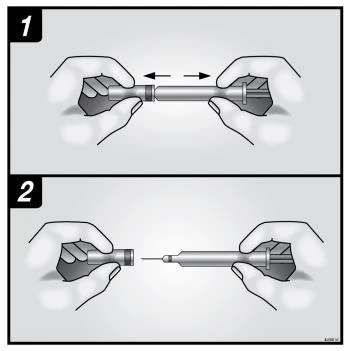
Before injecting Neupogen:
- To avoid bending the needle, hold the glass barrel of the pre-filled syringe safely and carefully remove the needle cap straight off, without twisting, as shown in figures 1 and 2.
- Do not touch the needle or press the plunger.
- Small air bubbles may be visible in the pre-filled syringe. It is not necessary to remove these air bubbles before injection. Injecting a solution containing small air bubbles is harmless.
- The pre-filled syringe is now ready for use.
Where should Neupogen be self-injected?
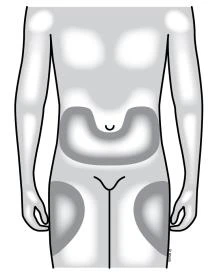
The best sites for self-injection are the upper thighs and the abdomen.
If another person is administering the injection, the back of the upper arms may also be used.
You may change the injection site if the previous site becomes red or painful.
How to self-administer the Neupogen injection
- Clean the skin with an alcohol swab and grasp (but do not squeeze) a fold of skin between your thumb and index finger.
- Insert the needle fully into the skin, as demonstrated by your nurse or doctor.
- Push the plunger steadily while maintaining the skin fold, injecting the medicine until the syringe is completely empty.
- Remove the needle and release the skin fold.
- If a drop of blood appears at the injection site, gently wipe it with a cotton swab or gauze. Do not rub the skin at the injection site. If necessary, a plaster (bandage) may be applied to the injection site.
- Each syringe is for single use only. Do not reuse any Neupogen remaining in the syringe.
Important: If you have any doubts or questions, do not hesitate to contact your doctor or nurse for assistance.
Disposal of used syringes
- Do not recap used needles, as this may result in accidental needle-stick injury.
- Store used syringes out of sight and reach of children.
- Do not dispose of used syringes in household waste bins. Ask your pharmacist for instructions on how to properly dispose of used or unused syringes.
Information intended exclusively for healthcare professionals:
When used as a concentrate for solution for infusion, Neupogen should be
diluted in 20 ml of 5% glucose solution. Detailed information is available in the Summary of Product Characteristics.