Neosine
Poland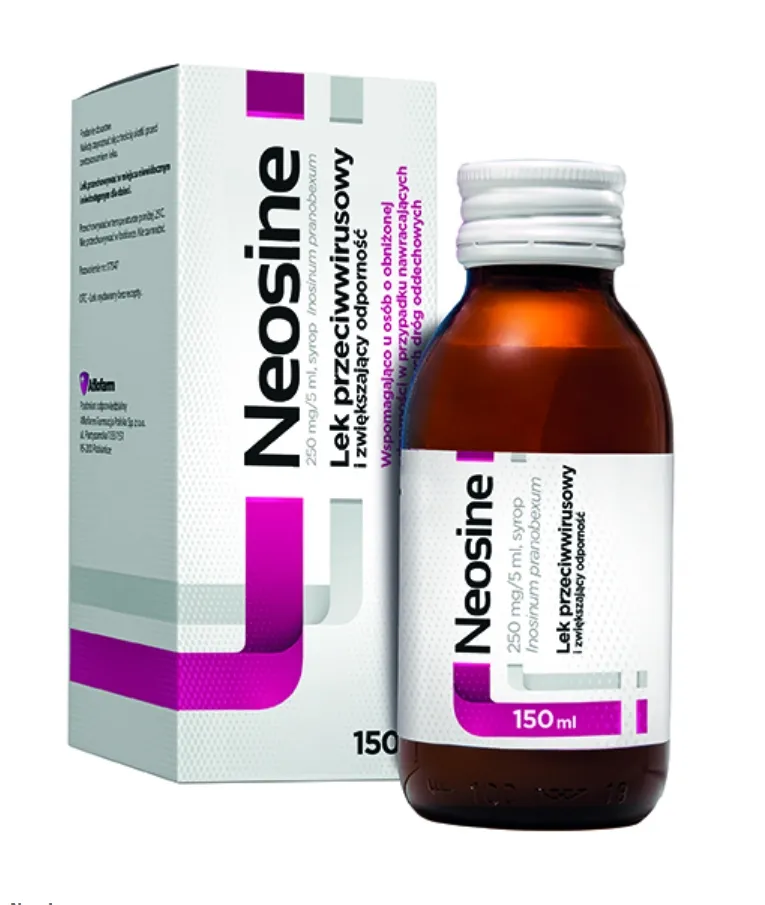
Table of Contents
Package leaflet: information for the patient
Neosine, 250 mg/5 ml, syrup
Inosinum pranobexum
Please read carefully all the information in this leaflet before taking the medicine, as it contains
important information for the patient.
This medicine should always be taken exactly as described in this patient leaflet or as directed by
the physician or pharmacist.
- Keep this leaflet so that you can read it again if necessary.
- If you need advice or further information, consult your pharmacist.
- If you experience any adverse reactions, including any adverse reactions not listed in this leaflet, inform your doctor or pharmacist. See section 4.
- If there is no improvement or if you feel worse after 5 to 14 days, contact your doctor.
Table of contents of the leaflet
- What Neosine is and what it is used for
- Important information before taking Neosine
- How to take Neosine
- Possible side effects
- How to store Neosine
- Contents of the pack and other information
1. What Neosine is and what it is used for
Neosine is an antiviral and immunostimulating medicine (it enhances the activity of the
immune system).
Neosine contains the active substance inosine pranobex, which inhibits in vitro replication of
pathogenic human viruses of the Herpes group.
Indications for Neosine
As an adjunctive treatment in individuals with reduced immunity, in cases of recurrent upper
respiratory tract infections.
For the treatment of herpes labialis and facial skin herpes caused by herpes simplex virus (Herpes
simplex). Neosine may be used only in patients who have previously been diagnosed with
infection by herpes simplex virus.
If there is no improvement or if you feel worse after 5 to 14 days, consult your doctor.
2. Important information before taking Neosine
When not to take Neosine
- If the patient is allergic to the active substance (inosine pranobex) or to any of the other ingredients of this medicine (listed in section 6). Symptoms of an allergic reaction may include: skin rash, itching, difficulty breathing, swelling of the face, lips, throat or tongue.
- If the patient currently has an acute attack of gout (severe joint pain with swelling and redness of the skin, or effusion in large joints), or tests have shown increased blood uric acid levels.
Warnings and precautions
Before starting Neosine, discuss this with your doctor or pharmacist:
- if the patient has had gout attacks or elevated uric acid levels – the medicine may cause transient increases in uric acid levels in blood and urine;
- if the patient has had kidney stones;
- if the patient has impaired kidney function – during treatment with Neosine, the doctor will regularly monitor blood tests and kidney function;
- if treatment is long-term (lasting 3 months or longer), the doctor will order regular blood tests and monitoring of kidney and liver function.
Children
Neosine should not be used in children under 1 year of age.
Neosine with other medicines
Tell your doctor or pharmacist about all medicines the patient is currently taking, has recently taken, or plans to take.
Especially inform your doctor if the patient is taking:
- medicines for the treatment of gout (e.g. allopurinol or other xanthine oxidase inhibitors);
- medicines that increase uric acid excretion, including diuretics (which increase urine production), e.g. furosemide, torasemide, ethacrynic acid, hydrochlorothiazide, chlorthalidone, indapamide;
- medicines that suppress the immune system (so-called immunosuppressants, used in organ transplant patients or in atopic dermatitis);
- zidovudine (a medicine used in the treatment of AIDS).
Pregnancy and breastfeeding
If the patient is pregnant or breastfeeding, suspects she might be pregnant, or is planning to become pregnant, she should consult a doctor or pharmacist before using this medicine.
Neosine should not be taken during pregnancy or breastfeeding without consulting a doctor, who will assess whether the benefits to the mother outweigh the risks to the child.
Driving and operating machinery
This medicine may affect the ability to drive and operate machinery.
If headache, dizziness or drowsiness occur, the patient should not drive, operate machinery, or perform any tasks requiring concentration. See also section 4.
Neosine contains sucrose, methyl parahydroxybenzoate (E 218), propyl parahydroxybenzoate, propylene glycol (E 1520), and sodium
The medicine contains the sugar sucrose
If the patient has previously been diagnosed with intolerance to certain sugars, the patient should consult a doctor before taking this medicine.
The medicine contains 3315 mg of sucrose in 5 ml of syrup. This should be taken into account in patients with diabetes.
Methyl parahydroxybenzoate (E 218) and propyl parahydroxybenzoate
The medicine may cause allergic reactions (including delayed-type reactions).
Propylene glycol (E 1520) and banana flavouring AR2876
The medicine contains 512 mg of propylene glycol in 5 ml of syrup.
Before administering the medicine to a child under 5 years of age, consult a doctor or pharmacist, especially if the child is taking other medicines containing propylene glycol or alcohol.
Pregnant or breastfeeding women should not take this medicine without medical advice.
The doctor may decide to perform additional tests in such patients.
Patients with impaired liver or kidney function should not take this medicine without medical advice. The doctor may decide to perform additional tests in such patients.
Sodium
The medicine contains 10.3 mg of sodium in 5 ml of syrup.
The medicine contains 41.2 mg of sodium (main component of table salt) in 20 ml of syrup. This corresponds to 2.06% of the maximum recommended daily sodium intake in the adult diet.
3. How to take Neosine
This medicine should always be taken exactly as described in this patient information leaflet or as directed by your doctor or pharmacist. If in doubt, consult your doctor or pharmacist.
The medicine should be taken orally.
Recommended dose
Adults, including elderly people (over 65 years of age):
usually 20 ml of syrup 3 or 4 times daily (1 ml of syrup per kg of body weight per day).
The maximum dose is 4 g of inosine pranobex (i.e. 80 ml of syrup) per day.
Children over 1 year of age:
1 ml of syrup per kg of body weight per day. The medicine should be administered 3 times daily, according to the table below:
Dose (ml of syrup)
Child's body weight
Administer 3 times daily
10 to 14 kg 5 ml
15 to 20 kg 5 to 7.5 ml
21 to 30 kg 7.5 to 10 ml
31 to 40 kg 10 to 15 ml
41 to 50 kg 15 to 17.5 ml
The measuring device provided with the medicine package should be used to ensure accurate dosing.
Duration of treatment
Treatment usually lasts from 5 to 14 days. It is recommended to continue taking the medicine for 1 to 2 days after symptoms have resolved.
Taking more Neosine than recommended
There is no data available regarding overdose with Neosine.
In case of any doubts or feeling unwell, contact your doctor immediately.
Missing a dose of Neosine
If a dose is missed, take it as soon as possible and continue treatment as scheduled. Do not take a double dose to make up for a missed dose.
If you have any further questions about the use of this medicine, consult your doctor or pharmacist.
4. Possible adverse reactions
Like all medicines, this medicine can cause adverse reactions, although not everyone will experience them.
The following adverse reactions may occur
Common (in 1 to 10 out of 100 patients):
- transient increase in blood and urine uric acid levels;
- increased liver enzyme activity or blood urea nitrogen concentration;
- nausea, with or without vomiting;
- abdominal pain;
- itching, skin rash;
- headache or dizziness;
- fatigue, malaise;
- joint pain.
Uncommon (occur in 1 to 10 out of 1,000 patients):
- diarrhoea;
- constipation;
- nervousness;
- drowsiness or difficulty sleeping (insomnia);
- excessive urine production (polyuria).
Reporting of adverse reactions
If any adverse reactions occur, including any adverse reactions not listed in this leaflet, inform your doctor, pharmacist, or nurse. Adverse reactions can be reported directly to the Department of Monitoring Adverse Drug Reactions at the Office for Registration of Medicinal Products, Medical Devices and Biocidal Products:
Al. Jerozolimskie 181C, 02-222 Warsaw
Tel.: +48 22 49 21 301
Fax: +48 22 49 21 309
Website: https://smz.ezdrowie.gov.pl
Adverse reactions can also be reported to the marketing authorization holder.
Reporting adverse reactions helps to provide more information on the safety of the medicine.
5. How to store Neosine
Keep this medicine out of sight and reach of children.
Do not use after the expiry date stated on the label and on the carton. The expiry date refers to the last day of the stated month.
Store below 25°C. Do not store in the refrigerator. Do not freeze.
Medicines should not be disposed of via wastewater or household waste. Ask your pharmacist how to dispose of medicines no longer required. This will help protect the environment.
6. Contents of the packaging and other information
What Neosine contains
- The active substance is inosine pranobex (a complex containing inosine and 2-hydroxypropyltrimethylammonium 4-acetamidobenzoate in a molar ratio of 1:3). 1 ml of syrup contains 50 mg of inosine pranobex. 5 ml of syrup contains 250 mg of inosine pranobex.
- Other ingredients: methyl 4-hydroxybenzoate (E 218), propyl 4-hydroxybenzoate, sucrose, citric acid, sodium hydroxide, propylene glycol (E 1520), banana flavour AR2876 [contains, among others, 1,2-propylene glycol (E 1520), eugenol, geraniol, linalool, citronellol, limonene], purified water.
What Neosine looks like and contents of the pack
Neosine is a syrup with a banana flavour and a slightly bitter taste.
Packaging: a coloured glass bottle containing 150 ml of syrup, closed with a white aluminium cap, with a polypropylene measuring cup of 15 ml capacity (graduated to allow dosing in volumes of 2.5 ml and multiples thereof), in a cardboard box.
Marketing Authorisation Holder
Aflofarm Farmacja Polska Sp. z o.o.
ul. Partyzancka 133/151
95-200 Pabianice
tel. (42) 22-53-100
Manufacturer
Aflofarm Farmacja Polska Sp. z o.o.
ul. Krzywa 2
95-030 Rzgów