Navelbine
Poland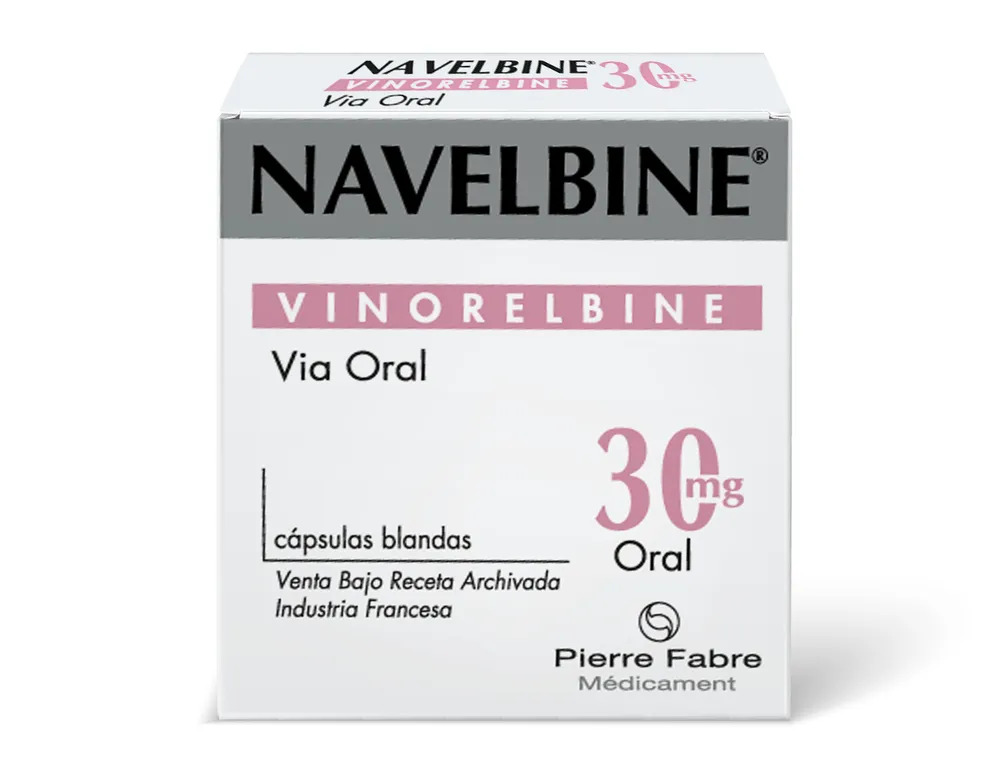
Table of Contents
Patient Information Leaflet
NAVELBINE 20 mg, soft capsules
NAVELBINE 30 mg, soft capsules
Vinorelbinum
Please read all of this leaflet carefully before taking this medicine, because it contains
important information for you.
- Keep this leaflet. You may need to read it again.
- If you have any further questions, ask your doctor or pharmacist.
- This medicine has been prescribed for you only. Do not pass it on to other people. It may harm them, even if their symptoms are the same as yours.
- If you experience any side effects, including any not listed in this leaflet, tell your doctor or pharmacist. See section 4.
Contents of the leaflet
- What Navelbine is and what it is used for
- What you need to know before taking Navelbine
- How to take Navelbine
- Possible side effects
- How to store Navelbine
- Contents of the pack and other information
1. What Navelbine is and what it is used for
Navelbine contains the active substance vinorelbine (as tartrate) and belongs to a group of medicines called Vinca alkaloids, which are used in the treatment of cancer.
Navelbine is used in the treatment of certain types of lung cancer and certain types of breast cancer in patients over 18 years of age.
2. Important information before using Navelbine
When not to use Navelbine:
- if the patient is allergic (hypersensitive) to the active substance (vinorelbine) or to other drugs containing Vinca alkaloids used in cancer treatment, or to any of the other ingredients of this medicine (listed in section 6); during breastfeeding;
- following previous surgery of the stomach or small intestine, or in the presence of intestinal disorders;
- if the patient has low neutrophil granulocytes and (or) low platelets, or if they currently have or have had an acute infection within the past two weeks;
- if the patient has recently been vaccinated against yellow fever or plans such vaccination;
- if the patient requires long-term oxygen therapy.
Warnings and precautions
Before starting treatment with Navelbine, speak with your doctor or pharmacist if:
- the patient previously suffered a heart attack or severe chest pain;
- the ability to perform daily activities has significantly decreased;
- the patient has undergone radiotherapy, particularly if the liver was within the radiation field;
- the patient shows signs of infection such as fever, chills, cough;
- vaccination is planned. The administration of live, attenuated vaccines (e.g. measles, mumps, rubella) together with Navelbine is not recommended, as it may increase the risk of life-threatening vaccine-induced disease;
- liver function is impaired;
- the patient is pregnant.
Before starting and during treatment with Navelbine, blood counts must be monitored to ensure the treatment is safe for the patient.
If blood count results are unsatisfactory, the doctor may recommend repeating the test or may delay treatment until blood parameters return to normal.
Children and adolescents
Navelbine is not recommended for use in children under 18 years of age.
Navelbine with other medicines
Inform your doctor about all medicines the patient is currently taking or has recently taken, as well as any medicines they plan to take.
The doctor should pay particular attention if the patient is taking the following medicines:
- anticoagulant drugs (blood thinners);
- anticonvulsants (e.g. phenytoin);
- antifungal drugs (e.g. itraconazole);
- anticancer drugs such as mitomycin C or lapatinib;
- drugs that suppress the immune system, such as cyclosporine and tacrolimus.
Concurrent use of Navelbine with other drugs that damage bone marrow (causing changes in blood counts) may increase the severity of certain adverse effects.
Pregnancy, breastfeeding and effects on fertility
If the patient is pregnant or breastfeeding, suspects she may be pregnant, or is planning to have a child, she should consult her doctor before using this medicine and seek genetic counseling, as vinorelbine may damage genetic material in cells, posing a potential risk to the unborn child. Use of Navelbine during pregnancy is contraindicated unless the doctor determines that individual expected benefits clearly outweigh potential risks. Breastfeeding must be avoided during treatment with Navelbine.
Women of childbearing potential must use effective contraception methods during treatment and for 7 months after its completion.
Men receiving Navelbine should not plan to father a child during treatment and for 4 months after its completion.
Before starting treatment, men should seek advice regarding sperm preservation due to the possibility of irreversible infertility caused by Navelbine therapy. Effective contraception methods must be used during treatment and for 4 months after its completion.
Driving and operating machinery
No studies have been conducted on the effects of Navelbine on the ability to drive vehicles or operate machinery. Under no circumstances should patients drive or operate machinery if they feel unwell or if the doctor advises against performing such activities.
Navelbine soft capsules contain sorbitol, alcohol, sodium
Navelbine 20 mg contains 5.36 mg of sorbitol in each capsule.
Navelbine 30 mg contains 8.11 mg of sorbitol in each capsule.
Navelbine 20 mg contains 5 mg of alcohol (ethanol) in each capsule.
Navelbine 30 mg contains 7.5 mg of alcohol (ethanol) in each capsule.
The amount of alcohol (ethanol) in each capsule of this medicine (Navelbine 20 mg, 30 mg) is equivalent to less than 1 ml of beer or 1 ml of wine.
The small amount of alcohol in this medicine will not cause noticeable effects.
This medicine (Navelbine 20 mg, 30 mg) contains less than 1 mmol of sodium (23 mg) per capsule, meaning the medicine is considered "sodium-free".
3. How to use Navelbine
This medicine should always be used exactly as prescribed by the doctor or pharmacist. If in doubt,
consult the doctor or pharmacist.
Before and during treatment, the doctor will order blood tests. The results of these tests will determine the dose and timing
of therapy initiation. The doctor will specify the strength and number of capsules, how often they should be taken, and the duration
of treatment.
The dosage will depend on the patient's body surface area, blood test results, and general condition.
The total weekly dose should not exceed 160 mg.
Navelbine should not be used more frequently than once a week.
Before starting treatment with Navelbine, check whether the capsules are damaged.
The liquid contents of the capsule are irritant and may cause damage upon contact with the eye, skin, or mucous membranes.
If contact occurs, wash the affected area immediately and thoroughly with water or saline solution.
Do not swallow a damaged capsule; return it to the doctor or pharmacist instead.
How to open the child-resistant packaging of the capsule:
- Cut the blister along the line.
- Peel back the soft plastic foil.
- Push the capsule out through the aluminum foil.
How to take Navelbine soft capsules:
- Navelbine should be swallowed with water, although it is recommended to take it with a light meal. Do not take the capsules with hot drinks, as this accelerates their dissolution.
- Do not suck or chew the capsules.
- If a capsule is accidentally chewed or sucked, rinse the mouth thoroughly with water or saline solution immediately and contact the doctor without delay.
- If vomiting occurs within a few hours after taking the medicine, contact the doctor immediately. Do not take a double dose to make up for the missed dose.
Use of antiemetic medicines
Nausea and vomiting may occur during treatment with Navelbine (see section 4 "Possible side effects"). If the doctor prescribes antiemetic medicines, always take them strictly as directed.
Taking Navelbine with a light meal may help reduce nausea.
Taking more Navelbine than prescribed
If more Navelbine is taken than prescribed, contact the doctor immediately. Serious changes in blood counts may occur, leading to symptoms of infection (such as fever, chills, cough), and severe constipation may also develop.
Missing a dose of Navelbine
If a dose of Navelbine is missed, do not take a double dose to make up for it. Contact the doctor, who will decide whether to adjust the dosing schedule.
Stopping Navelbine treatment
The decision to discontinue treatment should be made by the doctor. If the patient wishes to stop treatment early, they should discuss it with the doctor.
If there are any further doubts regarding the use of this medicine, consult the doctor or pharmacist.
4. Possible adverse reactions
Like all medicines, this medicine can cause adverse reactions, although not everyone will experience them.
You should contact your doctor immediately if any of the following adverse reactions occur during treatment with Navelbine:
- chest pain, shortness of breath, and fainting, which may be symptoms of a blood clot in the lung vessels (pulmonary embolism);
- headaches, altered mental state, which may lead to confusion and coma, seizures, blurred vision, and high blood pressure, which may be symptoms of a neurological disorder such as posterior reversible encephalopathy syndrome (PRES);
- signs of severe infections, such as cough, fever, chills;
- severe constipation associated with abdominal pain due to lack of bowel movements for several days;
- severe dizziness, feeling of emptiness in the head when standing up, signs of significant drop in blood pressure;
- severe chest pain not previously experienced, which may indicate impaired heart function due to insufficient blood flow; this is known as myocardial infarction (in some cases leading to death);
- difficulty breathing, dizziness, drop in blood pressure, rash covering the entire body or swelling of the eyelids, lips, or throat, which may be symptoms of an allergic reaction.
Adverse reactions occurring very commonly (may affect more than 1 in 10 patients)
- Infections at various sites;
- Gastrointestinal disorders: diarrhoea, constipation, abdominal pain, nausea, vomiting;
- Inflammation of the mucous membrane of the mouth;
- Decreased number of red blood cells, which may cause paleness of the skin, weakness, or shortness of breath;
- Reduced platelet count may increase the risk of bleeding or haemorrhagic spots (bruising);
- Decreased number of white blood cells, which may cause susceptibility to infections;
- Weakening of certain reflexes, sometimes sensory disturbances;
- Hair loss, usually mild in severity;
- Fatigue;
- Fever;
- Malaise;
- Weight loss, loss of appetite.
Adverse reactions occurring commonly (may affect less than 1 in 10 patients)
- Difficulties with muscle coordination;
- Visual disturbances;
- Shallow breathing, cough;
- Difficulties with urination and other symptoms related to the urinary and genital system;
- Difficulty falling asleep;
- Headache, dizziness, taste disturbances;
- Inflammation of the oesophagus, difficulty swallowing food or liquids;
- Skin reactions;
- Chills;
- Weight gain;
- Joint pain, jaw pain, muscle pain;
- Pain in various parts of the body and pain in the tumour area;
- High blood pressure;
- Liver function disorders (abnormal liver function test results).
Adverse reactions occurring uncommonly (may affect less than 1 in 100 patients)
- Heart failure, which may cause shallow breathing and swelling around the ankles, irregular heartbeat;
- Loss of muscle control, possibly accompanied by gait disturbances, speech problems, and changes or disturbances in eye movement (ataxia).
Adverse reactions with unknown frequency (frequency cannot be estimated from available data)
- Blood infection (septicaemia) with symptoms such as high fever and worsening general health condition;
- Heart attack (myocardial infarction);
- Gastrointestinal bleeding;
- Low sodium levels in the blood, leading to weakness, muscle twitching, fatigue, confusion, loss of consciousness, associated with excessive production of a hormone causing fluid retention (Syndrome of Inappropriate Antidiuretic Hormone Secretion - SIADH).
Reporting of adverse reactions
If any adverse symptoms occur, including any adverse symptoms not listed in this leaflet, inform your doctor or pharmacist. Adverse reactions can be reported directly to the Department of Monitoring Adverse Drug Reactions at the Office for Registration of Medicinal Products, Medical Devices and Biocidal Products, Al. Jerozolimskie 181C, 02-222 Warsaw, Tel: +48 22 49 21 301, Fax: +48 22 49 21 309, Website: https://smz.ezdrowie.gov.pl
Adverse reactions can also be reported to the marketing authorisation holder.
Reporting adverse reactions helps provide more information on the safety of this medicine.
5. How to store Navelbine
Store at a temperature of 2 °C to 8 °C (in the refrigerator), in the original packaging.
Keep the medicine out of the sight and reach of children.
Do not use this medicine after the expiry date stated on the blister and carton following: EXP.
The expiry date refers to the last day of the specified month.
Medicines should not be disposed of via wastewater or household waste. Ask your pharmacist
what to do with medicines no longer required. This will help protect the environment.
6. Contents of the pack and other information
What Navelbine contains
- The active substance is vinorelbine (as vinorelbine tartrate) in a dose of 20 mg or 30 mg.
- The other ingredients are: Capsule contents: anhydrous ethanol, purified water, glycerol, polyethylene glycol 400. Capsule shell for 20 mg: gelatin, glycerol 85%, ANIDRISORB 85/70 (D-sorbitol and 1,4-sorbitan solution), iron oxide yellow (E 172), titanium dioxide (E 171), medium-chain triglycerides, mixture of medium-chain triglycerides and PHOSAL 53 MCT (phosphatidylcholine, glycerides, ethanol). Capsule shell for 30 mg: gelatin, glycerol 85%, ANIDRISORB 85/70 (D-sorbitol and 1,4-sorbitan solution), iron oxide red (E 172), titanium dioxide (E 171), medium-chain triglycerides, mixture of medium-chain triglycerides and PHOSAL 53 MCT (phosphatidylcholine, glycerides, ethanol). Ink composition: carmine acid (E 120), sodium hydroxide, hexahydrate aluminium chloride, hypromellose, propylene glycol, isopropyl alcohol, purified water.
What Navelbine looks like and contents of the pack
Navelbine 20 mg, soft capsules: light brown soft capsules printed with N20
Navelbine 30 mg, soft capsules: pink soft capsules printed with N30
Navelbine is available in packaging containing 1 blister with 1 soft capsule.
Not all pack sizes may be marketed.
Marketing Authorisation Holder
Pierre Fabre Medicament
Les Cauquillous
81500 Lavaur
France
Manufacturer:
FAREVA PAU
FAREVA PAU 1,
Avenue du Béarn
64320 IDRON
France
For any further information, please contact the local representative of the Marketing Authorisation Holder:
Pierre Fabre Medicament Polska Sp. z o.o.
ul. Belwederska 20/22
00-762 Warsaw
Tel: 022 559 63 00