Myconolak
Poland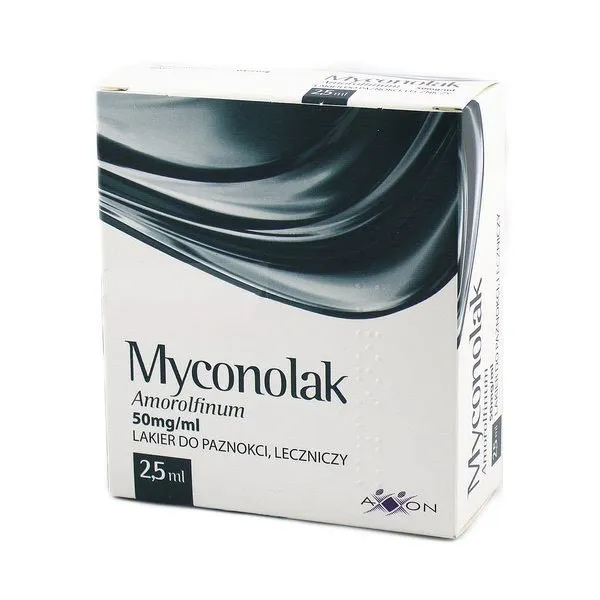
Table of Contents
Package leaflet: Information for the user
Myconolak, 50 mg/ml, nail lacquer for medicinal use
Amorolfinum
Please read all of this leaflet carefully before using this medicine, because it contains
important information for the patient.
- Keep this leaflet, so that you can read it again if necessary.
- If you have any further questions, please ask your doctor or pharmacist.
- This medicine has been prescribed for a specific individual. Do not pass it on to others. This medicine may harm other people, even if their symptoms are the same.
- If the patient experiences any adverse reactions, including any adverse reactions not listed in this leaflet, inform the doctor or pharmacist. See section 4.
Contents of the leaflet
- What Myconolak is and what it is used for
- What you need to know before using Myconolak
- How to use Myconolak
- Possible side effects
- How to store Myconolak
- Contents of the pack and other information
1. What Myconolak is and what it is used for
- Myconolak is used in the treatment of fungal infections of the nails.
- Myconolak contains the active substance amorolfine (as hydrochloride), which belongs to a group of medicines known as antifungals.
- It kills various fungi that may cause nail infections.
2. Important information before using Myconolak
When not to use Myconolak
- If the patient is allergic to amorolfine or any of the other ingredients of this medicine (listed in section 6).
Warnings and precautions
This medicine may cause allergic reactions, some of which may be serious. If an allergic reaction occurs, stop using the medicine immediately, remove it promptly using nail polish remover or the swabs provided in the package, and consult a doctor.
Do not reapply the medicine. If any of the following symptoms occur, seek immediate medical help:
- Difficulty breathing
- Swelling of the face, lips, tongue or throat
- Severe skin rash
Before starting treatment with Myconolak, discuss the following with your doctor or pharmacist:
- If the patient has diabetes.
- If the patient is being treated for a weakened immune system.
- If the patient has poor blood circulation in hands and feet.
- If the nails are severely damaged or infected.
- If Myconolak gets into the eyes or ears, rinse immediately with water and contact your doctor, pharmacist or nearest hospital immediately.
- Avoid contact of the nail lacquer with mucous membranes (e.g. mouth or nostrils).
- Do not inhale the medicine.
- Do not apply the lacquer to the skin around the nail.
Myconolak and other medicines
The patient may use the nail lacquer while taking other medicines.
Use of other nail products
Do not attach artificial nails during treatment with Myconolak.
Cosmetic nail polish may be used, but at least 10 minutes should be waited after applying Myconolak before applying the cosmetic polish. Before reapplying Myconolak, remove any cosmetic nail polish.
Pregnancy and breastfeeding
If the patient is pregnant or breastfeeding, suspects she may be pregnant, or is planning to have a baby, she should consult her doctor or pharmacist before using this medicine.
Before using any medicine, consult your doctor or pharmacist.
3. How to use Myconolak
This medicine should always be used as directed by the physician. In case of doubts,
contact your doctor or pharmacist.
Myconolak nail lacquer should be applied to the infected nail surface of the hands or
feet once or twice a week, exactly as prescribed by the doctor.
Instructions for use:
| Step 1: Filing the nail Before applying the first coat of nail lacquer, file as much of the infected nail area as possible, including the nail surface, using the provided nail file. WARNING: Do not use nail files that have been used on infected nails for healthy nails, as this may spread the infection. To avoid transmission of infection, ensure that no one else uses the patient's nail files. |  |
| Step 2: Cleaning the nail Use one of the included swabs (or nail cleanser) to clean the nail surface. |
Repeat steps 1 and 2 for each nail affected by the disease.

Step 3: Obtaining a small amount of the nail lacquer from the bottle
Dip the spatula into the bottle containing the nail lacquer.

Do not wipe off the lacquer against the neck of the bottle before applying it.
Step 4: Application of the lacquer
Apply the lacquer evenly over the entire surface of the nail.

Repeat this same step for each infected nail.
Leave the lacquer on the nail to dry for approximately 3 minutes.
Wait at least 10 minutes before applying cosmetic nail polish.
Step 5: Cleaning the spatulas
The spatulas provided are reusable. However, it is important to clean the spatula after each use with the same cotton swab used to wipe the nail surface earlier.

Avoid touching the treated nails with the cotton swab. Close the bottle of nail lacquer tightly.
Carefully dispose of the cotton swab, as it is flammable.
- Before reapplying the nail lacquer, first remove the old medicinal and cosmetic nail polish from the nails using a cotton swab, and if necessary, file down the nails.
- Reapply the lacquer as described previously.
- Once dried, the applied lacquer is resistant to soap and water, so the patient may wash their hands and feet as usual. If there is a need to use chemical substances such as paint thinners or turpentine, rubber gloves or other impermeable (waterproof) gloves should be worn to protect the nail lacquer.
- It is important to continue using Myconolak until the infection has resolved and healthy nails have regrown. This usually takes 6 months for fingernails and 9–12 months for toenails.
The physician will likely monitor the treatment progress approximately every 3 months.
Accidental ingestion of Myconolak
If the patient or anyone else accidentally swallows the lacquer, contact a physician, pharmacist, or hospital immediately.
Missed application of Myconolak
Do not be concerned if the lacquer is not applied at the correct time. As soon as the patient remembers, resume application in the same manner as before.
Discontinuation of Myconolak nail lacquer treatment
Do not stop treatment before being instructed to do so by the physician, as the infection may recur.
If there are any further questions regarding the use of this medicine, consult a physician or pharmacist.
4. Possible adverse effects
Like all medicines, this medicine can cause adverse effects, although not everybody will experience them.
You should stop using the medicine and contact your doctor immediately if the following occurs:
- Systemic allergic reaction (a serious allergic reaction which may involve swelling of the face, lips, tongue or throat, difficulty in breathing, and/or severe skin rash).
Rare (may affect up to 1 in 1,000 patients):
- Nail damage, nail discoloration, brittle or fragile nails.
Very rare (may affect up to 1 in 10,000 patients):
- Skin burning sensation.
Frequency not known (frequency cannot be estimated from the available data):
- Erythema, itching, urticaria, skin blisters, and allergic skin reactions.
Reporting of adverse effects
If any adverse effects occur, including any adverse effects not listed
in this leaflet, please inform your doctor, pharmacist, or nurse. Adverse effects
can be reported directly to the Department of Monitoring Adverse Drug Reactions of the Office for Registration of Medicinal Products, Medical Devices and Biocidal Products:
Al. Jerozolimskie 181C, 02-222 Warsaw, tel.: 22 49-21-301, fax: 22 49-21-309.
Website: https://smz.ezdrowie.gov.pl
Adverse effects can also be reported to the marketing authorization holder.
Reporting adverse effects can help provide more information on the safety of this medicine.
5. How to store Myconolak
- Keep this medicine out of the sight and reach of children.
- Do not use this medicine after the expiry date stated on the pack after: EXP. The expiry date refers to the last day of the stated month.
- Store below 30°C. Protect from high temperatures. Store the bottle in an upright position, tightly closed.
Flammable product! Keep away from fire and flames!
Medicines must not be disposed of via wastewater or household waste. Ask your pharmacist how to dispose of medicines no longer required. These measures will help protect the environment.
6. Contents of the package and other information
What Myconolak contains
The active substance in Myconolak is amorolfine 50 mg/ml (corresponding to 55.74 mg/ml
of amorolfine hydrochloride).
The other ingredients are: methacrylic acid-ammonium methacrylate copolymer (type A), triacetin,
butyl acetate, ethyl acetate and absolute ethanol.
What Myconolak looks like and contents of the pack
Myconolak is a clear, colourless to pale yellow solution.
Available pack sizes: 2.5 ml, 3 ml, 5 ml; 1 bottle supplied with swabs (or without swabs), spatulas and nail files (or without nail files).
Myconolak is also available in pack sizes of 7.5 ml and 10 ml; 2 bottles supplied with swabs (or without swabs), spatulas and nail files (or without nail files).
Not all pack sizes may be marketed.
Marketing Authorisation Holder
Aristo Pharma Sp. z o.o.
Baletowa Street 30
02-867 Warsaw
Poland
Manufacturer
Chanelle Medical
Loughrea, Co. Galway
Ireland
For further information about this medicinal product and its names in the European Economic Area countries, please contact the Marketing Authorisation Holder:
Aristo Pharma Sp. z o.o., Baletowa Street 30, 02-867 Warsaw
Phone: +48 22 855 40 93
Fax: +48 22 855 40 95