Molsidomine wzf
Poland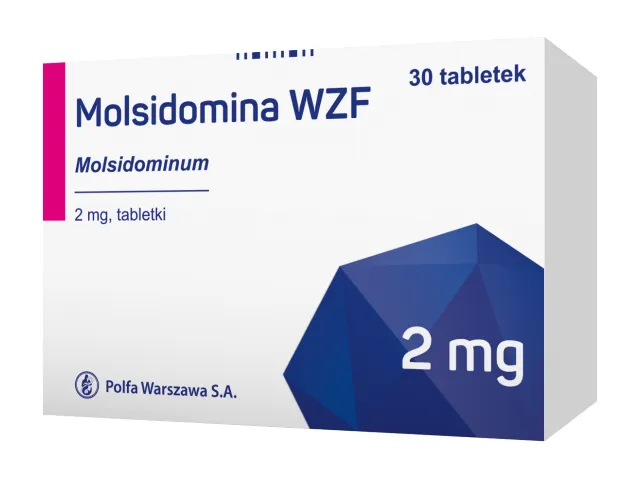
Table of Contents
Package leaflet: Information for the patient
MOLSIDOMINE WZF, 2 mg, tablets
MOLSIDOMINE WZF, 4 mg, tablets
Molsidominum
Please read carefully the entire leaflet before taking this medicine, as it contains
important information for the patient.
- Keep this leaflet, as you may need to read it again.
- If you have any questions, please consult your doctor, pharmacist, or nurse.
- This medicine has been prescribed for a specific individual. Do not pass it on to others. It may harm other people, even if their symptoms are the same.
- If you experience any adverse effects, including any not listed in this leaflet, inform your doctor, pharmacist, or nurse. See section 4.
Table of contents
- What Molsidomine WZF is and what it is used for
- Important information before taking Molsidomine WZF
- How to take Molsidomine WZF
- Possible side effects
- How to store Molsidomine WZF
- Contents of the pack and other information
1. What Molsidomine WZF is and what it is used for
Molsidomine dilates arterial blood vessels and relieves spasms of the coronary arteries. It reduces
the heart's oxygen demand and cardiac workload, thereby improving exercise tolerance and reducing
the frequency of angina attacks.
Indications for Molsidomine WZF:
- prevention and treatment of angina pectoris symptoms;
- coronary insufficiency;
- improvement of exercise tolerance in patients with ischemic heart disease.
2. Important information before using Molsidomina WZF
When not to use Molsidomina WZF:
-
if the patient is allergic to molsidomine or any of the other ingredients of this medicine (listed in section 6);
-
if the patient has acute circulatory failure (shock, acute phase of myocardial infarction with low ventricular filling pressure, left ventricular failure associated with low filling pressure);
-
if the patient has severe hypotension;
-
if the patient is pregnant, especially during the first three months;
-
if the patient is breastfeeding;
-
if the patient is concurrently taking sildenafil, tadalafil, vardenafil (medicines used for erectile dysfunction);
-
if the patient is concurrently taking so-called stimulators of soluble guanylate cyclase (medicines acting to dilate pulmonary arteries – blood vessels connecting the heart with the lungs,
facilitating the heart's pumping of blood into the lungs), due to increased risk of significant
reduction in blood pressure.
Molsidomina WZF is not suitable for the treatment of acute angina attacks.
Warnings and precautions
Before starting treatment with Molsidomina WZF, discuss with your doctor, pharmacist,
or nurse if any of the following warnings apply to you. -
Special caution is required in patients with severe cardiac dysfunction (patients with so-called hypertrophic cardiomyopathy with outflow tract obstruction, constrictive pericarditis or cardiac tamponade, acute myocardial infarction with left ventricular dysfunction, aortic and/or mitral valve stenosis).
-
In case of myocardial infarction, Molsidomina WZF should be administered only under strict medical supervision and close hemodynamic monitoring.
-
In patients with low blood pressure and in elderly patients, especially those taking other vasodilating medicines or dehydrated (e.g. after using diuretics), sudden drop in blood pressure may occur. In cases of increased risk of hypotensive reaction (i.e. reaction related to lowering of blood pressure), the doctor will carefully monitor the patient's condition and may adjust the dosage.
-
Concurrent use of molsidomine and medicines used for erectile dysfunction (sildenafil, tadalafil, vardenafil) is contraindicated, as it may lead to significant, sudden and dangerous reduction in blood pressure, resulting in fainting and collapse – see above section "When not to use Molsidomina WZF." Talk to your doctor if you plan to take medicines for erectile dysfunction. Before prescribing molsidomine, the doctor will instruct the patient not to take erectile dysfunction medicines and molsidomine simultaneously, not to use molsidomine within at least 24 hours after taking sildenafil or vardenafil, and at least 48 hours after taking tadalafil.
-
In patients with liver or kidney impairment, the doctor may modify the dosage depending on the patient's condition. In patients with hepatic impairment, the doctor may recommend starting treatment with a lower dose and gradually increasing it until the desired therapeutic effect is achieved. This particularly applies to patients with liver impairment who are also taking vasodilating medicines.
Molsidomina WZF and other medicines
Tell your doctor or pharmacist about all medicines you are currently taking or have recently taken,
as well as any medicines you plan to take.
- Molsidomine may enhance the effect of vasodilating medicines (e.g. so-called nitrates, beta-blockers, calcium antagonists), which may result in excessive lowering of blood pressure.
- Concurrent use of molsidomine and iloprost may strongly inhibit platelet aggregation (clumping of platelets).
- During treatment with molsidomine, taking medicines used for erectile dysfunction (sildenafil, tadalafil, vardenafil) is contraindicated, as it may cause sudden, excessive and dangerous drop in arterial blood pressure – see above section "When not to use Molsidomina WZF." Talk to your doctor if you plan to take medicines for erectile dysfunction – see above section "Warnings and precautions."
- Concurrent use of molsidomine and ergot alkaloids (medicines used in the treatment of migraine, circulatory disorders, venous diseases) is not recommended, as they may counteract each other’s therapeutic effects.
- Concurrent use of molsidomine and stimulators of soluble guanylate cyclase is contraindicated due to increased risk of arterial hypotension – see above section "When not to use Molsidomina WZF."
Molsidomina WZF with food, drink and alcohol
Tablets may be taken before, during or after meals.
Tablets should be swallowed with sufficient fluid (about half a glass).
Alcohol enhances the effect of molsidomine. Alcohol should not be consumed during treatment with
Molsidomina WZF.
Pregnancy, breastfeeding, effect on fertility
If the patient is pregnant or breastfeeding, suspects she may be pregnant, or is planning to have a
child, she should consult her doctor or pharmacist before using this medicine.
Use of molsidomine in pregnant women, especially during the first trimester, is
contraindicated.
Molsidomine passes into breast milk.
Use of molsidomine in breastfeeding women is contraindicated.
There are no data on the effect of molsidomine on human fertility. Animal studies did not
show negative effects on fertility.
Driving and operating machinery
Some adverse effects (e.g. dizziness) may impair the patient's ability to concentrate and react, and may pose a risk in situations where these abilities are particularly important (e.g. operating machinery or driving vehicles). The patient may perform such activities only with explicit approval from the doctor. Consult your doctor before using this medicine.
Molsidomina WZF 2 mg tablets contain sucrose, monohydrate lactose and orange yellow, lake (E 110), sodium
Molsidomina WZF 4 mg tablets contain suc sugar, monohydrate lactose and carmine red, lake (E 124), sodium
If the patient has previously been diagnosed with intolerance to certain sugars, the patient should
consult a doctor before taking this medicine.
The medicine may cause allergic reactions.
Molsidomina WZF 2 mg contains less than 1 mmol (23 mg) of sodium per tablet, meaning the medicine
is considered "sodium-free".
Molsidomina WZF 4 mg contains less than 1 mmol (23 mg) of sodium per tablet, meaning the medicine
is considered "sodium-free".
3. How to use Molsidomina WZF
This medicine should always be taken exactly as directed by your doctor or pharmacist. If in doubt,
consult your doctor or pharmacist.
Your doctor will determine the dose and timing of administration individually, depending on the severity
of the disease and the patient's daily activity pattern.
The medicine may be taken before, during, or after meals.
Typically, 1 to 2 mg 3 or 4 times daily (3 to 8 mg of molsidomine per day).
If necessary, the dose may be increased to 4 mg 3 or 4 times daily (12 to 16 mg
of molsidomine per day).
Use of a higher than recommended dose of Molsidomina WZF
Symptoms of overdose, depending on its severity, include low blood pressure
(hypotension), slowed heart rate, weakness, dizziness, drowsiness, collapse, and shock.
Management: contact your doctor immediately. In case of ingestion of too high a dose,
the doctor may consider gastric lavage. If necessary, symptomatic treatment will be applied.
Missed dose of Molsidomina WZF
Do not take a double dose to make up for a missed dose.
Stopping treatment with Molsidomina WZF
If you have any further questions regarding the use of this medicine, consult your
doctor or pharmacist.
4. Possible adverse reactions
Like all medicines, this medicine can cause adverse reactions, although not everyone will experience them.
You must stop taking this medicine and seek immediate medical advice or go to the nearest hospital emergency department
if allergic reactions occur, including
urticaria, swelling of the face, lips, tongue and (or) throat, which may cause difficulty
in breathing or swallowing (see information below).
The observed adverse reactions are defined as follows:
Common (less than 1 in 10 people):
- Headaches. These occur especially at the beginning of treatment and usually resolve during continued treatment. Adjusting the dose by the physician according to the patient's condition may reduce or eliminate this adverse reaction.
Uncommon (less than 1 in 1,000 people):
- Hypersensitivity reactions (e.g. skin reactions, bronchospasm);
- Dizziness;
- Significant decrease in blood pressure. Molsidomine usually lowers resting blood pressure. Undesirable lowering of blood pressure (e.g. dizziness) occurs in 1 to 10% of patients, which may require dose reduction or discontinuation of treatment - the decision will be made by the physician. Rarely, a significant drop in blood pressure with symptoms such as circulatory collapse and shock may occur;
- Nausea;
- Allergic skin reactions.
Rare (less than 1 in 10,000 people):
- Anaphylactic shock (a hypersensitivity reaction with acute course, accompanied by low blood pressure, tissue swelling, and breathing difficulties).
Not known (frequency cannot be estimated from available data):
- Low platelet count (thrombocytopenia);
- Facial flushing, skin rash;
- Lowering of arterial blood pressure, especially when changing to an upright position.
Reporting of adverse reactions
If any adverse reactions occur, including any adverse reactions not listed
in this leaflet, you should inform your doctor, pharmacist, or nurse. Adverse reactions can be reported directly to the Department of Monitoring Adverse Drug Reactions of the Office for Registration of Medicinal Products, Medical Devices
and Biocidal Products:
Al. Jerozolimskie 181C
02-222 Warsaw
Phone: + 48 22 49 21 301
Fax: + 48 22 49 21 309
Website: https://smz.ezdrowie.gov.pl
Adverse reactions can also be reported to the marketing authorization holder.
Reporting adverse reactions helps to provide more information on the safety of the medicine.
5. How to store Molsidomina WZF
Store below 25°C.
Keep blister packs in the outer packaging to protect from light.
Keep the medicine out of the sight and reach of children.
Do not use this medicine after the expiry date stated on the carton and blister pack. The expiry date refers to the last day of the stated month.
The marking on the packaging following the abbreviation EXP indicates the expiry date, and following the abbreviation Lot/LOT indicates the batch number.
Medicines should not be disposed of via wastewater or household waste. Ask your pharmacist how to dispose of medicines no longer required. Such measures will help protect the environment.
6. Contents of the packaging and other information
What Molsidomina WZF 2 mg tablets contain
- The active substance is molsidomine. Each tablet contains 2 mg of molsidomine.
- Other ingredients are: monohydrate lactose; sucrose; potato starch; tartrazine, lake (E 110); povidone K-25; magnesium stearate.
What Molsidomina WZF 4 mg tablets contain
- The active substance is molsidomine. Each tablet contains 4 mg of molsidomine.
- Other ingredients are: monohydrate lactose; sucrose; potato starch; cochineal red, lake (E 124); povidone K-25; magnesium stearate.
What Molsidomina WZF looks like and contents of the pack
Molsidomina WZF 2 mg: tablets of uneven light orange colour, round, biconvex, with bevelled edges and a score line on one side, facilitating division into equal doses.
Molsidomina WZF 4 mg: tablets of uneven pink colour, round, biconvex, with bevelled edges and a score line on one side, facilitating division into equal doses.
Molsidomina WZF is available in aluminium/PVC blisters containing 30 tablets, packed in a cardboard box.
Marketing Authorisation Holder and Manufacturer
Marketing Authorisation Holder
POLPHARMA S.A. Pharmaceutical Works
ul. Pelplińska 19, 83-200 Starogard Gdański
tel. +48 22 364 61 01
Manufacturer
POLPHARMA S.A. Pharmaceutical Works
Production Plant in Nowa Dęba
ul. Metalowca 2
39-460 Nowa Dęba