Mitomycin accord
Poland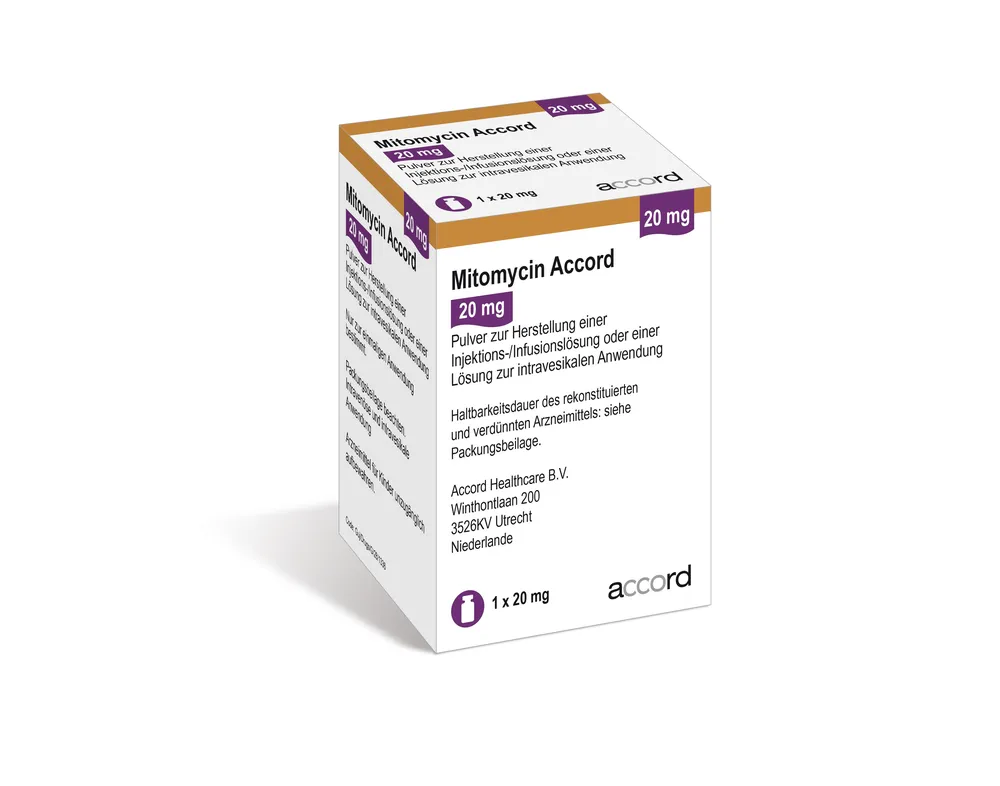
Table of Contents
- Package leaflet: Information for the user
- 1. What Mitomycin Accord is and what it is used for
- 2. Important information before using Mitomycin Accord
- 3. How to take Mitomycin Accord
- 4. Possible adverse reactions
- 5. How to store Mitomycin Accord
- 6. Contents of the pack and other information
- Information intended exclusively for healthcare professionals:
Package leaflet: Information for the user
Mitomycin Accord, 10 mg, powder for solution for injection/infusion or for
intravesical use
Mitomycin Accord, 20 mg, powder for solution for injection/infusion or for
intravesical use
Mitomycinum
Please read all of this leaflet carefully before using this medicine, because it contains important information for you.
- Keep this leaflet. You may need to read it again.
- If you have any further questions, ask your doctor.
- This medicine has been prescribed for you personally. Do not pass it on to others. It may harm someone else even if their symptoms are the same as yours.
- If you experience any side effects, including any not listed in this leaflet, tell your doctor, pharmacist or nurse. See section 4.
Contents of the leaflet
- What Mitomycin Accord is and what it is used for
- What you need to know before using Mitomycin Accord
- How to use Mitomycin Accord
- Possible side effects
- How to store Mitomycin Accord
- Contents of the pack and other information
1. What Mitomycin Accord is and what it is used for
Mitomycin is an anticancer medicine, which means it prevents or slows down the division of cancer cells by affecting their metabolism in various ways. The action of anticancer medicines is based on the fact that one of the differences between cancer cells and healthy cells is that cancer cells divide more rapidly due to lack of control over their division.
Indications for use
Mitomycin is used in the treatment of malignant tumours to relieve symptoms (so-called palliative treatment).
Intravenous administration
Mitomycin is administered intravenously, either as monotherapy (i.e. chemotherapy using a single active substance) or in combination with other anticancer agents (i.e. combination chemotherapy using several active substances). Mitomycin is active against the following malignant tumours:
- Advanced metastatic gastric cancer,
- Advanced and/or metastatic breast cancer,
- Respiratory tract cancer (non-small cell lung cancer),
- Advanced pancreatic cancer.
Intravesical administration
The medicine is administered into the bladder to prevent recurrences of superficial bladder cancer in patients who have undergone transurethral resection of bladder tumour (TURBT).
2. Important information before using Mitomycin Accord
When not to use Mitomycin Accord
- if the patient is allergic to mitomycin or to any of the other ingredients of this medicine (listed in section 6);
- during breastfeeding;
- for intravenous administration – if the patient has significant reduction in the number of all types of blood cells [red blood cells, white blood cells, and platelets (pancytopenia)] or isolated reduction in the number of white blood cells (leukopenia) or platelets (thrombocytopenia), tendency to bleeding (bleeding diathesis), or acute infection;
- for intravesical administration – if the patient has bladder wall perforation.
Warnings and precautions
Before starting treatment with Mitomycin Accord, consult a doctor or pharmacist if:
- the patient has respiratory failure, renal failure, or hepatic failure;
- the patient's general condition is poor;
- the patient is undergoing radiotherapy;
- the patient is being treated with other cytostatic agents (i.e. substances that inhibit cell growth and division);
- the patient has cystitis (in case of intravesical administration);
- the patient has suppressed bone marrow function (a condition in which the bone marrow is unable to produce blood cells necessary for the body), as this condition may worsen (particularly in elderly patients and with prolonged mitomycin treatment); worsening of infection due to bone marrow suppression may also occur, which could result in death;
- the female patient is of childbearing potential, as mitomycin may negatively affect future fertility;
- the patient has a tendency to bleed or has an infectious disease;
- the patient has recently received live viral vaccines, as this may increase the risk of infections.
The medicine will be administered to the patient under the supervision of a qualified healthcare professional experienced in chemotherapy, in order to reduce the risk of possible adverse effects at the injection site.
Children and adolescents
The use of mitomycin is not recommended in children and adolescents.
Mitomycin Accord and other medicines
Inform your doctor or pharmacist about all medicines currently used or recently used, as well as any medicines you plan to take.
If the patient is receiving other treatments simultaneously (particularly other anticancer drugs or radiotherapy), which may also have harmful effects on the body, the adverse effects of mitomycin may be intensified.
There are animal study reports indicating loss of mitomycin activity when administered together with vitamin B.
During treatment with mitomycin, the patient should not receive live vaccines.
The above also applies to medicines used recently.
Pregnancy, breastfeeding, and fertility
Mitomycin should not be used during pregnancy. If treatment with mitomycin during pregnancy is necessary, the doctor must weigh the benefits against the risk of harmful effects on the fetus.
Women of childbearing potential should avoid becoming pregnant. Both men and women must use effective contraception during treatment with mitomycin and for six months after the end of treatment. If a woman becomes pregnant during treatment, she must inform her doctor immediately.
Breastfeeding must be discontinued before starting mitomycin treatment.
Driving and operating machinery
Even when mitomycin is used according to instructions, it may cause nausea and vomiting, reducing reaction time to such an extent that the ability to drive motor vehicles and operate machinery may be impaired. This is particularly relevant when alcohol is consumed concurrently.
3. How to take Mitomycin Accord
Mitomycin should be administered only by physicians experienced in this type of treatment.
Mitomycin is intended for injection or infusion into a blood vessel (intravenous administration) or into the urinary bladder after prior reconstitution.
The physician determines the dose and dosing schedule appropriate for the individual patient.
Before administering mitomycin as an injection or intravenous infusion, it is recommended to perform lung, kidney, and liver function tests to rule out existing diseases that could be exacerbated during mitomycin treatment.
During mitomycin administration, the needle must remain properly inserted into the vein at all times. If the needle becomes dislodged or loosens, or if the medicine leaks into the surrounding tissues (which may be accompanied by discomfort or pain), the physician or nurse must be informed immediately.
Administration of a higher than recommended dose of Mitomycin Accord
If a patient accidentally receives a higher than recommended dose, symptoms such as fever, nausea, vomiting, and blood disorders may occur. In such cases, the physician may recommend symptomatic treatment for these adverse effects.
If you have any further questions about the use of this medicine, consult your doctor.
4. Possible adverse reactions
Like all medicines, this medicine can cause adverse reactions, although not everyone experiences them.
Possible adverse reactions after intravenous administration
Severe allergic reactions (symptoms may include fainting, skin rash or hives, itching, swelling of the lips, face and airways with breathing difficulties, loss of consciousness) – very rare (may affect up to 1 in 10,000 people).
Severe lung disease may develop, characterized by shortness of breath, dry cough and crackles on auscultation (interstitial lung disease), as well as severe kidney function disorders (nephrotoxicity). If a patient notices any of the above reactions, they should immediately inform their doctor, as treatment with mitomycin will then need to be discontinued.
Very common (affects more than 1 in 10 patients)
- Blood disorders: suppression of blood cell production in the bone marrow; reduced number of white blood cells (leukopenia), which increases the risk of infections; reduced number of platelets (thrombocytopenia), causing bruising and bleeding
- Nausea, vomiting
Common (affects less than 1 in 10 patients)
- Lung disease characterized by shortness of breath, dry cough and crackles on auscultation (interstitial lung disease)
- Shortness of breath, cough, difficulty breathing
- Skin rashes and skin irritation
- Tingling sensation, swelling and painful redness of the palms and soles (hand-foot syndrome, palmar-plantar erythrodysesthesia)
- Kidney disorders (renal failure, nephrotoxicity, glomerulopathy, elevated blood creatinine levels) – renal failure
- Connective tissue inflammation (cellulitis) and tissue necrosis following accidental injection into tissues surrounding the vein (extravasation)
Uncommon (affects less than 1 in 100 patients)
- Mucositis
- Stomatitis
- Diarrhea
- Hair loss
- Fever
- Loss of appetite (anorexia)
Rare (affects less than 1 in 1,000 patients)
- Life-threatening infections
- Blood poisoning (septicaemia, i.e. sepsis)
- Reduced number of red blood cells, sometimes accompanied by acute kidney failure [hemolytic anemia, microangiopathic hemolytic anemia (MAHA), hemolytic-uremic syndrome (HUS)]
- Heart failure following previous treatment with other anticancer medicines (anthracycline antibiotics)
- Increased blood pressure in the pulmonary blood vessels, which may cause shortness of breath, dizziness and fainting (pulmonary hypertension)
- Pulmonary veno-occlusive disease causing obstruction of the lung vessels
- Liver failure
- Increased liver enzyme activity – aminotransferases
- Yellowing of the skin and whites of the eyes (jaundice)
- Blockage of small liver veins (hepatic veno-occlusive disease), leading to fluid retention, liver enlargement and increased blood bilirubin levels
- Generalized skin rash
Very rare (affects less than 1 in 10,000 patients)
- Severe allergic reactions (symptoms may include: fainting, skin rash or hives, itching, swelling of the lips, face and airways causing breathing difficulties, loss of consciousness)
Possible adverse reactions after intravesical administration:
Common (affects less than 1 in 10 patients)
- Skin rashes (urticaria, allergic skin rash, contact dermatitis)
- Numbness, swelling, pain, redness of palms and soles (palmar-plantar erythrodysesthesia / hand-foot syndrome)
- Cystitis, which may be accompanied by blood in the urine
- Painful urination, urination at night (difficulty urinating, frequent urge to urinate, nocturia)
- Hematuria (blood in the urine)
- Local irritation of the bladder wall
Rare (affects less than 1 in 1,000 patients)
- Generalized skin rash
Very rare (affects less than 1 in 10,000 patients)
- Severe cystitis with necrosis of the bladder wall (allergic cystitis, necrotizing cystitis)
- Urinary tract stricture
- Reduced bladder capacity
- Bladder wall fibrosis (calcification of the bladder wall, bladder wall fibrosis)
Reporting of adverse reactions
If any adverse effects occur, including any not listed in this leaflet, patients should inform their doctor or pharmacist. Adverse reactions can be reported directly to the Department of Monitoring Adverse Drug Reactions, Office for Registration of Medicinal Products, Medical Devices and Biocidal Products
Al. Jerozolimskie 181C
02-222 Warsaw
Phone: +48 22 49 21 301
Fax: +48 22 49 21 309
Website: https://smz.ezdrowie.gov.pl
Adverse reactions can also be reported to the marketing authorization holder.
Reporting adverse reactions helps to provide more information on the safety of the medicine.
5. How to store Mitomycin Accord
Keep this medicine out of the sight and reach of children.
No special storage conditions are required.
The product should be used immediately after reconstitution.
Do not use this medicine after the expiry date stated on the vial and carton after: EXP.
The expiry date refers to the last day of the stated month.
Medicines should not be disposed of via wastewater or household waste. Ask your pharmacist how to dispose of medicines no longer required. These measures will help protect the environment.
6. Contents of the pack and other information
What Mitomycin Accord contains
The active substance is mitomycin.
The other ingredient is: mannitol.
What Mitomycin Accord looks like and contents of the pack
Mitomycin Accord is a powder which must be dissolved before administration.
It is supplied in amber glass vials with a bromobutyl rubber stopper and aluminium seal.
Mitomycin Accord 10 mg and 20 mg is available in packs of 1 or 5 vials in a cardboard box.
Not all pack sizes may be marketed.
Marketing Authorisation Holder
Accord Healthcare Polska Sp. z o.o.
ul. Taśmowa 7
02-677 Warsaw
Tel: +48 22 577 28 00
Manufacturer/Importer
Accord Healthcare Polska Sp. z o.o.
ul. Lutomierska 50
95-200 Pabianice
Accord Healthcare single member S.A.
64th Km National Road Athens, Lamia,
Schimatari, 32009
Greece
This medicinal product is authorised in the Member States of the European Economic Area and in the United Kingdom (Northern Ireland) under the following names:
| Member State | Medicinal product name |
| Austria | Mitomycin Accord 2 mg/10 mg/ 20 mg Powder for solution for Injection/Infusion or Intravesical use |
| Belgium | Mitomycin Accord Healthcare 2 mg/10 mg/20 mg, Powder for solution for Injection/Infusion or Intravesical use |
| Bulgaria | Mitomycin Accord 2 mg/ 10 mg/20 mg Powder for solution for Injection/Infusion or Intravesical use |
| Czech Republic | Mitomycin Accord 2 mg/10 mg/20 mg, powder for injection/infusion or intravesical solution |
| Cyprus | Mitomycin Accord 20 mg Powder for solution for Injection/Infusion or Intravesical use |
| Estonia | Mitomycin Accord |
| Finland | Mitomycin Accord 20 mg Powder for injection/infusion solution / intravesical use |
| France | Mitomycin Accord 10 mg/20 mg, Powder for injectable solution / perfusion or intravesical use |
| Spain | Mitomycin Accord 2 mg/10 mg/20 mg Powder for solution for injection / infusion or intravesical use EFG |
| Netherlands | Mitomycin Accord 2 mg/10 mg/20 mg Powder for solution for injection / infusion or intravesical use |
| Iceland | Mitomycin Accord 2 mg/10 mg Active substance for solution / infusion or intravesical use |
| Malta | Mitomycin 2 mg/ 10 mg Powder for solution for Injection/Infusion or Intravesical use |
| Germany | Mitomycin Accord 2 mg/10 mg/20 mg Powder for solution for Injection/Infusion or Intravesical use |
| Poland | Mitomycin Accord |
| Portugal | Mitomycin Accord |
| Slovakia | Mitomycin Accord 2/10/20 mg |
| Slovenia | Mitomycin Accord 10 mg/ 20 mg powder for solution for injection/infusion or intravesical use |
| United Kingdom (Northern Ireland) | Mitomycin 2 mg/10 mg/20 mg Powder for solution for Injection/Infusion or Intravesical use |
| Italy | Mitomycin Accord |
Information intended exclusively for healthcare professionals:
General Information
Accidental extravasation of mitomycin must be avoided. Extravascular administration may result in extensive tissue necrosis at the site of contact with the drug. To prevent tissue necrosis, the following precautions should be observed:
- Injections should be administered only into large veins of the upper extremities.
- Injections should not be given directly into a vein, but rather into an intravenous line that is currently being used safely and properly for infusion.
- After administration of the drug via a central venous catheter, the catheter should be flushed for several minutes with an infusion solution to remove any residual mitomycin.
In the event of extravasation, immediate infiltration of the affected area with 8.4% sodium bicarbonate solution is recommended, followed by injection of 4 mg dexamethasone. Systemic administration of 200 mg vitamin C may assist in promoting regeneration of damaged tissues. Contact of the medicinal product with skin and mucous membranes must be avoided.
Dosage and Administration
The recommended intravenous dosage is 10–20 mg/m² body surface area (BSA) every 6–8 weeks, 8–12 mg/m² every 3–4 weeks, or 5–10 mg/m² every 1–6 weeks. Doses exceeding 20 mg/m² increase the risk of toxic effects without providing additional therapeutic benefit.
The maximum cumulative dose of mitomycin is 60 mg/m².
The recommended dose for intravesical administration is 20–40 mg mitomycin once weekly for 8 to 12 weeks. An alternative dosing regimen for prevention of recurrence of superficial bladder cancer is 4–10 mg (0.06–0.15 mg/kg body weight) mitomycin administered via catheter once or three times per week. The solution should remain in the bladder for 1–2 hours.
Mitomycin Accord powder is intended for administration by injection, infusion, or intravesical use after prior reconstitution.
Intravenous Administration:
Mitomycin Accord 10/20 mg powder for solution for injection/infusion must not be dissolved in water.
The contents of the vial should be dissolved in sodium chloride solution (physiological saline) or 20% glucose solution using the following proportions:
10 mL diluent – 10 mg mitomycin
20 mL diluent – 20 mg mitomycin
| Reconstitution/ Diluent | Concentration | pH | Osmolality |
| Normal saline solution | 1 mg/ml (reconstitution) 0.1 mg/ml (dilution) | 4.5–7.5 | Approximately 290 mOsm/kg |
| 20% glucose solution | 1 mg/ml (reconstitution) 0.1 mg/ml (dilution) | 3.5–7.0 | Approximately 1100 mOsm/kg |
Intravesical administration:
The contents of the vial should be dissolved in physiological saline solution, phosphate buffer at pH 7.4, or
water for injections in the following proportions:
10 ml of solution – 10 mg of mitomycin
20 ml of solution – 20 mg of mitomycin
| Reconstitution/ Diluent | Concentration | pH | Osmolality |
| Saline solution | 1 mg/ml | 4.5–7.5 | Approx. 290 mOsm/kg |
| Phosphate buffer pH 7.4 | 1 mg/ml | 6.0–8.5 | Approx. 185 mOsm/kg |
| Water for injections | 1 mg/ml | 5.0–7.5 | 5–15 mOsm/kg |
Pregnant female healthcare personnel should not prepare or administer this medicinal product. Avoid contact of the medicinal product Mitomycin Accord with the skin. If contact occurs, the skin should be rinsed several times with 8.4% sodium bicarbonate solution, followed by washing with soap and water. The exposed skin should not be treated with hand cream or emollients, as this may increase drug penetration into the epidermis.
In case of eye contact, rinse eyes repeatedly with physiological saline solution. The exposed individual should then be observed for several days for possible corneal damage. If necessary, appropriate treatment should be initiated.
The reconstituted solution is clear, blue-violet in color, and free from visible particulate matter.
Any unused portions or waste material should be disposed of in accordance with local regulations.
After dilution, the solution should be used immediately.
Notes
- Mitomycin Accord must not be used in mixed injections.
- Other injectable solutions or infusion solutions must be administered separately.
- Accidental extravasation of mitomycin should be avoided.