Misyо
Poland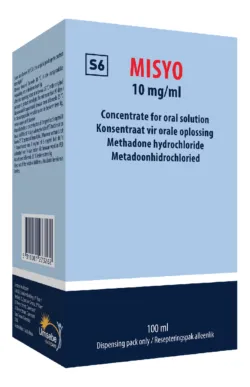
Table of Contents
Package leaflet: Information for the user
Misyo, 10 mg/ml, oral concentrate for solution
Methadoni hydrochloridum
Please read all of this leaflet carefully before taking this medicine, because it contains
important information for the patient.
- Keep this leaflet, as you may need to read it again.
- If you have any questions, please consult your doctor or pharmacist.
- This medicine has been prescribed for a specific individual. Do not pass it on to others. This medicine may harm other people, even if their symptoms are the same.
- If you experience any adverse reactions, including any adverse reactions not listed in this leaflet, tell your doctor or pharmacist. See section 4.
Contents of the leaflet
- What Misyo is and what it is used for
- Important information before taking Misyo
- How to take Misyo
- Possible side effects
- How to store Misyo
- Contents of the pack and other information
1. What Misyo is and what it is used for
This medicine contains methadone hydrochloride, which belongs to a group of medicines called opioid analgesics. It is used in the treatment of addiction to reduce withdrawal symptoms.
All patients taking Misyo must be routinely monitored for signs of misuse, abuse, and dependence.
2. Important information before taking Misyo
When not to take Misyo:
- if the patient is allergic to methadone or any of the other ingredients of this medicine (listed in section 6). Allergic reactions include rash, itching or difficulty breathing;
- if the patient is experiencing an asthma attack (this medicine should not be used during an asthma attack). In case of self-administration, wait until the asthma attack has completely subsided and full recovery has occurred;
- if the patient is alcohol-dependent;
- if the patient is taking monoamine oxidase inhibitors (MAOIs) used to treat depression, or if the patient has taken MAOIs within the last two weeks (see "Taking other medicines");
- if the patient is not opioid-dependent;
- if the patient has heart problems (prolonged QT interval);
- if the patient has severe liver function disorders;
- during childbirth.
If in doubt whether any of the above situations apply to the patient, consult a doctor or pharmacist before taking Misyo.
Warnings and precautions
Before starting Misyo, discuss with your doctor or pharmacist if the patient has:
- severe breathing problems;
- head injury currently or recently;
- problems with liver or kidneys;
- epilepsy;
- reduced thyroid function (hypothyroidism);
- problems with the adrenal glands;
- enlarged prostate gland;
- low blood pressure;
- shock;
- a disease causing muscle weakness called myasthenia gravis;
- intestinal problems;
- known risk factors for QT interval prolongation, such as:
- history of irregular heartbeat;
- history of heart disease;
- unexplained sudden death in family members;
- low levels of potassium, sodium or magnesium;
- pregnancy or breastfeeding;
- extremely severe illness or advanced age. Sensitivity to the medicine may be increased in these cases.
If any of the following symptoms occur while taking Misyo, consult a doctor or pharmacist: weakness, fatigue, loss of appetite, nausea, vomiting or low blood pressure. These symptoms may indicate that the adrenal glands are producing insufficient cortisol, and hormone replacement may be necessary.
Long-term use may lead to reduced levels of sex hormones and increased prolactin levels. If symptoms such as low libido, impotence or absence of menstruation occur, contact a doctor.
Breathing disorders during sleep
Misyo may cause breathing disorders during sleep, such as sleep apnoea (pauses in breathing during sleep) and sleep-related hypoxemia (low oxygen levels in the blood). Symptoms may include breathing pauses during sleep, waking up at night due to breathlessness, difficulty maintaining sleep or excessive daytime sleepiness. If the patient or someone else notices such symptoms, contact a doctor. The doctor may consider reducing the dose.
Tolerance, dependence and abuse
This medicine contains methadone, which is an opioid medicine. Repeated use of opioids may lead to reduced effectiveness of the medicine (the patient's body becomes accustomed to the medicine, known as "tolerance"). Repeated use of Misyo may also lead to dependence, abuse and compulsive use, which may result in life-threatening overdose.
Dependence or compulsive use may make the patient feel they have no control over the amount or frequency of medicine intake.
The risk of developing dependence or abuse varies among patients. The patient may be at higher risk of abusing or becoming dependent on Misyo if:
- the patient or a family member has ever abused or been dependent on alcohol, prescription medicines or illegal drugs ("addiction");
- the patient smokes cigarettes;
- the patient has ever had mood disorders (depression, anxiety disorders or personality disorders) or has been treated by a psychiatrist for other mental illnesses.
If, while taking Misyo, the patient notices any of the symptoms listed below, this may indicate the development of dependence or abuse:
- the patient feels the need to take the medicine longer than prescribed by the doctor;
- the patient feels the need to take a higher dose than recommended;
- the patient uses the medicine for reasons other than those for which it was prescribed, for example, "to calm down" or "to be able to sleep";
- the patient has repeatedly made unsuccessful attempts to stop or control the use of the medicine;
- after stopping the medicine, the patient feels unwell and feels better after taking the medicine again ("withdrawal symptoms").
If the patient notices any of the above symptoms, they should talk to their doctor and discuss the best treatment approach, including the appropriate timing and safe method of stopping treatment (see section 3, Stopping treatment with Misyo).
If in doubt whether any of the above situations apply to the patient, consult a doctor or pharmacist before using Misyo.
Misyo and other medicines
Tell your doctor or pharmacist about all medicines currently or recently taken, as well as any medicines the patient plans to take.
Methadone hydrochloride may affect the way some other medicines work. In addition, some medicines may affect the action of methadone.
When not to take Misyo:
- at the same time or within 2 weeks after stopping monoamine oxidase inhibitors (MAOIs).
In particular, inform the doctor if the patient is taking any of the following medicines:
- other opioid painkillers;
- medicines affecting mental state (e.g. thioridazine, phenothiazine derivatives, haloperidol and sertindole);
- medicines used for heart conditions, such as verapamil and quinidine;
- medicines used to treat depression (desipramine, nefazodone, fluvoxamine, fluoxetine, paroxetine and sertraline);
- anti-inflammatory and immunosuppressive medicines (e.g. dexamethasone and cyclosporine);
- antiviral medicines, including some used to treat HIV infection (nevirapine, zidovudine, efavirenz, nelfinavir, ritonavir, amprenavir, delavirdine, lopinavir/ritonavir, ritonavir/saquinavir, abacavir, didanosine and stavudine);
- antibiotics (medicines used to treat bacterial infections), such as ciprofloxacin and macrolide antibiotics, for example clarithromycin, telithromycin and erythromycin;
- medicines used to treat fungal infections, such as fluconazole, itraconazole and ketoconazole;
- cimetidine, used to treat peptic ulcer disease;
- naloxone, used to reverse the effects of opioids;
- medicines used to block the effects of opioids, such as naltrexone and buprenorphine;
- rifampicin, used to treat tuberculosis (TB);
- medicines used to treat epilepsy, such as phenytoin, carbamazepine, phenobarbital and primidone;
- cannabidiol (a medicine used to treat seizures);
- gabapentin and pregabalin (medicines used to treat epilepsy, neuropathic pain or anxiety), which may increase the risk of opioid overdose, respiratory depression (difficulty breathing) and may be life-threatening;
- medicines that cause acidification of urine, such as ascorbic acid (vitamin C) and ammonium chloride;
- a medicine used to treat diarrhoea (e.g. loperamide, diphenoxylate);
- a diuretic (e.g. spironolactone);
- a medicine that increases drowsiness;
- metamizole, a medicine used to treat pain and fever;
- herbal preparations containing St. John's wort, used to treat depression.
Concomitant use of Misyo and sedative medicines, such as benzodiazepines or similar medicines, increases the risk of drowsiness, breathing problems (respiratory depression), coma and may be life-threatening. For this reason, concomitant use of these medicines should only be considered when no other treatment options are available.
If the doctor prescribes Misyo together with sedative medicines, the doctor should reduce the dose and duration of concomitant treatment.
Inform the doctor about all sedative medicines the patient is taking and strictly follow the doctor's instructions regarding dosage. It may be helpful to inform friends or relatives about the symptoms and signs listed above. If these symptoms occur, contact the doctor.
The risk of adverse effects increases with concomitant use of methadone and antidepressants (such as citalopram, duloxetine, escitalopram, fluoxetine, fluvoxamine, paroxetine, sertraline, venlafaxine, amitriptyline, clomipramine, imipramine, nortriptyline).
Contact a doctor if any of the following symptoms occur:
- changes in mental state (e.g. agitation, hallucinations, coma);
- rapid heartbeat, unstable blood pressure, fever;
- exaggerated reflexes, coordination disorders, muscle stiffness;
- gastrointestinal disturbances (e.g. nausea, vomiting, diarrhoea).
Other medicines that may also affect heart function (e.g. sotalol, amiodarone and flecainide).
Inform the doctor about all other medicines the patient is taking, as they may be dangerous when used with methadone. In such cases, the doctor may decide that heart function monitoring via electrocardiogram (ECG) is necessary at the beginning of treatment to ensure these effects do not occur.
Methadone may also affect certain blood and urine tests (including anti-doping test results). Inform the doctor if the patient is taking methadone before any test is performed.
Misyo with food, drink and alcohol
Misyo may be taken with or without food.
Do not consume alcohol while taking Misyo. This is because methadone may cause drowsiness, and drinking alcohol may intensify this effect.
Do not drink grapefruit juice while taking Misyo, as grapefruit juice may alter the action of methadone.
Pregnancy, breastfeeding and effects on fertility
If the patient is pregnant or breastfeeding, suspects she may be pregnant, or is planning to have a child, she should consult a doctor or pharmacist before using this medicine.
Pregnancy
Misyo may be used during pregnancy, preferably under supervision in a specialist medical centre, after careful assessment of risks and benefits by the doctor. To ensure treatment effectiveness due to metabolic changes during pregnancy, dose adjustment to two daily doses may be necessary.
Long-term use during pregnancy may lead to fetal dependence on methadone and withdrawal symptoms after birth, which often require hospital treatment.
When performing a urine pregnancy test, the patient should be aware that Misyo may interfere with test results.
This medicine should not be used during childbirth.
Breastfeeding
Consult your doctor if breastfeeding or considering breastfeeding while taking methadone, as the medicine may affect the child. Monitor the breastfed infant for abnormal symptoms such as increased drowsiness (more than usual), breathing difficulties or floppiness. If any of these symptoms are observed, inform the doctor immediately.
Fertility
It has been reported that methadone used in maintenance treatment causes sexual dysfunction in men.
Driving and operating machinery
Methadone may seriously affect the ability to drive and operate machinery during and after treatment. The time after which such activities can be safely resumed must be determined by the doctor.
Misyo contains sorbitol
This medicine contains 300 mg of non-crystallizing liquid sorbitol (equivalent to 210 mg sorbitol) in each 1 ml.
Sorbitol is a source of fructose. If the patient has previously been diagnosed with intolerance to certain sugars or hereditary fructose intolerance, a rare genetic disorder in which the patient's body does not break down fructose, the patient should consult a doctor before taking or receiving this medicine.
In some individuals, sorbitol may affect the amount of methadone absorbed from the ingested dose. In these individuals, switching from Misyo to other methadone preparations that do not contain sorbitol may alter methadone blood levels and cause recurrence of symptoms. If this occurs, contact the doctor.
Misyo contains sodium benzoate
This medicine contains 3 mg of sodium benzoate in each 1 ml.
Although this medicine is not intended for use in newborns, it is important to be aware that sodium benzoate may increase the risk of jaundice (yellowing of the skin and whites of the eyes) in newborns (up to 4 weeks of age).
The medicine contains less than 1 mmol sodium (23 mg) per ml, meaning the medicine is considered "sodium-free".
3. How to take Misyo
This medicine should always be taken as directed by a doctor or pharmacist. If in doubt,
consult a doctor or pharmacist.
Misyo must only be taken by mouth. Under no circumstances should this medicine be injected,
as this may cause severe and permanent bodily harm, possibly resulting in death. This medicine is intended to be diluted by qualified medical personnel. The patient will receive Misyo in a diluted form.
The doctor will inform the patient how much Misyo to take and how often. It is important not to take more than the dose agreed upon with the doctor.
Adults
The usual starting dose is 10–30 mg per day. The dose will be gradually increased until withdrawal or intoxication symptoms have disappeared. The usual maintenance dose is 60–120 mg per day.
The doctor will decide which dose to use and when to reduce it.
Elderly patients (over 65 years of age) and seriously ill patients
If multiple doses of this medicine are required, the doctor may decide to monitor the patient’s condition more closely. In elderly patients, those who are ill, or those with liver or kidney disease, caution should be exercised and the dose reduced.
Use in children
Misyo is not intended for use in children.
Taking more Misyo than recommended
If an excessive dose of methadone is taken, the following may occur in the patient:
- breathing difficulties;
- extreme drowsiness, fainting, or coma;
- pinpoint (maximally constricted) pupils;
- muscle weakness;
- cold and clammy skin;
- low blood sugar;
- slow heart rate, low blood pressure, heart attack, or shock;
- brain function disorders (known as toxic leukoencephalopathy);
- in severe cases, death may occur. In case of overdose, contact a doctor immediately, even if the patient feels well, as methadone poisoning may be present.
Missing a dose of Misyo
Do not take a missed dose. Wait until the next scheduled dose and take only that amount. Do not take a double dose to make up for a missed dose.
Stopping Misyo treatment
Do not stop taking this medicine without medical advice, as withdrawal symptoms may occur. The doctor will inform the patient how to gradually reduce the dose.
If you have any further questions about the use of this medicine, consult your doctor or pharmacist.
4. Possible adverse reactions
Like all medicines, this medicine can cause adverse reactions, although not everyone will experience them.
The patient must stop taking this medicine immediately and contact a doctor without delay if any of the following symptoms occur:
- Allergic reaction, which may include: swelling of the face, lips, tongue or throat, difficulty breathing or swallowing, or severe skin itching with a lumpy rash.
- Heart problems. Symptoms may include changes in heart rhythm, such as faster heartbeat or irregular heartbeats, difficulty breathing, and dizziness associated with slow and shallow breathing. These adverse reactions are rare and may occur in 1 out of 1000 people.
- Occurrence of slow and shallow breathing.
- Increased intracranial pressure, if the patient has previously suffered brain injury or brain disease.
The patient should continue taking the medicine, but must contact a doctor immediately if any of the following adverse reactions occur:
- Asthma or worsening of asthma.
Other possible adverse reactions include:
Very common (may affect more than 1 in 10 people):
- Nausea or vomiting.
Common (may affect less than 1 in 10 people):
- Fluid retention in the body;
- Euphoria, seeing or hearing things that are not real (hallucinations);
- Drowsiness;
- Blurred vision, pinpoint (maximally constricted) pupils, dry eyes;
- Dizziness or vertigo;
- Constipation;
- Skin rash, sweating;
- Feeling of fatigue;
- Weight gain.
Uncommon (may affect less than 1 in 100 people):
- Feeling of depression (dysphoria), agitation, confusion, difficulty falling asleep, decreased libido;
- Headache, fainting;
- Low blood pressure, hot flushes;
- Breathing difficulties (including with accompanying cough), dry nose;
- Dry mouth, inflammation of the tongue;
- Biliary spasm (abdominal pain);
- Itching, urticaria, rash;
- Urinary retention, difficulty passing urine;
- Difficulty achieving or maintaining erection;
- Menstrual disorders, milk production;
- Swelling of the legs;
- Weakness;
- Low body temperature.
Rare (may affect less than 1 in 1000 people):
- Heart problems, slower heartbeat, palpitations;
- Shock;
- Respiratory arrest;
- Slowed intestinal motility (obstruction).
The following adverse reactions have also been reported (frequency unknown):
- Lowered platelet count, increasing the risk of bleeding or bruising;
- Increased prolactin levels;
- Loss of appetite;
- Low blood potassium or magnesium levels;
- Low blood sugar levels;
- Hearing loss;
- The patient may develop dependence on Misyo medicine (for more information, see section 2 "Warnings and precautions");
- Sleep apnoea (breathing pauses during sleep).
Adverse reactions such as low potassium or magnesium levels, hearing loss, and reduced platelet count may occur with unknown frequency.
Reporting of adverse reactions
If any adverse reactions occur, including any adverse reactions not listed in this leaflet, the patient should inform their doctor, pharmacist or nurse. Adverse reactions can be reported directly to the Department of Monitoring of Adverse Drug Reactions of the Office for Registration of Medicinal Products, Medical Devices and Biocidal Products,
Al. Jerozolimskie 181 C, PL-02 222 Warszawa,
Tel.: +48 22 49 21 301, Fax: +48 22 49 21 309, Website: https://smz.ezdrowie.gov.pl
Adverse reactions can also be reported to the marketing authorisation holder.
By reporting adverse reactions, additional information on the safety of this medicine can be collected.
5. How to store Misyo
Keep this medicine out of sight and reach of children. This medicine should be stored in a secure place inaccessible to others. Taking this medicine by someone for whom it has not been prescribed may lead to serious harm or death.
Store below 25°C. Keep in the original packaging to protect from light.
Do not use this medicine after the expiry date stated on the carton or bottle under "Expiry date (EXP)/EXP". The expiry date refers to the last day of the specified month.
After first opening, store below 25°C. Keep in the original packaging to protect from light and do not store for longer than 90 days. The medicine should be used within 90 days of opening.
After dilution, the shelf life of solutions at concentrations of 1 mg/ml or 5 mg/ml is 14 days, provided they are stored below 25°C in a light-protected PET bottle. The medicine should be used within 14 days of dilution.
Medicines must not be disposed of via the sewage system or household waste. Ask your pharmacist how to dispose of medicines no longer required. This will help protect the environment.
6. Contents of the pack and other information
What Misyo contains
- The active substance is methadone hydrochloride. 1 ml of oral concentrate contains 10 mg of methadone hydrochloride.
- The other ingredients are: sorbitol liquid, non-crystallising (E420), glycerol (E422), sodium benzoate (E211), monohydrate citric acid (E330), brilliant blue FCF (E133) and purified water.
What Misyo looks like and contents of the pack
Misyo is a clear blue solution.
100 ml pack:
A glass bottle containing 100 ml of oral concentrate with a plastic cap
or a plastic cap with child-resistant closure, together with a patient information leaflet,
in a cardboard box.
1000 ml pack:
A glass bottle containing 1000 ml of oral concentrate with a plastic cap
or a plastic cap with child-resistant closure, together with a patient information leaflet,
in a cardboard box.
Not all pack sizes may be marketed.
Marketing Authorisation Holder
INN-FARM d.o.o.
Maleševa ulica 14
1000 Ljubljana
Slovenia
Tel.: +386 70 390 711
Fax: +386 5191 116
e-mail: [email protected]
Manufacturer/Importer
ALKALOID-INT d.o.o., Šlandrova ulica 4, 1231 Ljubljana – Črnuče, Slovenia
Tel.: 386 1 300 42 90
Fax: 386 1 300 42 91
email: [email protected]
This medicinal product is authorised in the European Economic Area and the United Kingdom (Northern Ireland) under the following names:
United Kingdom (Northern Ireland) MISYO 10 mg/ml Concentrate for oral solution
Austria MISYO 10 mg/ml Konzentrat zur Herstellung einer Lösung zum Einnehmen
Czech Republic MISYO 10 mg/ml
Germany MISYO 10 mg/ml Konzentrat zur Herstellung einer Lösung zum Einnehmen
Hungary MISYO 10 mg/ml Koncentrátum belsőleges oldathoz
Poland Misyo
Portugal MISYO 10 mg/ml Concentrado para solução oral
Romania MISYO 10 mg/ml Concentrat pentru soluţie orală
Slovak Republic MISYO 10 mg/ml
Spain MISYO 10 mg/ml Concentrado para solución oral