Micafungin zentiva
Poland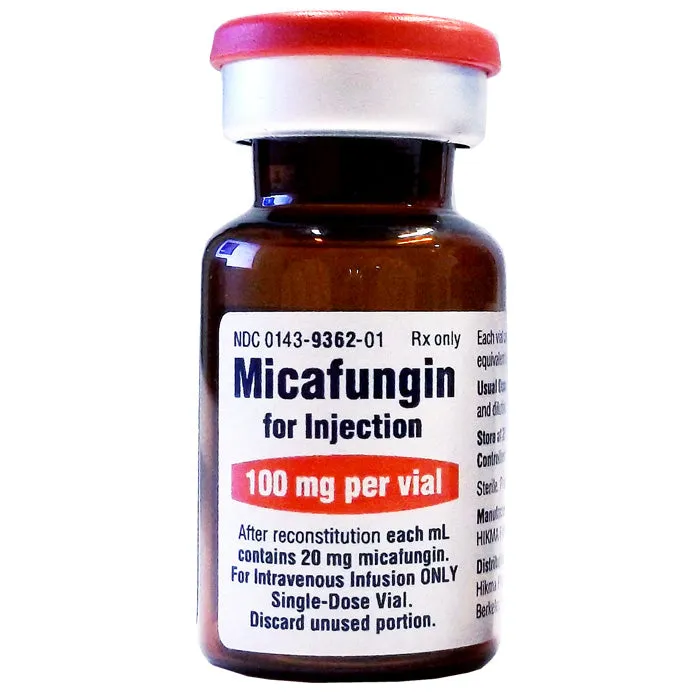
Table of Contents
- Package leaflet: Information for the patient
- 1. What Micafungin Zentiva is and what it is used for
- 2. Important information before administering Micafungin Zentiva
- 3. How to administer Micafungin Zentiva
- 4. Possible adverse effects
- 5. How to store Micafungin Zentiva
- 6. Package contents and other information
- Information intended exclusively for medical professionals:
Package leaflet: Information for the patient
Micafungin Zentiva, 50 mg, powder for solution for infusion concentrate
Micafungin Zentiva, 100 mg, powder for solution for infusion concentrate
Micafunginum
Please read all of this leaflet carefully before this medicine is administered, because it contains
important information for the patient.
- Keep this leaflet, so that you can read it again if necessary.
- If you have any further questions, please consult your doctor, pharmacist, or nurse.
- This medicine has been prescribed for a specific individual. Do not pass it on to others. It may harm someone else, even if their symptoms are the same.
- If you experience any adverse reactions, including any not listed in this leaflet, inform your doctor, pharmacist, or nurse. See section 4.
Contents of the leaflet
- What Micafungin Zentiva is and what it is used for
- Important information before receiving Micafungin Zentiva
- How Micafungin Zentiva is administered
- Possible side effects
- How to store Micafungin Zentiva
- Contents of the pack and other information
1. What Micafungin Zentiva is and what it is used for
Micafungin Zentiva contains the active substance micafungin. This medicine is an antifungal agent,
because it is used to treat infections caused by fungal cells.
Micafungin Zentiva is used to treat fungal infections caused by fungi or yeast called Candida.
Micafungin Zentiva is effective in treating systemic infections (those that have spread throughout the body). It acts by interfering with the formation of a component of the fungal cell wall. An intact cell wall is essential for the normal development and growth of fungal cells. Micafungin Zentiva damages the fungal cell wall, thereby preventing further development and growth of the fungi.
Your doctor may prescribe Micafungin Zentiva in the following cases, if no other appropriate antifungal therapy is available (see section 2):
treatment of adults, adolescents, and children, including newborns, with a serious fungal infection known as invasive candidiasis (an infection that has spread into the body);
treatment of adults and adolescents aged ≥ 16 years with Candida esophageal infection, when intravenous (IV) treatment is appropriate;
prevention of Candida-related infections in patients undergoing allogeneic haematopoietic stem cell transplantation or in patients expected to develop neutropenia (low levels of neutrophils, a type of white blood cell) lasting for 10 or more days.
2. Important information before administering Micafungin Zentiva
When not to give Micafungin Zentiva
– if the patient is allergic (hypersensitive) to micafungin, other echinocandins (Ecalta or Cancidas), or any of the other ingredients of this medicine (listed in section 6).
Warnings and precautions
Long-term treatment with micafungin in rats has led to liver damage and subsequently to liver tumours. The potential risk of developing liver tumours in humans is unknown; the doctor will assess the benefits and risks of using Micafungin Zentiva before starting treatment. Inform the doctor if the patient has severe liver diseases (e.g. liver failure or hepatitis) or if abnormal liver function test results have been observed. Liver function will be monitored more closely during treatment.
Before starting Micafungin Zentiva, discuss with the doctor or pharmacist
– if the patient is allergic to any medication;
– if the patient has haemolytic anaemia (anaemia caused by the breakdown of red blood cells) or haemolysis (breakdown of red blood cells);
– if the patient has kidney diseases (e.g. kidney failure or abnormal kidney function test results). In such cases, the doctor may order closer monitoring of kidney function.
Micafungin Zentiva may cause a severe inflammatory condition and/or skin and mucous membrane rashes (Stevens-Johnson syndrome, toxic epidermal necrolysis [Lyell's syndrome]).
Micafungin Zentiva with other medicines
Inform the doctor or pharmacist about all medicines the patient is currently taking or has recently taken, as well as any medicines the patient plans to take.
It is especially important to inform the doctor about the use of amphotericin B deoxycholate or itraconazole (antifungal antibiotics), sirolimus (an immunosuppressant), or nifedipine (a calcium channel blocker used in the treatment of hypertension). The doctor may decide to adjust the dosage of these medicines.
Micafungin Zentiva with food and drink
Since Micafungin Zentiva is administered intravenously (into a vein), there are no restrictions regarding food or drink intake.
Pregnancy and breastfeeding
If the patient is pregnant or breastfeeding, suspects she may be pregnant, or is planning to have a child, she should consult her doctor or pharmacist before using this medicine.
Micafungin Zentiva must not be used during pregnancy unless absolutely necessary, as determined by the doctor. Breastfeeding must not be performed during treatment with Micafungin Zentiva.
Driving and operating machinery
It is unlikely that Micafungin Zentiva will affect the ability to drive or operate machinery. However, dizziness may occur in some patients during treatment with this medicine, and in such cases, the patient should not drive or operate machinery. Inform the doctor if any side effects occur that may impair the ability to drive or operate machinery.
Micafungin Zentiva contains sodium
This medicine contains less than 1 mmol (23 mg) of sodium per 1 ml, meaning the medicine is considered "sodium-free".
3. How to administer Micafungin Zentiva
Micafungin Zentiva must be prepared and administered by a physician or other medical personnel.
Micafungin Zentiva should be given once daily by slow intravenous infusion (into a vein).
The daily dose is determined by the treating physician.
Use in adults, adolescents aged ≥16 years, and elderly patients
In the treatment of invasive Candida infections, the usual dose is 100 mg once daily for patients weighing more than 40 kg and 2 mg/kg body weight once daily for patients weighing 40 kg or less.
For the treatment of Candida esophagitis, the daily dose is 150 mg for patients weighing more than 40 kg and 3 mg/kg body weight once daily for patients weighing 40 kg or less.
For prophylaxis of invasive Candida infections, the usual dose is 50 mg once daily for patients weighing more than 40 kg and 1 mg/kg body weight once daily for patients weighing 40 kg or less.
Use in children aged >4 months and adolescents under 16 years of age
In the treatment of invasive Candida infections, the usual dose is 100 mg once daily for patients weighing more than 40 kg and 2 mg/kg body weight once daily for patients weighing 40 kg or less.
For prophylaxis of invasive Candida infections, the usual dose is 50 mg once daily for patients weighing more than 40 kg and 1 mg/kg body weight once daily for patients weighing 40 kg or less.
Use in children and newborns under 4 months of age
In the treatment of invasive Candida infections, the usual dose ranges from 4 mg/kg body weight to 10 mg/kg body weight once daily.
For prophylaxis of invasive Candida infections, the usual dose is 2 mg/kg body weight once daily.
Administration of a higher than recommended dose of Micafungin Zentiva
The physician determines the appropriate dose of Micafungin Zentiva based on the patient's response to treatment and clinical condition. If there is any doubt whether too high a dose of Micafungin Zentiva has been administered, contact the physician or other medical personnel immediately.
Missed dose of Micafungin Zentiva
The physician decides on the need for continued treatment with Micafungin Zentiva based on the patient's response to treatment and clinical condition. If there is any doubt whether a dose of Micafungin Zentiva has been missed, contact the physician or other medical personnel immediately.
If you have any further questions regarding the use of this medicine, consult your physician or pharmacist.
4. Possible adverse effects
Like all medicines, this medicine can cause adverse effects, although not everyone will experience them.
If you experience an allergic reaction or a severe skin reaction (e.g. blistering or peeling of the skin), inform your doctor or nurse immediately.
Micafungin Zentiva may cause the following other adverse effects:
Common (may occur in up to 1 in 10 patients)
- Abnormal blood test results (reduced number of white blood cells [leukopenia; neutropenia]); reduced number of red blood cells (anaemia)
- Decreased potassium levels in the blood (hypokalaemia); decreased magnesium levels in the blood (hypomagnesaemia); decreased calcium levels in the blood (hypocalcaemia)
- Headache
- Inflammation of the vein wall (at the injection site)
- Nausea; vomiting; diarrhoea; abdominal pain
- Abnormal liver function test results (increased alkaline phosphatase activity, increased aspartate aminotransferase activity, increased alanine aminotransferase activity)
- Increased bilirubin levels in the blood (hyperbilirubinaemia)
- Rash
- Fever
- Chills
Uncommon (may occur in up to 1 in 100 patients)
- Abnormal blood test results (reduced number of blood cells [pancytopenia]); reduced platelet count (thrombocytopenia); increased number of a certain type of white blood cells (eosinophils); decreased albumin levels in the blood (hypoalbuminaemia)
- Hypersensitivity
- Increased sweating
- Decreased sodium levels in the blood (hyponatraemia); increased potassium levels in the blood (hyperkalaemia); decreased phosphate levels in the blood (hypophosphataemia); anorexia (loss of appetite)
- Insomnia (sleep problems); anxiety; confusion
- Drowsiness (somnolence); tremor; dizziness; taste disturbance
- Rapid heartbeat; stronger heartbeat; irregular heartbeat
- High or low blood pressure; skin redness
- Shortness of breath
- Indigestion; constipation
- Liver failure; increased liver enzyme activity (gamma-glutamyl transferase); jaundice (yellowing of the skin or whites of the eyes due to liver or blood disorders); bile flow obstruction before bile reaches the intestine (cholestasis); enlarged liver; hepatitis
- Itchy rash (urticaria); itching; skin redness (erythema)
- Abnormal kidney function test results (increased creatinine levels in the blood; increased urea levels in the blood); worsening of kidney failure
- Increased activity of an enzyme called lactate dehydrogenase
- Vein thrombosis at the injection site; inflammation at the injection site; pain at the injection site; fluid retention in the body
Rare (may occur in up to 1 in 1,000 patients)
- Anaemia caused by breakdown of red blood cells (haemolytic anaemia); breakdown of red blood cells (haemolysis)
Unknown frequency (cannot be estimated from available data)
- Blood clotting disorders
- (Allergic) shock
- Liver cell damage, including cases leading to death
- Kidney problems; acute kidney failure
Additional adverse effects observed in children and adolescents
The following reactions have been observed more frequently in paediatric patients than in adults:
Common (may occur in up to 1 in 10 patients)
- Reduced platelet count (thrombocytopenia)
- Increased heart rate (tachycardia)
- High or low blood pressure
- Increased bilirubin levels in the blood (hyperbilirubinaemia); enlarged liver
- Acute kidney failure; increased urea levels in the blood
Reporting of adverse effects
If any adverse effects occur, including any not listed in this leaflet, inform your doctor, pharmacist, or nurse. Adverse effects can be reported directly to the Department of Monitoring Adverse Drug Reactions of the Office for Registration of Medicinal Products, Medical Devices and Biocidal Products
Al. Jerozolimskie 181C
02-222 Warsaw
Tel.: +48 22 49 21 301
Fax: +48 22 49 21 309
Website: https://smz.ezdrowie.gov.pl
Adverse effects can also be reported to the marketing authorization holder.
Reporting adverse effects helps provide more information on the safety of this medicine.
5. How to store Micafungin Zentiva
Keep this medicine out of the sight and reach of children.
Do not use this medicine after the expiry date stated on the vial and outer packaging:
EXP. The expiry date refers to the last day of the specified month.
Unopened vials do not require special storage conditions.
The prepared concentrate and diluted infusion solution should be administered immediately, as they contain no preservatives to prevent bacterial contamination. This medicine must be prepared for use only by trained healthcare personnel who have carefully read the entire instruction.
Do not use the diluted solution if it becomes cloudy or contains a precipitate.
To protect from light, the bottle (bag) containing the diluted solution should be placed in a closed, opaque cover.
The vial is intended for single use only. Any unused, prepared concentrate should be promptly discarded.
6. Package contents and other information
What Micafungin Zentiva contains
- The active substance is micafungin (as the sodium salt). Each vial contains 50 mg or 100 mg of micafungin (as the sodium salt).
- Other components are: monohydrate lactose, citric acid, and sodium hydroxide.
What Micafungin Zentiva looks like and contents of the pack
Micafungin Zentiva 50 mg or 100 mg, powder for concentrate for solution for infusion, is a white or almost white, lyophilised powder.
Micafungin Zentiva is available in packages containing 1 vial.
Marketing Authorisation Holder
Zentiva k.s.
U Kabelovny 130
Dolni Měcholupy
102 37 Prague 10
Czech Republic
Manufacturer
LABORATORI FUNDACIÓ DAU
C/C, 12-14 Pol. Ind. Zona Franca
08040 Barcelona
Spain
This medicinal product is authorised in the Member States of the European Economic Area under the following names:
Iceland, Poland: Micafungin Zentiva
For more detailed information about this medicinal product, please contact the local representative of the Marketing Authorisation Holder in Poland:
Zentiva Polska Sp. z o.o.
ul. Bonifraterska 17
00-203 Warsaw
tel: +48 22 375 92 00
Information intended exclusively for medical professionals:
Micafungin Zentiva must not be mixed or administered simultaneously with other medicinal products, except those listed below. Under aseptic conditions and at room temperature, Micafungin Zentiva should be prepared as follows:
- Remove the plastic cap from the vial and disinfect the stopper with alcohol.
- Under aseptic conditions, slowly inject 5 ml of sodium chloride 9 mg/ml (0.9%) for infusion or glucose 50 mg/ml (5%) for infusion (drawn from a 100 ml bottle/bag) down the inner wall of each vial. Although foaming may occur, every effort should be made to minimize foam formation. To achieve the correct dose in mg, prepare the concentrate using the appropriate number of Micafungin Zentiva vials (see table below).
- Gently rotate the vial along its long axis. DO NOT SHAKE! The powder will dissolve completely. The prepared concentrate should be used immediately. The vial is for single use only. Any unused concentrate should be discarded immediately.
- Transfer the entire volume of the prepared concentrate from each vial into the bottle (bag) containing the infusion solution from which the diluent was originally withdrawn. The diluted infusion solution should be administered immediately. The prepared solution remains chemically and physically stable for 96 hours at 25°C, provided it is protected from light and diluted according to the instructions above.
- Gently invert the bottle (bag) to ensure thorough mixing of the diluted solution and DO NOT SHAKE to avoid foaming. Do not administer the solution if it is cloudy or contains particulate matter.
- Place the bottle (bag) containing the diluted solution into a closed, opaque container to protect it from light.
- Only clear, colorless solutions free from particles should be used.
Preparation of infusion solution
Dose Number of Micafungin Volume of sodium chloride Volume (concentration) Standard infusion
(mg) Zentiva vials to be used (0.9%) or glucose (5%) added of reconstituted powder solution
(mg/vial) to vial (after dilution to 100 ml)
Final concentration
50 1 x 50 5 ml approx. 5 ml (10 mg/ml) 0.5 mg/ml
100 1 x 100 5 ml approx. 5 ml (20 mg/ml) 1.0 mg/ml
150 1 x 100 + 1 x 50 5 ml approx. 10 ml 1.5 mg/ml
200 2 x 100 5 ml approx. 10 ml 2.0 mg/ml
After reconstitution and dilution, the solution should be administered by intravenous infusion over approximately 1 hour.