Metoprolol medreg
Poland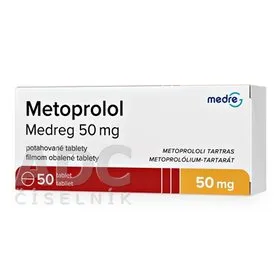
Table of Contents
- Package leaflet: Information for the user
- 1. What Metoprolol Medreg is and what it is used for
- 2. Important information before using Metoprolol Medreg
- 3. How to use Metoprolol Medreg
- 4. Possible side effects
- 5. How to store the medicine Metoprolol Medreg
- 6. Contents of the packaging and other information
Package leaflet: Information for the user
Metoprolol Medreg, 50 mg, film-coated tablets
Metoprolol Medreg, 100 mg, film-coated tablets
Metoprololi tartras
Please read all of this leaflet carefully before taking this medicine, because it contains
important information for you.
- Keep this leaflet. You may need to read it again.
- If you have any further questions, ask your doctor or pharmacist.
- This medicine has been prescribed for you personally. Do not pass it on to others. It may harm them, even if their symptoms are the same as yours.
- If you experience any side effects, including any not listed in this leaflet, inform your doctor or pharmacist. See section 4.
Leaflet contents:
- What Metoprolol Medreg is and what it is used for
- What you need to know before taking Metoprolol Medreg
- How to take Metoprolol Medreg
- Possible side effects
- How to store Metoprolol Medreg
- Contents of the pack and other information
1. What Metoprolol Medreg is and what it is used for
Metoprolol Medreg contains the active substance metoprolol tartrate, which belongs to a group of medicines called beta-blockers. Metoprolol tartrate works mainly by blocking certain receptors in the heart (cardioselective beta-blockers). This lowers blood pressure and improves heart function.
Metoprolol Medreg is used:
- for high blood pressure (hypertension)
- for chest pain caused by narrowed coronary arteries in the heart (chronic stable angina pectoris)
- in patients who have had a heart attack, and to help prevent further heart attacks
- for fast heartbeat (tachyarrhythmia)
- for prevention of migraine attacks.
Metoprolol Medreg is intended for use in adults.
2. Important information before using Metoprolol Medreg
When not to use Metoprolol Medreg:
- if the patient is allergic to metoprolol tartrate, other beta-blockers, or any of the other ingredients of this medicine (listed in section 6)
- if the patient has electrical conduction disorders of the heart (second- or third-degree atrioventricular block, sick sinus syndrome) except in patients with a permanent cardiac pacemaker
- if the patient has unstable heart failure and is being treated with drugs that increase myocardial contractility
- if the patient's heart beats very slowly (less than 50 beats per minute)
- if the patient has very poor blood circulation in the limbs
- if the patient has experienced shock caused by heart dysfunction
- if the patient has untreated pheochromocytoma (chromaffin tumor)
- if the patient has very low blood pressure (systolic blood pressure below 90 mmHg)
- if the patient has severe lung disease with airway obstruction (asthma or chronic obstructive pulmonary disease)
- if the patient has metabolic acidosis (excess acid in the blood)
- if the patient is taking certain antidepressants (MAO inhibitors, excluding specific MAO-B inhibitors)
- if the patient is simultaneously treated with certain intravenous blood pressure-lowering drugs or certain drugs used to treat irregular heartbeat (e.g. calcium channel blockers of the verapamil or diltiazem type, disopyramide), except for drugs used in intensive care
- if the patient suspects acute myocardial infarction and has a heart rate slower than 45 beats per minute, systolic blood pressure less than 100 mmHg, and certain irregular heart rhythms (PR interval longer than 0.24 seconds).
Warnings and precautions
Before starting treatment with Metoprolol Medreg, consult a doctor or
pharmacist:
- if the patient has asthma. Metoprolol Medreg may affect the action of certain drugs used in asthma treatment, and their dosage may need adjustment. Do not take Metoprolol Medreg in case of severe asthma or severe chronic obstructive pulmonary disease.
- if the patient has diabetes. Symptoms of low blood sugar (e.g. rapid heartbeat, trembling) may be reduced by Metoprolol Medreg. The doctor will monitor blood glucose levels at short intervals.
- if the patient has hyperthyroidism. Metoprolol Medreg may mask its symptoms, which may worsen after discontinuation of Metoprolol Medreg.
- if the patient has first-degree atrioventricular block (a mild electrical conduction disorder in the heart).
- if the patient has circulation disorders in the limbs (Raynaud's syndrome, intermittent claudication), as these may worsen. Do not take Metoprolol Medreg if the patient has severe circulatory disorders.
- if the patient has a pheochromocytoma (chromaffin tumor). The tumor should be treated (with alpha-receptor antagonists) before and during treatment with Metoprolol Medreg.
- if the patient is to undergo surgery and will receive anesthesia. Inform the doctor or dentist about taking Metoprolol Medreg.
- if the patient is also taking clonidine, a medicine used to treat high blood pressure. At the end of treatment, Metoprolol Medreg should be discontinued gradually first, followed by clonidine.
- if the patient has ever had a severe allergic reaction (allergy) or is undergoing treatment for existing hypersensitivity (immunotherapy). Metoprolol Medreg may increase both sensitivity to allergens and the severity of allergic reactions.
- if the patient has certain circulatory disorders in the coronary arteries (Prinzmetal's angina). The number and duration of angina attacks may increase or be prolonged.
- if the patient or a family member has ever had psoriasis.
- if the patient wears contact lenses. Metoprolol Medreg may reduce tear flow.
Use of Metoprolol Medreg may lead to positive anti-doping test results.
Children and adolescents
Metoprolol Medreg is not recommended for use in children and adolescents.
Metoprolol Medreg and other medicines
Tell your doctor or pharmacist about all medicines the patient is currently taking or has recently taken, as well as any medicines the patient plans to take.
Do not take Metoprolol Medreg simultaneously:
- with certain antidepressants (MAO inhibitors, excluding specific MAO-B inhibitors)
- with certain intravenous blood pressure-lowering drugs or certain drugs used to treat irregular heartbeat (e.g. calcium channel blockers of the verapamil or diltiazem type, disopyramide), except for drugs used in intensive care.
Medicines that may enhance the effect of Metoprolol Medreg include:
- certain antidepressants (selective serotonin reuptake inhibitors (SSRIs), such as paroxetine, fluoxetine, and sertraline)
- diphenhydramine (used to treat insomnia and allergies)
- hydroxychloroquine (used to prevent and treat malaria)
- celecoxib (used to treat joint diseases)
- terbinafine (used to treat fungal infections)
- medicines used to treat mental disorders (neuroleptics, e.g. chlorpromazine, trifluoperazine, chlorprothixene)
- cimetidine (used to treat heartburn and stomach upset related to excessive hydrochloric acid secretion)
- hydralazine (used to treat high blood pressure)
- amiodarone, quinidine, and possibly propafenone (used to treat irregular heartbeat)
- certain anesthetic agents (inhalational anesthetics). Inform the doctor or dentist about taking Metoprolol Medreg.
Medicines that may reduce the effect of Metoprolol Medreg include:
- rifampicin (an antibacterial medicine)
- certain anti-inflammatory and pain-relieving medicines (e.g. indomethacin).
Medicines that may interact with Metoprolol Medreg or whose effects may be affected by
Metoprolol Medreg include:
- other medicines used to treat high blood pressure, irregular heartbeat, or heart failure (e.g. reserpine, methyldopa, clonidine, guanfacine, class I antiarrhythmics (e.g. disopyramide), cardiac glycosides)
- other beta-blockers, e.g. eye drops used in glaucoma treatment
- medicines used to treat diabetes (insulin and oral antidiabetic drugs). Metoprolol Medreg may reduce symptoms of hypoglycemia (especially rapid heartbeat). Blood glucose levels should be checked regularly. The doctor may adjust the dose of antidiabetic medicines accordingly.
- Metoprolol Medreg may increase the risk of severe hypoglycemia when used with certain antidiabetic medicines called sulfonylureas (such as glyquidone, glyclopyramide, glibenclamide, glipizide, glimepiride, or tolbutamide).
- medicines that increase blood pressure (e.g. adrenaline, noradrenaline). Blood pressure may rise significantly. The effect of adrenaline in treating allergic reactions may be reduced.
- medicines containing xanthines (e.g. aminophylline, theophylline used in asthma treatment)
- lidocaine (a local anesthetic)
- certain antidepressants (MAO-B inhibitors).
If the patient wishes to discontinue clonidine (a medicine used to treat high blood pressure) at the
same time, Metoprolol Medreg should be discontinued several days earlier.
Metoprolol Medreg with food, drink, and alcohol
Alcohol may enhance the blood pressure-lowering effect of Metoprolol Medreg.
Pregnancy and breastfeeding
If the patient is pregnant or breastfeeding, suspects she may be pregnant, or plans to become
pregnant, she should consult a doctor or pharmacist before using this medicine.
Metoprolol Medreg should not be used during pregnancy unless absolutely necessary.
Metoprolol Medreg may harm the unborn child and lead to premature delivery. Metoprolol Medreg may cause adverse effects such as slow heart rate in the unborn child and newborn.
The active substance passes into human milk. The infant should be closely monitored during treatment with Metoprolol Medreg while breastfeeding.
Driving and operating machinery
This medicine may affect reaction ability and the ability to drive or operate machinery.
Dizziness or fatigue may occur, especially at the beginning of treatment, during dose escalation, when changing preparations, or when consuming alcohol. If any of these adverse effects occur, do not drive or operate machinery.
Metoprolol Medreg contains lactose and sodium
If the patient has previously been diagnosed with intolerance to certain sugars, the patient should
consult a doctor before taking this medicine.
This medicine contains less than 1 mmol (23 mg) of sodium per tablet, meaning the medicine is considered "sodium-free".
3. How to use Metoprolol Medreg
This medicine should always be taken exactly as directed by your doctor. If in doubt, consult your
doctor or pharmacist.
Recommended dose:
High blood pressure (hypertension)
The recommended dose is 50 mg to 100 mg of metoprolol tartrate twice daily or 100 mg to 200 mg
of metoprolol tartrate once daily.
Chest pain due to blockage of the coronary arteries in the heart (chronic stable angina pectoris)
The recommended dose is 50 mg to 100 mg of metoprolol tartrate twice daily.
Acute treatment of myocardial infarction and prevention of further heart attacks
Acute treatment:
Following intravenous administration of metoprolol tartrate, 50 mg of metoprolol tartrate should be
taken orally four times daily for the next 48 hours, starting 15 minutes after the last intravenous
injection.
In patients who received less than 15 mg of metoprolol tartrate intravenously, tablet treatment
should be initiated cautiously with a dose of 25 mg of metoprolol tartrate.
Prevention:
The recommended dose is 100 mg of metoprolol tartrate twice daily.
Rapid heartbeat (tachyarrhythmias)
The recommended dose is 50 mg to 100 mg of metoprolol tartrate twice daily.
Prevention of migraine attacks
The recommended dose is 50 mg to 100 mg of metoprolol tartrate twice daily.
Special populations
Patients with impaired liver function
Dose adjustment may be necessary in patients with severe impairment of liver function.
Method of administration
The tablets should be swallowed whole, without chewing, with a glass of water. Metoprolol Medreg
should be taken in the morning as a single dose or in two divided doses in the morning and evening.
The tablet may be divided into equal doses.
Taking more Metoprolol Medreg than recommended
If a patient accidentally takes too many tablets, contact a doctor immediately.
The most common symptoms, depending on the degree of overdose, include a sudden drop in blood
pressure, slow heart rate, irregular heartbeat, reduced cardiac output, cardiogenic shock, and
cardiac arrest, as well as breathing difficulties with narrowing/spasm of the airways, disturbances of
consciousness, coma, nausea, vomiting, bluish discoloration of the skin and mucous membranes
(cyanosis of the skin and mucous membranes), low blood sugar levels, and seizures.
Symptoms may worsen if alcohol, other medicines that lower blood pressure, quinidine (used to
treat irregular heartbeat), or barbiturates (sedative medicines) are taken concurrently.
The first signs of overdose usually appear between 20 minutes and 2 hours after taking the medicine.
The doctor may decide on necessary measures depending on the severity of the overdose or the
type of symptoms.
Missing a dose of Metoprolol Medreg
If a dose of Metoprolol Medreg is missed, take the missed dose as soon as possible, then continue
treatment as usual. However, if it is almost time for the next dose, skip the missed dose and take the
next dose at the regular time. Do not take a double dose to make up for a missed dose.
Stopping treatment with Metoprolol Medreg
Treatment with Metoprolol Medreg should only be changed or stopped after consultation with a
doctor. Treatment must be discontinued gradually and slowly under medical supervision.
Sudden discontinuation may worsen heart disease and increase the risk of myocardial infarction and
sudden cardiac death.
Stopping or discontinuing treatment with this medicine should only occur after consultation with
a doctor.
If you have any further questions about the use of this medicine, consult your doctor or pharmacist.
4. Possible side effects
Like all medicines, this medicine can cause side effects, although not everyone will experience them.
Very common (may occur in more than 1 out of 10 patients):
- fatigue
Common (may occur in up to 1 out of 10 patients):
- dizziness, headache
- slow heartbeat, low blood pressure, drop in blood pressure upon standing (sometimes with fainting), palpitations
- cold sensation in the limbs, poor circulation in the fingers (Raynaud's phenomenon)
- difficulty breathing during physical exertion
- nausea, abdominal pain, diarrhoea, constipation
Uncommon (may occur in up to 1 out of 100 patients):
- weight gain
- depression, difficulty concentrating, reduced awareness, drowsiness or sleep problems, nightmares
- unusual sensations such as tingling or numbness in the limbs (paraesthesia)
- transient worsening of heart failure, cardiogenic shock in patients with acute myocardial infarction, abnormal heart conduction (first-degree atrioventricular block), fluid retention, chest pain
- shortness of breath due to narrowing/constriction of the airways (bronchospasm)
- vomiting
- rash, increased sweating
- muscle weakness, muscle cramps
Rare (may occur in up to 1 out of 1,000 patients):
- onset or worsening of existing diabetes, increased insulin-related hypoglycaemia
- fat metabolism disorders (decreased HDL cholesterol, increased triglycerides)
- nervousness, restlessness
- visual disturbances, dry eye syndrome, eye irritation, conjunctivitis
- irregular heartbeat (conduction disorders, arrhythmias)
- rhinitis (nasal inflammation)
- dry mouth
- abnormal liver function values
- hair loss
- impotence, sexual dysfunction
Very rare (may occur in up to 1 out of 10,000 patients):
- spontaneous bleeding or bruising, possible symptoms of low platelet count (thrombocytopenia), marked reduction in certain white blood cells (agranulocytosis)
- fat metabolism disorders (increased VLDL cholesterol)
- amnesia, memory loss, confusion, hallucinations
- hearing disturbances, noise or ringing in the ears (tinnitus), transient hearing loss
- worsening of existing peripheral circulation disorders up to tissue death (gangrene)
- taste disturbances
- hepatitis
- increased skin sensitivity to sunlight, worsening or new onset of psoriasis (red/silver skin patches), psoriasis-like skin rash
- joint pain
Reporting of side effects
If you experience any side effects, including any not listed in this leaflet, tell your doctor or pharmacist. Side effects can also be reported directly to the Department of Monitoring Adverse Drug Reactions, Office for Registration of Medicinal Products, Medical Devices and Biocidal Products, Al. Jerozolimskie 181C, 02-222 Warsaw, Tel: +48 22 49 21 301, Fax: +48 22 49 21 309, website: https://smz.ezdrowie.gov.pl
Reporting side effects helps provide more information on the safety of this medicine.
Side effects can also be reported to the marketing authorisation holder.
5. How to store the medicine Metoprolol Medreg
Keep this medicine out of the sight and reach of children.
No special storage instructions apply to this medicine.
Do not use this medicine after the expiry date stated on the blister and outer packaging after: EXP. The expiry date refers to the last day of the stated month.
Medicines must not be disposed of via wastewater or household waste. Ask your pharmacist how to dispose of medicines no longer required. This will help protect the environment.
6. Contents of the packaging and other information
What Metoprolol Medreg contains
- The active substance is metoprolol tartrate.
Metoprolol Medreg 50 mg, film-coated tablets: Each film-coated tablet contains 50 mg of metoprolol tartrate.
Metoprolol Medreg 100 mg, film-coated tablets: Each film-coated tablet contains 100 mg of metoprolol tartrate. - Other ingredients are:
Tablet core: monohydrate lactose, microcrystalline cellulose, sodium carboxymethyl starch (type A), colloidal anhydrous silica, sodium croscarmellose, pregelatinized corn starch, magnesium stearate.
Tablet coating: hypromellose, titanium dioxide, talc, macrogol, iron oxide red (E172) (only in Metoprolol Medreg 50 mg, film-coated tablets).
What Metoprolol Medreg looks like and contents of the pack
Metoprolol Medreg 50 mg, film-coated tablets
Pink, round (diameter 7.8 mm – 8.3 mm), biconvex film-coated tablets with a scored line on one side and the engraved mark "50" on the other side.
The tablet can be divided into equal doses.
Metoprolol Medreg 100 mg, film-coated tablets
White or off-white, round (diameter 9.8 mm – 10.3 mm), biconvex film-coated tablets with a scored line on one side and the engraved mark "100" on the other side.
The tablet can be divided into equal doses.
Transparent, colourless PVC/Aluminum blister containing 10, 14, 28, 30, 50, 56, 60, 84, 90, 98 or 100 film-coated tablets, packed in a cardboard box.
Not all pack sizes may be marketed.
Marketing Authorisation Holder and Manufacturer
Marketing Authorisation Holder:
Medreg s.r.o.
Na Florenci 2116/15
Nové Město
110 00 Prague 1
Czech Republic
Tel.: (+420) 516 770 199
Manufacturer/Importer:
Medis International a.s.
Průmyslová 961/16
747 23 Bolatice
Czech Republic
Dr. Max Pharma s.r.o.
Na Florenci 2116/15
Nové Město
110 00 Prague 1
Czech Republic
This medicinal product is authorised in the European Economic Area countries under the following names:
Czech Republic: Metoprolol Medreg
Poland: Metoprolol Medreg
Romania: Metoprolol Gemax Pharma 50 mg comprimate filmate
Metoprolol Gemax Pharma 100 mg comprimate filmate
Slovakia: Metoprolol Medreg 50 mg
Metoprolol Medreg 100 mg