Methotrexate ebewe
Poland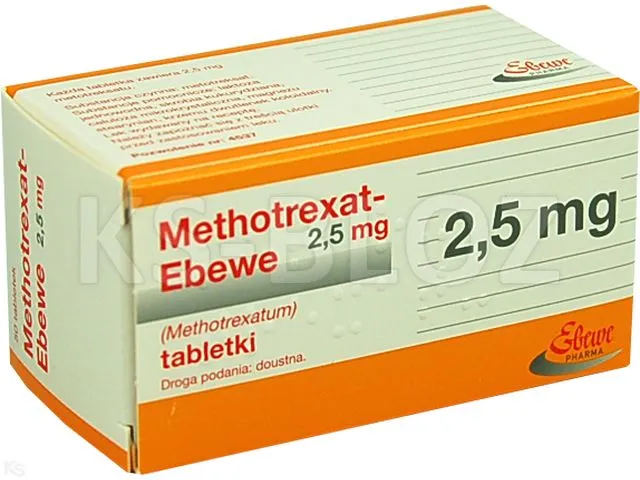
Table of Contents
Patient Information Leaflet
Methotrexat-Ebewe, 2.5 mg, tablets
Methotrexat-Ebewe, 5 mg, tablets
Methotrexat-Ebewe, 10 mg, tablets
Methotrexatum
Please read this leaflet carefully before taking this medicine, as it contains important information for you.
- Keep this leaflet, as you may need to read it again.
- If you have any further questions, please ask your doctor or pharmacist.
- This medicine has been prescribed for a specific individual. Do not pass it on to others.
- It may harm other people, even if their symptoms are the same.
- If you experience any adverse reactions, including any not listed in this leaflet, inform your doctor or pharmacist. See section 4.
Leaflet Contents:
- What Methotrexat-Ebewe is and what it is used for
- Important information before taking Methotrexat-Ebewe
- How to take Methotrexat-Ebewe
- Possible side effects
- How to store Methotrexat-Ebewe
- Contents of the pack and other information
1. What Methotrexat-Ebewe is and what it is used for
Methotrexat-Ebewe contains the active substance methotrexate. Methotrexate is a folic acid derivative and belongs to the group of antimetabolite cytostatic agents. It inhibits the proliferation of rapidly dividing cells (such as tumour cells, bone marrow cells, embryonic cells, oral mucosa, small intestine, and urinary bladder cells).
Methotrexat-Ebewe is used in combination therapy for malignant tumours and acute leukaemias, when oral treatment is indicated. If tumour cells divide much more rapidly than normal cells, methotrexate may inhibit the growth of tumour cells without causing irreversible damage to healthy tissues.
Methotrexat-Ebewe is also used in the most severe, treatment-resistant form of generalized plaque psoriasis (psoriasis vulgaris), including psoriatic arthritis. The increased proliferation of skin epithelial cells in psoriatic patients, compared to healthy individuals, provides the rationale for using methotrexate in these conditions.
Methotrexat-Ebewe is also used in other autoimmune diseases, such as rheumatoid arthritis. The mechanism of action in rheumatoid arthritis is most likely related to the immunosuppressive effect of the drug.
2. Important information before using Methotrexat-Ebewe
When not to use Methotrexat-Ebewe
- if the patient is allergic (hypersensitive) to methotrexate or to any of the other ingredients of this medicine (listed in section 6);
- if the patient has:
- severe liver function disorders
- severe kidney function disorders
- blood cell production disorders, including bone marrow dysfunction (leukopenia,
thrombocytopenia, anaemia), blood abnormalities
- severe and (or) active infections
- oral inflammation, oral ulceration and (or) diagnosed active peptic ulcer disease of the stomach or duodenum
- fresh surgical wounds
- if the patient consumes large amounts of alcohol, has alcoholic liver disease or another liver disease;
- if the patient has immunodeficiency;
- during breastfeeding and additionally during pregnancy, if the patient is using the medicine for non-oncological indications (in the treatment of non-cancerous disease) (see section "Pregnancy, breastfeeding and effects on fertility").
The medicine should not be used in children under 3 years of age.
During treatment with Methotrexat-Ebewe, vaccines containing live microorganisms must not be used.
Warnings and precautions
Methotrexate should only be administered under the supervision of a specialist physician experienced in managing anticancer chemotherapy and immunosuppressive therapy.
Before using Methotrexat-Ebewe, discuss with the doctor if:
- the patient has blood abnormalities and abnormal haematological parameters, especially if previously treated with radiotherapy or other cytostatic agents;
- the patient is undergoing radiotherapy;
- the patient has diabetes and is being treated with insulin;
- the patient has lung function disorders;
- the patient has or has had kidney or liver disease;
- the patient is dehydrated or has diarrhoea, vomiting, or oral inflammation;
- the patient has ulcerative stomatitis;
- the patient has ulcerative colitis;
- the patient is in poor general condition;
- the patient has shingles, tuberculosis, or viral hepatitis (type B or C);
- fluid accumulation in the abdominal cavity or in the space between the lungs and the chest wall has been detected (ascites, pleural effusion).
The physician will closely monitor the patient's condition to detect any adverse effects as early as possible.
If the patient develops signs of gastrointestinal toxicity such as stomatitis, diarrhoea, bloody vomiting, black stools or blood in the stool, the physician will decide whether treatment should be discontinued. Continuing treatment may lead to haemorrhagic enteritis and death due to intestinal perforation.
If the patient, their partner or caregiver notice new onset or worsening of neurological symptoms, including general muscle weakness, visual disturbances, changes in thinking, memory and orientation leading to disorientation and personality changes, contact the doctor immediately, as these may be symptoms of a very rare, serious brain infection called progressive multifocal leukoencephalopathy (PML).
Due to its effect on the immune system, methotrexate may weaken the response to vaccination and interfere with immunological test results.
Vaccinations administered during methotrexate treatment may be ineffective.
Cases of acute pulmonary haemorrhage have been reported in patients with underlying rheumatological disease during methotrexate treatment. If the patient develops haemoptysis (coughing up blood-tinged sputum), seek medical advice immediately.
Recommended monitoring tests and precautions
Even after administration of low doses of Methotrexat-Ebewe, severe adverse effects may occur. To detect these effects early, the physician must perform regular monitoring and laboratory tests.
Before starting treatment
Before initiating treatment, the physician will order blood tests to check blood cell counts, liver function and detect hepatitis. Serum albumin levels (blood protein), hepatitis status and kidney function will also be tested. The physician may also recommend additional liver tests, including imaging or liver biopsy (taking a small tissue sample for detailed examination). A chest X-ray or lung function tests may also be recommended to check for tuberculosis. Further tests may be performed during and after treatment.
During treatment:
The physician may order the following tests:
- examination of the mouth and throat to rule out mucosal changes such as inflammation or ulceration
- blood tests and (or) complete blood count to assess the number of different types of blood cells and serum methotrexate concentration
- blood tests to monitor liver function
- imaging tests to monitor liver status
- liver biopsy to examine liver tissue in detail
- blood tests to monitor kidney function
- monitoring of respiratory function and, if necessary, lung function tests.
It is essential to attend all scheduled blood tests and other examinations recommended by the physician.
If any of these test results are abnormal, treatment will only be resumed once all parameters have returned to normal.
In patients with rheumatoid arthritis, the physician will pay particular attention to the possibility of methotrexate-induced respiratory adverse effects. If cough or shortness of breath occurs, seek medical advice immediately.
Exposure to UV radiation during Methotrexat-Ebewe therapy may exacerbate skin lesions associated with psoriasis.
Methotrexate may increase skin sensitivity to sunlight. Avoid intense sun exposure and do not use sunbeds or tanning lamps without consulting a physician. To protect the skin from strong sunlight, wear appropriate clothing or use a high-protection sunscreen.
During methotrexate treatment, methotrexate or its metabolites may precipitate in the renal tubules. To prevent this, the physician will recommend drinking large amounts of fluids and administering agents to alkalinize the urine.
Any significant decrease in white blood cells or platelets and any signs of infection must be reported to the physician.
During treatment, standard procedures for handling cytotoxic substances must be followed.
Methotrexate may temporarily impair sperm and oocyte production. Methotrexate may cause miscarriage and severe congenital malformations. The patient should avoid becoming pregnant during methotrexate treatment and for at least 6 months after treatment ends. Men should avoid fathering a child during methotrexate treatment and for at least 3 months after treatment ends. See also section "Pregnancy, breastfeeding and effects on fertility".
Elderly patients
Elderly patients receiving methotrexate should be closely monitored by the physician to detect any adverse effects as early as possible.
Age-related liver and kidney function disorders, as well as reduced folate (folic acid) reserves in older age, require the use of relatively low doses of methotrexate.
Methotrexat-Ebewe and other medicines
Inform the physician or pharmacist about all medicines currently or recently taken, as well as any medicines the patient plans to use.
It is particularly important to inform the physician about the use of the following medicines:
- other medicines used for rheumatoid arthritis or psoriasis, such as gold salts, leflunomide, sulfasalazine (also used in the treatment of ulcerative colitis), acetylsalicylic acid, phenylbutazone or aminophenazone;
- azathioprine (used to prevent organ transplant rejection);
- retinoids (used in the treatment of psoriasis and other skin disorders);
- anticonvulsants (to prevent epileptic seizures);
- anticancer medicines (e.g. mercaptopurine, doxorubicin);
- asparaginase (a medicine used in the treatment of leukaemia);
- cytarabine (a medicine used in the treatment of certain lymphomas);
- barbiturates (sedatives);
- sedatives;
- oral contraceptives;
- probenecid (used in the treatment of gout);
- antibiotics or sulfonamides, ciprofloxacin;
- pyrimethamine (a medicine used in the treatment of malaria);
- vitamin supplements containing folic acid;
- proton pump inhibitors (used in the treatment of severe heartburn or ulcers);
- theophylline (used in the treatment of asthma);
- Vinca alkaloids;
- non-steroidal anti-inflammatory drugs, salicylates;
- metamizole (synonyms: novaminsulfone and dipyrone) [a potent analgesic and (or) antipyretic];
- calcium folinate;
- folate antagonists (trimethoprim with sulfamethoxazole);
- etretinate (used in the treatment of psoriasis);
- corticosteroids;
- hydroxychloroquine;
- penicillamine;
- cyclosporine;
- theophylline;
- triamterene;
- levetiracetam;
- live vaccines.
These medicines may increase methotrexate serum or intracellular concentrations, interfere with its excretion, thereby increasing methotrexate toxicity and altering treatment efficacy, and increasing the risk of treatment-related adverse effects.
Penicillins may reduce methotrexate excretion, potentially increasing adverse effects.
During methotrexate treatment, the immune system's response to concomitant vaccination may be weakened.
If the patient is to undergo surgery under anaesthesia, they should inform the anaesthesiologist about taking Methotrexat-Ebewe.
If the patient is unsure whether they are taking any of the listed medicines, they should consult a physician or pharmacist.
Methotrexat-Ebewe with food, drink and alcohol
Tablets should be taken on an empty stomach, with a small amount of water.
During treatment with Methotrexat-Ebewe, alcohol consumption should be avoided, as well as excessive coffee, caffeine-containing beverages and black tea.
During treatment, drink plenty of fluids, as dehydration (reduced body water) may intensify the toxic effects of the medicine.
Pregnancy, breastfeeding and effects on fertility
If the patient is pregnant or breastfeeding, suspects she may be pregnant, or plans to have a child, she should consult a physician before using this medicine.
Pregnancy
Do not use Methotrexat-Ebewe during pregnancy unless prescribed by a physician for oncological indications. Methotrexate may cause congenital malformations, harm the unborn child or cause miscarriage. This is associated with developmental abnormalities of the skull, face, heart and blood vessels, brain and limbs. Therefore, it is extremely important that women who are pregnant or planning pregnancy do not take methotrexate, except for oncological indications.
If the patient is taking methotrexate for oncological indications, she should plan pregnancy no earlier than 1-2 years after completing treatment.
If the patient is of childbearing age, pregnancy should be ruled out before starting treatment for non-oncological indications, e.g. by performing a pregnancy test. Do not use Methotrexat-Ebewe if the patient is pregnant or trying to become pregnant. The patient must absolutely avoid becoming pregnant during methotrexate treatment and for at least 6 months after its completion. Effective contraception must be used throughout this period (see also section "Warnings and precautions").
If the patient becomes pregnant during treatment or suspects she may be pregnant, she should consult a physician as soon as possible. If the patient becomes pregnant during treatment, she should seek advice regarding the possible harmful effects of treatment on the child.
If the patient plans to become pregnant, she should consult the treating physician, who may refer her to a specialist for pre-conception counselling before starting treatment.
Breastfeeding
Breastfeeding should not be performed during treatment, as methotrexate passes into breast milk. If the treating physician considers the use of Methotrexat-Ebewe absolutely necessary during this time, breastfeeding must be discontinued.
Male fertility
Available evidence does not indicate an increased risk of developmental abnormalities or miscarriages following paternal methotrexate exposure at doses below 30 mg/week. However, the risk cannot be completely ruled out, and there is no information regarding higher methotrexate doses. Methotrexate may be genotoxic, meaning it may cause genetic mutations. Methotrexate may affect sperm production, potentially leading to congenital abnormalities.
The patient should avoid impregnating a partner and donating semen during methotrexate treatment and for at least 3 months after its completion. Due to the possibility that higher-dose methotrexate treatment, typically used in cancer therapy, may cause infertility and genetic mutations, sperm cryopreservation prior to treatment initiation may be recommended for men receiving methotrexate at doses exceeding 30 mg/week (see also section "Warnings and precautions").
Driving and operating machinery
Methotrexate may cause fatigue and dizziness, which may impair the ability to drive or operate machinery.
Methotrexat-Ebewe contains lactose
If the patient has previously been diagnosed with intolerance to certain sugars, the patient should consult a physician before taking this medicine.
3. How to use Methotrexat-Ebewe
Methotrexat-Ebewe must only be used under the supervision of a physician experienced
in the use of antineoplastic chemotherapy or in immunosuppressive therapy.
Depending on the indication and treatment regimen used, the dose of Methotrexat-Ebewe may vary
within very wide limits; therefore, this medicine should always be used exactly as prescribed by the physician.
Recommended dose
Treatment-resistant generalized forms of psoriasis, psoriatic arthritis, and other autoimmune diseases
The dosage and duration of therapy depend on the severity of the disease and the patient's tolerance to methotrexate.
The usual weekly dose is 10 to 25 mg of methotrexate administered orally.
Dosage depends on the therapeutic response and occurrence of adverse drug reactions. Therefore, the physician will usually initiate treatment with a dose of 2.5–5 mg per week. This dose may be increased to 7.5–25 mg per week.
Important warning regarding the dosing of Methotrexat-Ebewe (methotrexate):
In the treatment of treatment-resistant generalized psoriasis, psoriatic arthritis, and other autoimmune diseases, Methotrexat-Ebewe must be administered once weekly only. Administration of a higher amount of Methotrexat-Ebewe (methotrexate) may result in death. Please read section 3 of this leaflet carefully. If you have any questions, consult your physician or pharmacist before taking the medicine.
Your physician will advise you to take the weekly dose as a single dose on an empty stomach, immediately before a meal.
Your physician will specify on the prescription the designated day for taking the medicine.
The tablets should be swallowed with water.
Malignant neoplasms and acute leukemias
The physician will determine the methotrexate dosage according to the indication, the patient's health status, and blood morphology results. Commonly used low (single dose not exceeding 100 mg/m² BSA [body surface area]), intermediate (single dose from 100 to 1000 mg/m² BSA), or high (single dose exceeding 1000 mg/m² BSA) doses of methotrexate depend on the multidrug chemotherapy regimen being administered.
Oral methotrexate is usually used as an adjunct to parenteral treatment and is administered only in low doses.
Taking more Methotrexat-Ebewe than prescribed
Always take the dose prescribed by your physician. Never change the dose on your own.
If you suspect that a patient (or someone else) has taken more medicine than prescribed, contact your physician or the nearest hospital emergency department immediately. Take the medicine package with you so that it is clear which medicine has been taken.
Methotrexate overdose may cause severe toxic reactions. Symptoms of overdose include: easy bruising or bleeding, weakness, mouth sores, nausea, vomiting, black or bloody stools, coughing up blood or vomiting material resembling coffee grounds, and reduced urine output. See also section 4.
Only a physician can decide on the appropriate treatment measures depending on the severity of poisoning symptoms.
The antidote used in case of poisoning is calcium folinate.
Missing a dose of Methotrexat-Ebewe
Do not take a double dose to make up for a missed tablet.
Stopping Methotrexat-Ebewe treatment
Do not stop treatment without consulting your physician.
If you have any further doubts about using this medicine, consult your physician or pharmacist.
4. Possible side effects
Like all medicines, this medicine can cause side effects, although not everybody will experience them.
The frequency and severity of side effects are considered to be related to the dose, method, and
frequency of administration of the medicine. The side effects listed below have mainly been reported
following the use of high-dose methotrexate in chemotherapy. These effects occur less frequently and
are milder after administration of low-dose methotrexate in the treatment of psoriasis and other
autoimmune diseases.
Immediately inform the doctor if the patient suddenly develops wheezing, difficulty breathing, swelling
of the eyelids, face or lips, rash or itching (especially if affecting the whole body).
Serious side effects
Contact the doctor immediately if any of the following side effects occur:
- pulmonary symptoms (may include general malaise; dry, irritating cough; shortness of breath; chest pain; or fever);
- severe peeling of the skin or formation of blisters on the skin;
- unexplained bleeding (including vomiting blood) or bruising;
- severe diarrhoea;
- ulceration of the oral mucosa;
- black or tarry stools;
- blood in the urine or faeces;
- small red spots on the skin;
- fever;
- yellowing of the skin (jaundice);
- pain or difficulty passing urine;
- feeling thirsty and (or) frequent urination;
- seizures (convulsions);
- loss of consciousness;
- blurred vision or visual disturbances;
- haemoptysis, i.e. coughing up blood*
*(reported during use of methotrexate in patients with underlying rheumatological disease)
Other side effects:
Very common side effects (may affect more than 1 in 10 people):
- reduced immunity to infections;
- sore throat;
- reduced platelet count (thrombocytopenia), reduced white blood cell count (leukopenia);
- headache, dizziness;
- cough;
- loss of appetite;
- diarrhoea, abdominal pain, nausea, vomiting;
- ulcerative inflammation of the oral mucosa;
- increased activity of liver enzymes (AspAT, AlAT), alkaline phosphatase;
- increased blood bilirubin concentration;
- decreased creatinine clearance;
- hair loss;
- fatigue, weakness, malaise.
Common side effects (may affect less than 1 in 10 people):
- shingles;
- anaemia, (reduced red blood cells, white blood cells and platelets (pancytopenia), complete or near-complete absence of granulocytes (agranulocytosis);
- bone marrow suppression;
- somnolence;
- conjunctivitis;
- pulmonary complications due to interstitial pneumonitis, alveolitis (may lead to death), acute pulmonary oedema;
- rash, erythema, itching, skin ulceration;
- photosensitivity.
Uncommon side effects (may affect less than 1 in 100 people):
- opportunistic infections (life-threatening);
- malignant lymphoma;
- allergic reactions up to anaphylactic shock;
- suppression of immune system function;
- diabetes;
- depression;
- hemiparesis;
- confusion;
- convulsions;
- encephalopathy/leukoencephalopathy;
- vasculitis, allergic vasculitis;
- pulmonary fibrosis, pleural effusion;
- ulceration of gastric and intestinal mucosa;
- haemorrhage;
- pancreatitis;
- hepatotoxic effects;
- fatty liver;
- chronic fibrosis and liver cirrhosis;
- decreased serum albumin concentration;
- skin eruptions, herpes-like skin eruptions;
- Stevens-Johnson syndrome, toxic epidermal necrolysis (Lyell's syndrome);
- urticaria;
- increased skin pigmentation;
- reactions resembling sunburn due to increased skin sensitivity to sunlight;
- methotrexate nodules;
- impaired wound healing;
- pain in psoriatic lesions;
- joint pain, muscle pain;
- osteoporosis;
- nephropathy, renal failure;
- inflammation and ulceration of the urinary bladder;
- haematuria;
- urinary disorders, painful urination, oliguria, anuria;
- congenital malformations in the foetus;
- inflammation and ulceration of the vagina;
- fever.
Rare side effects (may affect less than 1 in 1,000 people):
- opportunistic infections (life-threatening);
- sepsis (including fatal cases);
- megaloblastic anaemia;
- mood changes, transient disturbances in perception;
- paresis;
- speech disorders, including dysarthria and aphasia;
- myelopathy (after intrathecal administration);
- visual disturbances (including severe);
- severe retinal vessel thrombosis;
- hypotension;
- thromboembolic events (including arterial and cerebral vessel thrombosis, phlebitis, deep vein thrombosis);
- sore throat;
- respiratory arrest;
- pulmonary embolism;
- enteritis;
- gingivitis;
- tarry stools;
- acute hepatitis;
- acne;
- petechiae;
- erythema multiforme;
- erythematous skin rashes;
- increased pigmentation changes in nails, separation of the nail plate;
- bone fractures due to stress;
- increased serum uric acid, urea and creatinine concentration, azotemia.
Very rare side effects (may affect less than 1 in 10,000 people):
- hepatitis caused by herpes simplex virus;
- cryptococcosis, histoplasmosis, nocardiosis;
- infections caused by cytomegalovirus (e.g. pneumonia);
- disseminated herpes simplex virus infection;
- Pneumocystis jirovecii pneumonia;
- tumour lysis syndrome (in patients treated for neoplastic disease);
- skin cancer (in patients treated for psoriasis);
- aplastic anaemia;
- eosinophilia, neutropenia;
- lymphadenopathy;
- lymphoproliferative disorders (overproduction of white blood cells);
- hypogammaglobulinaemia;
- myasthenia;
- limb pain;
- sensation of numbness or tingling or reduced response to stimuli;
- taste disturbances (metallic taste);
- acute aseptic meningitis with cerebrospinal fluid reaction;
- symptoms of meningitis without infection (paralysis, vomiting);
- cranial nerve disorders;
- periorbital oedema;
- blepharitis;
- lacrimation due to inadequate drainage of the tear film;
- photophobia;
- transient blindness, loss of vision;
- pericarditis, pericardial tamponade, pericardial effusion;
- chronic obstructive pulmonary disease;
- asthma-like reactions with cough, dyspnoea and changes evident in lung function tests;
- vomiting blood;
- acute liver necrosis, acute liver degeneration, liver failure;
- chilblains, telangiectasias, acute onychia;
- haematuria, proteinuria;
- foetal death;
- impaired sperm production, impaired oocyte production;
- infertility;
- menstrual cycle disturbances;
- loss of libido;
- impotence;
- vaginal discharge;
- gynaecomastia;
- chills.
Side effects with unknown frequency (frequency cannot be estimated from available data):
- pneumonia;
- reactivation of hepatitis B virus;
- exacerbation of hepatitis C virus;
- neurotoxicity;
- adhesive arachnoiditis;
- transverse myelitis;
- stupor;
- ataxia;
- dementia;
- increased cerebrospinal fluid pressure;
- chest pain;
- hypoxia;
- alveolar haemorrhage (reported during use of methotrexate in patients with underlying rheumatological disease);
- non-infectious peritonitis;
- intestinal perforation;
- glossitis;
- acute colonic dilation;
- drug reaction with eosinophilia and systemic symptoms (DRESS);
- dermatitis;
- redness and peeling of the skin;
- exacerbation of psoriatic lesions after simultaneous exposure to UV radiation;
- skin ulceration (in patients with psoriasis);
- oedema;
- bone necrosis;
- jaw bone necrosis (due to overproduction of white blood cells);
- retinopathy;
- chills;
- seizures, neurotoxicity, adhesive arachnoiditis, paralysis, stupor, ataxia (movement disorders), dementia, increased cerebrospinal fluid pressure, encephalopathy (brain damage).
If the patient develops diarrhoea or ulceration in the mouth or throat, this must be reported to the
doctor immediately, as treatment may need to be discontinued due to the risk of gastrointestinal
perforation or haemorrhagic enteritis.
Methotrexate use may trigger recurrence of radiation-induced dermatitis or skin burns (so-called
"recall reactions").
Reporting of side effects
If any side effects occur, including any not listed in this leaflet, tell your doctor, pharmacist or nurse.
Side effects can be reported directly to the Department of Monitoring Adverse Drug Reactions of the
Office for Registration of Medicinal Products, Medical Devices and Biocidal Products:
Al. Jerozolimskie 181C, 02-222 Warsaw
Tel.: +48 22 49 21 301, Fax: +48 22 49 21 309, Website: https://smz.ezdrowie.gov.pl
Side effects can also be reported to the marketing authorisation holder.
Reporting side effects helps provide more information on the safety of this medicine.
5. How to store Methotrexat-Ebewe
- Keep this medicine out of the sight and reach of children.
- Do not use Methotrexat-Ebewe after the expiry date stated on the packaging after EXP. The expiry date refers to the last day of the stated month.
- Store below 25°C.
- Store in the original packaging to protect from light.
- Medicines should not be disposed of via wastewater or household waste. Ask your pharmacist how to properly dispose of medicines no longer in use. This will help protect the environment.
6. Contents of the pack and other information
What Methotrexat-Ebewe contains
The active substance is methotrexate. Each tablet contains 2.5 mg, 5 mg, or 10 mg of methotrexate.
The other ingredients are: lactose monohydrate, maize starch, microcrystalline cellulose,
magnesium stearate, colloidal anhydrous silica.
What Methotrexat-Ebewe looks like and contents of the pack
Methotrexat-Ebewe tablets are light yellow and may have yellow or red specks.
The 5 mg and 10 mg tablets can be divided into halves.
Packs contain 30 or 50 tablets.
Marketing Authorisation Holder and Manufacturer
Marketing Authorisation Holder
EBEWE Pharma Ges.m.b.H. Nfg.KG
Mondseestrasse 11
A-4866 Unterach, Austria
Manufacturers
Salutas Pharma GmbH
Otto-von-Guericke-Allee 1
39179 Barleben, Germany
Lek Pharmaceuticals d.d.
Verovškova 57
1526 Ljubljana, Slovenia
For further information, please contact:
Sandoz Polska Sp. z o.o.
ul. Domaniewska 50 C
02-672 Warsaw, Poland
tel. 22 209 70 00
EBEWE Logo