Magnokal
Poland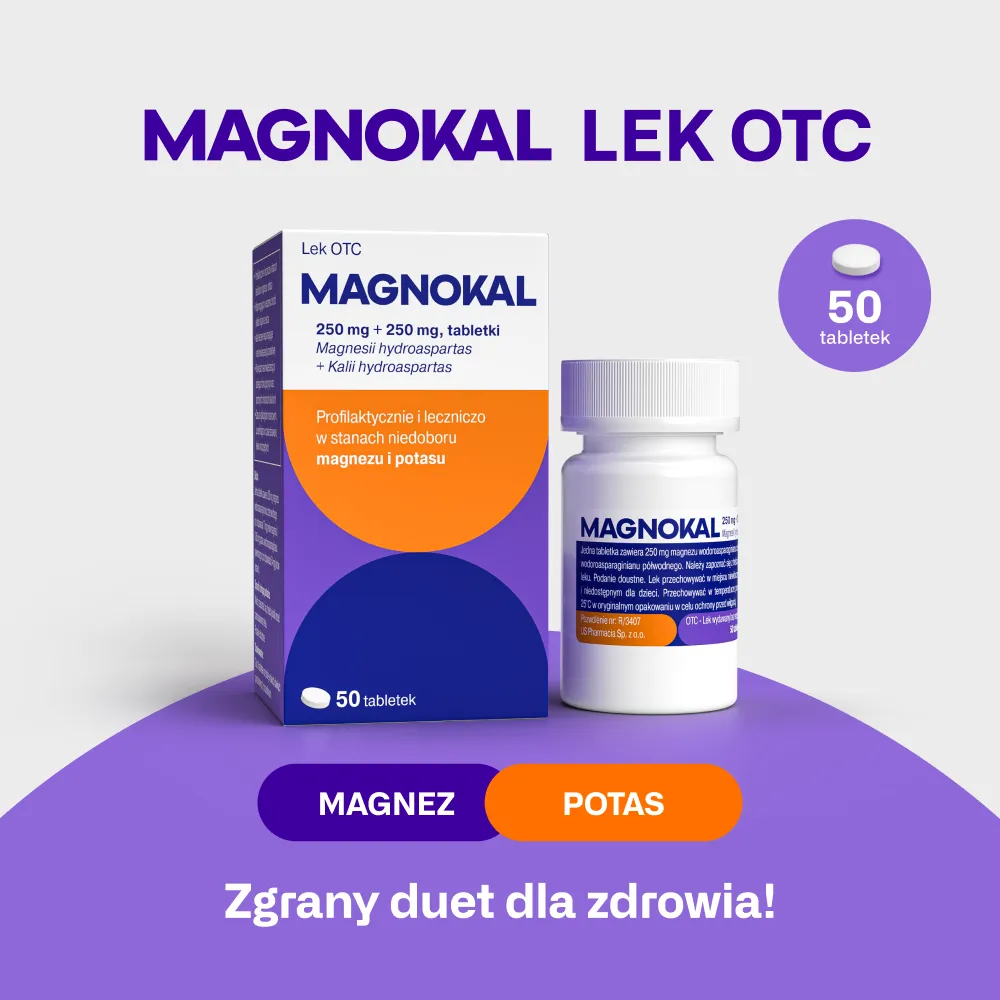
Table of Contents
Package leaflet: Information for the user
Magnokal, 250 mg + 250 mg, tablets
Magnesium hydroaspartate + Potassium hydroaspartate
Please read all of this leaflet carefully before taking this medicine, as it contains
important information for the patient.
This medicine should always be used exactly as described in this patient leaflet or as directed by a
physician or pharmacist.
- Keep this leaflet, as you may need to read it again.
- If you need advice or further information, please consult your pharmacist.
- If you experience any adverse reactions, including any not listed in this leaflet, inform your physician or pharmacist. See section 4.
- If there is no improvement after 7–8 days, or if you feel worse, consult your doctor.
Contents of the leaflet:
- What Magnokal is and what it is used for
- Important information before taking Magnokal
- How to take Magnokal
- Possible side effects
- How to store Magnokal
- Contents of the pack and other information
1. What Magnokal is and what it is used for
- as supportive treatment in cardiovascular diseases and myocardial disorders. In cardiac arrhythmias and tachycardia—particularly associated with magnesium and potassium deficiencies—and during post-infectious convalescence
- prophylactically and therapeutically in states of magnesium and potassium deficiency
- during recovery periods following surgical procedures and infectious diseases
- in glycoside intoxication, and as supplementary therapy during diuretic treatment.
Magnokal is a medicinal product with combined action of magnesium, potassium, and aspartic acid. It replenishes deficiencies of these substances in the body and prevents the development of their deficit, both during periods of increased demand and in cases of inadequate intake. Aspartic acid participates in the metabolism of nervous tissue cells, acts as a neurotransmitter in the central nervous system, and exerts a stimulating effect on bodily activity. Potassium and magnesium are ions involved in numerous metabolic processes in the body.
If there is no improvement after 7–8 days, or if you feel worse, consult your doctor.
2. Important information before using Magnokal
When not to use Magnokal
- if the patient is allergic to the active substances or to any of the other ingredients of this medicine (listed in section 6).
- severe renal insufficiency
- elevated serum potassium or magnesium levels
- urinary tract infections
- atrioventricular conduction disturbances (block) of the heart
- reduced heart rate (bradyarrhythmia)
- myasthenia gravis – a disease characterized by muscle weakness and fatigue
- significant hypotension.
Warnings and precautions
Before starting treatment with Magnokal, consult a doctor or pharmacist.
Do not use Magnokal in acute dehydration or extensive tissue destruction (e.g. large surface burns). Magnokal should not be used during antibiotic therapy or with other potassium-containing medicines. Use with caution in peptic ulcer disease.
During treatment, monitor serum potassium and magnesium levels, perform control ECG examinations, and monitor kidney function. This medicine does not contain sugar.
Magnokal and other medicines
Inform your doctor or pharmacist about all medicines currently used or recently used, as well as any medicines planned for future use.
Concomitant administration of magnesium and tetracycline antibiotics or nitrofurantoin reduces their absorption; to avoid interactions, a two-hour interval between administration of these medicines is recommended.
Oral sulfonylurea antidiabetic drugs taken together with magnesium-containing medicines may lead to a greater than expected decrease in blood glucose levels.
Potassium salts may reduce the effectiveness of digitalis glycosides and may cause cardiac arrhythmias.
Concomitant use of potassium salts and potassium-sparing diuretics, ACE inhibitors (angiotensin-converting enzyme inhibitors converting angiotensin I to angiotensin II, e.g. enalapril, perindopril), or anti-inflammatory and analgesic drugs (e.g. indomethacin) may lead to excessive potassium levels (hyperkalemia).
Magnokal with food and drink
Food does not affect the extent of absorption of potassium hydrogen aspartate hemihydrate and magnesium hydrogen aspartate tetrahydrate.
Use of Magnokal in patients with renal impairment
In patients with renal impairment who are taking other potassium preparations or potassium-sparing diuretics, dosage adjustments as advised by a physician may be necessary.
Pregnancy and breastfeeding
Pregnancy
Consult a doctor or pharmacist before taking any medicine.
Breastfeeding
Consult a doctor or pharmacist before taking any medicine.
Driving and operating machinery
Magnokal has no effect on the ability to drive or operate machinery.
3. How to use Magnokal
This medicine should always be taken exactly as described in this patient leaflet or as advised by your
doctor or pharmacist. If in doubt, consult your doctor or pharmacist.
The medicine should be taken orally, 2 to 6 tablets per day in two divided doses, taken after meals.
Taking more Magnokal than recommended
There have been no reported cases of overdose with this medicine so far.
If you forget to take Magnokal
Do not take a double dose to make up for a missed dose.
Stopping Magnokal
If you have any further questions about the use of this medicine, consult your doctor or pharmacist.
4. Possible adverse effects
Like all medicines, this medicine can cause adverse effects, although not everyone will experience them.
Gastrointestinal disturbances (nausea and diarrhoea), which usually resolve spontaneously, and a metallic taste in the mouth may occur occasionally. High doses of the medicine may cause atrioventricular conduction disturbances. Skin redness, insomnia, and muscle weakness may also occur.
Reporting of adverse effects
If any adverse effects occur, including any adverse effects not listed in this leaflet, inform a doctor or pharmacist. Adverse effects can be reported directly to the Department of Monitoring Adverse Drug Reactions of the Office for Registration of Medicinal Products, Medical Devices and Biocidal Products
Al. Jerozolimskie 181C, 02-222 Warsaw, tel.: + 48 22 49 21 301, fax: + 48 22 49 21 309,
website: https://smz.ezdrowie.gov.pl
Adverse effects can also be reported to the marketing authorisation holder.
Reporting adverse effects helps to provide more information on the safety of the medicine.
5. How to store Magnokal
Store below 25°C in the original packaging to protect from moisture.
Keep the medicine out of the sight and reach of children.
Do not use this medicine after the expiry date stated on the packaging. The expiry date refers to the last day of the stated month.
Medicines must not be disposed of via sewage systems or household waste. Ask your pharmacist how to dispose of medicines no longer required. Such measures help protect the environment.
6. Contents of the pack and other information
What Magnokal contains
- The active substances are magnesium hydrogen aspartate tetrahydrate and potassium hydrogen aspartate monohydrate.
- The other ingredients are: potato starch, povidone 25, magnesium stearate.
What Magnokal looks like and contents of the pack
Tablets.
1 bottle containing 50 tablets in a cardboard box.
Marketing Authorisation Holder
US Pharmacia Sp. z o.o.
Ziębicka Street 40
50-507 Wrocław
Poland
Manufacturer
Teva Operations Poland Sp. z o.o.
Mogilska Street 80
31-546 Kraków
Poland
For further information about this medicine, please contact the local representative of the Marketing Authorisation Holder:
USP Zdrowie Sp. z o.o.
Poleczki Street 35
02-822 Warsaw
Phone: +48 (22) 543 60 00