Linezolid krka
Poland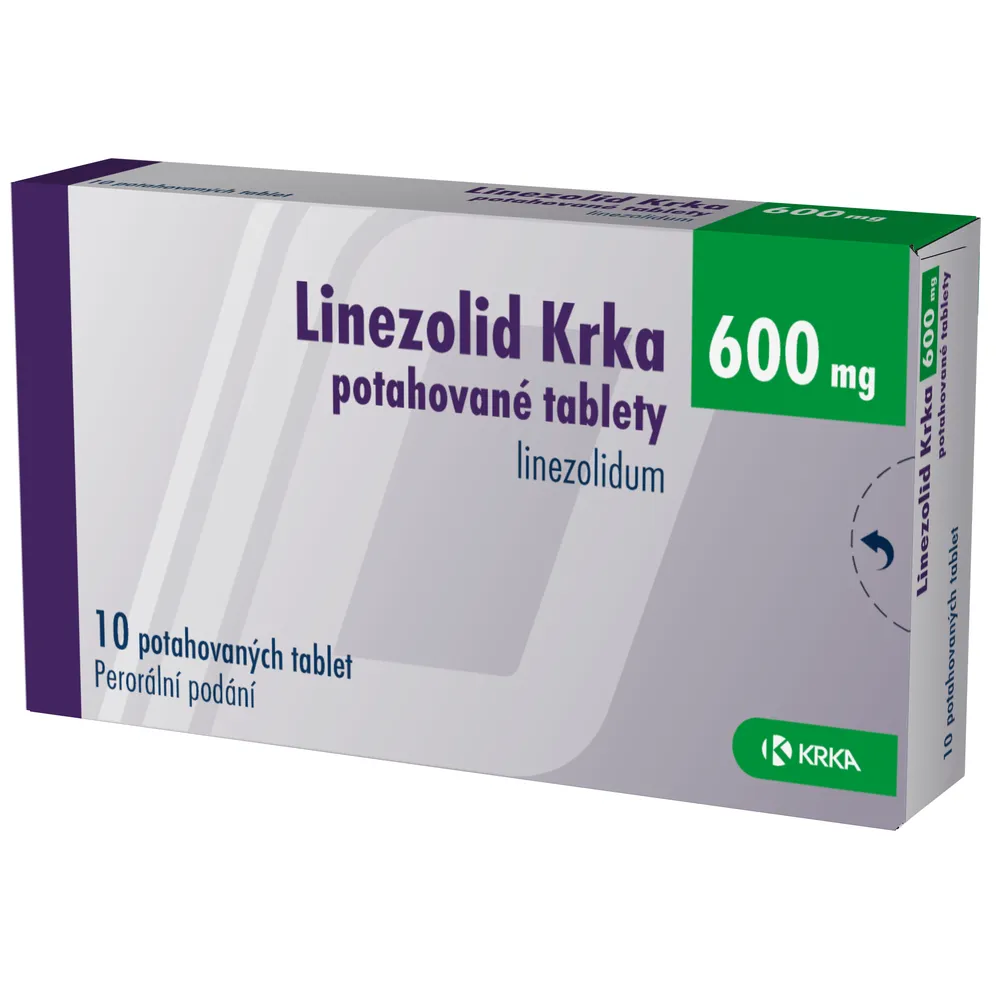
Table of Contents
Package leaflet: Information for the patient
Linezolid Krka, 600 mg, film-coated tablets
Linezolidum
Please read all of this leaflet carefully before taking this medicine, because it contains
important information for the patient.
- Keep this leaflet, as you may need to read it again.
- If you have any further questions, please ask your doctor, pharmacist or nurse.
- This medicine has been prescribed for a specific individual. Do not pass it on to others. The medicine may harm other people, even if their symptoms are the same.
- If you experience any adverse reactions, including any not listed in this leaflet, tell your doctor, pharmacist or nurse. See section 4.
Contents of the leaflet
- What Linezolid Krka is and what it is used for
- Important information before taking Linezolid Krka
- How to take Linezolid Krka
- Possible side effects
- How to store Linezolid Krka
- Contents of the pack and other information
1. What Linezolid Krka is and what it is used for
Linezolid Krka is an antibiotic belonging to a class of antibiotics called oxazolidinones, which works by stopping the growth of certain bacteria that cause infections.
This medicine is used to treat pneumonia and certain skin and soft tissue infections. Your doctor will decide whether treatment with Linezolid Krka is appropriate for your specific infection.
2. Important information before using Linezolid Krka
When not to use Linezolid Krka
- if the patient is allergic to linezolid or any of the other ingredients of this medicine (listed in section 6);
- if the patient is currently taking or has taken within the last 2 weeks medicines from a group called monoamine oxidase inhibitors (MAOIs, e.g. phenelzine, isocarboxazid, selegiline, moclobemide). These medicines may be used in the treatment of depression or Parkinson's disease;
- during breastfeeding, because linezolid passes into breast milk and may harm the baby.
Warnings and precautions
Before starting treatment with Linezolid Krka, talk to your doctor, pharmacist or
nurse.
Linezolid Krka may not be suitable for a patient if they can answer "yes" to any of the questions below. In such cases, discuss with your doctor, as it may be necessary to check general health and blood pressure before and during treatment. Your doctor may also decide to prescribe a different medicine.
If in doubt whether any of the following situations apply to the patient, consult your doctor.
-
Does the patient have high blood pressure, or is taking medicines for it?
-
Has the patient been diagnosed with hyperthyroidism?
-
Does the patient have a tumour of the adrenal gland (pheochromocytoma) or carcinoid syndrome (caused by tumours
in the hormonal system, associated with symptoms such as diarrhoea, skin flushing, wheezing)? -
Does the patient have bipolar affective disorder, schizoaffective disorders, disorientation or other psychiatric disorders?
-
Has the patient experienced hyponatraemia (low sodium levels in the blood), or is the patient taking medicines that reduce sodium levels in the blood, such as certain diuretics (also called "water tablets"), e.g. hydrochlorothiazide?
-
Is the patient taking any opioid medicines? Concurrent use of certain medicines, including antidepressants and opioids, with Linezolid Krka may lead to serotonin syndrome – a potentially life-threatening condition (see section 2 "Linezolid Krka and other medicines" and section 4).
When to be cautious when using Linezolid Krka
Inform your doctor before taking Linezolid Krka if the patient has:
- advanced age,
- tendency to bruising or bleeding,
- anaemia (low red blood cell count),
- tendency to infections,
- history of seizures,
- impaired liver or kidney function, especially if the patient is on dialysis,
- diarrhoea.
Tell your doctor immediately if the patient experiences any of the following during treatment:
- vision problems, such as blurred vision, changes in colour vision, difficulty seeing details or narrowing of the visual field,
- loss of sensation in hands or feet or tingling or prickling sensations in the hands and feet,
- diarrhoea may occur during or after taking antibiotics, including Linezolid Krka; if severe, persistent, or if blood or mucus appears in the stool, stop taking Linezolid Krka immediately and contact your doctor; in such cases, do not take medicines that stop or slow down bowel movements,
- recurring nausea or vomiting, abdominal pain or rapid breathing,
- unexplained muscle pain, tenderness or weakness and (or) darkening of urine. These may be symptoms of a serious condition called rhabdomyolysis (muscle breakdown), which may lead to kidney damage.
- nausea and malaise, including muscle weakness, headache, confusion and memory disturbances, which may indicate hyponatraemia (low sodium levels in the blood).
Children and adolescents
Linezolid Krka is generally not used to treat children and adolescents (under 18 years of age).
Linezolid Krka and other medicines
There is a risk of interactions between Linezolid Krka and other medicines. These interactions
may lead to adverse effects, such as changes in blood pressure, body temperature or pulse.
Tell your doctor about all medicines the patient is currently taking or has taken recently, as well as any medicines the patient plans to take.
Inform your doctor if the patient is currently taking or has taken any of the following medicines within the last 2 weeks, because Linezolid Krka must not be used during or shortly after treatment with these medicines (see also section 2 above: "When not to use Linezolid Krka"):
- monoamine oxidase inhibitors (MAOIs: e.g. phenelzine, isocarboxazid, selegiline, moclobemide); these medicines may be used in the treatment of depression or Parkinson's disease.
Also inform your doctor if the patient is taking any of the following medicines. Your doctor may still prescribe Linezolid Krka, but monitoring of the patient's general health and blood pressure before and during treatment will be necessary. In other cases, your doctor may decide that another medicine would be more suitable for the patient.
- Decongestants used for colds or flu containing pseudoephedrine or phenylpropanolamine.
- Certain anti-asthma medicines, e.g. salbutamol, terbutaline, fenoterol.
- Tricyclic antidepressants or SSRIs (selective serotonin reuptake inhibitors). Many medicines belong to these groups, e.g. amitriptyline, citalopram, clomipramine, dosulepin, doxepin, fluoxetine, fluvoxamine, imipramine, lofepramine, paroxetine, sertraline.
- Medicines for migraine, e.g. sumatriptan and zolmitriptan.
- Medicines used to treat sudden, severe allergic reactions, e.g. adrenaline (epinephrine).
- Medicines that increase blood pressure, e.g. noradrenaline (norepinephrine), dopamine and dobutamine.
- Opioids, e.g. pethidine, used to treat moderate to severe pain.
- Medicines used to treat anxiety disorders, e.g. buspirone.
- Anticoagulants, e.g. warfarin.
- An antibiotic called rifampicin.
Linezolid Krka with food, drink and alcohol
- Linezolid Krka can be taken regardless of meals.
- During treatment, avoid consuming foods such as aged cheeses, yeast extracts, soy products (e.g. soy sauce) and alcoholic beverages, especially draught beer and wine. These products contain tyramine, which may interact with Linezolid Krka and cause an increase in blood pressure.
- If a pulsating headache occurs after eating or drinking, contact your doctor, pharmacist or nurse immediately.
Pregnancy, breastfeeding and fertility
The effect of linezolid in pregnant women is unknown. Therefore, unless otherwise advised by a doctor, Linezolid Krka should not be used during pregnancy. If the patient is pregnant or breastfeeding, suspects she may be pregnant, or is planning to have a baby, she should consult her doctor or pharmacist before using this medicine.
Breastfeeding should not be continued during treatment with Linezolid Krka, because this medicine passes into breast milk and may harm the baby.
Driving and operating machinery
Linezolid Krka may cause dizziness or visual disturbances. In such cases, do not drive or operate machinery. Remember that feeling unwell may adversely affect the ability to drive or operate machinery.
Linezolid Krka contains sodium
This medicine contains less than 1 mmol (23 mg) of sodium per tablet, meaning the medicine is considered "sodium-free".
3. How to take Linezolid Krka
This medicine should always be taken exactly as described in this patient information leaflet or as directed by your doctor, pharmacist, or nurse. If in doubt, consult your doctor or pharmacist. The usual dose is one tablet (600 mg of linezolid) twice daily (every 12 hours). Swallow the tablet whole with water.
If you are undergoing dialysis, Linezolid Krka should be taken after the dialysis session.
Treatment usually lasts from 10 to 14 days, but may last up to 28 days. The efficacy and safety of this medicine have not been established for treatment periods longer than 28 days. The duration of treatment is determined by your doctor.
During treatment with Linezolid Krka, your doctor will recommend regular blood tests to monitor blood counts.
If Linezolid Krka is used for longer than 28 days, an eye examination should be performed.
Use in children and adolescents
Linezolid Krka is generally not used in children and adolescents (under 18 years of age).
If you take more Linezolid Krka than you should
Contact your doctor or pharmacist immediately.
If you forget to take Linezolid Krka
If you miss a dose, take it as soon as possible. Then take the next coated tablet after 12 hours, and continue taking subsequent coated tablets every 12 hours. Do not take a double dose to make up for a missed coated tablet.
If you stop taking Linezolid Krka
Continue taking Linezolid Krka for as long as your doctor instructs. If symptoms return after stopping the medicine, contact your doctor or pharmacist immediately.
If you have any further questions about the use of this medicine, consult your doctor, pharmacist, or nurse.
4. Possible adverse effects
Like all medicines, this medicine can cause adverse effects, although not everyone will experience them.
Serious adverse effects (with frequency in parentheses) of Linezolid Krka include:
If any of the following adverse effects occur in a patient during treatment with Linezolid Krka,
you should immediately tell your doctor, nurse, or
pharmacist:
-
severe skin reactions (not common), swelling, particularly of the face and neck (not common), wheezing and (or) difficulty breathing (rare). These may be symptoms of an allergic reaction, and it may be necessary to discontinue treatment with Linezolid Krka. Skin reactions such as raised, purple rash caused by inflammation of blood vessels (rare), redness and peeling of the skin (skin inflammation) (not common), rash (common), itching (common)
-
visual disturbances (not common), such as blurred vision (not common), changes in color perception (frequency not known), difficulty in seeing details (frequency not known), or narrowing of the visual field (rare)
-
severe diarrhoea with blood and/or mucus in the stool (antibiotic-associated colitis, including pseudomembranous colitis), rarely leading to life-threatening complications (not common)
-
recurrent nausea or vomiting, abdominal pain or rapid breathing (rare)
-
seizures or convulsions have been reported (not common) during treatment with Linezolid Krka
-
serotonin syndrome (frequency not known). Inform your doctor if, when taking antidepressants of the SSRI group or opioids concurrently, symptoms such as agitation, confusion, hallucinations, rigidity, tremor, coordination disturbances, convulsive seizures, rapid heartbeat, severe breathing problems, and diarrhoea occur (suggesting serotonin syndrome) (see section 2).
-
pancreatitis (not common)
-
bleeding or bruising of unknown cause, possibly due to changes in blood cell counts affecting blood clotting or leading to anaemia (common)
-
changes in the number of certain blood cells, possibly affecting the ability to fight infections (not common); signs of infection include: fever (common), sore throat (not common), mouth ulcers (not common), fatigue (not common)
-
rhabdomyolysis (rare): objective and subjective symptoms include unexplained muscle pain, tenderness or weakness, and (or) dark discoloration of urine. These may be signs of a serious condition called rhabdomyolysis (muscle breakdown), which may lead to kidney damage
-
convulsions (not common)
-
transient ischaemic attacks (transient disturbances in blood supply to the brain causing temporary symptoms such as loss of vision, limb weakness, slurred speech, loss of consciousness) (not common)
-
"ringing" in the ears (tinnitus) (not common)
In patients treated with Linezolid Krka for more than 28 days, numbness, tingling, or blurred vision have been reported. If visual disturbances occur, contact your doctor immediately.
Additional adverse effects include:
Common adverse effects (may occur in up to 1 in 10 people):
- fungal infections, particularly vaginal or oral thrush
- headache
- metallic taste in the mouth
- diarrhoea, nausea or vomiting
- changes in certain blood test results, including those measuring proteins, salts or enzymes used to assess kidney or liver function, or blood sugar levels
- sleep disturbances
- increased blood pressure
- anaemia (low number of red blood cells)
- dizziness
- localised or generalised abdominal pain
- constipation
- indigestion (dyspepsia)
- local pain
- decreased platelet count
Uncommon adverse effects (may occur in up to 1 in 100 people):
- inflammation of the vaginal mucosa or genital area in women
- sensation of numbness or tingling
- swelling, pain or discoloration of the tongue
- dry mouth
- frequent urination
- chills
- increased thirst
- increased sweating
- hyponatremia (low sodium levels in blood)
- kidney dysfunction
- bloating
- increased creatinine levels
- abdominal pain
- changes in heart rate (e.g. increased rate)
- decreased number of all types of blood cells
- weakness and (or) sensory changes
Rare adverse effects (may occur in fewer than 1 in 1000 people):
- superficial tooth discoloration, reversible after dental cleaning (manual removal of tartar)
The following adverse effects have also been reported (frequency not known: frequency cannot be
determined from available data):
- hair loss (alopecia)
If any of the adverse effects worsen or if any adverse effects not listed in this leaflet occur, inform your doctor or pharmacist.
Reporting of adverse effects
If you experience any adverse effects, including any not listed in this leaflet, tell your doctor or pharmacist. Adverse effects can be reported directly to the Department of Monitoring Adverse Drug Reactions of the Office for Registration of Medicinal Products, Medical Devices and Biocidal Products:
Al. Jerozolimskie 181C, 02-222 Warsaw
Tel.: +48 22 49 21 301
Fax: +48 22 49 21 309
Website: https://smz.ezdrowie.gov.pl
Adverse effects can also be reported to the Marketing Authorisation Holder.
Reporting adverse effects helps to provide more information on the safety of the medicine.
5. How to store Linezolid Krka
Keep this medicine out of the sight and reach of children.
Do not use this medicine after the expiry date stated on the packaging after the abbreviation
"EXP". The expiry date refers to the last day of the stated month.
No special storage conditions are required for this medicinal product.
Medicines must not be disposed of via the sewage system or household waste. Ask your
pharmacist how to dispose of medicines no longer required. These measures will help
protect the environment.
6. Contents of the package and other information
What Linezolid Krka contains
- The active substance is linezolid. Each coated tablet contains 600 mg of linezolid.
- The other ingredients are microcrystalline cellulose, maize starch, sodium carboxymethyl starch type A, hydroxypropylcellulose, magnesium stearate in the tablet core, and hypromellose 3 cP, titanium dioxide (E 171), macrogol 6000, and talc in the tablet coating. See section 2, "Linezolid Krka contains sodium".
What Linezolid Krka looks like and contents of the pack
White to almost white, oval, slightly biconvex coated tablets; tablet dimensions:
18 mm x 9 mm.
Packaging: 10, 20 and 30 coated tablets in blisters, packed in a cardboard box.
Not all pack sizes may be marketed.
Marketing Authorisation Holder
KRKA, d. d., Novo mesto, Šmarješka cesta 6, 8501 Novo mesto, Slovenia
Manufacturer
KRKA, d. d., Novo mesto, Šmarješka cesta 6, 8501 Novo mesto, Slovenia
TAD Pharma GmbH, Heinz-Lohmann-Straße 5, 27472 Cuxhaven, Germany
This medicinal product is authorised in the European Economic Area under the following names:
| Member State | Medicinal product name |
| Austria | Ilenozyd |
| Bulgaria, Croatia, Czech Republic, Estonia, Spain, Lithuania, Latvia, Poland, Romania, Slovakia, Slovenia, Hungary | Linezolid Krka |
| France | Linézolide Krka |
| Portugal | Linezolida Krka |
| Italy | Linezolid Krka d.d. |
For more detailed information about this medicinal product, please contact the local representative of the marketing authorization holder:
KRKA-POLSKA Sp. z o.o.
Równoległa 5 Street
02-235 Warsaw
Phone: +48 22 57 37 500