Lignocaine hydrochloride wzf 2%
Poland
Table of Contents
- Package leaflet: information for the patient
- 1. What Lignocainum hydrochloricum WZF 1% and Lignocainum hydrochloricum WZF 2% are and what they are used for
- 2. Important information before using Lignocainum hydrochloricum WZF 1%
- 3. How to use Lignocainum hydrochloricum WZF 1% and Lignocainum hydrochloricum WZF 2%
- 4. Possible adverse reactions
- 5. How to store Lignocainum hydrochloricum WZF 1% and Lignocainum hydrochloricum WZF 2%
- 6. Contents of the Packaging and Other Information
Package leaflet: information for the patient
LIGNOCAINUM HYDROCHLORICUM WZF 1%, 10 mg/ml solution for injection
Lidocaini hydrochloridum monohydricum
LIGNOCAINUM HYDROCHLORICUM WZF 2%, 20 mg/ml solution for injection
Lidocaini hydrochloridum monohydricum
Please read carefully the entire leaflet before use, as it contains
important information for the patient.
- Keep this leaflet for future reference.
- If you have any questions, consult your doctor or pharmacist.
- This medicine has been prescribed for a specific individual. Do not pass it on to others. It may harm them even if their symptoms are the same.
- If you experience any adverse reactions, including those not listed in this leaflet, inform your doctor or pharmacist. See section 4.
Table of contents
- What Lignocainum hydrochloricum WZF 1% and Lignocainum hydrochloricum WZF 2% are and what they are used for
- Important information before use of Lignocainum hydrochloricum WZF 1% and Lignocainum hydrochloricum WZF 2%
- How to use Lignocainum hydrochloricum WZF 1% and Lignocainum hydrochloricum WZF 2%
- Possible side effects
- How to store Lignocainum hydrochloricum WZF 1% and Lignocainum hydrochloricum WZF 2%
- Contents of the pack and other information
1. What Lignocainum hydrochloricum WZF 1% and Lignocainum hydrochloricum WZF 2% are and what they are used for
Lidocaine is a local anaesthetic and antiarrhythmic agent administered by a physician.
It acts by inhibiting the generation and conduction of impulses in nerve fibres and in the cardiac conduction system.
Lignocainum hydrochloricum WZF 1% and Lignocainum hydrochloricum WZF 2% are used:
- in regional anaesthesia – infiltration, nerve blocks, plexus blocks, intrathecal and epidural anaesthesia – in general surgery, urology, orthopaedics, gynaecology, obstetrics, and in various diagnostic and therapeutic procedures;
- in ventricular arrhythmias (ventricular premature beats, ventricular tachycardia), particularly during acute myocardial infarction or following cardiac glycoside overdose;
- in the treatment of perioperative pain, as a component of preventive analgesia and multimodal analgesia;
- in the treatment of neuropathic pain, as a second-line agent.
2. Important information before using Lignocainum hydrochloricum WZF 1%
and Lignocainum hydrochloricum WZF 2%
When must Lignocainum hydrochloricum WZF 1% and Lignocainum hydrochloricum WZF 2% not be used:
- if the patient is allergic to lidocaine or to any of the other ingredients of this medicine (listed in section 6);
- if the patient has previously experienced an allergic reaction to other local anaesthetic medicines;
- if there are contraindications to performing specific anaesthetic techniques, especially spinal and epidural anaesthesia – this will be decided by the physician.
Intravenous infusion of lidocaine used for pain management in the perioperative period is contraindicated when regional anaesthesia is simultaneously administered, particularly techniques involving bolus administration or high doses of local anaesthetic (e.g. epidural anaesthesia, nerve plexus and trunk blocks).
Warnings and precautions
Before starting treatment with Lignocainum hydrochloricum WZF 1% and Lignocainum hydrochloricum WZF 2%, discuss this with your doctor or pharmacist.
The patient should inform the doctor if they:
- have heart disease, especially severe hypertension;
- suffer from neurological disorders such as neuromuscular disorders, multiple sclerosis, hemiplegia, or transverse myelitis;
- have liver problems;
- have blood disorders (reduced circulating blood volume);
- have disturbances in water and electrolyte balance (symptoms include: dry mouth, thirst, weakness, lethargy, drowsiness, motor agitation, seizures, disorientation, muscle pain and cramps, muscle fatigue, hypotension, oliguria, rapid heartbeat, nausea and vomiting).
Anaesthetic procedures must be performed by a physician experienced in the relevant techniques and trained in the diagnosis and treatment of lidocaine overdose.
During administration of Lignocainum hydrochloricum WZF 1% or Lignocainum hydrochloricum WZF 2%, the physician:
- must ensure availability of resuscitation equipment, oxygen, essential medications, and be prepared to manage any complications;
- must continuously monitor cardiac and respiratory function, level of consciousness, and other vital functions.
Repeated administration of lidocaine may lead to toxic symptoms – see section 4 of the leaflet. Following a high dose administered via spinal route, severe disturbances of the circulatory and respiratory systems may occur.
Lignocainum hydrochloricum WZF 1% and Lignocainum hydrochloricum WZF 2% with other medicines
Inform the doctor about all medicines currently used or recently used, as well as any medicines the patient intends to use.
Inform the doctor if the patient is taking any of the following medicines:
- anticonvulsants, e.g. phenytoin;
- antiarrhythmics;
- antihypertensives, e.g. propranolol;
- medications for peptic ulcer disease, e.g. cimetidine.
High doses of lidocaine may enhance the effects of muscle relaxants (e.g. suxamethonium). Intravenous lidocaine may enhance the analgesic effect of painkillers used in monotherapy. Perioperative use of lidocaine reduces the need for opioids.
Pregnancy and breastfeeding
If the patient is pregnant, breastfeeding, suspects she may be pregnant, or is planning to become pregnant, she should consult a doctor or pharmacist before using this medicine. The decision on using this medicine during pregnancy or breastfeeding will be made by the physician.
Driving and using machines
The effect of lidocaine on the ability to drive and operate machinery depends on the type of procedure performed and the dose of the medicine used. Driving and operating machinery should be avoided for at least 24 hours after completion of the procedure involving lidocaine.
Lignocainum hydrochloricum WZF 1% and Lignocainum hydrochloricum WZF 2% contain sodium
Lignocainum hydrochloricum WZF 1% contains 2.75 mg of sodium per ml of solution.
2 ml ampoules:
Lignocainum hydrochloricum WZF 1% contains 5.5 mg of sodium (main component of table salt) per ampoule (2 ml solution), equivalent to 0.28% of the maximum recommended daily dietary intake of sodium in adults.
20 ml vials:
Lignocainum hydrochloricum WZF 1% contains 55 mg of sodium (main component of table salt) per vial (20 ml solution), equivalent to 2.75% of the maximum recommended daily dietary intake of sodium in adults.
Lignocainum hydrochloricum WZF 2% contains 2.36 mg of sodium per ml of solution.
2 ml ampoules:
Lignocainum hydrochloricum WZF 2% contains 4.72 mg of sodium (main component of table salt) per ampoule (2 ml solution), equivalent to 0.24% of the maximum recommended daily dietary intake of sodium in adults.
20 ml vials:
Lignocainum hydrochloricum WZF 2% contains 47.2 mg of sodium (main component of table salt) per vial (20 ml solution), equivalent to 2.36% of the maximum recommended daily dietary intake of sodium in adults.
The medicine may be diluted with 0.9% sodium chloride solution. The sodium content originating from the diluent must be taken into account when calculating the total sodium content in the prepared diluted solution. For accurate information on the sodium content of the diluent solution used, please refer to the patient leaflet of the diluent.
In patients with impaired renal function, the sodium content of the ready-to-use medicinal product should be considered.
3. How to use Lignocainum hydrochloricum WZF 1% and Lignocainum hydrochloricum WZF 2%
Lignocainum hydrochloricum WZF 1% and Lignocainum hydrochloricum WZF 2% are administered by a physician.
The physician adjusts the dosage according to the patient's general condition, age, body weight, concomitant diseases, type of procedure, anesthesia, and concomitantly used medications.
Lignocainum hydrochloricum WZF 1% and Lignocainum hydrochloricum WZF 2% can be administered intravenously, infiltratively, intrathecally, and extradurally.
Use of a higher than recommended dose of Lignocainum hydrochloricum WZF 1% and Lignocainum hydrochloricum WZF 2%
Overdose may occur following injection directly into a blood vessel, into a highly vascularized area, or after exceeding the maximum recommended dose. Symptoms of overdose are described below in section 4. "Possible adverse reactions".
4. Possible adverse reactions
Like all medicines, this medicine can cause adverse reactions, although not everyone experiences them.
If the patient develops first signs of hypersensitivity (e.g. swelling of the face, lips, tongue,
throat, causing difficulty in breathing or swallowing), inform the doctor immediately.
Such symptoms are very rare. The doctor will then assess the severity of the symptoms and decide
on further management.
Adverse reactions to lidocaine most commonly occur as a result of exceeding permissible
concentrations in body fluids, e.g. due to overdose, disturbances in absorption, distribution,
metabolism and excretion, or use of an inappropriate injection technique.
Very rare (less than 1 in 10,000 people):
- allergic reactions (skin changes, urticaria, oedema);
- loss of sensation, inability to perform movements (paralysis).
Frequency not known (cannot be estimated from available data):
- anaphylactoid symptoms (symptoms similar to allergic reactions, but with a different mechanism of occurrence);
- metallic taste in the mouth;
- feeling of dizziness;
- restlessness;
- anxiety;
- euphoria;
- muscle tremors;
- drowsiness;
- disturbances of consciousness;
- headache and dizziness;
- tinnitus;
- sensation of heat, cold or numbness;
- loss of consciousness;
- seizures;
- decreased blood pressure;
- slowed heart function, in extremely severe cases leading to cardiac arrest;
- severe breathing difficulties, in extremely severe cases leading to respiratory arrest;
- visual disturbances;
- nausea, vomiting.
After intravenous administration of lidocaine in multimodal analgesia, the most commonly
occurring reactions were: drowsiness, feeling of fatigue, nausea, numbness of lips, metallic taste in the mouth,
and dizziness.
Reporting of adverse reactions
If any adverse reactions occur, including any adverse reactions not listed in this leaflet, inform your doctor or pharmacist. Adverse reactions can be reported directly to the Department of Monitoring Adverse Drug Reactions of the Office for Registration of Medicinal Products, Medical Devices and Biocidal Products
Al. Jerozolimskie 181C
02-222 Warsaw
Phone: +48 22 49 21 301
Fax: +48 22 49 21 309
Website: https://smz.ezdrowie.gov.pl
Adverse reactions can also be reported to the marketing authorization holder.
Reporting adverse reactions enables continued monitoring of the medicine's safety and helps to gather more information on its safe use.
5. How to store Lignocainum hydrochloricum WZF 1% and Lignocainum hydrochloricum WZF 2%
Keep the medicine out of sight and reach of children.
Do not use this medicine after the expiry date stated on the carton, ampoule, or vial after EXP. The expiry date refers to the last day of the specified month.
The marking on the packaging following the abbreviation EXP indicates the expiry date, and following the abbreviation Lot indicates the batch number.
Store in the original packaging to protect from light, at a temperature below 25°C. Do not freeze.
After the first dose has been withdrawn, any unused content of the vial must be discarded if not used within 24 hours.
Medicines must not be disposed of via wastewater or household waste. Ask your pharmacist how to dispose of medicines no longer required. Such measures help protect the environment.
6. Contents of the Packaging and Other Information
What the medicinal product Lignocainum hydrochloricum WZF 1% contains
- The active substance is lidocaine hydrochloride monohydrate. Each ml of solution contains 10 mg of lidocaine hydrochloride monohydrate. Each ampoule (2 ml of solution) contains 20 mg of lidocaine hydrochloride monohydrate. Each vial (20 ml of solution) contains 200 mg of lidocaine hydrochloride monohydrate.
- Other components: sodium chloride, sodium hydroxide 10% (for pH adjustment), water for injections.
What the medicinal product Lignocainum hydrochloricum WZF 2% contains
- The active substance is lidocaine hydrochloride monohydrate. Each ml of solution contains 20 mg of lidocaine hydrochloride monohydrate. Each ampoule (2 ml of solution) contains 40 mg of lidocaine hydrochloride monohydrate. Each vial (20 ml of solution) contains 400 mg of lidocaine hydrochloride monohydrate.
- Other components: sodium chloride, sodium hydroxide 10% (for pH adjustment), water for injections.
What Lignocainum hydrochloricum WZF 1% and Lignocainum hydrochloricum WZF 2% look like and contents of the packaging
The solution is colourless and clear.
Packaging consists of 10 ampoules of 2 ml or 5 vials of 20 ml in a cardboard box.
Marketing Authorisation Holder and Manufacturer
Marketing Authorisation Holder
Zakłady Farmaceutyczne POLPHARMA S.A.
ul. Pelplińska 19, 83-200 Starogard Gdański
tel. + 48 22 364 61 01
Manufacturer
Warszawskie Zakłady Farmaceutyczne Polfa S.A.
ul. Karolkowa 22/24, 01-207 Warszawa
Zakłady Farmaceutyczne POLPHARMA S.A.
ul. Pelplińska 19, 83-200 Starogard Gdański
Information intended exclusively for healthcare professionals:
LIGNOCAINUM HYDROCHLORICUM WZF 1%, 10 mg/ml solution for injection
Lidocaini hydrochloridum
LIGNOCAINUM HYDROCHLORICUM WZF 2%, 20 mg/ml solution for injection
Lidocaini hydrochloridum
Lignocainum hydrochloricum WZF 1% and Lignocainum hydrochloricum WZF 2% do not contain preservatives.
Lignocainum hydrochloricum WZF 1% and Lignocainum hydrochloricum WZF 2% can be administered intravenously, infiltratively, intrathecally, and epidurally.
Instructions for opening the ampoule
Before opening the ampoule, ensure that the entire solution is located in the lower part of the ampoule. Gently shake the ampoule or tap it with your finger to help the solution flow downwards.
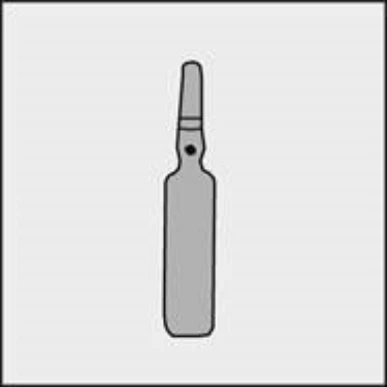
Each ampoule has a coloured dot (see Figure 1) indicating the score mark located beneath it.
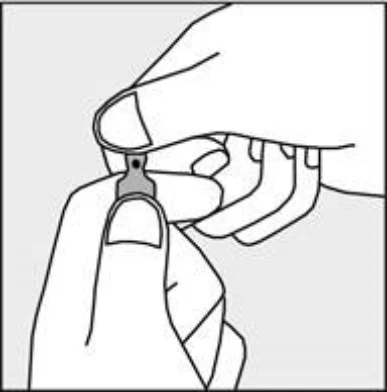
- To open the ampoule, hold it vertically in both hands, with the coloured dot facing towards you – see Figure 2. The upper part of the ampoule should be gripped so that the thumb is positioned above the coloured dot.
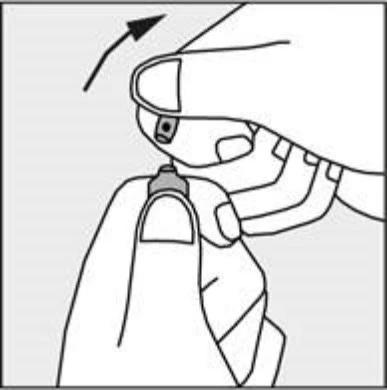
- Press in the direction of the arrow shown in Figure 3. Ampoules are intended for single use only and should be opened immediately before use. Any unused medicinal product remaining after opening must be destroyed in accordance with applicable regulations.
Figure 1 Figure 2 Figure 3
Dosage
The medicinal product may be administered intravenously, infiltratively, intrathecally, and epidurally.
Regional anaesthesia
The maximum single dose of lidocaine for an adult patient is 200 mg (4.5 mg/kg body weight [b.w.]). The doses provided are approximate and apply to adult patients in good general health without concomitant diseases.
In children, the dose should not exceed 3 mg/kg b.w. Lidocaine must be dosed individually, based on body weight and the patient's general condition. During anaesthesia, the patient must be supervised and vital functions monitored.
The intensity and duration of lidocaine's effect depend on the concentration and volume of the solution used. Increasing the volume and concentration accelerates, prolongs, and intensifies the local anaesthetic effect.
Lidocaine, like other local anaesthetics, should be administered slowly, following prior aspiration to avoid inadvertent intravascular injection.
When performing epidural anaesthesia, administration of the main dose of anaesthetic should be preceded by a test dose (3 to 5 ml of lidocaine hydrochloride with adrenaline). If inadvertently injected intravascularly, the adrenaline contained in the test dose will cause a distinct increase in heart rate. Therefore, ECG monitoring should be observed on the monitor screen for 5 minutes after administration. A negative test result permits injection (at a rate of 25 to 50 mg/min) of the remaining anaesthetic dose. During this time, continuous verbal contact with the patient should be maintained, and if even mild symptoms of overdose occur, administration must be stopped immediately. The test dose also helps prevent risks associated with accidental intrathecal injection and subsequent complete spinal anaesthesia.
Intervals between successive doses administered epidurally should not be shorter than 90 minutes.
The maximum dose of lidocaine administered during cervical blockade (during childbirth and in gynaecology) should not exceed 200 mg every 90 minutes.
The smallest effective doses of lidocaine should always be used to minimize the risk of overdose. The medicinal product may be diluted with 0.9% sodium chloride solution.
| Drug concentration | Type of anesthesia | Maximum dose |
| 0.5 to 2% | Infiltration anesthesia | Up to 200 mg |
| 0.5 to 2% | Nerve plexus and trunk blocks | Up to 200 mg |
| 0.5 to 2% | Epidural anesthesia | Up to 200 mg |
| 1 to 2% | Spinal anesthesia | Up to 80 mg (1.5 to 4 ml) |
| 0.5 to 1% | Intravenous regional anesthesia | Up to 200 mg |
Cardiac arrhythmias
For the treatment of cardiac arrhythmias in adults, lidocaine is administered intravenously as a single dose of 50 to 100 mg, or in divided doses of 25 to 50 mg per minute. If the initial dose is ineffective, a subsequent dose (50 to 100 mg) may be administered after 5 minutes. The dose should not exceed 200 to 300 mg within one hour.
In patients with a tendency to recurrent arrhythmias or resistant to oral antiarrhythmic drugs, continuous intravenous infusion of lidocaine may be used at a rate of 1 to 4 mg/min (20 to 50 µg/kg body weight/min) under continuous ECG monitoring. The infusion should be discontinued when arrhythmias resolve or symptoms of overdose appear. In elderly patients, the dose should be adjusted according to the patient's general condition.
Cardiac arrhythmias in children are treated with intravenous lidocaine at a dose of 0.8 to 1 mg/kg body weight, which may be repeated as needed up to a total dose of 3 to 5 mg/kg body weight. Lidocaine may also be administered via continuous intravenous infusion at a rate of 10 to 50 µg/kg body weight/min.
Perioperative pain management
Intravenous lidocaine administered during the perioperative period is used in adult patients as an adjuvant in multimodal (multimodal) therapy and in preventive (prophylactic) analgesia. Lidocaine is administered intravenously during surgical procedures involving minor to moderate or extensive tissue trauma.
Typical dosing regimen:
- Loading dose of 1.5 mg/kg body weight administered as a bolus, followed by a continuous infusion of 1.5 to 3 mg/kg body weight/hour via intravenous infusion during surgery; it is recommended to start lidocaine administration 30 minutes before anesthesia induction, but no later than at the time of induction;
- Postoperatively: 1 to 3 mg/kg body weight/hour via continuous infusion for 24 to 48 hours.
If lidocaine is simultaneously used in the same patient as a local anesthetic (infiltrative), e.g., for infiltration along the anticipated incision line, and as intravenous infusion, the total lidocaine dose should be reduced.
If necessary, intravenous lidocaine infusion may be initiated 4 to 8 hours after the last bolus dose of a drug used for regional anesthesia. In case of failed epidural or intrathecal anesthesia, after discontinuation of continuous epidural or intrathecal infusion and without administering a bolus dose into the epidural or intrathecal space, continuous intravenous lidocaine infusion may be started immediately, but without administering an intravenous bolus.
The lidocaine dose should be reduced in conditions associated with increased free fraction of the drug in serum—acidosis, hypercapnia, hypoxia, hypoproteinemia, and impaired liver and/or kidney function. In patients with circulatory, hepatic, and/or renal impairment, the lidocaine dose should be reduced and cardiovascular function should be monitored.
Treatment of patients with neuropathic pain
Adults
Continuous intravenous infusion at a dose of 3–5 mg/kg body weight for a minimum of 30 minutes, but not longer than 6 hours, once daily.
Note: The drug is incompatible and should not be mixed in the same syringe with solutions containing sodium bicarbonate or other alkaline solutions.