Lamitrin s
Poland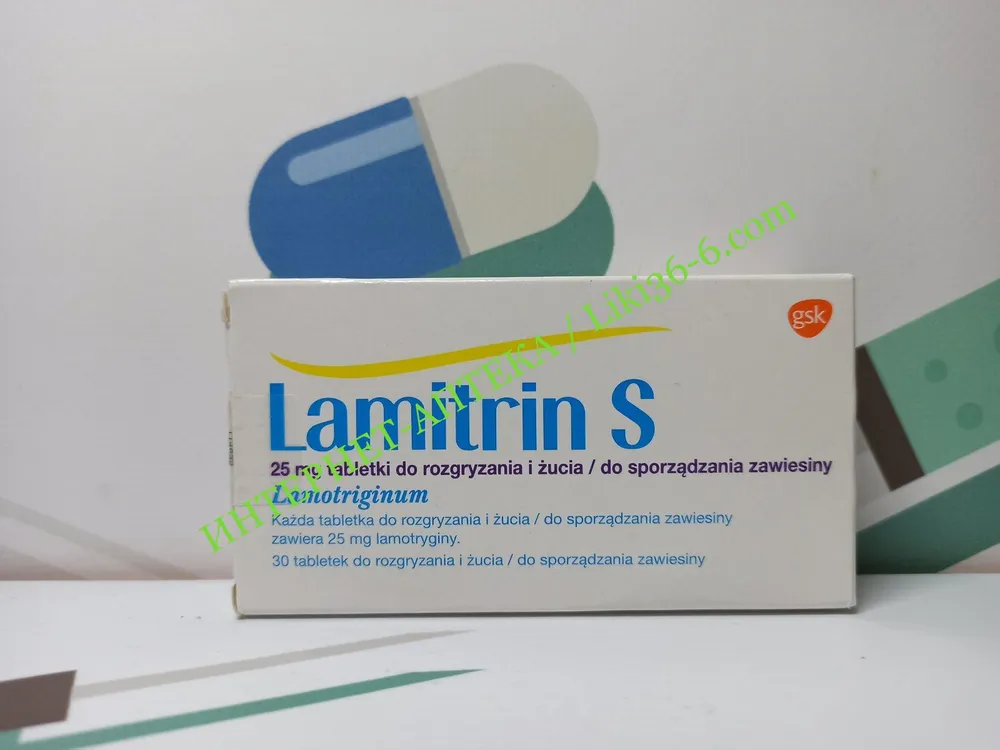
Table of Contents
Package leaflet: information for the user
Lamitrin S, 2 mg, chewable and dispersible tablets / for preparation of a suspension
Lamitrin S, 5 mg, chewable and dispersible tablets / for preparation of a suspension
Lamitrin S, 25 mg, chewable and dispersible tablets / for preparation of a suspension
Lamitrin S, 50 mg, chewable and dispersible tablets / for preparation of a suspension
Lamitrin S, 100 mg, chewable and dispersible tablets / for preparation of a suspension
Lamitrin S, 200 mg, chewable and dispersible tablets / for preparation of a suspension
Lamotrigine
Please read this leaflet carefully before taking this medicine because it contains important
information for you.
- Keep this leaflet. You may need to read it again.
- If you have any further questions, ask your doctor or pharmacist.
- This medicine has been prescribed for you only. Do not pass it on to others. It may harm them, even if their symptoms are the same as yours.
- If you experience any adverse effects, including any not listed in this leaflet, tell your doctor or pharmacist. See section 4.
Leaflet contents
1 What Lamitrin S is and what it is used for
2 Important information before taking Lamitrin S
3 How to take Lamitrin S
4 Possible side effects
5 How to store Lamitrin S
6 Contents of the pack and other information
1. What Lamitrin S is and what it is used for
Lamitrin S belongs to a group of medicines called antiepileptic drugs. It is used to treat two conditions – epilepsy and bipolar disorder.
The action of Lamitrin S in treating epilepsy involves blocking nerve signals in the brain that cause epileptic seizures.
- In adults and children aged 13 years and older, Lamitrin S may be used alone (as monotherapy) or in combination with other medicines for the treatment of epilepsy. Lamitrin S may also be used in combination with other medicines to treat seizures associated with a condition called Lennox-Gastaut syndrome.
- In children aged 2 to 12 years, Lamitrin S may be used in combination with other medicines to treat these conditions. It may also be used as the sole treatment for a type of epilepsy known as typical absence seizures.
Lamitrin S is also used in the treatment of bipolar disorder.
In patients with bipolar disorder (sometimes called manic-depressive psychosis), extreme mood swings occur, with episodes of mania (excitement or euphoria) alternating with episodes of depression (deep sadness or despair). In adults aged 18 years and older, Lamitrin S may be used alone or in combination with other medicines to prevent depressive episodes in bipolar disorder. The mechanism by which Lamitrin S exerts this effect in the brain has not yet been fully understood.
2. Important information before using Lamitrin S
When not to use Lamitrin S
- If the patient has a known allergy ( hypersensitivity ) to lamotrigine or to any of the other ingredients of this medicine (listed in section 6). In such a case: Inform the treating doctor and do not take Lamitrin S.
Warnings and precautions
When to exercise particular caution when using Lamitrin S
Before starting to take Lamitrin S, consult the treating doctor or
pharmacist if:
- the patient has any kidney disease;
- the patient has ever experienced a rash after taking lamotrigine or other medicines used to treat bipolar disorder or epilepsy;
- the patient has ever developed a rash or sunburn after exposure to sunlight or artificial light (e.g. in a solarium) following lamotrigine intake. The doctor will review the patient's treatment and may advise avoiding sunlight or using sun protection (e.g. sunscreen or protective clothing);
- the patient has ever had meningitis ( aseptic meningitis ) after taking lamotrigine ( see description of symptoms in section 4 of this leaflet: Rare adverse reactions );
- the patient is taking another medicine containing lamotrigine;
- the patient has a condition called Brugada syndrome or other heart diseases. Brugada syndrome is a genetically determined heart condition characterized by disturbances in the heart's electrical activity. Abnormal ECG findings are associated with arrhythmia (irregular heartbeat), which may be triggered by taking lamotrigine.
If any of the above conditions apply:
Inform the treating doctor , who may recommend reducing the dose or
decide that Lamitrin S is not suitable for the patient.
Important information about life-threatening reactions
A small number of patients taking Lamitrin S have experienced an allergic reaction or a potentially
life-threatening skin reaction, which may worsen if left untreated. Such reactions include
Stevens-Johnson syndrome (SJS), toxic epidermal necrolysis (TEN), and drug reaction with
eosinophilia and systemic symptoms (DRESS). The patient should be aware of the symptoms of these
conditions and monitor for them during treatment with Lamitrin S. This risk may be associated with
a genetic variant found in individuals of Asian ancestry (particularly Han Chinese and Thai). If
the patient is of such ancestry and has previously been identified as carrying this genetic variant
(HLA-B*1502), this should be discussed with the treating doctor before starting Lamitrin S.
Please read the description of these symptoms in section 4 of this leaflet, under "Life-threatening
reactions: contact a doctor immediately".
Haemophagocytic lymphohistiocytosis (HLH)
Cases of a rare but very serious immune system reaction have been reported in patients taking lamotrigine.
If the patient develops the following symptoms while taking lamotrigine: fever,
rash, neurological symptoms (e.g. tremors or chills, confusion, brain dysfunction),
contact a doctor or pharmacist immediately.
Thoughts of self-harm or suicide
Antiepileptic medicines are used to treat various conditions, including epilepsy and bipolar disorder.
Patients with bipolar disorder may sometimes experience thoughts of self-harm or suicide. These thoughts may occur more frequently in patients with bipolar disorder:
- when starting treatment for the first time
- if the patient has previously had thoughts of self-harm or suicide
- if the patient is under 25 years of age. If the patient experiences disturbing thoughts or feelings, or if their condition worsens during treatment with Lamitrin S, or new symptoms appear:
Seek medical help immediately by visiting the doctor or the nearest hospital.
It may be helpful to inform a relative, caregiver, or friend that the patient may experience depression or significant mood changes and ask them to read this leaflet.
The patient may ask them to inform them if they notice signs of depression or concerning changes in behaviour.
In a small number of patients treated with antiepileptic medicines such as Lamitrin S,
thoughts of self-harm or suicide have also occurred. If the patient ever experiences such thoughts,
contact the treating doctor immediately.
Use of Lamitrin S in the treatment of epilepsy
Seizures in certain types of epilepsy may occasionally worsen or occur more frequently during
treatment with Lamitrin S. Some patients may experience severe seizures that may pose a serious
health risk. If seizures occur more frequently during treatment with Lamitrin S or if a severe seizure occurs:
seek medical advice as soon as possible.
Lamitrin S should not be used to treat bipolar disorder in patients under 18 years of age. Medicines used to treat depression or other psychiatric disorders may increase the risk of suicidal thoughts or behaviour in children and adolescents under 18 years of age.
Lamitrin S and other medicines
Inform the doctor or pharmacist about all medicines currently or recently taken by the patient,
as well as any medicines the patient plans to take, including herbal remedies or other over-the-counter medicines.
The treating doctor must be aware if the patient is taking other medicines used to treat epilepsy or
psychiatric disorders. This will allow the appropriate dose of Lamitrin S to be determined. These medicines include:
- oxcarbazepine, felbamate, gabapentin, levetiracetam, pregabalin, topiramate, zonisamide , used in the treatment of epilepsy
- lithium, olanzapine or aripiprazole , used in the treatment of psychiatric disorders
- bupropion , used in the treatment of psychiatric disorders or nicotine dependence
- paracetamol , used to treat pain and fever
Inform the treating doctor if the patient is taking any of these medicines.
Some medicines interact with Lamitrin S or increase the risk of adverse effects. These include:
- valproate , used in the treatment of epilepsy and psychiatric disorders
- carbamazepine , used in the treatment of epilepsy and psychiatric disorders
- phenytoin, primidone or phenobarbital , used in the treatment of epilepsy
- risperidone , used in the treatment of psychiatric disorders
- rifampicin , an antibiotic
- medicines used to treat human immunodeficiency virus (HIV) infection (combination of lopinavir with ritonavir or atazanavir with ritonavir)
- products containing oestrogens, including hormonal contraceptives such as the oral contraceptive pill ( see below ) and hormone replacement therapy (HRT).
Inform the treating doctor if the patient is taking, has taken, or is starting to take any of these medicines.
Hormonal contraceptives (such as the oral contraceptive pill) may affect the action of Lamitrin S
The treating doctor may recommend a specific type of hormonal contraceptive or another method of contraception, such as condoms, a diaphragm, or an intrauterine device. If the patient is using hormonal contraceptives such as the oral contraceptive pill, the treating doctor may recommend blood tests to monitor the concentration of Lamitrin S. If the patient is using or plans to start using hormonal contraceptives:
discuss the appropriate contraceptive method with the treating doctor.
Lamitrin S may also affect the action of hormonal contraceptives, although it is unlikely to reduce their effectiveness. If the patient is using hormonal contraceptives and notices any changes in her menstrual cycle, such as bleeding or intermenstrual spotting:
inform the treating doctor. These symptoms may indicate an interaction between Lamitrin S and the contraceptive.
Hormone replacement therapy (HRT) may affect the action of Lamitrin S
If the patient is using hormone replacement therapy (HRT) containing oestrogens, the treating doctor may recommend blood tests to monitor the concentration of Lamitrin S.
Pregnancy and breastfeeding
If the patient is pregnant, suspects she may be pregnant, plans to become pregnant, or is planning pregnancy,
consult the treating doctor or pharmacist before using this medicine.
- Do not stop treatment without first consulting the treating doctor. This is particularly important if the patient has epilepsy.
- Pregnancy may affect the effectiveness of Lamitrin S, so blood tests and dose adjustments may be necessary.
- There may be a slight increase in the risk of congenital malformations, including cleft lip and palate, if Lamitrin S is taken during the first three months of pregnancy.
- If the patient plans to become pregnant or is pregnant, the treating doctor may recommend taking folic acid additionally.
If the patient is breastfeeding or plans to breastfeed, consult the treating doctor or pharmacist before using
this medicine. The active substance in Lamitrin S passes into breast milk and may affect the infant. The doctor will discuss the risks and benefits of breastfeeding during treatment with Lamitrin S. If the patient decides to breastfeed, the infant will be monitored periodically for excessive drowsiness, rash, or poor weight gain. If any of these symptoms are observed in the infant, inform the doctor.
Driving and operating machinery
Lamitrin S may cause dizziness and double vision.
Do not drive or operate machinery unless the patient is certain these symptoms do not occur.
If the patient has epilepsy, discuss driving and operating machinery with the doctor.
Lamitrin S dispersible and chewable tablets / for oral suspension contain less than 1 mmol
(23 mg) of sodium per tablet, meaning the medicine is considered "sodium-free".
3. How to use Lamitrin S
This medicine should always be taken exactly as directed by your doctor or pharmacist. If you are
unsure, you should consult your doctor or pharmacist.
What dose of Lamitrin S should be taken
Determining the appropriate dose of Lamitrin S for the patient may take some time. The dose taken by
the patient depends on:
- the patient's age
- whether the patient is taking Lamitrin S in combination with other medicines
- whether the patient has any kidney or liver disease.
Your doctor will initially prescribe a low dose and then gradually increase it over several weeks until
reaching the dose effective for the patient (called the maintenance dose). You must never take a higher
dose of Lamitrin S than the one prescribed by your doctor.
Typically, the effective dose of Lamitrin S in adults and children aged 13 years and older ranges from 100
mg to 400 mg per day.
In children aged 2 to 12 years, the effective dose depends on body weight – usually from 1 mg to 15 mg per
kilogram of body weight per day, up to a maximum maintenance dose of 200 mg per day.
The use of Lamitrin S is not recommended in children under 2 years of age.
Taking the dose of Lamitrin S
The dose of Lamitrin S should be taken once or twice daily, as directed by your doctor. Lamitrin S may be
taken with or without food.
- You must always take the full prescribed dose. Never take only part of a tablet.
Your doctor may also recommend starting or stopping other medications, depending on the indication and the patient's response to treatment.
Lamitrin S dispersible and chewable tablets / tablets for oral suspension can be swallowed whole with a
small amount of water, or chewed, or taken as a liquid after mixing with water. Never take only part of the suspension.
Removing the tablet from the blister pack
These tablets are supplied in special child-resistant packaging.
Each blister section containing one tablet is numbered. Tablets should be taken sequentially in numerical order, starting from number 1.
- Separating one tablet: to separate a blister section with one tablet, tear the blister along the perforated lines.

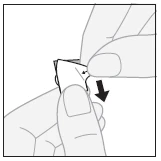
- Peeling back the outer layer: starting from the corner, lift and peel back the outer layer from the separated blister section.
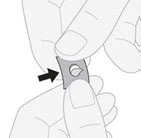
- Removing the tablet: gently push the tablet from the foil backing at one edge.
Chewing the tablet:
Swallowing a small amount of water at the same time will help dissolve the tablet in the mouth. Then the patient should drink additional water to ensure the entire dose has been swallowed.
To prepare an oral suspension:
- place the tablet in a glass and add enough water to cover the entire tablet;
- stir or wait until the tablet is completely dissolved;
- drink the prepared suspension completely;
- add a small amount of water to the glass and drink it to ensure no medicine remains in the glass.
Taking more than the recommended dose of Lamitrin S
You should contact your doctor or the nearest emergency department immediately.
If possible, show the Lamitrin S packaging to the medical staff.
Taking an excessive dose of Lamitrin S may increase the risk of serious adverse reactions, which could be fatal.
In a person who has taken too high a dose of Lamitrin S, the following may occur:
- rapid, involuntary eye movements ( nystagmus )
- unsteadiness, lack of coordination, inability to maintain balance ( ataxia )
- disturbances in heart rhythm (usually detected during an ECG)
- loss of consciousness, seizures, or coma.
Missing a dose of Lamitrin S
Do not take extra tablets to make up for a missed dose. Take the next dose at the usual time.
If several doses of Lamitrin S have been missed
You should consult your doctor for advice on how to resume taking Lamitrin S. This is important for the patient.
Do not stop taking Lamitrin S unless your doctor tells you to do so
Lamitrin S should be taken for as long as your doctor recommends. Do not stop taking it unless your doctor instructs you to do so.
Using Lamitrin S in the treatment of epilepsy
When stopping Lamitrin S, it is essential that the dose be gradually reduced over approximately two weeks. Abruptly stopping Lamitrin S may cause seizures to recur or worsen.
Using Lamitrin S in the treatment of bipolar affective disorders
It may take some time before Lamitrin S begins to work, so improvement is unlikely to occur immediately. When discontinuing treatment with Lamitrin S, gradual dose reduction is not required. However, you should still consult your doctor if you plan to stop taking Lamitrin S.
4. Possible adverse effects
Like any medicine, this medicine can cause adverse effects, although not everyone will experience them.
Life-threatening reactions: contact your doctor immediately.
A small number of patients taking Lamitrin S have experienced an allergic reaction or potentially
life-threatening skin reaction, which may worsen if left untreated.
These symptoms occur more frequently during the first few months of treatment with Lamitrin S,
especially if the patient has been given too high a dose, the dose has been increased too quickly, or if the patient
is taking Lamitrin S in combination with another medicine called valproate. Some of these symptoms
occur more frequently in children, so parents should pay particular attention to them.
Such reactions include:
- skin rash or redness of the skin, which may worsen leading to severe or, in some cases, life-threatening skin reactions, including rashes with target-like lesions ( erythema multiforme ), extensive rash with blisters and peeling of the outer layer of skin, particularly around the mouth, nose, eyes, and genitals ( Stevens-Johnson syndrome ), widespread peeling of the skin (affecting more than 30% of body surface area - toxic epidermal necrolysis ), or extensive rash accompanied by involvement of the liver, blood, and other organs (drug hypersensitivity syndrome with eosinophilia and systemic symptoms, also known as DRESS syndrome)
- ulceration of the mouth, throat, nose, or genitals
- mouth pain or redness and swelling of the eyes ( conjunctivitis )
- high body temperature (fever), flu-like symptoms, or drowsiness
- facial swelling, enlarged lymph nodes in the neck, underarms, or groin
- unexpected bleeding, bruising, or blue discoloration of the fingers
- sore throat or more frequent infections (such as colds) than usual
- increased liver enzymes in blood tests
- increased number of white blood cells (eosinophilia)
- enlarged lymph nodes
- involvement of other organs, including the liver and kidneys.
In many cases, these are symptoms of less severe adverse effects. However, it should be remembered that
they may be potentially life-threatening and, if left untreated, may progress to serious conditions,
such as organ failure. If any of these symptoms occur:
contact your doctor immediately. Your treating physician may decide to perform liver, kidney, or blood function tests and may advise discontinuation of Lamitrin S. If the patient develops Stevens-Johnson syndrome or toxic epidermal necrolysis, the doctor will inform them that they must never take lamotrigine again.
Hemophagocytic lymphohistiocytosis (HLH) (see section 2. Important information before taking Lamitrin S).
Very common adverse effects
May occur in more than 1 in 10 patients:
- headache
- skin rash.
Common adverse effects
May occur in up to 1 in 10 patients:
- aggression or irritability
- feeling sleepy
- dizziness
- tremor
- difficulty sleeping ( insomnia )
- feeling of restlessness
- diarrhoea
- dry mouth
- nausea or vomiting
- feeling tired
- back, joint, or other body pain.
Uncommon adverse effects
May occur in up to 1 in 100 patients:
- lack of coordination and unsteady movements ( ataxia )
- double or blurred vision
- unusual hair loss or thinning ( alopecia )
- skin rash or sunburn after exposure to sunlight or artificial light ( photosensitivity ).
Rare adverse effects
May occur in up to 1 in 1,000 patients:
- skin reaction causing red spots and patches on the skin, which may resemble a target or "bull's eye" with a dark red center surrounded by lighter red rings ( erythema multiforme )
- life-threatening skin reaction ( Stevens-Johnson syndrome: also refer to information at the beginning of section 4 ).
- a group of symptoms occurring simultaneously: fever, nausea, vomiting, headache, neck stiffness, extreme sensitivity to bright light. This may be due to inflammation of the membranes surrounding the brain and spinal cord ( meningitis ). These symptoms usually resolve after stopping treatment, but if they persist or worsen, contact your doctor.
- rapid, involuntary eye movements ( nystagmus )
- itchy eyes with discharge ( conjunctivitis ).
Very rare adverse effects
May occur in up to 1 in 10,000 patients:
- life-threatening skin reaction ( toxic epidermal necrolysis: also refer to information at the beginning of section 4)
- drug hypersensitivity syndrome with eosinophilia and systemic symptoms (DRESS): (also refer to information at the beginning of section 4)
- high body temperature ( fever: also refer to information at the beginning of section 4)
- facial swelling, enlarged lymph nodes in the neck, underarms, and groin ( generalized lymphadenopathy: also refer to information at the beginning of section 4)
- liver function abnormalities detected in blood tests or liver failure: (also refer to information at the beginning of section 4)
- severe blood clotting disorder, which may cause unexpected bleeding or bruising ( disseminated intravascular coagulation: also refer to information at the beginning of section 4)
- hemophagocytic lymphohistiocytosis (HLH) (see section 2. Important information before taking Lamitrin S)
- changes in blood test results - including decreased number of red blood cells ( anaemia ), decreased number of white blood cells ( leukopenia , neutropenia , agranulocytosis ), decreased number of platelets ( thrombocytopenia ), decreased number of all blood cells ( pancytopenia ), and bone marrow disorder known as aplastic anaemia
- hallucinations ("seeing" or "hearing" things that are not real)
- disorientation
- feeling of unsteadiness or loss of balance during movement
- involuntary, repetitive body movements and/or sounds or words (tics), involuntary muscle contractions affecting the eyes, head, and trunk (choreoathetosis), or other unusual body movements such as jerks, tremors, or stiffness
- increased frequency of seizures in patients with previously diagnosed epilepsy
- worsening of symptoms in patients with diagnosed Parkinson's disease
- pseudotumor cerebri syndrome (symptoms may include back or joint pain, sometimes accompanied by fever and/or general malaise).
Other adverse effects
Other adverse effects have occurred in a small number of patients, but their frequency is unknown.
- Bone disorders including osteopenia and osteoporosis (weakening of bones) and fractures have been reported. If the patient is being treated long-term with antiepileptic medicines, has had osteoporosis in the past, or is taking steroids, they should discuss this with their doctor or pharmacist.
- Kidney inflammation ( tubulointerstitial nephritis ) or simultaneous kidney and eye inflammation ( tubulointerstitial nephritis and uveitis )
- Nightmares
- Weakened immunity due to lower levels in the blood of antibodies called immunoglobulins, which help protect the body against infections
- Red nodules or spots on the skin (pseudolymphoma).
Reporting of adverse effects
If any adverse effects occur, including any not listed in this leaflet, inform your doctor or pharmacist. Adverse effects can be reported directly to the Department of Monitoring Adverse Drug Reactions of the Office for Registration of Medicinal Products, Medical Devices and Biocidal Products, Al. Jerozolimskie 181C, 02-222 Warsaw, tel.: +48 22 49 21 301, fax: +48 22 49 21 309, website: https://smz.ezdrowie.gov.pl
Adverse effects can also be reported to the marketing authorization holder.
Reporting adverse effects helps provide more information on the safety of this medicine.
5. How to store Lamitrin S
Keep this medicine out of sight and reach of children.
Do not use this medicine after the expiry date stated on the blister pack, cardboard box, or bottle. The expiry date refers to the last day of the stated month.
No special precautions for storage of Lamitrin S.
Medicines must not be disposed of via wastewater or household waste. Ask your pharmacist how to dispose of medicines no longer required. Such measures help protect the environment.
6. Contents of the pack and other information
What Lamitrin S chewable and dispersible tablets / oral suspension contain
The active substance is lamotrigine. Each chewable and dispersible tablet / tablet for oral suspension contains: 2 mg, 5 mg, 25 mg, 50 mg, 100 mg or 200 mg of lamotrigine, respectively.
The other ingredients are: calcium carbonate, low-substituted hydroxypropylcellulose, magnesium aluminium silicate, sodium carboxymethyl starch (type A), povidone K30, sodium saccharin, magnesium stearate, blackcurrant flavour.
What Lamitrin S chewable and dispersible tablets / oral suspension look like and contents of the pack
Lamitrin S chewable and dispersible tablets / tablets for oral suspension (all strengths) are white to almost white in colour and may be slightly mottled. They have a blackcurrant odour. Not all pack sizes may be marketed.
Lamitrin S 2 mg chewable and dispersible tablets / tablets for oral suspension are round. They are marked with the letters "LTG" above the number "2" on one side; on the other side, two ellipses intersecting at right angles are visible. Each bottle contains 30 tablets.
Lamitrin S 5 mg chewable and dispersible tablets / tablets for oral suspension are oblong, biconvex. They are marked with "GS CL2" on one side and "5" on the other side. Each pack contains 10, 14, 28, 30, 42, 50 or 56 tablets in blisters or 14, 28, 30, 42, 56 or 60 tablets in a bottle.
Lamitrin S 25 mg chewable and dispersible tablets / tablets for oral suspension are square with rounded corners. They are marked with "GSCL5" on one side and "25" on the other side. Each pack contains 10, 14, 21, 28, 30, 42, 50, 56 or 60 tablets in blisters.
Lamitrin S 50 mg chewable and dispersible tablets / tablets for oral suspension are square with rounded corners. They are marked with "GSCX7" on one side and "50" on the other side. Each pack contains 10, 14, 28, 30, 42, 50, 56, 60, 90, 98, 100, 196 or 200 tablets in blisters.
Lamitrin S 100 mg chewable and dispersible tablets / tablets for oral suspension are square with rounded corners. They are marked with "GSCL7" on one side and "100" on the other side. Each pack contains 10, 14, 28, 30, 42, 50, 56, 60, 90, 98, 100, 196 or 200 tablets in blisters.
Lamitrin S 200 mg chewable and dispersible tablets / tablets for oral suspension are square with rounded corners. They are marked with "GSEC5" on one side and "200" on the other side. Each pack contains 10, 14, 28, 30, 42, 50, 56, 60, 90, 98, 100, 196 or 200 tablets in blisters.
Marketing Authorisation Holder and Manufacturer
Marketing Authorisation Holder:
GlaxoSmithKline Trading Services Limited
12 Riverwalk
Citywest Business Campus
Dublin 24
D24 YK11
Ireland
Manufacturer:
Delpharm Poznań Spółka Akcyjna
ul. Grunwaldzka 189
60-322 Poznań
Poland
This medicinal product is authorised in the Member States of the European Economic Area under the following names:
| Austria Lamictal | Belgium Lamictal | Bulgaria Lamictal |
| Croatia Lamictal | Cyprus Lamictal | Czech Republic Lamictal |
| Denmark Lamictal | Estonia Lamictal | Finland Lamictal |
| France Lamictal Lamicstart | Germany Lamictal | Greece Lamictal |
| Hungary Lamictal | Iceland Lamictal | Ireland Lamictal |
| Italy Lamictal | Latvia Lamictal | Lithuania Lamictal |
| Luxembourg Lamictal | Malta Lamictal | Netherlands Lamictal |
| Norway Lamictal | Poland Lamitrin S | Portugal Lamictal |
| Romania Lamictal | Slovakia Lamictal | Slovenia Lamictal |
| Spain Lamictal | Sweden Lamictal |
For more detailed information, please contact the representative of the marketing authorization holder:
GSK Services Sp. z o.o.
tel.: +48 22 576 90 00