Kwetaplex
Poland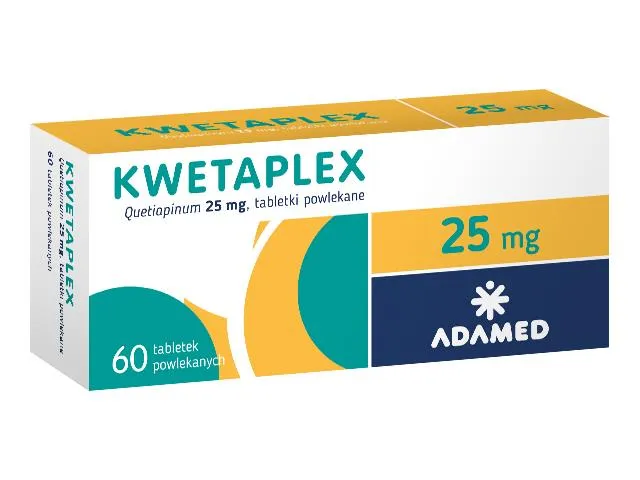
Table of Contents
Package leaflet: Information for the patient
Kwetaplex, 25 mg, film-coated tablets
Kwetaplex, 100 mg, film-coated tablets
Kwetaplex, 150 mg, film-coated tablets
Kwetaplex, 200 mg, film-coated tablets
Kwetaplex, 300 mg, film-coated tablets
Quetiapinum
Please read this leaflet carefully before taking this medicine, as it contains important information for you.
- Keep this leaflet, as you may need to read it again.
- If you have any further questions, please ask your doctor or pharmacist.
- This medicine has been prescribed for a specific individual. Do not pass it on to others. It may harm other people, even if their symptoms are the same.
- If you experience any adverse reactions, including any not listed in this leaflet, tell your doctor or pharmacist. See section 4.
Leaflet contents:
- What Kwetaplex is and what it is used for
- What you need to know before taking Kwetaplex
- How to take Kwetaplex
- Possible side effects
- How to store Kwetaplex
- Contents of the pack and other information
1. What Kwetaplex is and what it is used for
Kwetaplex contains an active substance called quetiapine. It belongs to a group of medicines known as antipsychotics.
These medicines are used to treat conditions that may cause symptoms such as:
depressive episodes in bipolar disorder, when the patient feels sadness, depression, lack of energy, loss of appetite, guilt, or inability to sleep;
mania: the patient may be highly excited, elated, overactive, overenthusiastic, or excessively active, and may have impaired judgment, including aggressive or destructive behavior;
schizophrenia: the patient may hear or sense things that do not exist in reality, have beliefs contrary to reality, or be extremely suspicious, fearful, disoriented, feel guilt, or experience tension or depression.
Your doctor may recommend continuing treatment with Kwetaplex even if you start feeling better.
2. Information before taking Kwetaplex
When not to take Kwetaplex:
- if the patient is allergic to quetiapine or any of the other ingredients of this medicine (listed in section 6);
- if the patient is taking any of the following medicines:
- certain medicines used to treat HIV infection;
- azole-derived medicines (used for fungal infections);
- erythromycin or clarithromycin (used for infections);
- nefazodone (used to treat depression).
Page 1 of 10
Do not take Kwetaplex if any of the above situations apply to the patient. If in doubt, consult a doctor or
pharmacist before starting to take Kwetaplex.
Warnings and precautions
Before starting to take Kwetaplex, discuss this with your doctor, pharmacist or nurse if:
- the patient has or has had heart problems, such as heart rhythm disorders, weakened heart muscle or myocarditis, or if the patient is taking medicines that may cause changes in heart rhythm;
- the patient has low blood pressure;
- the patient has had a stroke, especially if they are elderly;
- the patient has liver problems;
- the patient has experienced epileptic seizures (fits);
- the patient has diabetes or is at risk of developing diabetes. If so, the doctor may monitor blood sugar levels during treatment with Kwetaplex;
- the patient has previously had a low white blood cell count (which may or may not have been caused by other medicines);
- the patient is an elderly person with dementia (reduced mental function). Such patients should not take Kwetaplex, as medicines in this class may increase the risk of stroke and even death in these patients;
- the patient is an elderly person with Parkinson's disease/parkinsonism;
- the patient has or has had a history of blood clots, as such medicines may increase the risk of blood clot formation;
- the patient has or has had episodes of breathing stopping briefly during normal night sleep (so-called sleep apnoea) and is taking medicines that reduce normal brain activity (so-called depressants);
- the patient has or has had difficulty completely emptying the bladder (urinary retention), an enlarged prostate, intestinal obstruction or increased pressure inside the eye. These symptoms may sometimes be caused by medicines (called "anticholinergic products") used to treat certain conditions affecting nerve cell function;
- the patient has a history of alcohol or drug abuse.
Contact the doctor immediately if any of the following symptoms occur:
- a group of symptoms including fever, muscle stiffness, sweating or reduced level of consciousness (a condition called neuroleptic malignant syndrome). Immediate medical help may be required;
- uncontrolled movements, mainly of the face and tongue;
- dizziness or pronounced drowsiness. This may increase the risk of accidental injuries (falls) in elderly patients;
- seizures (epileptic fits);
- prolonged painful erection (priapism);
- rapid or irregular heartbeat, even at rest, palpitations, difficulty breathing, chest pain or unexplained fatigue. The doctor will need to examine the heart and, if necessary, refer the patient immediately to a cardiologist.
The above symptoms may be caused by the use of antipsychotic medicines.
Inform the doctor as soon as possible if any of the following symptoms occur:
fever, flu-like symptoms, sore throat or other infections, which may be due to a low white blood cell count. This may require discontinuation of Kwetaplex therapy and/or appropriate treatment;
Page 2 of 10
constipation with persistent abdominal pain or constipation that does not respond to treatment. This may lead to severe intestinal obstruction;
suicidal thoughts or worsening depression.
If the patient is depressed, they may experience thoughts of self-harm or suicide. These thoughts may be particularly intense at the beginning of treatment, as the effects of medicines develop gradually, usually over about 2 weeks, sometimes longer. These thoughts may also intensify after abrupt discontinuation of treatment. Such thoughts may especially affect young adults. Clinical studies indicate an increased risk of suicidal thoughts and/or behaviours in young adults under 25 years of age with depression.
If thoughts of self-harm or suicide occur, contact a doctor immediately or go to hospital. It may be helpful to inform a relative or friend about the depression and ask them to read this leaflet. The patient may ask these people to inform them if they notice worsening depressive symptoms or are concerned about other behavioural changes.
Severe skin reactions
Very rarely, severe cutaneous adverse reactions (SCAR) have been reported during treatment with this medicine, which may be life-threatening or fatal. These usually present as:
- Stevens-Johnson syndrome (SJS): widespread rash with blistering and peeling of the skin, particularly around the mouth, nose, eyes and genital area;
- toxic epidermal necrolysis (TEN): a more severe form causing extensive skin peeling;
- drug reaction with eosinophilia and systemic symptoms (DRESS): flu-like symptoms with rash, fever, swollen lymph nodes and abnormal blood test results (including increased white blood cells (eosinophilia) and liver enzymes).
If any of these symptoms occur, discontinue Kwetaplex immediately and contact the treating doctor or seek medical help immediately.
Weight gain
Patients taking Kwetaplex may experience weight gain. Body weight should be monitored regularly by the patient or doctor.
Children and adolescents
Quetiapine is not recommended for use in children and adolescents under 18 years of age.
Kwetaplex and other medicines
Tell your doctor about all medicines currently taken or recently taken, as well as any medicines the patient plans to take.
Do not take Kwetaplex if the patient is taking any of the following medicines:
- certain medicines used to treat HIV;
- azole-class medicines (used for fungal infections);
- erythromycin or clarithromycin (used for infections);
- nefazodone (used to treat depression).
Tell the doctor if the patient is taking:
antiepileptic medicines (such as phenytoin or carbamazepine);
antihypertensive medicines;
barbiturates (medicines used for sleep disorders);
thioridazine or medicines containing lithium (antipsychotic medicines);
Page 3 of 10
medicines that affect heart rhythm, such as medicines causing electrolyte imbalance (low potassium or magnesium levels), including diuretics (water tablets) or certain antibiotics (medicines used for infections);
laxatives;
medicines (called "anticholinergic medicines") that affect nerve cell function for treating certain conditions.
Do not stop taking other medicines without informing the doctor.
Kwetaplex with food, drink and alcohol
Kwetaplex can be taken with or without food.
During treatment with Kwetaplex, avoid drinking alcoholic beverages. Taking Kwetaplex together with alcohol may cause drowsiness.
Do not take Kwetaplex with grapefruit juice. This may affect how the medicine works.
Pregnancy and breastfeeding
If the patient is pregnant or breastfeeding, suspects she may be pregnant, or is planning to have a child, she should consult a doctor or pharmacist before taking this medicine.
Kwetaplex should not be used during pregnancy unless advised otherwise by a doctor. Quetiapine should not be used during breastfeeding.
Newborns whose mothers took Kwetaplex during the third trimester (last 3 months of pregnancy) may experience the following symptoms: tremor, muscle stiffness and/or weakness, drowsiness, agitation, breathing difficulties and feeding problems. If these symptoms are observed in the patient's newborn, contact a doctor.
Driving and operating machinery
Kwetaplex may cause drowsiness. Do not drive or operate machinery until the patient knows how this medicine affects them.
Effect on urine drug screening tests
In patients taking Kwetaplex, urine drug screening tests performed using certain methods may show the presence of methadone or other medicines used for depression called tricyclic antidepressants (TCA), even though the patient has not taken these medicines. It is recommended to confirm test results using alternative methods.
Kwetaplex contains lactose
If the patient has previously been diagnosed with intolerance to certain sugars, they should contact their doctor before taking this medicine.
Kwetaplex contains sodium
The medicine contains less than 1 mmol (23 mg) of sodium per tablet, meaning the medicine is considered "sodium-free".
Kwetaplex 25 mg contains sunset yellow (E110)
This medicine may cause allergic reactions.
3. How to take Kwetaplex
This medicine should always be taken as prescribed by the doctor. If in doubt, consult the doctor or pharmacist. The doctor will determine the initial dose.
The maintenance dose (daily dose) depends on the patient's symptoms and needs, but the usual dose range is between 150 mg and 800 mg.
The medicine should be taken once daily before bedtime, or twice daily, depending on the patient's condition. Tablets should be swallowed whole with water.
Tablets may be taken with or without food.
Do not take Kwetaplex with grapefruit juice. It may affect how the medicine works.
Do not stop taking the tablets even if symptoms improve, unless otherwise directed by the doctor.
Patients with liver function impairment
The doctor may adjust the dose in patients with impaired liver function.
Elderly patients
The doctor may adjust the dose in elderly patients.
Use in children and adolescents
Kwetaplex should not be used in children and adolescents under 18 years of age.
Taking more Kwetaplex than recommended
If more Kwetaplex is taken than recommended, symptoms such as drowsiness, dizziness and irregular heartbeat may occur. Seek immediate medical help from a doctor or the nearest hospital. Bring the medicine with you.
Missed dose of Kwetaplex
If the patient forgets to take a dose, they should take it as soon as they remember. However, if it is almost time for the next dose, the missed dose should be skipped and the next dose taken at the usual time.
Do not take a double dose to make up for a missed dose of Kwetaplex.
Stopping Kwetaplex
If Kwetaplex is stopped abruptly, symptoms such as insomnia, nausea, headache, diarrhoea, vomiting, dizziness and irritability may occur. The doctor may recommend gradually reducing the dose before stopping treatment completely.
If there are any further doubts about using this medicine, consult the doctor or pharmacist.
4. Possible adverse reactions
Like all medicines, this medicine can cause adverse reactions, although not everyone will experience them.
Very common: may affect more than 1 in 10 patients
- Dizziness (which may lead to falls), headache, dry mouth;
- Drowsiness (which may diminish during prolonged use of Kwetaplex) (which may lead to falls);
- Withdrawal symptoms (symptoms occurring after discontinuation of Kwetaplex) including difficulty falling asleep (insomnia), nausea, headache, diarrhoea, vomiting, dizziness or irritability. Gradual discontinuation of the medicine over 1–2 weeks is recommended;
- Increased body weight;
- Abnormal muscle movements, including difficulty initiating intended movements, tremors, feeling of fatigue or muscle stiffness without accompanying pain;
- Changes in levels of certain lipids (triglycerides, total cholesterol).
Common: may affect less than 1 in 10 patients
- Rapid heartbeat;
- Palpitations or irregular heartbeat;
- Constipation, indigestion (dyspepsia);
- Feeling of weakness;
- Swelling of arms or legs;
- Low blood pressure upon standing. This may cause dizziness or fainting (which may lead to falls);
- Increased blood glucose levels;
- Blurred vision;
- Unpleasant dreams and nightmares;
- Increased feeling of hunger;
- Feeling irritable;
- Speech disorders;
- Suicidal thoughts and worsening of depression;
- Shortness of breath;
- Vomiting (mainly in elderly people);
- Fever;
- Changes in thyroid hormone levels in blood;
- Decreased number of certain types of blood cells;
- Increased liver enzyme activity;
- Increased prolactin levels in blood. Elevated prolactin levels may rarely lead to:
- Breast swelling and unexpected milk production, in both women and men,
- Absence or irregular menstrual cycles in women.
Uncommon: may affect less than 1 in 100 patients
- Seizures or epileptic fits;
- Allergic reactions, including raised skin rash (blisters), skin swelling and swelling within the mouth;
- Unpleasant sensations in the legs (also known as restless legs syndrome);
- Difficulty swallowing;
- Involuntary movements, especially of facial muscles or tongue;
- Sexual dysfunction;
- Diabetes;
- Changes in the electrical activity of the heart visible on ECG (prolongation of QT interval);
- Slower than usual heart rate, which occurs more frequently at the beginning of treatment and may be associated with low blood pressure and fainting;
- Difficulty urinating;
- Fainting (which may lead to falls);
- Stuffy nose;
- Decreased number of red blood cells;
- Decreased serum sodium levels;
- Worsening of pre-existing diabetes;
- Neutropia (reduced number of granulocyte white blood cells).
Rare: may affect less than 1 in 1,000 patients
- A combination of symptoms: high temperature (fever), sweating, muscle stiffness, severe drowsiness or fainting (a condition called "neuroleptic malignant syndrome");
- Yellowing of the skin and eyes (jaundice);
- Hepatitis;
- Prolonged and painful erection (priapism);
- Breast swelling and unexpected milk production (galactorrhea);
- Menstrual disorders;
- Blood clots, especially in the veins of the legs (symptoms may include leg swelling, pain and redness), which may travel through blood vessels to the lungs, causing chest pain and breathing difficulties. If any of these symptoms occur, seek immediate medical advice;
- Walking, talking, eating or performing other activities during sleep;
- Decreased body temperature (hypothermia);
- Pancreatitis;
- A medical condition called metabolic syndrome, which includes a combination of 3 or more symptoms (increased abdominal fat tissue, reduced levels of "good cholesterol" (HDL), increased triglyceride levels, high blood pressure, increased blood sugar levels);
- Fever, flu-like symptoms, sore throat, infections with very low white blood cell count (so-called agranulocytosis);
- Intestinal obstruction;
- Increased blood creatine phosphokinase activity.
Very rare: may affect less than 1 in 10,000 patients
- Severe rash, blisters or red spots on the skin;
- Severe allergic reactions (so-called anaphylactic shock), which may cause difficulty breathing or shock;
- Sudden swelling of the skin, usually around the eyes, lips and throat (angioedema);
- Severe blistering skin reactions affecting the body, mouth, eyes and genital area (Stevens-Johnson syndrome); See section 2.
- Inappropriate secretion of a hormone that controls the amount of urine excreted;
- Muscle tissue damage and muscle pain (rhabdomyolysis).
Frequency not known: cannot be estimated from available data
- Severe illness causing red spots on the skin (erythema multiforme);
- Severe, sudden allergic reaction with symptoms such as fever, skin blisters, peeling of the outer layer of skin (toxic epidermal necrolysis); See section 2.
- Drug Reaction with Eosinophilia and Systemic Symptoms (DRESS), which includes flu-like symptoms with rash, high fever, swollen glands and abnormal blood test results (including increased white blood cells (eosinophilia) and liver enzymes); See section 2.
- Newborns of mothers who used quetiapine during pregnancy may experience withdrawal symptoms;
- Stroke;
- Disorders of the heart muscle (cardiomyopathy);
- Inflammation of the heart muscle (myocarditis);
- Inflammation of blood vessels (vasculitis), often accompanied by skin rash with small red or purple nodules.
Medicines in the class to which Kwetaplex belongs may cause disturbances in heart rhythm, which may be severe and, in some cases, lead to death.
Some adverse reactions can only be detected through blood tests. These include: increased levels of certain lipids (triglycerides and total cholesterol) or blood glucose, changes in thyroid hormone levels in blood, increased liver enzyme activity, decreased number of various types of blood cells, including red blood cells, increased blood creatine kinase levels (a substance found in muscles), decreased blood sodium levels, and increased blood levels of a hormone called prolactin. Elevated prolactin levels may rarely cause:
- In men and women – breast enlargement and milk discharge from nipples,
- In women – cessation of menstruation or irregular menstrual cycles.
Your doctor may occasionally request blood tests.
Additional adverse reactions in children and adolescents
Adverse reactions observed in adults may also occur in children and adolescents.
The following adverse reactions have been observed more frequently in children and adolescents, or were not observed in adults:
Very common: may affect more than 1 in 10 patients
- Increased prolactin levels in blood. In rare cases this may lead to:
- In boys and girls – breast swelling and unexpected milk production,
- In girls – cessation of menstruation or irregular menstrual bleeding;
- Increased appetite;
- Vomiting;
- Abnormal muscle movements, including difficulty initiating intended movements, tremors, restlessness or muscle stiffness without accompanying pain;
- Increased blood pressure.
Common: may affect 1 to 10 in 100 patients
- Feeling of weakness, fainting (which may lead to falls);
- Stuffy nose (nasal congestion);
- Irritability.
Reporting of adverse reactions
If any adverse reactions occur, including any not listed in this leaflet, inform your doctor or pharmacist. Adverse reactions can be reported directly to the Department of Monitoring Adverse Drug Reactions of the Office for Registration of Medicinal Products, Medical Devices and Biocidal Products:
Al. Jerozolimskie 181C
02-222 Warsaw
Tel: +48 22 49-21-301
Fax: 22 49-21-309
Website: https://smz.ezdrowie.gov.pl
Adverse reactions can also be reported to the marketing authorization holder.
Reporting adverse reactions helps to provide more information on the safety of the medicine.
5. How to store Kwetaplex
The medicine should be stored in a place inaccessible and out of sight of children.
The medicine should be stored in its original packaging.
Do not use this medicine after the expiry date stated on the carton. The expiry date refers to the last day of the stated month.
Medicines must not be disposed of via the sewage system or household waste. Ask a pharmacist how to dispose of medicines no longer required. This will help protect the environment.
6. Contents of the package and other information
What the medicine Kwetaplex contains
- The active substance is quetiapine. Each 25 mg tablet contains 25 mg of quetiapine (as quetiapine fumarate). Each 100 mg tablet contains 100 mg of quetiapine (as quetiapine fumarate). Each 150 mg tablet contains 150 mg of quetiapine (as quetiapine fumarate). Each 200 mg tablet contains 200 mg of quetiapine (as quetiapine fumarate).
Page 8 of 10
Each 300 mg tablet contains 300 mg of quetiapine (as quetiapine fumarate).
- Other ingredients are:
Tablet core:
Hypromellose 2910
Calcium hydrogen phosphate dihydrate
Lactose monohydrate
Corn starch
Sodium carboxymethyl starch (type A)
Magnesium stearate
Microcrystalline cellulose pH 102
Talc
Colloidal anhydrous silica
Tablet coating:
25 mg:
Opadry Pink 02B34304:
Iron oxide red (E172)
Iron oxide yellow (E172)
Hypromellose
Titanium dioxide (E171)
Macrogol 400
Orange yellow (E110)
100 mg:
Opadry Yellow 02B32696:
Iron oxide yellow (E172)
Hypromellose 2910
Titanium dioxide (E171)
Macrogol 400
150 mg:
Opadry Yellow 02B32696:
Iron oxide yellow (E172)
Hypromellose
Titanium dioxide (E171)
Macrogol 400
Opadry White 20A28735:
Hydroxypropyl cellulose
Hypromellose
Titanium dioxide (E171)
Talc
200 mg and 300 mg:
Opadry White 20A28735:
Hydroxypropyl cellulose
Hypromellose
Titanium dioxide (E171)
Talc
What Kwetaplex looks like and contents of the pack
25 mg: Peach-coloured, round, biconvex coated tablets, 5.7 mm in diameter.
100 mg: Yellow, round, biconvex coated tablets, 9.1 mm in diameter, with a score line on one side.
Page 9 of 10
150 mg: Pale yellow, round, biconvex coated tablets, 10.45 mm in diameter.
200 mg: White, round, biconvex coated tablets, 12.1 mm in diameter, with a score line on one side.
300 mg: White, oblong, biconvex coated tablets, with a score line on one side.
Tablets of 100 mg, 200 mg and 300 mg can be divided into halves.
The 4-day starter pack contains 6 tablets of quetiapine (as quetiapine fumarate) 25 mg, 3 tablets of 100 mg and 1 tablet of 200 mg.
Pack sizes: 25 mg – 30, 60, 90, 120 tablets; 100 mg, 150 mg, 200 mg and 300 mg – 60 tablets; 4-day starter pack.
Not all pack sizes may be marketed.
Marketing Authorisation Holder and Manufacturer
Marketing Authorisation Holder
Adamed Pharma S.A.
Pieńków, ul. M. Adamkiewicza 6A
05-152 Czosnów
Poland
Manufacturer
Adamed Pharma S.A.
Pieńków, ul. M. Adamkiewicza 6A
05-152 Czosnów
Poland
Genepharm S.A.
18 Km. Marathon Ave.
153 51 Pallini
Greece
Rontis Hellas Medical and Pharmaceutical Products S.A.
P.O. BOX 3012 Larisa Industrial Area Larisa, 41004
Greece
This medicinal product is authorised in the European Economic Area under the following names:
PL: Kwetaplex
Page 10 of 10