Iomeron 350
Poland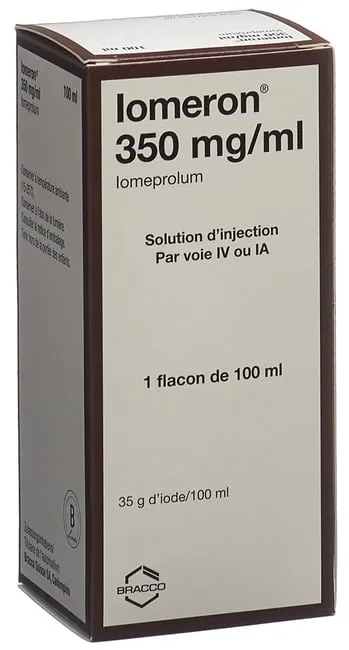
Table of Contents
Iomeron 250, solution for injection, 250 mg iodine/ml
Iomeron 300, solution for injection, 300 mg iodine/ml
Iomeron 350, solution for injection, 350 mg iodine/ml
Iomeron 400, solution for injection, 400 mg iodine/ml
Iomeprol (Iomeprolum)
Read the entire package leaflet before using this medicine.
- Keep this leaflet, as you may need to read it again.
- If you have any further questions, please consult your doctor or pharmacist.
- This medicine has been prescribed for a specific individual. Do not pass it on to others. It may harm other people, even if their symptoms are the same.
- If any adverse reactions occur in the patient, including any adverse reactions not listed in this leaflet, inform your doctor or nurse. See section 4.
Package leaflet contents:
- What Iomeron is and what it is used for
- Important information before using Iomeron
- How to use Iomeron
- Possible side effects
- How to store Iomeron
- Contents of the pack and other information
1. What Iomeron is and what it is used for
Medicinal product intended for diagnostic use only.
Iomeron is a sterile aqueous solution of iomeprol at iodine concentrations ranging from 200 to 400 mg iodine/ml.
The active substance in this medicine is iomeprol—a non-ionic, water-soluble, tri-iodinated contrast agent used in radiological diagnosis of various body regions.
After intravenous administration of Iomeron, most of the dose is excreted in urine within the first 24 hours; small amounts may be excreted between 24 and 38 hours after administration.
2. Important information before using Iomeron
When not to use Iomeron:
Do not administer the Iomeron medicine:
- if the patient is allergic to the active substance or to any of the other components of this medicine (listed in section 6),
- in case of repeated myelography, due to the risk of contrast medium overdose.
Warnings and precautions
Before starting treatment with Iomeron, discuss this with your doctor or nurse.
- if the patient has allergies, asthma, and particularly if they are taking blood pressure-regulating medicines (beta-blockers),
- if the patient has thyroid function disorders,
- if the patient has ever experienced severe rash, skin peeling, blistering and/or oral mucosal ulceration after administration of an iodinated contrast medium.
Children
After administration of Iomeron, thyroid function disorders may occur in both children and adults. Newborns may also be exposed via the mother during pregnancy. The doctor may need to perform thyroid function tests before and/or after administration of Iomeron.
Pregnancy and breastfeeding
Exposure to radiation during pregnancy should be avoided. The potential benefit of performing a radiographic examination using a contrast agent must be carefully weighed against the potential risk.
If a patient is pregnant and has received Iomeron during pregnancy, monitoring of the newborn's thyroid function after birth is recommended.
Similarly, radiographic examinations using contrast agents should be avoided in breastfeeding women. Iodinated contrast media are excreted in small amounts in breast milk. Based on current experience, the occurrence of adverse reactions in the breastfed infant is unlikely. Breastfeeding may be continued after the examination with Iomeron.
Elderly patients
Due to age-related decline in physiological functions, elderly patients are at particular risk of adverse reactions, especially when high doses of contrast media are used.
Hypersensitivity to iodinated contrast media
Known hypersensitivity or previous reaction to iodinated contrast media increases the risk of severe reactions upon re-exposure, even with non-ionic agents. In such patients, premedication with glucocorticoids and antihistamines is recommended to prevent recurrent reactions.
Predisposition to allergic reactions
Adverse reactions to iodinated contrast media occur more frequently in patients with a history of allergies, such as hay fever, urticaria, or food allergy.
Bronchial asthma
Patients receiving beta-blockers, especially those with asthma, may have a lower threshold for bronchospasm and reduced responsiveness to beta-agonists and adrenaline, potentially requiring higher adrenaline doses.
Thyroid function and thyroid function testing
Small amounts of free inorganic iodine present in contrast media may affect thyroid function. This effect is more pronounced in patients with latent or overt hyperthyroidism or goiter. Cases of hyperthyroidism or even thyroid storm have been reported after administration of iodinated contrast media.
Renal impairment
Pre-existing renal dysfunction may predispose to acute kidney injury following contrast media administration. Preventive measures include:
- identifying patients at high risk;
- ensuring adequate hydration before contrast administration; intravenous fluid infusion is recommended before and during the procedure, continuing until complete renal elimination of the contrast agent;
- avoiding, whenever possible, nephrotoxic drugs or extensive procedures such as renal angioplasty until the contrast agent is fully eliminated;
- postponing subsequent contrast-enhanced examinations until renal function has returned to baseline. In dialysis patients, contrast agents such as iomeprol may be administered before dialysis.
Diabetes
Diabetic nephropathy is one of the risk factors for developing renal dysfunction after contrast media administration. Biguanide derivatives (e.g. metformin) may increase the risk of lactic acidosis.
Pheochromocytoma
To reduce the risk of hypertensive crisis, alpha-adrenergic blocking agents are recommended in these patients.
Myasthenia gravis
Administration of iodinated contrast media may exacerbate symptoms of the disease.
Severe cardiovascular diseases
The risk of severe reactions is increased in patients with serious heart disease, particularly in cases of heart failure and coronary artery disease.
Intravascular injection of contrast media may accelerate the onset of pulmonary edema in patients with overt or early-stage heart failure. Administration in patients with pulmonary hypertension or valvular heart disease may lead to significant hemodynamic changes.
Central nervous system (CNS) disorders
Particular caution is required when administering contrast media intravascularly in patients with acute cerebral ischemia, acute intracranial hemorrhage, conditions involving disruption of the blood-brain barrier, cerebral edema, or acute demyelination.
The presence of intracranial tumors, metastases, or a history of epilepsy may increase the likelihood of seizures. Neurological symptoms due to coexisting degenerative, inflammatory, or neoplastic lesions may worsen after contrast administration.
Intravascular injection of contrast media may cause vasospasm and subsequent ischemic symptoms.
Transient brain dysfunction, known as contrast-induced encephalopathy, may occur during or shortly after imaging procedures. If any of the symptoms associated with this condition, described in section 4, occur, the patient should immediately inform the doctor.
Alcoholism
Both experimental and clinical evidence shows that acute and chronic alcoholism increase blood-brain barrier permeability, facilitating the passage of iodinated contrast media into brain tissue, potentially leading to CNS disturbances. Caution is advised in alcohol-dependent individuals due to the possible lowering of the seizure threshold.
Drug dependence, drug addiction
Caution is required in patients with drug or narcotic dependence due to the potential lowering of the seizure threshold.
Agitated states
Severe anxiety, agitation, and pain may trigger or exacerbate adverse reactions following contrast media administration.
Dehydration
Caution should be exercised during injection of contrast media to avoid dehydration.
Special caution is required when using Iomeron
Serious skin reactions have been reported with the use of Iomeron, including Stevens-Johnson syndrome (SJS), toxic epidermal necrolysis (TEN), acute generalized exanthematous pustulosis (AGEP), and drug reaction with eosinophilia and systemic symptoms (DRESS). If any symptoms related to serious skin reactions described in section 4 are observed, immediate medical attention must be sought.
Iomeron and other medicines
The doctor may consider temporarily discontinuing medications that lower the seizure threshold. Such treatment should be resumed 24 hours after the procedure.
Antiepileptic therapy must not be interrupted, and anticonvulsants should be administered at optimal doses.
Biguanide derivatives (e.g. metformin) may accelerate the development of lactic acidosis. As a precautionary measure, biguanide derivatives should be discontinued at the time of or 48 hours before contrast medium administration and restarted only after renal function has been checked and confirmed to have returned to baseline.
Increased risk of adverse reactions, particularly delayed ones (rash, erythema, fever, flu-like symptoms), occurs in patients treated with interleukin-2 (IL-2) and interferon.
Thyroid function tests
Radioactive iodine uptake in diagnostic tests of thyroid function is reduced for up to 16 days after administration of iodinated contrast media.
Thyroid function tests independent of iodine levels, such as T3 and T4 levels, are unaffected. All tests dependent on iodine concentration should be performed before contrast-enhanced imaging. These observations are independent of clinical symptoms.
Laboratory tests
High concentrations of contrast media in serum and urine may interfere with laboratory test results for bilirubin, protein, and inorganic substances (e.g. iron, copper, calcium, phosphates).
Driving and operating machinery
The effect on the ability to drive and operate machinery is unknown.
3. How to use Iomeron
Dosage details are provided at the end of the leaflet in the section Information for medical or healthcare professionals. Diagnostic procedures using contrast agents should be carried out by appropriately trained medical personnel.
Overdose
Overdose may lead to life-threatening adverse reactions, primarily due to effects on the respiratory and cardiovascular systems. Treatment of overdose focuses on maintaining vital functions and symptomatic therapy. Dialysis or hemodialysis may also be used.
In case of overdose following intracanal administration, careful observation for possible central nervous system (CNS) disturbances is particularly important. Symptoms include: progressive increase in deep tendon reflexes, tonic-clonic seizures, generalized convulsions, elevated body temperature, stupor, and respiratory depression.
4. Possible adverse reactions
Like any contrast agent, Iomeron may cause adverse reactions, although they do not occur in
everyone.
Adverse reactions are usually mild to moderate and transient. However, severe and life-threatening
reactions have also been reported, some of which led to death. Reactions most commonly occur
within minutes after administration, but may appear significantly later.
Anaphylaxis (anaphylactoid reactions/hypersensitivity reactions) manifests in various ways and very
rarely presents with all possible symptoms in a single patient. Typically, within 1 to 15 minutes (rarely
more than 2 hours after administration), patients report malaise, restlessness, hot flushes, sensation of
warmth, increased sweating, dizziness, excessive tearing, nasal mucosal inflammation, palpitations,
paresthesia, itching, pulsating headache, sore throat and sensation of throat tightness, difficulty
swallowing, cough, sneezing, urticaria, erythema, mild local swelling, angioneurotic edema, dyspnea
due to swelling of the tongue and larynx and (or) their spasm, manifesting as wheezing and bronchial
spasm.
Nausea, vomiting, abdominal pain, and diarrhea have also been reported.
These reactions, which may occur regardless of dose or route of administration, may be the first
signs of circulatory failure.
Administration of the contrast agent should be stopped immediately, and appropriate intravenous
treatment should be initiated if necessary.
Severe cardiovascular reactions such as vasodilation with a drop in arterial blood pressure,
tachycardia, dyspnea, restlessness, cyanosis, loss of consciousness progressing to cardiac and
respiratory arrest may be fatal. These reactions may occur rapidly and require full and intensive
cardiopulmonary resuscitation (restoration of circulatory and respiratory function).
Primary circulatory collapse may occur as the sole and (or) initial reaction without additional
respiratory symptoms or other previously mentioned signs.
Adverse reactions after intravascular administration
Adults
Common (occur in 1 to 10 out of 100 patients):
sensation of warmth
Uncommon (occur in 1 to 10 out of 1,000 patients):
dizziness, headache, arterial hypertension, dyspnea, vomiting, nausea, erythema, urticaria, itching,
chest pain, pain and sensation of warmth at the injection site
Rare (occur in 1 to 10 out of 10,000 patients):
pre-syncope, bradycardia (slow heart rate), tachycardia (markedly increased heart rate), extrasystoles,
arterial hypotension, rash, back pain, asthenia (reduced or absent natural physical and nervous
resilience), chills, fever, increased serum creatinine concentration.
Frequency not known (frequency cannot be estimated from available data):
immediate medical attention should be sought if patients develop severe skin reactions such as:
- blisters, skin peeling, oral, throat, nasal, genital, or ocular ulcers. These serious skin changes may be preceded by fever and flu-like symptoms (Stevens-Johnson syndrome, toxic epidermal necrolysis).
- red, peeling rash with subcutaneous nodules and blisters, accompanied by fever. Symptoms usually appear at the beginning of treatment (acute generalized exanthematous pustulosis).
- widespread rash, high fever, and enlarged lymph nodes (DRESS syndrome or drug hypersensitivity syndrome).
Other adverse reactions of unknown frequency:
Thrombocytopenia, hemolytic anemia (abnormal breakdown of red blood cells, which may cause
fatigue, rapid heartbeat, and shortness of breath), anaphylactic reaction, anxiety, confusion, coma,
transient ischemic attacks, paralysis, fainting, seizures, loss of consciousness, dysarthria (speech
articulation disorders), paresthesia, amnesia, somnolence, taste disturbances, transient blindness,
visual disturbances, conjunctivitis, increased lacrimation, photopsia (sensation of flashes or colors),
cardiac arrest, myocardial infarction, heart failure, angina pectoris, ventricular fibrillation or atrial
fibrillation, atrioventricular block, cyanosis, circulatory collapse or shock, pallor, respiratory arrest,
acute respiratory distress syndrome (ARDS), pulmonary edema, laryngeal edema, pharyngeal edema,
bronchospasm, asthma, cough, discomfort in the throat, discomfort in the larynx, rhinitis, dysphonia
(voicing disorders such as hoarseness), diarrhea, abdominal pain, excessive salivation, difficulty
swallowing, salivary gland enlargement, vasomotor edema, increased sweating, acute renal failure,
reaction at the injection site*, malaise, ST-segment elevation, ECG abnormalities, hyperthyroidism,
cyanotic discoloration of skin and mucous membranes, blood clots, vasoconstriction and consequently
ischemia, erythema multiforme (development of round skin blisters, often with a lighter center).
Cerebral disorder (encephalopathy) with symptoms including headache, visual disturbances, vision
loss, confusion, seizures, loss of coordination, hemiplegia (loss of movement on one side of the
body), speech difficulties, and loss of consciousness.
* Reactions at the injection site include pain and swelling at the site. In most cases, these are caused
by extravasation of the contrast agent. These reactions are usually transient and do not cause
permanent consequences. Cases of extravasation associated with inflammation, skin necrosis, and
even development of compartment syndrome have been reported.
Thrombosis and coronary artery embolism have been reported as complications of coronary
angiography.
During intra-arterial administration of contrast agent, vasospasm and subsequent ischemia have
been observed, particularly after angiography of vessels and the brain, often related to the procedure
itself and presumably caused by catheter tip effects or excessive pressure within the catheter.
Children
Experience with the use of iomeprol in children is limited. The safety profile of iomeprol is similar in
children and adults. Transient hypothyroidism may occur in children under 3 years of age.
Adverse reactions after intracavitary administration
Adults
The most commonly reported adverse reactions after intracavitary administration of iomeprol are:
headache, dizziness, nausea, vomiting, and back pain. These reactions are mild to moderate and
transient. In rare cases, headache may persist for several days. Most adverse reactions occur within
3–6 hours after administration, depending on the rate of distribution of the contrast agent from the
site of administration into the bloodstream. The majority of reactions occur within 24 hours after
administration.
Very common (occur in more than 1 out of 10 patients):
headache.
Common (occur in 1 to 10 out of 100 patients):
dizziness, arterial hypertension, nausea, vomiting, back pain, limb pain, reaction at the injection site*.
Uncommon (occur in 1 to 10 out of 1,000 patients):
loss of consciousness, paralysis, paresthesia, hypotonia, somnolence, hypotension, sudden
flushing, increased sweating, itching, muscle and joint stiffness, neck pain, sensation of warmth,
fever.
Frequency not known:
anaphylactic reaction, seizures, rash.
* Reactions at the injection site include pain and swelling at the site.
Children
The safety profile of this medicinal product in children is similar to that in adults.
No adverse reactions have been reported after intracavitary administration of iomeprol in children.
Adverse reactions after administration into body cavities
After administration of iodinated contrast agents into body cavities, the contrast agents are slowly
absorbed from the site of administration into the bloodstream and subsequently eliminated via the
kidneys.
Increased amylase concentration frequently occurs after endoscopic retrograde cholangiopancreatography
(ERCP, a procedure using endoscope and X-ray contrast agent). Rare cases of pancreatitis have been
reported.
Reactions reported during arthrography and fistulography are related to irritation symptoms occurring
in previously inflamed tissues.
Hypersensitivity reactions are rare, occurring in mild form or as skin inflammation. However, severe
anaphylactic reactions cannot be excluded.
As with other iodinated contrast agents, pelvic pain and malaise may occur after hysterosalpingography
(radiological examination to visualize the uterine cavity and fallopian tubes).
Reporting of adverse reactions
If any adverse reactions occur, including any not listed in this leaflet, inform your doctor or pharmacist.
Adverse reactions can be reported directly to the Department of Monitoring Adverse Drug Reactions,
Office for Registration of Medicinal Products, Medical Devices and Biocidal Products, Al. Jerozolimskie
181C, 02-222 Warsaw, Tel: (22) 49 21 301, Fax: (22) 49 21 309, website: https://smz.ezdrowie.gov.pl
Adverse reactions can also be reported to the marketing authorization holder.
Reporting adverse reactions helps to provide more information on the safety of the medicinal product.
5. How to store Iomeron
Store below 30°C.
Keep in the outer packaging to protect from light.
Although iomeprol is only slightly sensitive to X-rays, it is advisable to store the medicinal product out of the reach of ionizing radiation.
Vials containing the contrast solution are not intended for multiple withdrawals.
Do not draw the contrast agent into a syringe earlier than immediately before use. Unused solutions remaining after one examination, as well as residual amounts in syringes, must be discarded.
Do not use Iomeron if signs of deterioration are visible.
Do not use after the expiry date stated on the packaging.
Before administering the product, ensure that none of the packaging components are damaged.
Do not use the product if it is discoloured, contains particulate matter, or if the packaging is damaged.
6. Contents of the pack and other information
What Iomeron contains
The active substance is iomeprol.
Iomeron solution contains (amount/100 ml) the following excipients:
trometamol 100 mg
hydrochloric acid (d = 1.18) 24 mg
water for injections q.s. 100 ml
What Iomeron looks like and contents of the pack
Iomeron is packed in vials/bottles made of colourless glass, closed with a rubber stopper,
aluminium seal and plastic plug, placed in cardboard boxes.
Available pack sizes:
Iomeron 250
Bottles of 50 ml, 100 ml, 150 ml, or 200 ml
Iomeron 300
Vials of 20 ml
Bottles of 50 ml, 100 ml, 150 ml, 200 ml, or 500 ml
Iomeron 350
Vials of 20 ml
Bottles of 50 ml, 100 ml, 150 ml, 200 ml, 250 ml, or 500 ml
Iomeron 400
Bottles of 50 ml, 100 ml, 150 ml, 200 ml, 250 ml, or 500 ml
Marketing Authorisation Holder and Manufacturer
Marketing Authorisation Holder:
Bracco Imaging Deutschland GmbH
Max-Stromeyer-Strasse 116
D-78467 Konstanz
Germany
Manufacturers:
Patheon Italia S.p.A
2° Trav. SX Via Morolense 5
03013 Ferentino
Italy
BIPSO GmbH
Robert-Gerwig-Strasse 4
78224 Singen
Germany
Bracco Imaging S.p.A.
Bioindustry Park
via Ribes, 5
10010 Colleretto Giacosa (TO)
Italy
Representative of the Marketing Authorisation Holder:
Bracco Imaging Polska Sp. z o.o.
ul. Domaniewska 39 A
02-672 Warsaw
tel: +48 22 208 24 20
INFORMATION FOR MEDICAL OR HEALTHCARE PROFESSIONALS
1 ml of Iomeron contains respectively:
| Iomeron | Iomeprol (mg) | which corresponds to iodine content (mg) |
| Iomeron 250 | 510.3 | 250 |
| Iomeron 300 | 612.4 | 300 |
| Iomeron 350 | 714.4 | 350 |
| Iomeron 400 | 816.5 | 400 |
Indications for use
Iomeron 250 Intravenous urography, peripheral venography, computed tomography—CT (brain and body), intravenous and intra-arterial digital subtraction angiography (DSA), myelography.
Iomeron 300 Intravenous urography (in adults and children), peripheral venography, computed tomography—CT (brain and body), cavernosography, intravenous digital subtraction angiography (DSA), conventional angiography, intra-arterial computed subtraction angiography (DSA), angiocardiography (in adults and children), conventional selective coronary arteriography, interventional coronary arteriography, endoscopic retrograde cholangiopancreatography—ERCP, arthrography, hysterosalpingography, fistulography, discography, galactography, cholangiography, dacryocystography, sialography, retrograde urethrography, retrograde pyeloureterography, myelography.
Iomeron 350 Intravenous urography (in adults and children), computed tomography—CT (body), intravenous computed subtraction angiography (DSA), conventional angiography, intra-arterial digital subtraction angiography (DSA), angiocardiography (in adults and children), conventional selective coronary arteriography, interventional coronary angiography, arthrography, hysterosalpingography, fistulography, galactography, retrograde cholangiography, dacryocystography, sialography.
Iomeron 400 Intravenous urography (in adults, including patients with impaired renal function or diabetic patients), computed tomography—CT (body), conventional angiography, intra-arterial digital subtraction angiography (DSA), angiocardiography (in adults and children), conventional selective coronary arteriography, interventional coronary arteriography, arthrography, hysterosalpingography, fistulography, galactography, dacryocystography, sialography.
Dosage
| Indication | Product mg (iodine)/ml | Recommended dosage |
| Intravenous urography | 250, 300, 350, 400 | Adults: 50–150 ml Newborns: 3–4.8 ml/kg body weight Infants: 2.5–4 ml/kg body weight Children: 1–2.5 ml/kg body weighta |
| Peripheral venography | 250, 300 | Adults: 10–100 ml Repeat if necessaryb (10–50 ml for upper limbs; 50–100 ml for lower limbs) |
| CT of the brain | 250, 300 | Adults: 50–200 ml Childrena, g |
| CT of body | 250, | Adults: 100–200 ml |
| 300, 350, 400 | Childrena, g | |
| Cavernosography | 300 | Adults: up to 100 ml |
| Intravenous DSA | 250, 300, 350, 400 | Adults: 100–250 ml Childrena, g |
| Conventional angiography Upper limb arteriography | 300, 350 | Adultsb |
| Pelvic and lower limb arteriography | 300, 350, 400 | Adultsb |
| Abdominal arteriography | 300, 350, 400 | Adultsb |
| Descending aortic angiography | 300, 350 | Adultsb |
| Pulmonary angiography | 300, 350, 400 | Adults: up to 170 ml |
| Cerebral angiography | 300, 350 | Adults: up to 100 ml |
| Arteriography in pediatrics | 300 | Childreng: up to 130 mla |
| Interventional intra-arterial DSA | 300, 350, 400 | Adultsb Childrena, g |
| Cerebral | 300, 350 | Adults: 30–60 ml – total dose 5–10 ml – selective injection Childrena, g |
| Chest | 300 | Adultsb: 20–25 ml (aorta), repeat if necessary, 20 ml (bronchial arteries) |
| Aortic arch | 300, 350 | Adultsc |
| Abdomen | 250, 300 | Adultsc |
| Aortography | 300, 350 | Adultsc |
| Percutaneous lumbar aortography | 300 | Adultsb |
| Peripheral arteriography | 250, 300 | Adults: 5–10 ml for selective injection, up to 250 ml Childrena, g |
| Interventional procedures | 300 | Adults: 10–30 ml for selective injection, up to 250 ml Childrena, g |
| Angiocardiography | 300, 350, 400 | Adultsb Childreng: 3–5 ml/kg body weight |
| Conventional selective coronary arteriography | 300, 350, 400 | Adults: 4–10 ml per artery, repeat if necessary |
| Interventional coronary arteriography | 300, 350, 400 | Adults: 4–10 ml per artery, repeat if necessary |
| ERCP | 300 | Adults: up to 100 ml |
| Arthrography | 300, 350 | Adults: up to 10 ml per injection |
| Hysterosalpingography | 300, 350 | Adults: up to 35 ml |
| Fistulography | 300, 350, 400 | Adults: up to 100 ml |
| Discography | 300 | Adults: up to 4 ml |
| Galactography | 300, 350, 400 | Adults: 0.15–1.2 ml per injection |
| Dacryocystography | 300, 350, 400 | Adults: 2.5–8 ml per injection |
| Sialography | 300, 350, 400 | Adults: 1–3 ml per injection |
| Retrograde cholangiography | 300, 350 | Adults: up to 60 ml |
| Retrograde ureterography | 300 | Adults: 20–100 ml |
| Pyelo-ureterography | 300 | Adults: 10–20 ml per injection |
| Myelography | 250 300 | Adults: 10–18 mld 8–15 mld |
Recommended doses for adults are calculated for an average body weight of 70 kg. Each time before administration of the medicinal product, the dose should be adjusted to the patient's current body weight and other relevant factors (e.g. clinical condition).
Recommended doses for newborns, infants and children are given per single injection/kg b.w.
= according to body weight and age
= do not exceed 250 ml. The volume of a single injection depends on the vascular area to be examined
= do not exceed 350 ml
= do not exceed 4500 mg of iodine and concentrations above 300 mg I/ml when administered intrathecally
= newborns 0–27 days of life
= infants from day 28 to 12 months of life
= includes children and adolescents (1–17 years)
Instructions for use
Contrast media administered intravascularly and intrathecally should be at body temperature during injection.
Before administration, ensure that none of the packaging components are damaged.
Do not use the product if it is discolored, contains particulate matter, or if the packaging is damaged.
Never mix other medicinal products with contrast media.
The contrast medium should be withdrawn from the container under sterile conditions using a sterile syringe.
Sterile conditions and technique must be maintained during intrathecal puncture, intravascular administration, and when using catheters and guidewires.
Containers once opened must be used immediately. The rubber stopper should never be punctured more than once.
It is recommended to use appropriate piercing cannulae for puncturing the stopper and withdrawing the contrast medium from the container.
Contrast media in containers intended for multiple use with a volume of 500 ml should be used with suitable injection devices. After completion of the examination, all single-use components must be discarded. Follow the instructions provided by the manufacturer of the injection device.
Iomeron, like other contrast media, may react with metallic surfaces containing copper, e.g. brass; therefore, avoid using equipment made from such materials.
Contraindications for intrathecal administration:
Repeated myelography is contraindicated due to the risk of contrast medium overdose.
Special warnings and precautions for use
Diagnostic examinations using contrast media should be performed by appropriately trained medical personnel (especially regarding treatment of anaphylactic shock and life support).
General precautions for use regarding the patient
Hydration
Patients must be well hydrated, and any significant disturbances in fluid and electrolyte balance should be corrected before and after administration of the contrast medium. Patients with severe renal, hepatic or cardiac dysfunction, multiple myeloma or other paraproteinemias, sickle cell anemia, diabetes, polyuria, oliguria, hyperuricemia, newborns, elderly patients, and patients with severe systemic disease should not be exposed to dehydration. Caution is advised in patients who are already hydrated, in whom their condition may worsen due to administration of excessive fluid volume, including in congestive heart failure.
Dietary recommendations
Unless otherwise instructed by the attending physician, a normal diet may be followed on the day of examination. Adequate fluid intake should be ensured before and after intravascular administration.
Allergy testing
In patients with suspected or known hypersensitivity to contrast media, allergy testing is not recommended, as severe or fatal reactions to contrast media cannot be predicted based on allergy test results.
Hypersensitivity
In patients with a history of allergies, hypersensitivity reactions to iodinated contrast media and/or asthma, administration of antihistamines and/or glucocorticosteroids is recommended to reduce the risk of pseudo-anaphylactic reactions.
Anxiety
Marked agitation, anxiety and pain may contribute to adverse reactions or exacerbate reactions associated with contrast media.
Newborns, infants, children
Infants (<1 year of age), and especially newborns, are particularly susceptible to electrolyte imbalances and hemodynamic changes. Careful attention should be paid to planned dosing, procedural details, and the patient's health status.
General precautions for use regarding the procedure
Intrathecal administration
As with other contrast media, Iomeron should be administered with particular caution to patients with increased intracranial pressure or suspected tumor, abscess or intracranial hematoma. In patients with a history of seizures, anticonvulsant medication should be administered before and after myelography.
Catheterization
Non-ionic contrast media show weaker in vitro anticoagulant effects compared to ionic contrast media. Medical personnel performing catheterization procedures should be aware of this. Angiography procedures should be performed very meticulously, and catheters should be flushed regularly to minimize the risk of thrombosis and embolism associated with the procedure. To maintain catheter patency, flushing with physiological saline solution (with heparin added if necessary) is recommended.
Patient monitoring
Intravascular administration – should be performed, whenever possible, with the patient lying down. The patient should be observed for at least 30 minutes after administration of the contrast medium.
Intrathecal administration – after completion of direct injection into cervical or lumbar segments, the head of the bed should be elevated (approximately 45°) for about 2 minutes to allow the contrast medium to fill the lower parts of the spinal canal. During the first hours after the examination, the patient should avoid excessive, sudden movements and remain under close observation. The patient should lie supine with the head elevated.
Administration into (cisterns) at the base of the brain or into brain ventricles – direct administration is not recommended when using conventional radiography without computer enhancement.
The label detached from the vial or bottle should be attached to the patient's chart to allow proper documentation of the medicinal product used. The administered dose should also be recorded.