Inflanor plus
Poland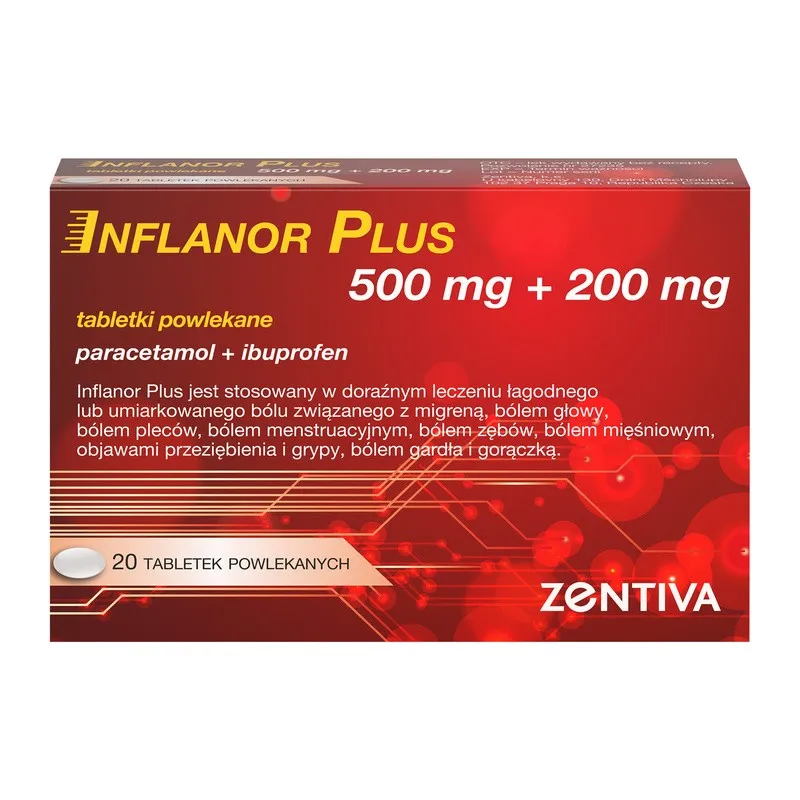
Table of Contents
Package leaflet: Information for the user
Inflanor Plus, 500 mg + 200 mg coated tablets
paracetamol + ibuprofen
Please read all of this leaflet carefully before taking this medicine, because it contains
important information for you.
This medicine should always be taken exactly as described in this patient leaflet or as directed by your
doctor or pharmacist.
- Keep this leaflet so that you can read it again if necessary.
- If you need advice or further information, consult your pharmacist.
- If you experience any side effects, including any not listed in this leaflet, tell your doctor or pharmacist. See section 4.
- If there is no improvement after 3 days, or if you feel worse, consult your doctor.
Contents of the leaflet
- What Inflanor Plus is and what it is used for
- Important information before taking Inflanor Plus
- How to take Inflanor Plus
- Possible side effects
- How to store Inflanor Plus
- Contents of the pack and other information
1. What Inflanor Plus is and what it is used for
Inflanor Plus contains two active substances: ibuprofen and paracetamol.
Ibuprofen belongs to a group of medicines called non-steroidal anti-inflammatory drugs (NSAIDs).
NSAIDs work by reducing pain, swelling, and fever.
Paracetamol is a pain-relieving medicine that reduces pain and fever through a different mechanism than ibuprofen.
Inflanor Plus is used for the short-term treatment of mild to moderate pain associated with migraine, headache, back pain, menstrual pain, toothache, rheumatic pain, muscle pain, mild forms of arthritis, symptoms of cold and flu, sore throat, or fever.
For the relief of rheumatic pain and pain associated with mild forms of arthritis, Inflanor Plus should be used only on medical advice or prescription. This medicine is particularly suitable for pain not adequately relieved by ibuprofen or paracetamol alone.
Inflanor Plus is intended for adult patients.
2. Important information before using Inflanor Plus
When not to use Inflanor Plus
- if the patient is allergic to ibuprofen, paracetamol, or any of the other ingredients of this medicine (listed in section 6);
- if the patient is taking any other medicines containing paracetamol;
- if the patient is taking any other pain-relieving medicines such as ibuprofen, acetylsalicylic acid (aspirin) in high doses (above 75 mg per day), or other medicines in the group of non-steroidal anti-inflammatory drugs (NSAIDs), including cyclooxygenase-2 (COX-2) inhibitors;
- if the patient has ever had an allergic reaction such as bronchospasm (tightening of the muscles in the lungs, which may cause breathlessness), asthma, rhinitis, itching, or nasal inflammation with sneezing,
urticaria (itchy rash) or angioedema (swelling under the skin) while
taking acetylsalicylic acid or other NSAIDs;
- if the patient currently has or has a history of recurrent gastric or duodenal ulceration or bleeding (at least two separate episodes of confirmed bleeding or ulceration);
- if the patient currently has or has a history of gastric or duodenal ulceration, perforation, or bleeding caused by treatment with NSAIDs;
- in patients with blood clotting disorders (coagulation disorders);
- in patients with severe heart, liver, or kidney failure;
- during the last 3 months of pregnancy.
Warnings and precautions
Before starting treatment with Inflanor Plus, consult a doctor or pharmacist if:
the patient has an infection — see below, section "Infections";
the patient is elderly;
the patient has or has had asthma;
the patient has impaired kidney, heart, liver, or intestinal function;
the patient has systemic lupus erythematosus (SLE) – an autoimmune disease
affecting connective tissue, causing joint pain, skin lesions, and organ dysfunction, or mixed connective tissue disease;
the patient has gastrointestinal disorders or chronic inflammatory bowel diseases (such as
ulcerative colitis, Crohn's disease);
the patient is in the first 6 months of pregnancy or breastfeeding;
the patient plans to become pregnant.
Infections
Inflanor Plus may mask symptoms of infection such as fever and pain. Therefore, Inflanor Plus may delay appropriate treatment of infection and consequently increase the risk of complications. This has been observed in bacterial pneumonia and bacterial skin infections associated with chickenpox. If the patient takes this medicine during an infection and symptoms persist or worsen, seek immediate medical advice.
Skin reactions
Severe skin reactions have been reported with the use of Inflanor Plus. If the patient develops any skin rash, mucosal lesions, blisters, or other signs of hypersensitivity, treatment with Inflanor Plus must be discontinued immediately and medical help should be sought promptly, as these may be early signs of a very serious skin reaction. See section 4.
Anti-inflammatory and/or pain-relieving medicines such as ibuprofen may be associated with a small increased risk of heart attack or stroke, particularly when used at high doses. Do not exceed the recommended dose or duration of treatment.
Before using Inflanor Plus, the patient should discuss treatment with a doctor or pharmacist if they have:
heart diseases such as heart failure, angina (chest pain), history of heart attack, coronary artery bypass surgery, peripheral arterial disease (poor blood circulation in the legs due to narrowed or blocked arteries), or any stroke (including mini-stroke or transient ischemic attack, TIA);
high blood pressure, diabetes, high cholesterol levels, a family history of heart disease or stroke, or if the patient smokes.
Children and adolescents
This medicine is not intended for use in children and adolescents under 18 years of age.
Inflanor Plus and other medicines
Tell your doctor or pharmacist about all medicines the patient is currently taking or has recently taken, as well as any medicines the patient plans to take.
Inflanor Plus must not be used:
with other medicines containing paracetamol,
with other NSAIDs such as acetylsalicylic acid (in doses above 75 mg per day), ibuprofen, or other NSAIDs, including selective cyclooxygenase-2 (COX-2) inhibitors.
Inflanor Plus may affect the action of other medicines. For example:
corticosteroids,
antibiotics (e.g. chloramphenicol or quinolones),
antiemetics (e.g. metoclopramide, domperidone),
anticoagulants (used to thin the blood and prevent clotting, such as acetylsalicylic acid, warfarin, ticlopidine),
cardiac stimulants (e.g. cardiac glycosides),
cholesterol-lowering agents (e.g. cholestyramine),
diuretics (facilitating water excretion),
medicines lowering high blood pressure (ACE inhibitors such as captopril, beta-blockers such as atenolol, angiotensin II receptor antagonists, e.g. losartan),
immunosuppressants (e.g. methotrexate, cyclosporine, tacrolimus),
medicines used to treat mania or depression (e.g. lithium or selective serotonin reuptake inhibitors, SSRIs),
mifepristone (a medicine used in medical termination of pregnancy),
medicines used in the treatment of HIV (e.g. zidovudine),
flucloxacillin (an antibiotic), due to a serious risk of blood and body fluid disorder (metabolic acidosis with a high anion gap), which requires urgent treatment and may occur particularly in patients with severe kidney dysfunction, sepsis (a condition in which bacteria and their toxins circulate in the blood, leading to organ damage), malnutrition, chronic alcoholism, and in patients taking maximum daily doses of paracetamol.
Pregnancy, breastfeeding, and effects on fertility
If the patient is pregnant or breastfeeding, suspects she may be pregnant, or is planning to have a baby, she should consult a doctor or pharmacist before using this medicine.
Do not take Inflanor Plus if the patient is in the last 3 months of pregnancy, as it may harm the unborn child or cause problems during delivery. It may cause kidney and heart problems in the unborn child. It may increase the tendency to bleeding in both mother and child and may delay or prolong labour. Inflanor Plus should not be used during the first 6 months of pregnancy unless the doctor considers it absolutely necessary. If treatment is required during this period or when trying to conceive, the lowest possible dose should be used for the shortest possible time. From week 20 of pregnancy, Inflanor Plus may cause kidney dysfunction in the unborn child if taken for longer than a few days. This may lead to low levels of amniotic fluid surrounding the baby (oligohydramnios) or narrowing of a blood vessel (ductus arteriosus) in the baby's heart. If treatment is required for longer than a few days, the doctor may recommend additional monitoring.
Only small amounts of paracetamol, ibuprofen, and their metabolites pass into breast milk. This medicine may be taken during breastfeeding if used at the recommended dose and for the shortest possible duration.
Inflanor Plus may make it more difficult to become pregnant. Ibuprofen belongs to a group of medicines that may impair fertility in women. This effect is reversible after stopping the medicine. Inform the doctor if a woman plans to become pregnant or has difficulty conceiving.
Driving and operating machinery
After taking an NSAID medicine, adverse effects such as dizziness, drowsiness, fatigue, and visual disturbances may occur. Do not drive or operate machinery if any of these adverse effects occur.
Inflanor Plus contains sodium
This medicine contains less than 1 mmol of sodium (23 mg) per tablet, which means it is essentially "sodium-free".
3. How to use Inflanor Plus
This medicine should always be taken exactly as described in this patient leaflet or as directed by your doctor or pharmacist. If in doubt, consult your doctor or pharmacist.
This medicine is intended for oral use and short-term treatment only.
Use the lowest effective dose for the shortest duration necessary to relieve symptoms.
If symptoms (such as fever and pain) persist or worsen during an infection, consult a doctor immediately (see section 2).
Adults
Recommended dose: 1 tablet up to 3 times daily. At least a 6-hour interval should be maintained between doses.
If symptoms do not subside after taking one tablet, a maximum of 2 tablets may be taken, no more frequently than 3 times a day. Due to the presence of paracetamol, a single dose of 2 tablets is intended exclusively for patients weighing 60 kg or more.
Do not exceed 6 tablets within 24 hours (corresponding to 1200 mg of ibuprofen and 3000 mg of paracetamol per day).
Method of administration
Tablets should be taken with a glass of water.
To reduce the likelihood of adverse effects, Inflanor Plus should be taken with food.
Do not take Inflanor Plus for longer than 3 days. If symptoms worsen or persist, consult a doctor.
If the patient has liver or kidney disease, or is elderly, the doctor will determine the appropriate dose, which will be the lowest possible. Do not take this medicine if the patient has severe renal or hepatic impairment.
Use in children and adolescents
Do not use in children and adolescents under 18 years of age.
Overdose of Inflanor Plus
If a patient has taken more Inflanor Plus than recommended, or if the medicine has been accidentally ingested by a child, contact a doctor or the nearest hospital immediately for advice and information on potential health risks.
Symptoms of overdose may include nausea, abdominal pain, vomiting (possibly with blood), headache, tinnitus, confusion, and nystagmus. After ingestion of large doses, the following may occur: drowsiness, chest pain, palpitations (rapid heartbeat), loss of consciousness, seizures (mainly in children), weakness and dizziness, blood in urine, low blood potassium levels, feeling cold, and breathing difficulties.
In case of overdose with this medicine, contact a doctor even if the patient feels well, because excessive amounts of paracetamol may cause delayed, severe liver damage.
Missed dose of Inflanor Plus
Do not take a double dose to make up for a missed dose. If a dose is missed, take it as soon as possible, and then take the next dose no sooner than 6 hours later.
If you have further questions about the use of this medicine, consult your doctor or pharmacist.
4. Possible adverse reactions
Like all medicines, this medicine can cause adverse reactions, although not everyone experiences them.
YOU MUST STOP TAKING THE MEDICINE AND CONTACT YOUR DOCTOR IMMEDIATELY IF THE FOLLOWING OCCUR:
- Heartburn, indigestion (uncommon adverse reactions; may affect up to 1 in 100 people);
- Symptoms of gastrointestinal bleeding (severe abdominal pain, vomiting blood or vomiting material containing dark particles resembling coffee grounds, blood in stool, black tarry stools) (uncommon adverse reaction; may occur in no more than 1 in 100 people);
- Symptoms of meningitis such as neck stiffness, headaches, nausea or vomiting, fever, or feeling disoriented (very rare adverse reaction; may affect up to 1 in 10,000 people);
- Symptoms of severe allergic reaction (swelling of the face, tongue or throat, difficulty breathing, worsening of asthma) (very rare adverse reaction; may affect up to 1 in 10,000 people);
- Severe skin reactions, such as blisters – see also information below.
Severe skin reaction known as DRESS syndrome (frequency not known). Symptoms of DRESS include skin rash, fever, swollen lymph nodes, and increased eosinophil count (a type of white blood cell).
A red, scaly, widespread rash with subcutaneous nodules and blisters, mainly located in skin folds on the trunk and upper limbs, accompanied by fever at the beginning of treatment (acute generalized exanthematous pustulosis) (frequency not known). If such symptoms occur, Inflanor Plus must be discontinued immediately and medical help should be sought without delay. See also section 2.
Other possible adverse reactions
Common: may affect up to 1 in 10 people
- Abdominal pain or discomfort, nausea or vomiting, diarrhoea,
- Increased liver enzyme activity (ALT, GGT), increased creatinine and urea levels (in blood tests),
- Excessive sweating.
Uncommon: may affect up to 1 in 100 people
- Headache and dizziness,
- Flatulence and constipation,
- Oral ulceration, exacerbation of ulcerative colitis or Crohn’s disease, gastritis or pancreatitis,
- Skin rashes, facial swelling, itching,
- Increased activity of certain liver enzymes (AST, ALP) and creatine kinase,
- Decreased haemoglobin levels (protein in red blood cells) or increased platelet count (blood clotting cells) (in blood tests).
Very rare: may affect up to 1 in 10,000 people
- Decreased blood cell count (manifesting as sore throat, mouth ulcers, flu-like symptoms, severe fatigue, unexplained bleeding, bruising, and nosebleeds),
- Visual disturbances, tinnitus, sensation of spinning,
- Disorientation, depression, hallucinations,
- Fatigue, general malaise,
- Severe skin reactions, such as blistering,
- Skin becomes sensitive to light,
- Red or purple spots on the skin that do not fade under pressure and are caused by subcutaneous bleeding (purpura),
- High blood pressure, fluid retention,
- Liver function disorders (manifesting as yellowing of the skin and whites of the eyes),
- Kidney function disorders (manifesting as increased or decreased urine output, leg swelling),
- Heart failure (manifesting as shortness of breath, oedema),
- Tingling, numbness or itching (pins and needles),
- Optic neuritis,
- Somnolence.
Use of medicines such as Inflanor Plus may be associated with a slightly increased risk of heart attack (myocardial infarction) or stroke (see section 2).
Reporting of adverse reactions
If any adverse reactions occur, including any not listed in this leaflet, inform your doctor, pharmacist or nurse. Adverse reactions can be reported directly to the Department for Monitoring Adverse Drug Reactions of the Office for Registration of Medicinal Products, Medical Devices and Biocidal Products
Al. Jerozolimskie 181C, 02-222 Warsaw
Tel.: +48 22 49 21 301
Fax: +48 22 49 21 309
Website: https://smz.ezdrowie.gov.pl
Adverse reactions can also be reported to the marketing authorization holder.
Reporting adverse reactions helps provide more information on the safety of this medicine.
5. How to store Inflanor Plus
This medicine should be stored out of sight and reach of children.
Do not use this medicine after the expiry date stated on the blister pack and the cardboard box after
EXP. The expiry date refers to the last day of the stated month.
No special storage conditions are required for this medicine.
Medicines must not be disposed of via wastewater or household waste. Ask your pharmacist how to dispose of medicines no longer required. Such measures will help protect the environment.
6. Contents of the pack and other information
What Inflanor Plus contains
- The active substances are paracetamol and ibuprofen. One coated tablet contains 500 mg of paracetamol and 200 mg of ibuprofen.
- The other ingredients are: sodium croscarmellose; hydroxypropylcellulose; microcrystalline cellulose; colloidal anhydrous silica; stearic acid; magnesium stearate.
Coating: poly(ethylene glycol) grafted copolymer and poly(vinyl alcohol); talc; mica/titanium dioxide (E 171); glycerol monocaprylocaprate; poly(vinyl alcohol); titanium dioxide (E 171); iron oxide black (E172).
What Inflanor Plus looks like and contents of the pack
A grey, shiny, oval coated tablet, embossed with "200 M 500" on one side. The size of the coated tablet is: length: 18.9–19.4 mm, width: 8.9–9.3 mm, thickness: 6.3–7.3 mm.
Inflanor Plus is packed in white PVC/PVDC/Aluminium blisters in a cardboard box.
Pack sizes: 10, 20 coated tablets.
Not all pack sizes may be marketed.
Marketing Authorisation Holder and Manufacturer
Marketing Authorisation Holder
Zentiva, k.s.
U kabelovny 130
Dolní Měcholupy
102 37 Prague 10
Czech Republic
Manufacturer
Zakłady Farmaceutyczne POLPHARMA S.A.
Pelplińska 19
83-200 Starogard Gdański
Poland
For further information about this medicinal product, please contact the representative
of the Marketing Authorisation Holder in Poland:
Zentiva Polska Sp. z o.o.
Bonifraterska 17
00-203 Warsaw
Tel: +48 22 375 92 00
This medicinal product is authorised in the European Economic Area countries under the following names:
Czech Republic, Slovakia: Paracetamol/Ibuprofen Zentiva
Poland, Romania: Inflanor Plus