Ibuvit c
Poland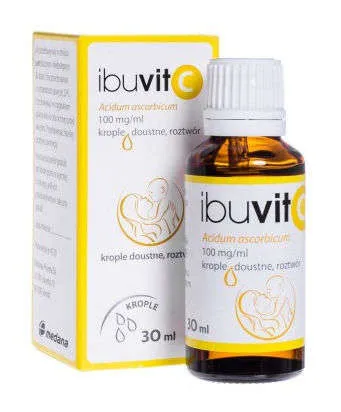
Table of Contents
Patient Information Leaflet
Ibuvit C, 100 mg/ml, oral drops, solution
Acidum ascorbicum
(Vitamin C)
Please read all of this leaflet carefully before taking this medicine, because it contains
important information for you.
This medicine should always be used exactly as described in this patient leaflet or as directed by
your doctor or pharmacist.
- Keep this leaflet so that you can read it again if necessary.
- If you need advice or further information, please consult your pharmacist.
- If you experience any side effects, including any not listed in this leaflet, tell your doctor or pharmacist. See section 4.
- If your symptoms do not improve or if you feel worse, consult your doctor.
Table of contents
- What Ibuvit C is and what it is used for
- Important information before taking Ibuvit C
- How to take Ibuvit C
- Possible side effects
- How to store Ibuvit C
- Contents of the pack and other information
1. What Ibuvit C is and what it is used for
Ibuvit C oral drops contain ascorbic acid (vitamin C) as the active substance.
This formulation is particularly recommended for infants and children, as it facilitates the accurate administration of vitamin C.
Vitamin C is a water-soluble vitamin. It is easily degraded by various external factors, such as light, high temperature, and oxygen present in the air.
Vitamin C is involved in the formation of various body tissues (including cartilage, bones, and teeth), and also affects wound healing, bone fracture repair, and immune system function.
Ibuvit C is used for the prevention and treatment of vitamin C deficiency states, in cases where an appropriate diet alone is insufficient.
2. Information before using Ibuvit C
When not to use Ibuvit C:
- if the patient is allergic to vitamin C or any of the other ingredients of this medicine (listed in section 6);
- if the patient has oxalate kidney stones;
- if the patient has increased iron levels in the body due to, for example, excessive iron intake (hemochromatosis), sickle cell anemia, quantitative hemoglobin synthesis disorders (thalassemia), or poisoning with iron-containing products.
Warnings and precautions
Before starting treatment with Ibuvit C, consult your doctor or pharmacist.
Special caution should be exercised when using Ibuvit C prior to laboratory tests.
High-dose vitamin C may interfere with the results of certain laboratory tests, such as blood and urine glucose or creatinine measurements.
Ibuvit C and other medicines
Inform your doctor or pharmacist about all medicines currently used, recently used, or planned to be used.
Consult your doctor when using Ibuvit C simultaneously with:
- iron-containing products. Vitamin C significantly enhances the gastrointestinal absorption of iron ions, especially in individuals with low iron levels in the body;
- deferoxamine (a drug used in iron poisoning). In patients with increased iron levels receiving deferoxamine in combination with vitamin C, increased iron toxicity may occur in the initial stages of treatment;
- acetylsalicylic acid. High doses of acetylsalicylic acid reduce the absorption of vitamin C;
- vitamin E. Vitamin C enhances the antioxidant effect of vitamin E;
- paracetamol. Ascorbic acid prolongs the half-life of paracetamol;
- tricyclic antidepressants, phenothiazine derivatives (medicines used in the treatment of psychiatric disorders), and aminoglycoside antibiotics (e.g., streptomycin). Ascorbic acid used in doses exceeding 1 g daily may reduce their therapeutic effectiveness.
Ibuvit C with food and drink
Ibuvit C can be taken with food and drink. In children, it is recommended to dissolve the appropriate dose of Ibuvit C in water, tea, or juice, or to add it to food.
Pregnancy and breastfeeding
If the patient is pregnant or breastfeeding, suspects she may be pregnant, or is planning to have a child, she should consult her doctor or pharmacist before using this medicine.
Pregnancy
The recommended daily intake of vitamin C for pregnant women (including vitamin intake from food) is 80 mg (corresponding to 16 drops of Ibuvit C).
Breastfeeding
The recommended daily intake of vitamin C for breastfeeding women (including vitamin intake from food) is 100 mg (corresponding to 20 drops of Ibuvit C). Vitamin C passes into breast milk. Excessive doses taken by the mother during breastfeeding may increase the risk of vitamin C overdose in the infant.
Driving and operating machinery
Ibuvit C has no effect on the ability to drive or operate machinery.
3. How to use Ibuvit C
This medicine should always be taken exactly as described in the patient information leaflet or as advised by a doctor or pharmacist. In case of doubt, consult a doctor or pharmacist.
The medicine should be taken orally once daily or in divided doses, preferably during meals.
For children, it is recommended to dissolve the appropriate dose of Ibuvit C in water, tea, or juice, or to add it to food. The medicine should not be administered directly from the container (bottle) into the child's mouth.
Use in children and adolescents
In children under 3 years of age, this medicine should only be given after consultation with a doctor.
Recommended dose of Ibuvit C (unless otherwise advised by a doctor):
- in infants and children up to 2 years of age: 5 to 8 drops per day, added to a drink or food;
- in children from 2 to 11 years of age: 10 drops per day;
- in adolescents from 12 to 17 years of age: 15 to 20 drops per day.
Use of higher than recommended dose of Ibuvit C
Taking a higher than recommended dose of Ibuvit C is practically not associated with risk of adverse effects. Large doses of vitamin C are rapidly excreted unchanged in urine.
If you have any further doubts regarding the use of this medicine, consult a doctor or pharmacist.
4. Possible adverse reactions
Like any medicine, this product may cause adverse reactions, although not everyone experiences them.
The medicine is well tolerated when used at the recommended doses. Adverse reactions
are associated with the use of high doses of vitamin C (above 1,000 mg = 200 drops
per day).
Administration of high doses of vitamin C in individuals with glucose-6-phosphate dehydrogenase deficiency
(a rare hereditary disorder) may lead to erythrocyte haemolysis (red blood cells).
When oral daily doses of vitamin C of 1 g or higher are administered, gastrointestinal disturbances may occur,
e.g. diarrhoea.
High-dose vitamin C may cause excessive urinary excretion of oxalate, leading to crystallization of oxalates and citrates,
increasing the risk of kidney stone formation in the urinary tract.
Prolonged use of high doses may lead to the development of tolerance, which after discontinuation of the medicine
may manifest as vitamin C deficiency in the body.
Reporting of adverse reactions
If any adverse symptoms occur, including any adverse effects not listed in this leaflet, inform your doctor or pharmacist.
Adverse reactions can be reported directly to the Department of Monitoring Adverse Drug Reactions of the Office for Registration of Medicinal Products, Medical Devices and Biocidal Products
Al. Jerozolimskie 181C
02-222 Warsaw
Phone: +48 22 49 21 301
Fax: +48 22 49 21 309
Website: https://smz.ezdrowie.gov.pl
Adverse reactions can also be reported to the marketing authorization holder.
Reporting adverse reactions helps to provide more information on the safety of the medicine.
5. How to store Ibuvit C
Keep the medicine out of the sight and reach of children.
Do not store above 25°C.
Store in the original packaging to protect from light.
Keep the bottle tightly closed.
After opening the bottle, the product remains stable for at least 6 months, provided it is stored
as recommended.
Do not use this medicine after the expiry date stated on the packaging. The expiry date refers to the last day of the stated month.
Medicines must not be disposed of via wastewater or household waste. Ask your pharmacist how to dispose of medicines no longer required. Such measures will help protect the environment.
6. Contents of the pack and other information
What Ibuvit C contains
- The active substance is ascorbic acid. Each ml contains 100 mg of ascorbic acid. Each drop contains 5 mg of ascorbic acid.
- The other ingredients are: glycerol, purified water.
What Ibuvit C looks like and contents of the pack
30 ml solution in a brown glass bottle closed with a screw cap with dropper, in a cardboard box.
Marketing Authorisation Holder
Zakłady Farmaceutyczne POLPHARMA S.A.
ul. Pelplińska 19, 83-200 Starogard Gdański
tel. + 48 22 364 61 01
Manufacturer
Zakłady Farmaceutyczne POLPHARMA S.A.
Medana Branch in Sieradz
ul. Władysława Łokietka 10, 98-200 Sieradz