Iberogast
Poland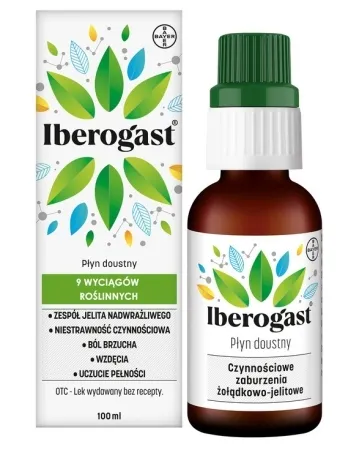
Table of Contents
Package leaflet: Information for the patient
Warning! Keep the leaflet! Information on the immediate packaging is in a foreign language.
Iberogast, oral liquid
Please read the entire leaflet carefully before use, as it contains
important information for the patient.
This medicine should always be used exactly as described in the patient leaflet or
as directed by a physician or pharmacist.
- Keep this leaflet, as you may need to read it again.
- If you need advice or further information, please consult your pharmacist.
- If you experience any adverse reactions, including any possible side effects not listed in this leaflet, inform your doctor or pharmacist. See section 4.
- If there is no improvement after 7 days, or if your condition worsens, consult your doctor.
Table of contents of the leaflet
- What is Iberogast and for what is it used
- Important information before taking Iberogast
- How to take Iberogast
- Possible side effects
- How to store Iberogast
- Contents of the pack and other information
1. What is Iberogast and for what is it used
Iberogast is a herbal medicine used to treat functional gastrointestinal disorders related to gastrointestinal motility (transit), such as functional dyspepsia (indigestion) or irritable bowel syndrome. These disorders are mainly characterized by cramping abdominal and intestinal discomfort, abdominal pain, bloating, nausea, and heartburn.
Iberogast helps relieve bloating and the sensation of fullness, and reduces spasms in the stomach and intestines. It exhibits anti-inflammatory, carminative, antioxidant, and antibacterial properties.
2. Important information before using Iberogast
When not to use Iberogast
If the patient is allergic to any of the ingredients of this medicine.
It is not recommended for children under 6 years of age. In children under 6 years of age, any abdominal pain should be discussed with a doctor.
If the patient has or has previously had liver disease, or if the patient is taking medicines which – according to the patient leaflet – may cause adverse effects in the form of liver damage. If in doubt, consult a doctor or pharmacist.
Warnings and precautions
If the patient develops yellowing of the skin or eyes, dark urine, pale stools, or upper abdominal pain, Iberogast should be discontinued immediately and medical advice should be sought. These may be symptoms of liver damage.
Patients with diagnosed liver disease should consult a doctor before starting treatment with Iberogast.
If there is no improvement after 7 days, or if the patient feels worse, medical advice should be sought to exclude other serious conditions.
Iberogast with other medicines
Inform your doctor or pharmacist about all medicines the patient is currently taking or has recently taken, as well as any medicines the patient plans to take.
Interactions are not known.
Iberogast and alcohol
Due to its alcohol content, Iberogast is not intended and should not be used in patients with alcohol-related disorders.
Iberogast contains ethanol (alcohol) at a volume concentration of approximately 31%. A single adult dose (20 drops) contains up to 240 mg of ethanol, equivalent to approximately 6.2 ml of beer or 2.6 ml of wine per dose.
Children and patients at high risk, including those with liver disease or epilepsy, should consult a doctor before using Iberogast.
Pregnancy and breastfeeding
If the patient is pregnant or breastfeeding, suspects she may be pregnant, or is planning to have a baby, she should consult a doctor or pharmacist before using this medicine.
As a precautionary measure, it is recommended to avoid using Iberogast during pregnancy.
Driving and operating machinery
A single adult dose contains up to 240 mg of alcohol (ethanol). When used as directed, Iberogast should not have a significant effect on the ability to drive or operate machinery (see section "Iberogast and alcohol").
3. How to take Iberogast
This medicine should always be taken exactly as described in this patient information leaflet or as
advised by your doctor or pharmacist. If in doubt, consult your doctor or pharmacist.
Instructions for first use of the dropper
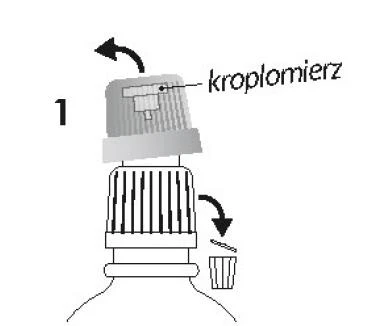
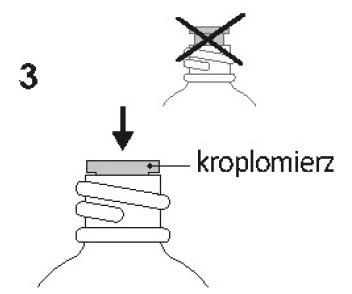
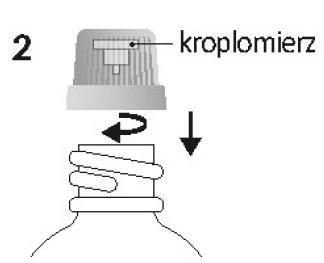
Unscrew the white-green Screw the green cap onto Make sure the dropper is
cap and discard its white the bottle tightly to secure properly inserted.
part. the dropper.
When dosing, hold the bottle with the dropper at a 45° angle. After use, close tightly with the green
cap.
For oral use.
Unless otherwise advised by a doctor, Iberogast should be taken diluted in a small amount of liquid,
before or during meals.
The recommended dose of Iberogast is:
- adults and adolescents over 12 years of age: 20 drops three times daily,
- children from 6 to 12 years of age: 15 drops three times daily,
- children under 6 years of age: not recommended.
Duration of use:
If symptoms do not improve after 7 days of treatment, consult your doctor to determine their cause.
Shake well before use.
The presence of sediment or cloudiness does not affect the efficacy of Iberogast liquid.
Use of a higher than recommended dose of Iberogast
There are no reports of acute overdose. However, the alcohol content should generally be taken into
consideration.
Accidentally taking one or two extra doses of Iberogast, i.e. a total of 40 to 60 drops, usually does not
lead to negative consequences. In case of ingestion of significantly larger amounts, seek medical
advice from a doctor or pharmacist.
Missed dose of Iberogast
If a dose of Iberogast is missed, wait until the next scheduled dose and take the dose as prescribed
by your doctor or as stated in this leaflet under "Dosage".
Do not take a double dose to make up for a missed dose.
4. Possible adverse reactions
Like all medicines, this product may cause adverse reactions, although not everybody experiences them.
In very rare cases (less than 1 in 10,000) hypersensitivity reactions may occur, such as skin reactions, itching, or shortness of breath.
Frequency not known: cases of liver injury (elevated liver function test values, drug-induced jaundice, hepatitis, and liver failure) have been reported. If symptoms such as yellowing of the skin or eyes, dark urine, or pale stools occur, administration of Iberogast should be discontinued immediately and a doctor should be consulted without delay.
Reporting of adverse reactions
If any adverse reactions occur, including any adverse reactions not listed in the leaflet, inform a doctor or pharmacist. Adverse reactions can be reported directly to the Department of Monitoring Adverse Drug Reactions at the Office for Registration of Medicinal Products, Medical Devices and Biocidal Products, Al. Jerozolimskie 181 C, 02-222 Warsaw, phone: +48 22 49 21 301, fax: +48 22 49 21 309, website: https://smz.ezdrowie.gov.pl.
Reporting adverse reactions enables the collection of further information on the safety of the medicine.
5. How to store Iberogast
Store below 25°C.
Keep out of sight and reach of children.
Do not use this medicine after the expiry date stated on the packaging. The expiry date refers to the last day of the stated month.
Shelf-life after first opening of the immediate packaging: 8 weeks.
Medicines must not be disposed of via wastewater or household waste. Ask your pharmacist how to dispose of medicines no longer required. This will help protect the environment.
6. Contents of the pack and other information
What Iberogast contains
100 ml of liquid contains:
Iberis amara herbae extractum (extract of bitter candytuft herb) (1:1.5 – 2.5) 15.0 ml
extraction solvent – ethanol 50% (v/v)
Angelicae radicis extractum (extract of angelica root) (1:2.5 – 3.5) 10.0 ml
extraction solvent – ethanol 30% (v/v)
Matricariae flos extractum (extract of chamomile flower) (1:2 – 4) 20.0 ml
extraction solvent – ethanol 30% (v/v)
Carvi fructus extractum (extract of caraway fruit) (1:2.5 – 3.5) 10.0 ml
extraction solvent – ethanol 30% (v/v)
Silybi mariani fructus extractum (extract of milk thistle fruit) (1:2.5 – 3.5) 10.0 ml
extraction solvent – ethanol 30% (v/v)
Melissae folii extractum (extract of lemon balm leaf) (1:2.5 – 3.5) 10.0 ml
extraction solvent – ethanol 30% (v/v)
Menthae piperitae folii extractum (extract of peppermint leaf) (1:2.5 – 3.5) 5.0 ml
extraction solvent – ethanol 30% (v/v)
Chelidonii herbae extractum (extract of greater celandine herb) (1:2.5 – 3.5) 10.0 ml
extraction solvent – ethanol 30% (v/v)
Liquiritiae radicis extractum (extract of licorice root) (1:2.5 – 3.5) 10.0 ml
extraction solvent – ethanol 30% (v/v)
Iberogast contains 29.5 – 32.6% (v/v) ethanol.
What Iberogast looks like and contents of the pack
A dark glass bottle with a dropper applicator and screw cap, in a cardboard box.
The pack contains 20 ml of Iberogast liquid.
For more detailed information, please contact the responsible party or the parallel importer.
Responsible party in Bulgaria, country of export:
Bayer Bulgaria EOOD
5 Rezbarska Str.
1510 Sofia
Bulgaria
Manufacturer:
Steigerwald Arzneimittelwerk GmbH
Havelstrasse 5
64295 Darmstadt
Germany
Parallel importer:
InPharm Sp. z o.o.
ul. Strumykowa 28/11
03-138 Warsaw
Poland
Repackaged in:
Pharma Innovations Sp. z o.o.
ul. Jagiellońska 76
03-301 Warsaw
Poland
InPharm Sp. z o.o. Services sp. k.
ul. Chełmżyńska 249
04-458 Warsaw
Poland
Marketing authorization number in Bulgaria, country of export: 20060714
Parallel import authorization number: 1/19