Chlorprothixen hasco
Poland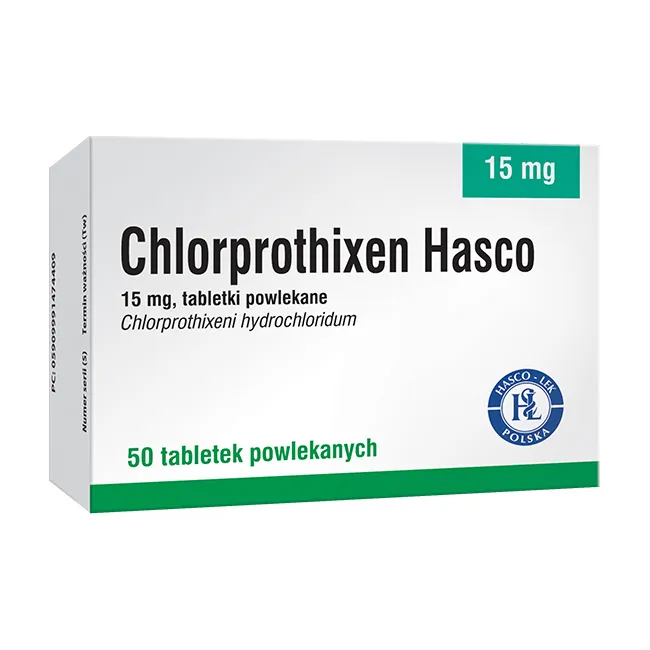
Table of Contents
Package leaflet: Information for the patient
CHLORPROTHIXEN HASCO, 15 mg, film-coated tablets
CHLORPROTHIXEN HASCO, 50 mg, film-coated tablets
Chlorprothixeni hydrochloridum
Please read carefully the entire leaflet before using the medicine, as it contains
important information for the patient.
- Keep this leaflet, so that you can read it again if necessary.
- If you have any doubts, please consult your doctor or pharmacist.
- This medicine has been prescribed for a specific individual. Do not pass it on to others. The medicine may harm another person, even if their symptoms are identical.
- If any adverse reactions occur in the patient, including any possible adverse reactions not listed in this leaflet, inform your doctor or pharmacist. See section 4.
Contents of the leaflet
- What Chlorprothixen Hasco is and what it is used for
- Important information before taking Chlorprothixen Hasco
- How to take Chlorprothixen Hasco
- Possible side effects
- How to store Chlorprothixen Hasco
- Contents of the package and other information
1. What Chlorprothixen Hasco is and what it is used for
Chlorprothixen Hasco is a medicine with strong sedative properties, weak antipsychotic and
anti-manic effects, slight antidepressant activity. It also has antihistaminic and antiemetic actions.
In small doses, it exhibits anxiolytic effects. It does not cause fatigue or drowsiness. It potentiates the effects of alcohol, hypnotics, and anesthetic agents. It lowers body temperature.
It is indicated in the treatment of endogenous and organic psychoses with states of motor agitation and aggressiveness, anxiety and insomnia in neuroses and psychosomatic disorders, alcoholic psychoses, and also in surgery for premedication to calm the patient, reduce neuropsychovagal reactions, and prevent postoperative vomiting.
2. Important information before using Chlorprothixen Hasco
When not to use Chlorprothixen Hasco:
- if the patient is allergic (hypersensitive) to the active substance, other thioxanthene derivatives, or any of the other ingredients of this medicine (listed in section 6);
- if the patient has circulatory collapse, disturbances of consciousness regardless of cause (e.g. alcohol, barbiturate or opioid poisoning), coma;
- if the patient has previously experienced cardiovascular disorders (e.g. slow heart rate - bradycardia, recent acute myocardial infarction, cardiac arrhythmias, hypertrophy of the heart muscle), tachycardia with torsade de pointes );
- if the patient has prolonged QT interval (visible on ECG);
- if the patient is taking medicines that prolong the QT interval;
1/8
- if the patient has hypokalaemia (low potassium blood levels) or hypomagnesaemia (low magnesium blood levels).
Warnings and precautions
Before starting treatment with Chlorprothixen Hasco, discuss this with your doctor or
pharmacist.
Particular caution is required when using the medicine in certain medical conditions.
Therefore, inform your doctor about all existing diseases.
Special caution is required when administering the medicine to patients with:
- phaeochromocytoma,
- prolactin-dependent tumour,
- severe hypotension or orthostatic hypotension (related to change in body position to upright),
- Parkinson's disease,
- circulatory system disorders,
- hyperthyroidism,
- urinary disorders, urinary retention,
- pyloric stenosis, intestinal obstruction,
- alcoholism or abuse of opioids or central nervous system depressants (sedatives);
- severe respiratory disorders (e.g. pneumonia, asthma, pulmonary emphysema),
- risk factors for stroke (applies to elderly patients),
- exposed to extreme temperatures or during electroconvulsive therapy;
- history of cardiovascular disease or history of prolonged QT interval.
As with other neuroleptic medicines, caution is required when using chlorprothixene in patients with:
- organic brain damage,
- intellectual disability,
- epilepsy,
- severe liver, kidney and (or) heart function disorders,
- myasthenia gravis (a disease characterised by muscle weakness),
- benign prostatic hyperplasia,
- diabetes mellitus (chlorprothixene may affect insulin and glucose blood levels, requiring adjustment of antidiabetic treatment).
Neuroleptic Malignant Syndrome
When using any neuroleptic medicine, there is a risk of developing neuroleptic malignant syndrome, characterised by symptoms such as: high fever, muscle rigidity, altered mental status, autonomic instability.
Glaucoma
In patients with the rare condition of shallow anterior chamber of the eye and narrow filtration angle, acute attacks of glaucoma may occur due to pupillary dilation.
Venous thromboembolic disease
Particular caution is required if the patient or a family member has a history of venous thrombosis, as use of antipsychotic medicines (medicines used to treat behavioural disorders) is associated with thrombus formation.
Priapism
Cases of priapism (prolonged, usually painful erection, which may require surgical treatment) have been reported during use of antipsychotic medicines. Chlorprothixen Hasco belongs to the group of antipsychotic medicines, and therefore, the risk of priapism cannot be excluded after its use. The doctor should be informed immediately if the patient experiences prolonged or painful erection. Immediate medical intervention may be necessary.
Chlorprothixene may cause false positive results in immunological urine pregnancy tests and urine tests for bilirubin.
Children and adolescents
Use of Chlorprothixen Hasco is not recommended in children and adolescents.
Elderly patients
Caution should be exercised when using chlorprothixene in this patient group. Elderly patients are particularly susceptible to orthostatic hypotension (low blood pressure related to change in body position to upright).
Chlorprothixene is not intended for the treatment of behavioural disorders associated with dementia. In elderly patients with dementia, an increased incidence of cerebrovascular adverse events has been observed.
Chlorprothixen Hasco with other medicines
Inform your doctor or pharmacist about all medicines currently used, recently used, or planned for use.
In particular, inform your doctor about the use of the following medicines:
- medicines that lower blood pressure (e.g. guanethidine and similar medicines);
- antidepressants (e.g. tricyclics);
- medicines causing drowsiness (barbiturates and similar medicines);
- medicines used to treat epilepsy (neuroleptics and lithium compounds);
- medicines used to treat Parkinson's disease (levodopa and similar medicines);
- medicines used to treat galactorrhoea (e.g. bromocriptine) – the doctor may adjust the dosage if necessary.
The following medicines should not be taken simultaneously with Chlorprothixen Hasco:
- medicines affecting heart function (e.g. quinidine, amiodarone, sotalol, dofetilide, erythromycin, terfenadine, astemizole, gatifloxacin, moxifloxacin, cisapride, lithium);
- other antipsychotic medicines (e.g. thioridazine).
Avoid using:
- medicines disturbing water-electrolyte balance (e.g. thiazide diuretics);
- medicines known to increase chlorprothixene blood levels (e.g. paroxetine, fluoxetine, chloramphenicol, disulfiram, isoniazid, MAO inhibitors, oral contraceptives, buspirone, sertraline, citalopram).
The risk of extrapyramidal symptoms (e.g. movement retardation, facial expression disturbances, muscle rigidity due to increased muscle tone, tremor) increases when used concomitantly with:
- metoclopramide (an antiemetic medicine);
- phenothiazine derivatives, haloperidol or reserpine (antipsychotic medicines);
- piperazine (an antiparasitic medicine acting against pinworms and roundworms).
Consumption of alcohol, use of sleeping pills, antidepressants, anticonvulsants, analgesics, muscle relaxants, neuroleptics, antihistamines (medicines used to treat allergies) together with chlorprothixene may intensify the central nervous system depressant effect.
3/8
The risk of intensified anticholinergic effects (pupil dilation, dry mouth, bronchodilation, slowed intestinal peristalsis, hallucinations) increases when used concomitantly with medicines:
- used to treat urinary disorders, e.g. overactive bladder (antimuscarinic, anticholinergic medicines);
- used to treat allergies (antihistamines);
- used to treat Parkinson's disease.
Concomitant use of adrenaline with chlorprothixene increases the risk of hypotension (low blood pressure, manifesting e.g. as dizziness) and tachycardia (rapid heartbeat).
Chlorprothixene may reduce or abolish the alcohol-disulfiram reaction.
Thioxanthenes may mask toxic effects of other medicines on the auditory organ (tinnitus, dizziness, etc.).
Chlorprothixen Hasco with food, drink and alcohol
Tablets should be taken with food and swallowed whole, with a glass of water or milk, to avoid stomach irritation.
Chlorprothixene may intensify the sedative effect of alcohol. Alcohol should not be consumed during treatment with this medicine.
Pregnancy and breastfeeding
If the patient is pregnant, breastfeeding, suspects she may be pregnant, or plans to become pregnant, she should consult a doctor before using this medicine.
The safety of using the medicine during pregnancy has not been confirmed. The medicine should not be used during pregnancy unless the expected benefit to the mother outweighs the risk to the foetus.
Newborns whose mothers used antipsychotic medicines (including chlorprothixene) during the third trimester (last 3 months of pregnancy) may experience the following symptoms: tremor, muscle stiffness and (or) weakness, drowsiness, agitation, breathing difficulties, and feeding problems. If any of these symptoms occur in the newborn, contact a doctor.
Chlorprothixene passes into breast milk in small amounts. It is not expected that the medicine administered in therapeutic doses would affect the infant. However, since chemically similar compounds may affect the child, breastfeeding may be continued if clinically significant, but observation of the infant, especially during the first 4 weeks after birth, is recommended.
Driving and operating machinery
The medicine may adversely affect activities requiring increased attention, motor coordination and rapid decision-making (e.g. driving a car, operating machinery, working at heights), particularly at the beginning of treatment. Therefore, such activities should only be performed after obtaining the doctor's approval.
The medicine contains monohydrate lactose
If the patient has previously been diagnosed with intolerance to certain sugars, the patient should contact the doctor before taking the medicine.
The medicine contains azo dyes
Chlorprothixen Hasco, 15 mg contains Sunset Yellow, aluminium lake (E 110).
Chlorprothixen Hasco, 50 mg contains Carmoisine Red, aluminium lake (E 124).
4/8
The medicine may cause allergic reactions.
3. How to use Chlorprothixen Hasco
This medicine should always be used according to the doctor's instructions. In case of doubt, consult the doctor.
Dosage should be individually adjusted depending on indications and patient tolerance.
Neuroses: the usual recommended dose is 15 mg once to three times daily.
Psychotic disorders: the usual dose is 50 mg to 100 mg two to four times daily. The daily dose should be divided so that the larger dose is administered before bedtime.
Premedication: dosage is individually determined by the doctor for each patient.
Use in children and adolescents
Use of chlorprothixene is not recommended in children and adolescents.
Coated tablets should be taken with food and swallowed whole, with a glass of water or milk, to avoid stomach irritation.
Use of a higher than recommended dose of Chlorprothixen Hasco
The most likely symptoms of overdose are drowsiness, coma, convulsions, shock, movement disorders, significantly increased or decreased body temperature, respiratory depression, low blood pressure, which may appear several hours after administration and last from 2 to 3 days. In severe cases, kidney damage may occur. As these symptoms subside, convulsive seizures, excessive motor activity and haematuria may occur.
Cardiac arrhythmias or cardiac arrest have also occurred when the medicine was administered in excessive doses in combination with other medicines known to affect the heart.
The doctor will administer symptomatic and life-supporting treatment: gastric lavage (as soon as possible after administration), activated charcoal, respiratory and cardiovascular support.
If neuroleptic malignant syndrome occurs, characterised by symptoms such as: high fever, muscle rigidity, altered mental status, autonomic instability, the medicine should be discontinued. The doctor will administer symptomatic and life-supporting treatment.
In case of overdose or accidental ingestion by a child, contact a doctor immediately.
Missed dose of Chlorprothixen Hasco
Take the missed dose as soon as possible. If the time for the next dose is approaching, do not take the missed dose.
Do not take a double dose to make up for a missed dose.
Stopping treatment with Chlorprothixen Hasco
Sudden discontinuation of chlorprothixene may be accompanied by withdrawal symptoms.
These most commonly include nausea, vomiting, loss of appetite, diarrhoea, watery nasal discharge, sweating, muscle pain, paresthesia, insomnia, restlessness, anxiety and agitation. Patients may also experience dizziness, increased sensation of heat or cold, and tremor. Symptoms usually begin 1 to 4 days after discontinuation and gradually subside over 7–14 days.
5/8
4. Possible adverse reactions
Like any medicine, this medicine can cause adverse reactions, although not everyone will experience them.
The risk of developing adverse reactions increases with long-term use of high
doses of chlorprothixene. This risk is higher in children and elderly patients.
The adverse reactions listed below may occur and are categorized by frequency:
Very common (may occur in more than 1 in 10 people): drowsiness, dizziness, dry mouth, increased salivation.
Common (may occur in no more than 1 in 10 people): increased appetite, insomnia, nervousness, restlessness, agitation, decreased libido, headache, dystonia (involuntary movements causing twisting or bending of various body parts), eye accommodation disorders, visual disturbances, rapid heartbeat (especially after sudden discontinuation of treatment), palpitations (pounding heart), orthostatic hypotension (including dizziness, usually occurring after sudden standing), constipation, indigestion, nausea, excessive sweating, muscle pain, chronic weakness, fatigue, weight gain.
Uncommon (may occur in no more than 1 in 100 people): decreased appetite, akathisia (inability to remain still), tardive dyskinesia (involuntary, uncoordinated muscle movements, especially of the face), parkinsonism, seizures, oculogyric crisis (episodes of forced upward gaze with eye rotation), arterial hypotension, hot flushes, vomiting, diarrhoea, rash, itching, photosensitivity, skin inflammation, muscle stiffness, urinary disorders, urinary retention, ejaculation disorders, erectile dysfunction, weight loss, abnormal liver function test results.
Rare (may occur in no more than 1 in 1000 people): thrombocytopenia (reduced number of platelets), leukopenia, neutropenia (reduced number of white blood cells), agranulocytosis (reduced number or absence of granulocytes in blood), hypersensitivity, anaphylactic reaction, increased blood prolactin levels, increased blood glucose levels, impaired glucose tolerance, epileptic-like seizures, QT interval prolongation on ECG, ventricular arrhythmias – ventricular fibrillation, ventricular tachycardia, torsade de pointes, sudden unexplained death, nasal inflammation, dyspnoea, skin redness, rash, excessive breast gland tissue growth in males (gynaecomastia), galactorrhea, menstrual disorders, disturbances in body temperature regulation.
Very rare (may occur in no more than 1 in 10,000 people): reduced number of red blood cells (hemolytic anemia), thrombocytopenic purpura, pancytopenia (deficiency of all normal blood cells), eosinophilia, neuroleptic malignant syndrome (extremely high fever, increased muscle rigidity, akinesia, coma), cardiac arrest, bradycardia, venous thromboembolic disease, asthma, laryngeal edema, jaundice, lupus-like syndrome (autoimmune inflammatory syndrome affecting skin, joints and internal organs), increased urinary uric acid concentration.
After many years of treatment with high doses, pigmentary retinopathy, lens opacities, and corneal deposits may occur.
Frequency not known (cannot be estimated from available data)
withdrawal syndrome in newborns, venous thrombosis (especially in legs: swelling, pain and redness), which may travel through blood vessels to the lungs, causing chest pain and breathing difficulties. If any of these symptoms occur, contact a doctor immediately.
6/8
Priapism (prolonged, painful penile erection), which may lead to erectile dysfunction, has been reported during treatment with antipsychotic medicines.
Reporting of adverse reactions
If any adverse reactions occur, including any not listed in this leaflet, inform your doctor, pharmacist or nurse. Adverse reactions can be reported directly to the Department of Monitoring Adverse Drug Reactions of the Office for Registration of Medicinal Products, Medical Devices and Biocidal Products:
Al. Jerozolimskie 181C, 02-222 Warsaw,
tel.: 22 49-21-301, fax: 22 49-21-309,
Website: https://smz.ezdrowie.gov.pl
Adverse reactions can also be reported to the marketing authorization holder.
Reporting adverse reactions helps provide more information on the safety of this medicine.
5. How to store Chlorprothixen Hasco
Keep this medicine out of sight and reach of children.
Store below 25°C. Keep in the original packaging to protect from light.
Do not use this medicine after the expiry date stated on the container. The expiry date refers to the last day of the stated month.
Medicines must not be disposed of via the sewage system or household waste. Ask your pharmacist how to dispose of medicines no longer required. This will help protect the environment.
6. Contents of the pack and other information
What Chlorprothixen Hasco contains
- The active substance is chlorprothixine hydrochloride. Each coated tablet contains either 15 mg or 50 mg of chlorprothixine hydrochloride.
- Other ingredients are: monohydrate lactose, microcrystalline cellulose, sodium carboxymethylstarch (type A), maize starch, pregelatinized, colloidal anhydrous silica, magnesium stearate.
Composition of the coating
Chlorprothixen Hasco, 15 mg (Opadry II Orange, 85F23368):
polyvinyl alcohol, talc, macrogol 3350, titanium dioxide (E 171), quinoline yellow, aluminium lake (E 104), orange yellow, aluminium lake (E 110).
Chlorprothixen Hasco, 50 mg (Opadry II Yellow, 85F32879):
polyvinyl alcohol, talc, macrogol 3350, titanium dioxide (E 171), quinoline yellow, aluminium lake (E 104), carmine red, aluminium lake (E 124).
What Chlorprothixen Hasco looks like and contents of the pack
Chlorprothixen Hasco, 15 mg: orange, round, biconvex coated tablets with bevelled edges.
Chlorprothixen Hasco, 50 mg: yellow, round, biconvex coated tablets with bevelled edges.
7/8
Pack size: 50 coated tablets
Marketing Authorisation Holder and Manufacturer
"PRZEDSIĘBIORSTWO PRODUKCJI FARMACEUTYCZNEJ HASCO-LEK" S.A.
51-131 Wrocław, ul. Żmigrodzka 242 E
Medicinal product information
tel.: 22 742 00 22
e-mail: [email protected]
8/8