Haemate p 250 j.m. fviii/600 j.m. vwf
PolandTable of Contents
- PACKAGE LEAFLET - INFORMATION FOR THE USER
- 1. WHAT HAEMATE P IS AND WHAT IT IS USED FOR
- 2. IMPORTANT INFORMATION BEFORE USING HAEMATE P
- 3. HOW TO USE HAEMATE P
- 4. POSSIBLE ADVERSE REACTIONS
- 5. HOW TO STORE HAEMATE P
- 6. CONTENTS OF THE PACKAGE AND OTHER INFORMATION
- Information intended exclusively for healthcare professionals:
PACKAGE LEAFLET - INFORMATION FOR THE USER
Haemate P 250 IU FVIII/600 IU VWF
Haemate P 500 IU FVIII/1200 IU VWF
Haemate P 1000 IU FVIII/2400 IU VWF
Powder and solvent for solution for injection or infusion
Human coagulation factor VIII (FVIII) / Human von Willebrand factor (VWF)
Please read this leaflet carefully before using the medicine, as it contains important information for the patient.
- Keep this leaflet, so that you can read it again if necessary.
- If you have any further questions, please consult your doctor or pharmacist.
- This medicine has been prescribed for a specific individual. Do not pass it on to others. The medicine may harm another person, even if their symptoms are the same.
- If you experience any adverse effects, including any not listed in this leaflet, tell your doctor or pharmacist. See section 4.
Table of contents:
- What Haemate P is and what it is used for
- Important information before using Haemate P
- How to use Haemate P
- Possible side effects
- How to store Haemate P
- Contents of the pack and other information
1. WHAT HAEMATE P IS AND WHAT IT IS USED FOR
What Haemate P is
Haemate P is supplied as a powder and solvent. The prepared solution is administered intravenously by injection or infusion.
Haemate P is manufactured from human plasma (the liquid component of blood) and contains human von Willebrand factor and human coagulation factor VIII.
What Haemate P is used for
Haemate P contains both human coagulation factor VIII (FVIII) and von Willebrand factor (VWF). It is very important to know which factor the patient requires more. If the patient has haemophilia A, the doctor will prescribe Haemate P specifying the number of units of factor VIII. If the patient has von Willebrand disease, the doctor will prescribe Haemate P specifying the number of units of factor VWF.
Von Willebrand disease (VWD)
Haemate P is used for the prevention and treatment of bleeding, including bleeding during surgical procedures, caused by a deficiency of von Willebrand factor, when therapy with desmopressin (DDAVP) alone is ineffective or contraindicated.
Haemophilia A (congenital factor VIII deficiency)
Haemate P is used for the prevention or control of bleeding caused by a deficiency of factor VIII in the blood.
It may also be used in the treatment of acquired factor VIII deficiency and in patients with inhibitors (antibodies) against factor VIII.
2. IMPORTANT INFORMATION BEFORE USING HAEMATE P
The following sections contain information that should be considered before using Haemate P.
When NOT to use Haemate P:
- In case of hypersensitivity (allergy) to human von Willebrand factor or human coagulation factor VIII, or to any of the other components of this medicine (listed in section 6). If you are allergic to any medicine or food, inform your doctor.
Warnings and precautions
Traceability
It is strongly recommended that, for each administration of Haemate P, the name and batch number of the product be recorded in order to maintain a record of batches used.
Before starting treatment with Haemate P, discuss the following with your doctor or pharmacist:
- In case of allergic or anaphylactic-type reactions (a serious allergic reaction causing severe breathing difficulties or dizziness). As with any protein injection, hypersensitivity reactions may occur. Your doctor should inform you about early signs of hypersensitivity such as hives, generalized skin rash, chest tightness, wheezing, drop in blood pressure, and anaphylaxis (a serious allergic reaction causing severe breathing difficulties or dizziness). If such symptoms occur, administration of the medicine must be stopped immediately and you must contact your doctor.
- The development of inhibitors (antibodies) is a known complication that may occur during treatment with any factor VIII-containing product. These inhibitors, especially at high titres, may interfere with effective treatment, and the patient will be closely monitored for their development. If bleeding is not properly controlled with Haemate P, inform your doctor immediately.
- If you have existing heart disease or are at risk of developing it, inform your doctor or pharmacist.
- If a central venous access device (CVAD) is required for administration of Haemate P, your doctor should consider the risk of complications related to CVAD, including local infections, bacteraemia (bacteria in the blood), and thrombosis (blood clots) at the catheter site.
Von Willebrand disease
- In patients with known risk of thrombosis (blood clots), especially those with clinical or morphological risk factors (e.g. perioperative periods without antithrombotic prophylaxis, prolonged immobilization, obesity, overdose, or malignancy), Haemate P should be used with caution. In such cases, patients must be monitored for early signs of thrombosis. Prophylaxis against venous thromboembolism should be initiated in accordance with current guidelines.
Your doctor will carefully weigh the benefits of Haemate P treatment against the risk of such complications.
Viral safety
Medicines prepared from human blood or plasma include precautions to reduce the risk of transmitting infections. These include:
- Careful selection of blood and plasma donors to exclude those at risk of transmitting infections.
- Testing of each donation and plasma pools for the presence of viruses/infections.
- Incorporation of manufacturing steps that inactivate or remove viruses.
Despite these measures, the possibility of transmitting infection by medicines derived from human blood or plasma cannot be completely ruled out, especially with regard to unknown or newly emerging viruses and other pathogens.
The procedures used are considered effective against enveloped viruses such as human immunodeficiency virus (HIV, the virus that causes AIDS), hepatitis B virus, and hepatitis C virus (liver inflammation), as well as against the non-enveloped hepatitis A virus (liver inflammation).
For non-enveloped viruses such as parvovirus B19, the effectiveness of the procedures may be limited.
Parvovirus B19 infection may be dangerous:
- For pregnant women (risk of infection to the unborn child), and
- For individuals with compromised immune systems or increased red blood cell production due to certain types of anaemia (e.g. sickle cell anaemia or haemolytic anaemia).
For patients receiving regular or repeated treatment with products derived from human plasma containing von Willebrand factor and factor VIII, your doctor may recommend vaccination against hepatitis A and B.
Haemate P and other medicines
Tell your doctor or pharmacist about all medicines you are currently taking, have recently taken, or plan to take, including over-the-counter medicines.
- Haemate P must not be mixed with other medicines, solvents, or diluents.
Pregnancy, breastfeeding and fertility
- If you are pregnant or breastfeeding, think you may be pregnant, or are planning to have a child, consult your doctor or pharmacist before using this medicine.
- As haemophilia A is rare in women, data on the use of factor VIII during pregnancy and breastfeeding are limited.
- In von Willebrand disease, women are at greater risk than men due to additional bleeding risks associated with menstruation, pregnancy, delivery, childbirth, and gynaecological complications. Based on post-marketing experience, substitution therapy with von Willebrand factor (VWF) is recommended for the prevention and treatment of acute bleeding. Clinical studies on VWF replacement therapy in pregnant and breastfeeding women are not available.
- During pregnancy and breastfeeding, Haemate P should be administered only if clearly indicated.
Driving and operating machinery
There are no reports indicating that Haemate P impairs the ability to drive or operate machinery.
Haemate P contains sodium
Haemate P 250 IU FVIII/600 IU VWF contains less than 1 mmol of sodium (23 mg) per vial and can therefore be considered essentially "sodium-free".
Haemate P 500 IU FVIII/1200 IU VWF contains 26 mg of sodium (main component of table salt) per vial, equivalent to 1.3% of the recommended maximum daily sodium intake for an adult.
Haemate P 1000 IU FVIII/2400 IU VWF contains 52.5 mg of sodium (main component of table salt) per vial, equivalent to 2.6% of the recommended maximum daily sodium intake for an adult.
3. HOW TO USE HAEMATE P
Treatment should be initiated and managed under the supervision of a physician experienced in treating this type of disorder.
Dosage
The required amount of von Willebrand factor and factor VIII, as well as the duration of treatment, depends on several factors such as body weight, severity of the disorder, location and intensity of bleeding, or the need to prevent bleeding during surgery or a medical procedure (see section "Information intended exclusively for medical professionals"). If Haemate P has been prescribed for home use, the patient must be trained by a physician in the method of administering the injection and proper dosage.
Follow the instructions provided by your doctor or nurse at the hemophilia treatment center.
Use of a higher than recommended dose of Haemate P
Symptoms of overdose with VWF or FVIII are currently unknown. However, the risk of blood clots (thrombosis) cannot be excluded when exceptionally high doses are administered, particularly with VWF-containing products that have high FVIII content.
Reconstitution and method of administration
General information
- The powder must be mixed (reconstituted) with the solvent (liquid component) and withdrawn from the vial under aseptic conditions.
- The solution should be clear or slightly opalescent. After filtration/withdrawal (see below), the reconstituted product should be visually inspected for particles and discoloration prior to administration. Even when reconstitution procedures are strictly followed, the presence of a few fibrils or particles is not uncommon. The filter included in the Mix2Vial device completely removes these particles. Filtration does not affect dose calculations.
- Do not use solutions that are visibly cloudy or contain clumps or particles after filtration.
- Any unused portions of the product or waste material after administration must be disposed of in accordance with national regulations and physician recommendations.
Reconstitution
Without opening either vial, warm the Haemate P powder and solvent to room temperature by leaving them at room temperature for about one hour or by holding them in your hands for several minutes. DO NOT expose the vials to direct heat sources. Do not heat the vials above body temperature (37°C).
Carefully remove the protective caps from both the solvent vial and the Haemate P vial. Clean the exposed rubber stoppers of both vials with an alcohol swab and allow them to air dry. The solvent may then be transferred to the vial containing the powder using the provided Mix2Vial transfer set. Follow the instructions provided below.
1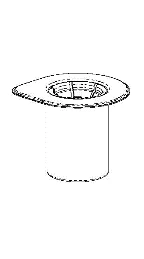 |
|
2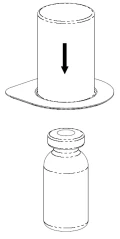 |
|
3 |
|
4 |
|
5 |
|
6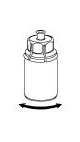 |
|
7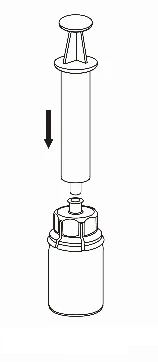 |
|
Collection and administration
8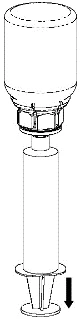 |
|
9 |
|
Method of administration
For Haemate P injection, the use of plastic disposable syringes is recommended, since solutions of this type tend to adhere to the surface of all glass syringes.
The solution should be administered slowly intravenously, at a rate not exceeding 4 ml per minute. Care should be taken to prevent blood from entering the syringe filled with the product. After drawing the product into the syringe, it should be used immediately.
If a larger amount of factor is required, administration may also be performed via infusion. For this purpose, the reconstituted product should be transferred to an approved infusion system. The infusion should be carried out according to the physician's instructions. Attention should be paid to the occurrence of any immediate reactions. In the event of any reaction possibly related to the administration of Haemate P, the injection/infusion should be discontinued (see also section 2).
If there are any further doubts regarding the use of this medicinal product, consult a physician or pharmacist.
4. POSSIBLE ADVERSE REACTIONS
Like all medicines, Haemate P may cause adverse reactions, although not everyone experiences them.
The following adverse reactions occurred very rarely (in less than 1 out of 10,000 patients):
- Acute allergic reaction (such as angioedema, burning and stinging sensation at the infusion site, chills, facial flushing, generalized urticaria, headache, skin allergic reaction (urticaria), hypotension, lethargy, nausea, restlessness, tachycardia, chest tightness, tingling, vomiting, wheezing), which occurred very rarely and in some cases may lead to acute anaphylaxis (including anaphylactic shock).
- Increase in body temperature (fever).
Von Willebrand disease
- Very rarely, there is a risk of thrombotic / thromboembolic events, including pulmonary embolism (risk of formation and migration of blood clots into the vascular system (veins/arteries) with potential organ involvement).
- In patients receiving VWF products, persistently elevated plasma levels of FVIII:C may increase the risk of thrombus formation (see also section 2).
- In patients with von Willebrand disease, inhibitors (neutralizing antibodies) against VWF may very rarely develop. If such inhibitors occur, they manifest as insufficient clinical response leading to prolonged bleeding. This occurs particularly in patients suffering from a specific form of von Willebrand disease, so-called type 3. These antibodies may precipitate and may appear in association with anaphylactic reactions. Therefore, patients who have experienced an anaphylactic reaction should be tested for the presence of inhibitors. In such cases, contact with a specialized hemophilia treatment center is recommended.
Hemophilia A
- In previously untreated children receiving factor VIII-containing medicinal products, blocking antibodies (see section 2) may develop very commonly (more than 1 in 10 patients). However, in patients who have previously been treated with factor VIII (more than 150 days of treatment), the risk is uncommon (less than 1 in 100 patients). If this occurs, the medicine may no longer work properly and the patient may experience persistent bleeding. If this occurs, contact the physician immediately.
Adverse reactions in children and adolescents
The frequency, type, and severity of adverse reactions in children are comparable to those in adults.
Reporting of adverse reactions
If any adverse effects occur, including any adverse effects not listed in this leaflet, inform your doctor, pharmacist, or nurse. Adverse reactions can be reported directly to the Department of Monitoring of Adverse Drug Reactions of the Office for Registration of Medicinal Products, Medical Devices and Biocidal Products:
Al. Jerozolimskie 181C
02-222 Warsaw
Phone: +48 22 49 21 301
Fax: +48 22 49 21 309
Website: https://smz.ezdrowie.gov.pl
Adverse reactions can also be reported to the marketing authorization holder.
Reporting of adverse reactions helps to provide more information on the safety of the medicine.
5. HOW TO STORE HAEMATE P
- Keep this medicine out of the sight and reach of children.
- Do not use this medicine after the expiry date stated on the label and carton (after the abbreviation EXP).
- Do not store above 25 o C.
- Do not freeze.
- Store the vials in the outer packaging to protect from light.
- Haemate P medicine does not contain a preservative, therefore the prepared solution should be used immediately.
- If the prepared solution is not administered immediately, it should be used within 3 hours.
- After drawing the product into a syringe, it should be used immediately.
- The batch number is indicated on the label and carton after the abbreviation (Lot).
6. CONTENTS OF THE PACKAGE AND OTHER INFORMATION
What Haemate P contains
Active substances:
Human von Willebrand factor and human factor VIII
Other components (excipients):
Human albumin, glycine, sodium chloride, sodium citrate, sodium hydroxide or hydrochloric acid (in small
amounts for pH adjustment)
Solvent: Water for injections
What Haemate P looks like and contents of the pack
Haemate P is supplied as a white or light yellow powder or brittle, amorphous solid, together with water for injections as solvent. The resulting solution should be clear or slightly opalescent (i.e. may shimmer when held to light), but must not contain any visible particles.
Available pack sizes
Pack containing 250 IU FVIII / 600 IU VWF:
1 vial of powder
1 vial with 5 ml water for injections
1 transfer system 20/20 with filter
Administration set (inner packaging)
1 single-use syringe with a capacity of 5 ml
1 infusion set
2 alcohol-impregnated swabs
1 non-sterile plaster
Pack containing 500 IU FVIII / 1200 IU VWF:
1 vial of powder
1 vial with 10 ml water for injections
1 transfer system 20/20 with filter
Administration set (inner packaging)
1 single-use syringe with a capacity of 10 ml
1 infusion set
2 alcohol-impregnated swabs
1 non-sterile plaster
Pack containing 1000 IU FVIII / 2400 IU VWF:
1 vial of powder
1 vial with 15 ml water for injections
1 transfer system 20/20 with filter
Administration set (inner packaging)
1 single-use syringe with a capacity of 20 ml
1 infusion set
2 alcohol-impregnated swabs
1 non-sterile plaster
Not all pack sizes may be marketed.
Marketing Authorisation Holder and Manufacturer
CSL Behring GmbH
Emil-von-Behring-Strasse 76
35041 Marburg
Germany
Information intended exclusively for healthcare professionals:
Dosing
Von Willebrand disease:
It is important to calculate the dose using the stated number of International Units (IU) of VWF:RCo.
1 IU/kg of VWF:RCo typically increases circulating VWF:RCo levels by 0.02 IU/mL (2%).
The target should be to achieve VWF:RCo levels > 0.6 IU/mL (60%) and FVIII:C > 0.4 IU/mL (40%).
A dose of 40–80 IU/kg of von Willebrand factor (VWF:RCo) and 20–40 IU FVIII:C/kg body weight is
usually recommended to achieve hemostasis.
An initial dose of up to 80 IU/kg of von Willebrand factor may be required, especially in patients with type 3
von Willebrand disease, where maintaining adequate levels may require higher doses than in other types of
this disease.
Prevention of bleeding during surgical procedures or following severe trauma:
To prevent massive bleeding during or after surgery, administration should begin 1 to 2 hours before the
procedure.
Appropriate dosing should be administered every 12–24 hours. The dose and duration of therapy depend on
the patient's clinical condition, type and severity of bleeding, and levels of VWF:RCo and FVIII:C.
When using von Willebrand factor preparations containing FVIII, the treating physician should be aware
that prolonged therapy may lead to excessive increases in FVIII:C levels. After 24–48 hours of treatment,
to avoid uncontrolled elevation of FVIII:C, consideration should be given to reducing doses and/or
extending the interval between administrations.
Children and adolescents
Dosing in children is based on body weight; therefore, the dose should be determined according to the
same principles as in adults. The frequency of administration should always be individually adjusted based
on clinical efficacy.
Hemophilia A:
Monitoring of treatment
During treatment, appropriate assays of Factor VIII levels should be performed to determine the correct
dose and frequency of repeat infusions. Individual patient responses to Factor VIII may vary due to
differences in recovery and half-life. Dosing based on body weight may require adjustment in patients who
are overweight or underweight. Especially during major surgical procedures, careful monitoring of
replacement therapy is essential by measuring the coagulation process (Factor VIII activity levels in
plasma).
Patients should be monitored for the development of Factor VIII inhibitors. See also section 2.
The dose and duration of replacement therapy depend on the severity of Factor VIII deficiency, location
and intensity of bleeding, and the patient's clinical condition.
It is important to calculate the dose using the stated number of International Units (IU) of FVIII:RCo.
The number of units of administered Factor VIII is expressed in International Units (IU), which refer to
the current WHO standard for Factor VIII concentrate products. Factor VIII activity in plasma is expressed
as a percentage (relative to normal human plasma) or preferably in IU (relative to the International
Standard for Factor VIII in plasma).
One IU of Factor VIII activity corresponds to the amount of Factor VIII present in 1 mL of normal human
plasma.
On-demand treatment
The calculation of required Factor VIII dosing is based on the empirical observation that 1 IU of Factor VIII
per kg of body weight increases plasma Factor VIII activity by approximately 2% (2 IU/dL). The required
dose is calculated using the following formula:
Required number of units = body weight [kg] × desired rise in Factor VIII level [% or IU/dL] × 0.5.
The dose and frequency of administration should always be individually adjusted according to clinical
efficacy in individual patients.
In the event of the following bleeding episodes, Factor VIII activity should not fall below the specified
plasma activity levels (in % or IU/dL) during the corresponding time period.
The following table may be used to determine dosing in cases of bleeding and during surgical procedures:
| Type of bleeding / surgical procedure | Therapeutic factor VIII activity level in plasma (% or IU/dL) | Dosing frequency (hours) / duration of treatment (days) |
| Minor bleeding | ||
| Minor joint bleed, muscle bleed, or oral bleeding | 20–40 | Repeat infusion every 12 to 24 hours for at least 1 day until resolution of pain and bleeding or healing |
| Extensive joint bleed; muscle hemorrhage or hematoma | 30–60 | Repeat infusion every 12–24 hours for 3 to 4 days or longer until resolution of pain and acute dysfunction |
| Life-threatening hemorrhage | 60–100 | Repeat infusion every 8 to 24 hours until the threat resolves |
| Surgical procedures | ||
| Minor surgical procedures including tooth extraction | 30–60 | Every 24 hours, for at least 1 day until healing is achieved |
| Major surgical procedures | 80–100 (pre- and postoperatively) | Repeat infusion every 8–24 hours until adequate wound healing, followed by therapeutic dosing for at least 7 days to maintain factor VIII activity between 30% and 60% (IU/dL) |
Prophylaxis
In long-term prophylactic treatment of patients with severe haemophilia A, the usual dose is 20 to 40 IU of factor VIII per kg body weight, administered every 2 to 3 days.
In some cases, particularly in younger patients, more frequent administration or higher doses may be required.
Children and adolescents
There are no clinical data on Haemate P dosing in children.
Special warnings and precautions for use
When using VWF preparations, the treating physician should be aware that prolonged therapy may lead to excessive increase in FVIII:C levels. In patients receiving VWF preparations containing FVIII, plasma FVIII:C levels should be monitored to avoid persistent, excessive elevation of FVIII:C, which may increase the risk of thrombotic events; consideration should also be given to the use of antithrombotic agents.
Adverse reactions
When very high doses or frequently repeated doses are required, when inhibitors are present, or during pre- and postoperative care, all patients should be monitored for symptoms of hypervolemia. Additionally, patients with blood groups A, B, and AB should be monitored for signs of intravascular hemolysis and/or decreasing hematocrit values.