Gensulin r
Poland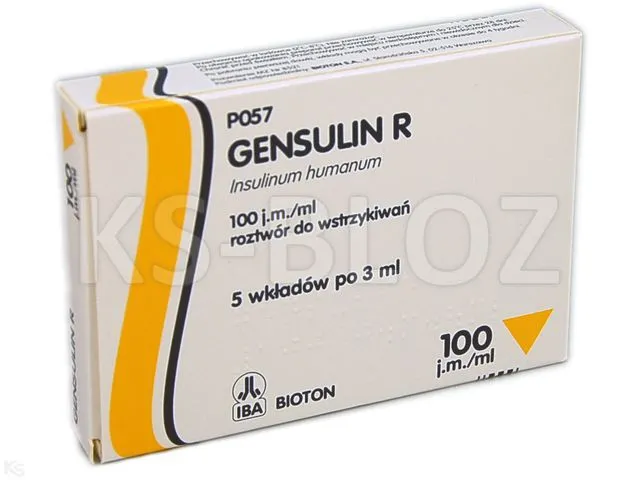
Table of Contents
Patient Information Leaflet
Gensulin R, 100 IU/ml, solution for injection
Insulinum humanum
Please read all of this leaflet carefully before using this medicine, because it contains
important information for the patient.
- Keep this leaflet, so that you can read it again if necessary.
- If you have any questions, please consult your doctor, pharmacist, or nurse.
- This medicine has been prescribed for a specific individual. Do not pass it on to others. It may harm other people, even if their symptoms are the same.
- If you experience any adverse reactions, including any not listed in this leaflet, inform your doctor, pharmacist, or nurse. See section 4.
Contents of the leaflet:
- What Gensulin R is and what it is used for
- Important information before using Gensulin R
- How to use Gensulin R
- Possible side effects
- How to store Gensulin R
- Contents of the pack and other information
1. What Gensulin R is and what it is used for
Gensulin R contains human insulin as the active substance, which is used in the treatment of diabetes.
Diabetes is caused by the inability of the pancreas to produce insulin in amounts sufficient to
control blood glucose levels (blood sugar). Gensulin R is used to maintain long-term
control of blood glucose levels. It is a fast-acting insulin.
Your doctor may recommend using Gensulin R together with an insulin having a longer duration of action. Follow your doctor's instructions. When changing insulin, great care must be taken. Each type of insulin has a different symbol and colour on the outer packaging, carton, and vial to make them easier to distinguish.
2. Important information before using Gensulin R
Gensulin R in cartridges is intended exclusively for subcutaneous injection using a reusable injection pen.
Gensulin R in cartridges must not be administered intravenously or intramuscularly. If administration via syringe is required, for intravenous injection or with an infusion pump, a vial should be used.
Gensulin R in vials is intended for subcutaneous injection.
Although not recommended, Gensulin R in vials may also be administered by intramuscular injection.
In special circumstances, it may also be administered intravenously.
Gensulin R in vials or cartridges may be used in intensive insulin therapy as prandial (mealtime) insulin.
When not to use Gensulin R
- if symptoms indicating hypoglycaemia (low blood glucose levels) are present. Information on managing mild hypoglycaemia is provided later in this leaflet (see section A "Hypoglycaemia" in point 4).
- if the patient is allergic to human insulin or to any of the other ingredients of this medicine (listed in section 6).
Warnings and precautions
Before starting treatment with Gensulin R, discuss it with your doctor, pharmacist, or nurse.
- If current treatment provides good glycaemic control, warning signs of low blood glucose levels may become less noticeable. Warning symptoms are listed later in the leaflet. Meals should be taken at regular times, and the frequency and level of physical activity should be carefully planned. Blood glucose levels should also be monitored regularly by frequent blood glucose testing.
- Some people who experienced hypoglycaemia (low blood glucose) after switching from animal to human insulin have reported that early warning symptoms of hypoglycaemia were less pronounced or different than before. If hypoglycaemia occurs frequently or if you have difficulty recognizing the warning symptoms, consult your doctor.
- Inform your diabetes nurse, doctor, or pharmacist if you have recently had an illness; if you have kidney or liver disease; or if you plan to increase physical exertion.
- Insulin requirements may also change after alcohol consumption.
- Inform your diabetes nurse, doctor, or pharmacist if you plan to travel abroad. Differences in time zones may require adjustments in injection and meal times.
- In some patients with type 2 diabetes who have heart disease or a history of stroke and are treated long-term, cases of heart failure have been reported when pioglitazone was used concomitantly with insulin. Inform your doctor immediately if symptoms of heart failure occur, such as shortness of breath, sudden weight gain, or localised swelling.
Skin changes at the injection site
Rotate injection sites to prevent skin changes such as lumps under the skin (lipohypertrophy). Insulin injected into areas with such lumps may not be absorbed properly and may not work effectively (see "How to use Gensulin R"). If you are currently injecting insulin into an area with lumps, contact your doctor before changing the site. Your doctor may recommend more frequent blood glucose monitoring and adjustment of insulin or other antidiabetic medication doses.
Gensulin R and other medicines
Tell your doctor or pharmacist about all medicines you are currently taking or have recently taken, as well as any medicines you plan to take.
Your body's insulin requirement may change when taking the following medicines concomitantly:
- corticosteroids,
- thyroid hormone replacement therapy,
- oral glucose-lowering agents (antidiabetic drugs),
- acetylsalicylic acid (aspirin),
- growth hormone,
- octreotide, lanreotide,
- selective β2-adrenergic receptor agonists (e.g. ritodrine, salbutamol, terbutaline),
- β-adrenergic blocking agents (β-blockers),
- thiazides or certain antidepressants (monoamine oxidase inhibitors),
- danazol,
- certain angiotensin-converting enzyme inhibitors (e.g. captopril, enalapril) or angiotensin II receptor antagonists.
Pregnancy and breastfeeding
Insulin requirements usually decrease during the first three months of pregnancy and increase during the following six months. Women who are breastfeeding may require changes in insulin dose or dietary habits.
If you are pregnant, breastfeeding, think you may be pregnant, or are planning to have a baby, you should consult your doctor or pharmacist before using this medicine.
Driving and operating machinery
In the event of hypoglycaemia (low blood sugar), your ability to concentrate and reaction speed may be reduced. This should be kept in mind in any situation where this could pose a risk to you or others (e.g. when driving or operating machinery).
You should consult your diabetes nurse or doctor about driving if:
- you experience frequent hypoglycaemia,
- you have weak or no warning signs of hypoglycaemia.
Gensulin R contains sodium
This medicine contains less than 1 mmol of sodium (23 mg) per dose and is therefore considered "sodium-free".
3. How to use Gensulin R
Always check the name and type of insulin on the label and outer packaging of the vial or
cartridge when purchasing the medicine at the pharmacy. Make sure it is the Gensulin R medicine prescribed by
your doctor.
This medicine should always be used according to the instructions of your doctor or pharmacist. If you have any doubts,
please consult your doctor or pharmacist. To avoid possible transmission of diseases, each
cartridge should be used by only one person, even if the needle has been changed.
Dosage
Your doctor will recommend the appropriate type of insulin, the amount of medicine, and the time and frequency
of injections. These instructions are intended solely for the specific patient. You must strictly follow your doctor's recommendations and regularly visit the diabetes clinic.
Changing the type of insulin used (e.g. from animal insulin to human insulin) may
require a reduction or increase in dose. This change may apply only to the
first injection or may be introduced gradually over several weeks or months.
Gensulin R in cartridges is intended exclusively for subcutaneous injection
using a reusable insulin pen. If insulin must be administered by another method, consult your doctor.
Gensulin R in vials is intended for subcutaneous injection. Although not recommended, in exceptional cases it may be administered intramuscularly or intravenously.
Preparing Gensulin R
Before using Gensulin R, you should
- check the name and letter marking on the outer packaging and label of the cartridge or vial to ensure that the insulin received matches the one prescribed by your doctor.
- check the expiry date on the packaging.
Instructions for use
Inject the insulin dose according to the instructions provided by your doctor or nurse at the diabetes clinic.
Always rotate injection sites to avoid skin thickening (see section 4. Possible side effects). It is best to inject insulin into the abdominal area, buttocks, front of the thigh, or upper arm. Injecting insulin into the abdominal area results in faster absorption than injections into other sites.
Rotate injection sites so that the same site is not used more often than approximately once per month.
Remove the insulin from the refrigerator about 15 minutes before planned administration to allow it to reach room temperature (if it is a newly opened vial or cartridge). Vials and cartridges currently in use should be stored at room temperature for up to 28 days.
Maintain proper hygiene during administration: wash your hands before injecting and disinfect the injection site.
Before administration, carefully inspect the vial or cartridge. The Gensulin R solution should be colourless and clear, resembling water in appearance and consistency. Do not use the medicine if the solution is cloudy, thick, or discoloured.
Take special care not to insert the needle into a blood vessel during insulin injection.
Administration of Gensulin R from vials using syringes
Gensulin R in vials is intended for subcutaneous injection. Although not recommended, in exceptional cases it may be administered intramuscularly.
In special cases, it may also be administered intravenously.
Special syringes marked with insulin concentration units are intended for insulin administration. It is recommended to use syringes of the same type and manufacturer. Always check that the syringe used is calibrated appropriately for the concentration of insulin being administered.
Instructions for use
Immediately before injection:
- Remove the protective plastic cap from the vial (do not remove the seal).
- Wipe the exposed part of the rubber stopper with alcohol. Do not remove the stopper!
- Draw air into the syringe equal in volume to the insulin dose.
- Insert the needle attached to the syringe through the rubber stopper and inject the air into the vial.
- Turn the vial and syringe upside down.
- Ensure that the tip of the needle is immersed in the insulin solution.
- Draw the correct volume of insulin into the syringe.
- Remove any air bubbles from the syringe.
- Recheck the recommended dose and remove the needle from the vial.
Injecting insulin:
- Disinfect the skin at the injection site.
- Stabilize the skin with one hand by stretching it or pinching a large area to create a skin fold. Hold the syringe in the other hand like a pencil. Insert the needle straight into the skin (at a 90° angle). Ensure that the needle is fully inserted and properly placed in the subcutaneous fat layer and not into deeper tissue layers (in very thin individuals, it may be necessary to insert the needle at an angle rather than perpendicularly). To inject the insulin, push the plunger fully to administer the dose within less than 5 seconds. Hold an alcohol swab close to the needle and withdraw the needle from the skin. Press the alcohol swab gently against the injection site for several seconds. Do not rub the skin at the injection site! To avoid tissue damage, rotate the injection site with each injection. The next injection site should be at least 1–2 cm away from the previous one.
Mixing Gensulin R solution from vials with Gensulin N suspension from vials
The decision to mix Gensulin R solution with Gensulin N suspension may only be made by a
doctor. When preparing the mixture for the syringe, always draw up the fast-acting insulin – Gensulin R – first. Administer the insulin as described above.
Administration of Gensulin R from cartridges in insulin pens
Gensulin R 3 ml cartridges are intended exclusively for subcutaneous injection using a reusable insulin pen. If it becomes necessary to administer insulin by another method, consult your doctor.
The 3 ml cartridges are intended for use with a CE-marked insulin pen, according to the manufacturer's instructions. Gensulin R cartridges should only be used in Bioton insulin pens to ensure accurate dosing.
For loading the pen, attaching the needle, and administering the medicine, strictly follow the instructions provided by the pen manufacturer included in the pen packaging.
The cartridge design prevents adding any other insulin to the cartridge. Used cartridges must not be refilled.
Use of a higher than recommended dose of Gensulin R
If a higher dose of Gensulin R than recommended is administered, low blood glucose levels may occur. Check your blood glucose level (see subsection A "Hypoglycaemia" in section 4).
Missing a dose of Gensulin R
If a smaller dose of Gensulin R than recommended is administered, high blood glucose levels may occur. Check your blood glucose level. Do not use a double dose to make up for a missed dose.
Stopping Gensulin R
If a smaller than recommended dose of Gensulin R is administered, blood glucose levels may increase. Do not change the insulin being used unless advised by your doctor.
If you have any further doubts regarding the use of this medicine, consult your doctor, pharmacist, or nurse.
4. Possible adverse effects
Like all medicines, this medicine can cause adverse effects, although not everyone will experience them.
Human insulin may cause hypoglycaemia (low blood glucose levels). See further information on hypoglycaemia below under the section "Common problems in diabetes".
Possible adverse effects
Generalised allergic reaction is very rare (occurring in less than 1 in 10,000 patients). Symptoms include:
- drop in blood pressure,
- breathing difficulties,
- rapid heartbeat,
- rash all over the body,
- wheezing,
- sweating.
If any of these symptoms occur while using Gensulin R, contact your doctor immediately.
Local allergic reaction is common (occurring in less than 1 in 10 patients). Symptoms may include redness, swelling or itching of the skin around the injection site. These symptoms usually disappear after a few days or weeks. If any of the above symptoms occur, inform your doctor.
Skin changes at the injection site
If insulin is injected too frequently into the same site, fatty tissue may shrink (lipoatrophy) or thicken (lipohypertrophy) (less than 1 in 100 patients). Lumps under the skin may also be caused by the accumulation of a protein called amyloid (cutaneous amyloidosis; frequency unknown). Insulin injected into an area with lumps may not work properly. Always rotate injection sites to help prevent these skin changes.
Oedema (e.g. swelling of arms, ankles; fluid retention) has been reported, particularly at the beginning of insulin treatment or during changes in therapy aimed at improving blood glucose control.
Common problems in diabetes
A. Hypoglycaemia
Hypoglycaemia (low blood glucose level) is a condition in which there is too little sugar in the blood. It may occur if the patient:
- has taken too high a dose of Gensulin R or another insulin;
- has missed or delayed a meal, or changed their diet;
- has exercised too intensively shortly before or after a meal;
- is ill (especially with an illness involving diarrhoea or vomiting);
- has changed insulin requirements, or
- has worsening kidney or liver function disorders.
Alcohol and certain medicines may affect blood glucose levels.
The first symptoms of low blood glucose usually appear quickly and include:
- tiredness,
- nervousness or trembling,
- headache,
- rapid heartbeat,
- nausea,
- cold sweats.
If you are unsure about recognising the warning signs of hypoglycaemia, avoid situations in which you or others may be put at risk (e.g. driving a car).
Do not use Gensulin R if symptoms of hypoglycaemia (low blood glucose level) are present.
If blood glucose level is low, consume glucose tablets, sugar or a sweet drink. Then eat a piece of fruit, biscuits or a sandwich as advised by your doctor, and rest. This is usually sufficient in cases of mild hypoglycaemia or minor insulin overdose. If the condition worsens, with shallow breathing and pale skin, contact your doctor immediately. An injection of glucagon may help in cases of moderately severe hypoglycaemia. After glucagon injection, consume glucose or sugar. If there is no improvement after glucagon administration, go to hospital immediately. For information about glucagon, consult your doctor.
B. Hyperglycaemia and diabetic ketoacidosis
Hyperglycaemia (excessively high blood glucose level) means that the body is not receiving enough insulin. Hyperglycaemia may be caused by:
- failure to take Gensulin R or another insulin;
- injecting less insulin than prescribed by the doctor;
- eating very large meals compared to dietary requirements; or
- fever, infection or stressful events.
Hyperglycaemia may lead to diabetic ketoacidosis. Symptoms develop gradually over several hours or days and include:
- drowsiness,
- flushed skin on the face,
- thirst,
- loss of appetite,
- fruity odour of breath,
- nausea or vomiting.
Severe symptoms include laboured breathing and rapid pulse. Seek immediate medical help.
Untreated hypoglycaemia (low blood glucose) or hyperglycaemia (high blood glucose) may lead to serious disturbances and cause headache, nausea, vomiting, dehydration, loss of consciousness, coma or even death.
Three simple ways to avoid hypoglycaemia or hyperglycaemia:
Always carry spare syringes and a spare vial of Gensulin R.
Always carry something that informs others that you have diabetes.
Always carry sugar cubes.
C. Illness
During illness, especially when associated with nausea or vomiting, the body's insulin requirements may change. People with diabetes need insulin even when they are unable to eat normal meals. Perform urine or blood tests, follow general illness management guidelines, and contact a diabetes nurse or doctor.
The following adverse effects have also been reported since the medicine was placed on the market:
- oedema, particularly when previously poor metabolic control improves following intensive insulin therapy,
- weight gain,
- injection site reactions such as discolouration, bleeding, induration, lump or infiltration, pain, rash,
- urticaria or blisters,
- itching, including generalised itching,
- dizziness.
Reporting of adverse effects
If any adverse effects occur, including any not listed in this leaflet, tell your doctor, pharmacist or nurse.
Adverse effects can be reported directly to the Department of Monitoring Adverse Drug Reactions, Office for Registration of Medicinal Products, Medical Devices and Biocidal Products:
Al. Jerozolimskie 181C,
02-222 Warsaw
Tel: +48 22 49 21 301
Fax: +48 22 49 21 309
Website: https://smz.ezdrowie.gov.pl
Adverse effects can also be reported to the marketing authorisation holder.
Reporting adverse effects helps provide more information on the safety of this medicine.
5. How to store Gensulin R
Keep this medicine out of the sight and reach of children.
Store the medicine in a refrigerator (2°C – 8°C). Do not freeze.
After first opening the immediate packaging, store the medicine at a temperature not exceeding 25°C for up to 28 days. Gensulin R should be protected from light.
Cartridges and vials that are in use or are to be used should not be stored in the refrigerator.
The patient may carry them at room temperature. Gensulin R should be protected from high temperatures.
Do not use this medicine after the expiry date stated on the label and outer packaging of the vials and cartridges after “EXP”. The expiry date refers to the last day of the stated month.
Do not use this medicine if it appears discoloured or contains particles. Gensulin R should only be used when it looks like water. The appearance of insulin should be checked before each injection.
Medicines must not be disposed of via the sewage system or household waste. Ask a pharmacist how to dispose of medicines no longer in use. This will help protect the environment.
6. Contents of the package and other information
What Gensulin R contains
- The active substance is human insulin produced by recombinant DNA technology. 1 ml of solution contains 100 IU of human insulin. Each vial contains 10 ml, corresponding to a dose of 1000 IU of human insulin. Each cartridge contains 3 ml, corresponding to a dose of 300 IU of human insulin.
- The other components (excipients) are: glycerol, metacresol, hydrochloric acid, sodium hydroxide, water for injections.
What Gensulin R looks like and contents of the pack
Gensulin R is a sterile, clear, colourless aqueous solution of human insulin with pH 7.0–7.6.
Packaging
- 1 glass vial closed with an aluminium cap and a two-layer rubber disc, with a polypropylene flip-off cap, containing 10 ml of Gensulin R solution, packed in a cardboard box.
- 5 glass cartridges for injection devices containing 3 ml of Gensulin R, packed in a cardboard box.
- 10 glass cartridges for injection devices containing 3 ml of Gensulin R, packed in a cardboard box.
Marketing Authorisation Holder and Manufacturer
Marketing Authorisation Holder:
Bioton S.A.
ul. Starościńska 5
02-516 Warsaw
Manufacturer:
Bioton S.A.
ul. Starościńska 5
02-516 Warsaw
This medicinal product is authorised in the Member States of the European Economic Area under the following names:
Poland: Gensulin R
Malta: Gensulin R, 100 IU/ml, solution for injection
For further information about this medicinal product, contact the representative of the Marketing Authorisation Holder:
Bioton S.A.
ul. Starościńska 5
02-516 Warsaw
Poland
February 2024