Genotropin 5.3
Poland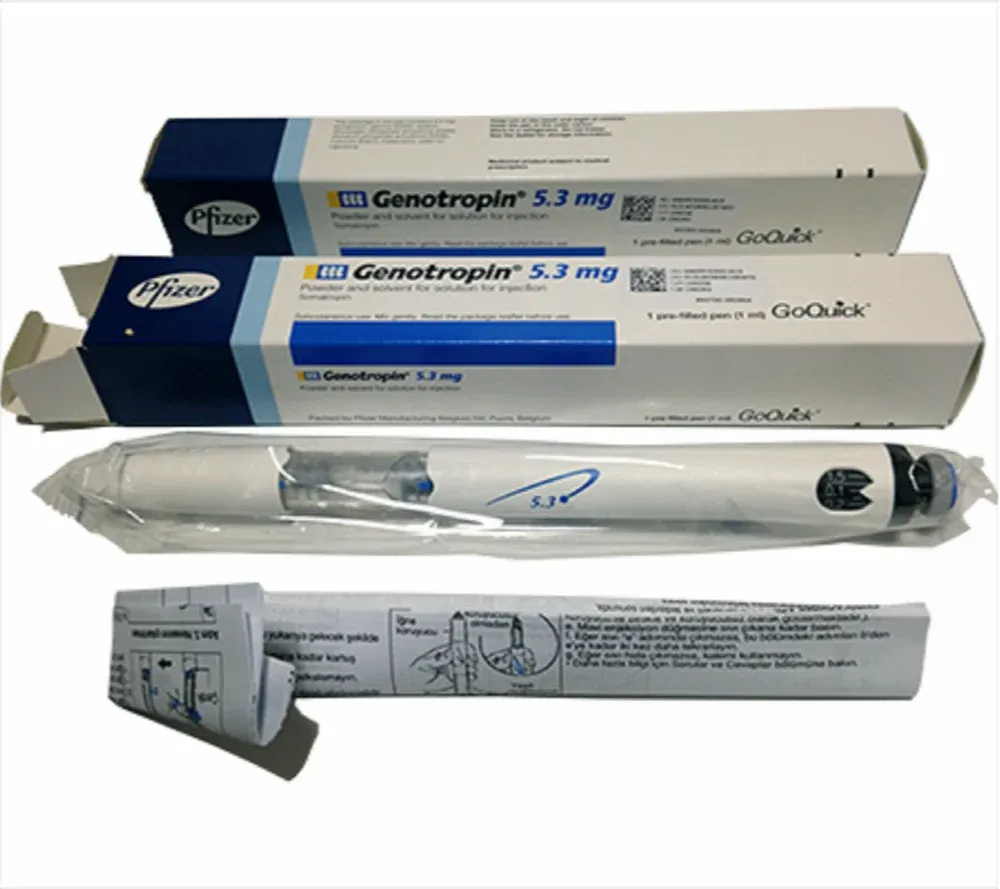
Table of Contents
- Package leaflet: Information for the patient
- 1. What Genotropin is and what it is used for
- 2. Important information before using Genotropin
- 3. How to use Genotropin
- 4. Possible adverse reactions
- 5. How to store Genotropin
- 6. Contents of the package and other information
- Package leaflet: information for the patient
- 1. What Genotropin is and what it is used for
- 2. Important information before taking Genotropin
- 3. How to use Genotropin
- 4. Possible side effects
- 5. How to store Genotropin
- 6. Contents of the package and other information
Package leaflet: Information for the patient
GENOTROPIN 5.3, 5.3 mg (16 IU), powder and solvent for solution for injection
GENOTROPIN 12, 12 mg (36 IU), powder and solvent for solution for injection
Somatropinum
Please read this leaflet carefully before using the medicine, as it contains important information for the patient, as well as instructions for use of the injector (GoQuick).
- Keep this leaflet, so that you can read it again if necessary.
- If you have any further questions, please consult your doctor or pharmacist.
- This medicine has been prescribed for a specific individual. Do not pass it on to others. This medicine may harm others, even if their symptoms are the same.
- If you experience any adverse reactions, including any not listed in this leaflet, inform your doctor or pharmacist. See section 4.
Table of contents
- What Genotropin is and what it is used for
- Important information before using Genotropin
- How to use Genotropin
- Possible side effects
- How to store Genotropin
- Contents of the pack and other information
1. What Genotropin is and what it is used for
Genotropin contains somatropin – human growth hormone produced in Escherichia coli bacteria using recombinant DNA technology. Somatropin is essential for normal growth in children. In adults with growth hormone deficiency, somatropin reduces fat tissue mass and increases muscle mass.
Genotropin is used in children:
- for growth disorders caused by insufficient secretion of growth hormone;
- for growth disorders associated with Turner syndrome (chromosomal abnormalities in girls);
- for growth disorders related to chronic renal insufficiency;
- for growth disorders in short children who were born small for gestational age (i.e. too small for the duration of pregnancy);
- for Prader-Willi syndrome, to improve growth process and body composition.
Genotropin is used in adults as replacement therapy in patients with severe growth hormone deficiency. Treatment may be initiated in adulthood or continued from childhood treatment.
If the patient was treated with Genotropin during childhood, growth hormone levels should be assessed after completion of growth. If severe growth hormone deficiency is confirmed, the doctor may recommend continuing treatment.
2. Important information before using Genotropin
Before starting treatment with Genotropin, the diagnosis must be confirmed.
Treatment must be administered only under the supervision of a physician with appropriate knowledge and experience.
When not to use Genotropin
- if the patient is allergic to somatropin or to any of the other ingredients of this medicine (listed in section 6);
- if the patient has active malignancy. Inform the doctor about any history of cancer. Tumours must be inactive and anticancer therapy must be completed before starting treatment with Genotropin;
- in children who have completed growth;
- if the patient has acute, life-threatening illnesses, complications following open-heart surgery, abdominal surgery, or multiple trauma, or acute respiratory failure and similar conditions. Before any planned surgery or during hospitalization, inform the physician about the use of growth hormone.
Warnings and precautions
Before starting treatment with Genotropin, discuss the following with your doctor or pharmacist:
- in patients with diabetes mellitus; after starting Genotropin, it may be necessary to adjust the dose of medication used to treat diabetes;
- if there are risk factors for diabetes (e.g. if the patient is overweight or has a family history of diabetes);
- in some patients, thyroid hormone replacement therapy may become necessary after starting treatment with Genotropin;
- in patients receiving thyroid hormone therapy, dose adjustments of these medications may be required;
- if the patient is receiving glucocorticoid replacement therapy, regular consultations with the physician are necessary, as dose adjustments may be needed;
- if the child begins to gain weight (applies only to children);
- in case of severe or sudden headaches, visual disturbances, nausea and/or vomiting;
- when symptoms of spinal curvature occur;
- if the patient develops worsening abdominal pain, inform the doctor;
- in patients over 80 years of age, due to limited experience in treating patients in this age group and increased susceptibility to adverse reactions.
If treatment is related to chronic kidney disease, renal function should be evaluated before starting therapy; Genotropin should be discontinued after kidney transplantation.
In Prader-Willi syndrome, the physician should assess the presence of the following risk factors before initiating and during treatment: severe obesity, respiratory dysfunction or history of sleep apnoea, and unidentified respiratory infections. The physician will recommend an appropriate low-calorie diet and/or treatment of infection.
In patients with intrauterine growth retardation, other causes of growth disorders should be excluded before starting treatment. The physician should order a test to measure fasting insulin and glucose levels before starting treatment and annually thereafter. Also, before starting treatment and then twice yearly, the physician should recommend measuring IGF-I (insulin-like growth factor-I) levels. Initiation of therapy is not recommended in children with intrauterine growth retardation approaching puberty.
Genotropin with other medicines
Inform the doctor about all medicines currently or recently taken, as well as any medicines the patient plans to take.
In particular, inform the doctor if currently or recently taking:
- oral estrogens or other sex hormones. The doctor may recommend adjusting the dose of Genotropin or other medications.
Pregnancy and breastfeeding
If the patient is pregnant or breastfeeding, suspects she may be pregnant, or plans to become pregnant, she should consult her doctor or pharmacist before using this medicine.
Use of Genotropin is not recommended in pregnant women or in women planning pregnancy in the near future.
Driving and operating machinery
Genotropin has no effect on the ability to drive or operate machinery.
Genotropin contains m-cresol
Genotropin contains m-cresol as an excipient, which may be associated with the occurrence of myalgia. Report any muscle pain or excessively severe injection site pain to the doctor. If myositis occurs, the doctor will decide to switch to a formulation of the medicine not containing m-cresol.
Genotropin contains sodium
The medicine contains less than 1 mmol (23 mg) of sodium per maximum daily dose, meaning the medicine is considered "sodium-free".
3. How to use Genotropin
This medicine should always be used exactly as prescribed by the doctor. In case of doubt, consult the doctor or pharmacist.
The doctor determines the dose individually for each patient.
Genotropin is administered subcutaneously. The injection site should be rotated to avoid skin changes. Follow the instructions provided by the doctor or nurse.
Growth disorders in children due to growth hormone deficiency
Recommended dose: 0.025–0.035 mg/kg body weight per day or 0.7–1.0 mg/m² body surface area per day.
In children with Prader-Willi syndrome to increase growth and improve body composition
Recommended dose: 0.035 mg/kg body weight per day or 1.0 mg/m² body surface area per day.
Do not use a daily dose exceeding 2.7 mg/m² body surface area per day. Do not treat children growing less than 1 cm per year or who are approaching completion of growth.
Growth disorders in children associated with Turner syndrome
Recommended dose: 0.045–0.050 mg/kg body weight per day or 1.4 mg/m² body surface area per day.
Growth disorders associated with chronic renal insufficiency
Recommended dose: 0.045–0.050 mg/kg body weight per day or 1.4 mg/m² body surface area per day. If growth velocity is inadequate, dose increase may be necessary. Dose adjustment may be required after 6 months of treatment.
Growth disorders in short children who were small for gestational age at birth
Recommended dose: 0.035 mg/kg body weight per day (1 mg/m² body surface area per day). Treatment should continue until final adult height is reached. Discontinue treatment if growth velocity becomes too slow.
Adults with growth hormone deficiency
In patients continuing growth hormone therapy from childhood GH deficiency, the recommended re-initiation dose is 0.2–0.5 mg per day. The dose should be gradually increased or decreased according to individual patient requirements, based on serum IGF-I (insulin-like growth factor-I) levels.
In adult-onset GH deficiency, treatment should be initiated with a low dose: 0.15–0.3 mg per day. The dose should be gradually increased depending on serum IGF-I levels, as well as treatment efficacy and adverse effects. The maximum daily dose rarely exceeds 1.0 mg per day. Use the lowest effective dose.
Women may require higher doses than men.
Natural hormone production decreases with age; therefore, over time, dose reduction may become necessary.
Dosing should be monitored every 6 months.
In patients over 60 years of age, treatment should be initiated at a dose of 0.1–0.2 mg per day and gradually increased according to individual requirements. Use the lowest effective dose. Maintenance doses in these patients rarely exceed 0.5 mg per day.
Method of administration
Genotropin solution for injection in GoQuick prefilled pen. The dual-chamber cartridge pre-assembled in the pen contains growth hormone and solvent.
Remember to screw the needle onto the GoQuick pen before mixing. Use a new needle for each injection. Needles must not be reused.
Mixing of growth hormone and solvent occurs by activating the cartridge in the pen (see GoQuick User Manual). Then dissolve the powder by gently tilting the pen until the powder is completely dissolved.
DO NOT SHAKE!
Shaking may cause denaturation of the active substance, leading to loss of biological activity.
Read the instructions for use of the GoQuick pen provided in the patient leaflet.
Use of a higher than recommended dose of Genotropin
If an overdose of Genotropin is administered, contact the doctor immediately. A single overdose may affect blood glucose levels, which may become too low or too high. Symptoms may include tremor, sweating, drowsiness, fainting, and a feeling of being "not oneself."
Missed dose of Genotropin
Do not administer a double dose to make up for a missed dose.
If you have any further questions about the use of this medicine, consult your doctor.
4. Possible adverse reactions
Like all medicines, this medicine can cause adverse reactions, although not everyone will experience them.
Very common (may affect more than 1 in 10 people):
Adults:
- Joint pain.
- Fluid retention (manifesting as swollen fingers or swollen wrists).
Common (may affect up to 1 in 10 people):
Children:
- Joint pain.
- Transient redness, itching, and pain at the injection site.
Adults:
- Numbness/tingling.
- Pain or burning sensation in the hands or armpits (known as carpal tunnel syndrome).
- Stiffness of arms and legs, muscle pain.
Uncommon (may affect up to 1 in 100 people):
Children:
- Leukaemia (observed in a small number of patients with growth hormone deficiency, some of whom were treated with Genotropin. However, there is no evidence confirming an increased incidence of leukaemia in patients with growth hormone deficiency without predisposing factors).
- Increased intracranial pressure (causing symptoms such as severe headache, visual disturbances, or vomiting).
- Numbness/tingling.
- Rash.
- Itching.
- Raised, itchy skin nodules.
- Muscle pain.
- Breast enlargement (gynaecomastia).
- Fluid retention (manifesting as swollen fingers or swollen wrists).
Adults:
- Breast enlargement (gynaecomastia).
Frequency not known (cannot be estimated from available data):
Adults and children:
- Type 2 diabetes.
- Facial swelling.
- Headache.
- Decreased blood cortisol levels.
Children:
- Stiffness of arms and legs.
Adults:
- Increased intracranial pressure (causing symptoms such as severe headache, visual disturbances, or vomiting).
- Rash.
- Itching.
- Raised, itchy skin nodules.
- Redness, itching, and pain at the injection site.
Development of antibodies directed against the injected growth hormone has been observed; however, this does not appear to be associated with loss of efficacy.
Very rarely, inflammatory reactions in muscles around the injection site caused by m-cresol (an excipient) have been observed. If such a reaction is confirmed by a physician, use of a preparation not containing m-cresol is recommended.
The injection site should be rotated to avoid skin changes such as irregularities or nodules.
Since the medicine was introduced to the market, rare cases of sudden death in patients with Prader-Willi syndrome treated with Genotropin have been reported. However, a causal relationship with Genotropin has not been established.
In children treated with growth hormone, cases of slipped capital femoral epiphysis and Legg-Calve-Perthes disease have been reported. However, a causal relationship with Genotropin has not been established.
Other adverse reactions associated with growth hormone use may include increased blood glucose levels or decreased thyroid hormone levels in both adults and children. These can be confirmed by a physician, who may initiate appropriate treatment if necessary. Pancreatitis has been rarely reported in patients treated with growth hormone.
Reporting of adverse reactions
If any adverse reactions occur, including any not listed in this leaflet, inform your doctor or pharmacist. Adverse reactions can be reported directly to the Department of Monitoring Adverse Drug Reactions, Office for Registration of Medicinal Products, Medical Devices and Biocidal Products
Al. Jerozolimskie 181C
02-222 Warsaw
Phone: +48 22 49 21 301
Fax: +48 22 49 21 309
Website: https://smz.ezdrowie.gov.pl
Adverse reactions can also be reported to the marketing authorisation holder or its representative.
Reporting adverse reactions helps provide more information on the safety of the medicine.
5. How to store Genotropin
Keep the medicine out of the sight and reach of children.
Do not use this medicine after the expiry date stated on the carton after "Expiry date (EXP)". The expiry date refers to the last day of the specified month.
Store the medicine at 2°C - 8°C (in the refrigerator), do not freeze. The medicine may be stored below 25°C for one month. Keep in the outer packaging to protect from light.
After reconstitution
The solution may be stored for 28 days at 2°C - 8°C (in the refrigerator), do not freeze.
Keep in the outer packaging to protect from light.
If a needle protection cap is used, store the injection device with the needle protection cap and the black cap attached.
If a needle protection cap is not used, store the injection device with the white cap attached (see Instructions for Use).
These measures will help protect the Genotropin medicine from light.
Medicines must not be disposed of via wastewater or household waste. Ask your pharmacist how to dispose of medicines no longer required. This will help protect the environment.
6. Contents of the package and other information
What Genotropin 5.3 contains
- The active substance is somatropin*. One cartridge contains 5.3 mg of somatropin*.
- Other ingredients are: glycine, mannitol, monosodium dihydrogen phosphate monohydrate (calculated as anhydrous), disodium hydrogen phosphate dodecahydrate (calculated as anhydrous) (see section 2 "Genotropin contains sodium"). The solvent contains m-cresol (see section 2 "Genotropin contains m-cresol"), mannitol, water for injections. After reconstitution, the concentration of somatropin is 5.3 mg/ml.
* produced in Escherichia coli bacterial cells by recombinant DNA technology.
What Genotropin 12 contains
- The active substance is somatropin*. One cartridge contains 12 mg of somatropin*.
- Other ingredients are: glycine, mannitol, monosodium dihydrogen phosphate monohydrate (calculated as anhydrous), disodium hydrogen phosphate dodecahydrate (calculated as anhydrous) (see section 2 "Genotropin contains sodium"). The solvent contains m-cresol (see section 2 "Genotropin contains m-cresol"), mannitol, water for injections. After reconstitution, the concentration of somatropin is 12 mg/ml.
* produced in Escherichia coli bacterial cells by recombinant DNA technology.
What the medicine looks like and contents of the pack
Genotropin is available in pre-filled, multi-dose, single-use GoQuick injectors containing dual-chamber cartridges, in which one chamber contains the active substance as a white powder and the other chamber contains a clear solution serving as the solvent for the active substance.
Genotropin is available in a pack containing one or five GoQuick injectors.
Marketing Authorisation Holder:
Pfizer Europe MA EEIG
Boulevard de la Plaine 17
1050 Bruxelles
Belgium
Manufacturer:
Pfizer Manufacturing Belgium NV
Rijksweg 12
2870 Puurs-Sint-Amands
Belgium
For further information about this medicine, please contact the representative of the Marketing Authorisation Holder:
Pfizer Polska Sp. z o.o.
tel.: 22 335 61 00
Other sources of information
Detailed information about this medicine is available on the website of the Office for Registration of Medicinal Products, Medical Devices and Biocidal Products http://urpl.gov.pl
GENOTROPIN 5.3 GOQUICK INSTRUCTIONS FOR USE
Please read the entire instruction before using the GoQuick injector. If you have any questions about the recommended dose or treatment with Genotropin 5.3, please contact your doctor or nurse.
Information about the GoQuick injector
GoQuick is a pre-filled, multi-dose, single-use injector containing 5.3 mg of somatropin. It allows administration of Genotropin 5.3 in doses ranging from 0.1 mg to 1.5 mg. Each click of the black ring changes the dose by 0.05 mg. Genotropin 5.3 in the injector is mixed only once, at the first use of the injector. Cartridges are not replaceable. After emptying the injector, a new one must be used.
The injector is equipped with a dose memory. The dose is set once in the injector. Subsequently, each injection is delivered at the same set dose. This prevents exceeding the set dose.
Important information
- Do not mix the powder and liquid contained in the injector if there is no needle attached.
- The injector must not be stored with the needle attached. Genotropin 5.3 may leak from it, and air bubbles may form in the cartridge. Before preparing for storage, always remove the needle and attach the injector cap or the cap of the protective needle cover.
- Be careful not to drop the injector. If it is dropped and any part appears broken or damaged, do not use it. Contact your doctor or nurse to obtain a new injector. If the injector is dropped but is not damaged or broken, perform reloading of the dose according to the instructions in step 6 (Setting up and using a new GoQuick injector).
- Clean the injector with a damp cloth. Do not immerse it in water.
- Always use a new needle for each injection. Do not share needles for injectors.
- The remaining volume scale located on the side of the cartridge handle indicates the volume of Genotropin 5.3 remaining in the injector.
Storage and disposal
- Store the injector in the refrigerator (at 2°C to 8°C), in the outer packaging, to protect it from light. Do not freeze or expose to frost.
- Do not use the injector after the expiry date.
- After 28 days from mixing, dispose of the injector, even if some medicine remains.
- Information on storage of the GoQuick injector can be found in this leaflet, on its second page.
- Dispose of used injectors according to local regulations. If in doubt, consult your doctor or nurse.
Components of the GoQuick injector
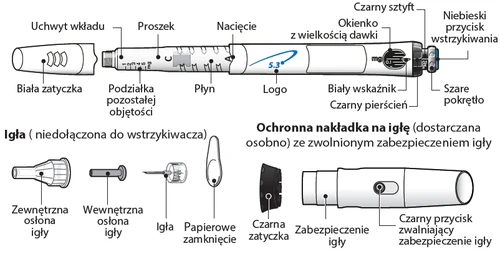
Needles are not included with the GoQuick injector. Needles up to 8 mm in length should be purchased at a pharmacy.
- Needles suitable for use with the GoQuick injector: 31 G or 32 G (Becton Dickinson and Company) 31 G or 32 G (Novo Nordisk) 32.5 G or 34 G (Terumo) Setting up and using a new GoQuick injector Step 1 Preparation
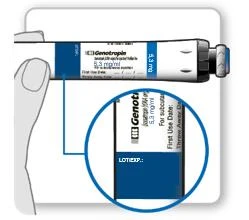
- Wash and dry your hands.
- Gather the following materials and place them on a clean, flat surface: o new GoQuick injector o new needle (not included with the set) o appropriate sharps container (not included with the set).
- Check the expiry date on the injector label. Do not use the injector if the expiry date has passed.
Step 2 Selecting the injection site
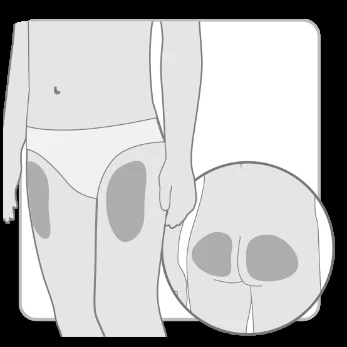
- Select and clean the injection site according to your doctor's or nurse's instructions. Choose a different site for each injection. Each subsequent injection should be administered at least 2 cm away from the previous one.
- Avoid bony, bruised, red, painful, or hardened areas, as well as areas of skin covered with scars or affected by disease. Step 3 Attaching a new needle
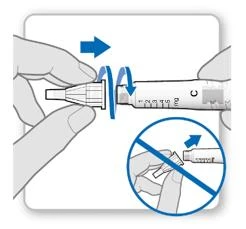
- Remove the white cap from the injector.
- Take a new needle and remove its paper seal.
- Gently press and then screw the needle onto the injector. Do not overtighten. Note: Be careful not to attach the needle at an angle. This may cause leakage.
- Leave both needle shields on the needle.
Step 4 Mixing Genotropin 5.3 medicine
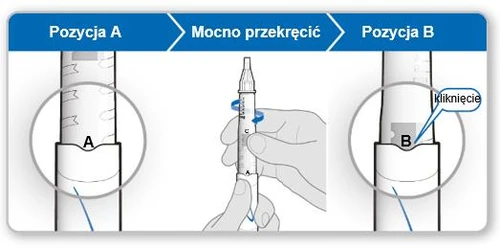
- Hold the injector with the needle pointing upwards and the letter “A” facing you.
- Firmly screw the cartridge into the injector until you feel a click, when the letter “B” aligns with the notch.
- Gently tilt the injector from side to side to facilitate complete dissolution of the powder. Do not shake. Shaking may damage the growth hormone.
- Check whether the liquid in the cartridge is clear and whether all the powder has dissolved. o If the liquid is cloudy or powder is visible, gently tilt the injector from side to side several more times. o If the liquid remains cloudy or powder is visible, do not use this injector and try again using a new one.
Step 5 Removing air from the injector
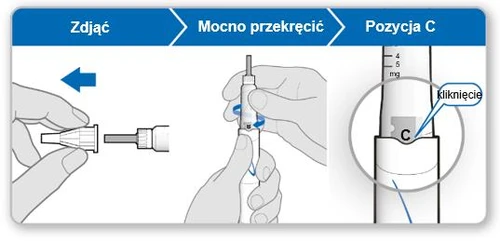
- Remove the outer needle shield. Keep it to secure the used needle after injection.
- Leave the inner needle shield in place. Note: After removing the outer shield, the inner needle shield should be visible. If it is not visible, try reattaching the needle.
- Hold the injector with the needle pointing upwards.
- Gently tap the cartridge to move trapped air to the top.
- Firmly screw the cartridge into the injector until you feel a click, when the letter “C” aligns with the notch. A small amount of liquid may appear around the inner needle shield. This is normal. Step 6 Loading the medicine dose
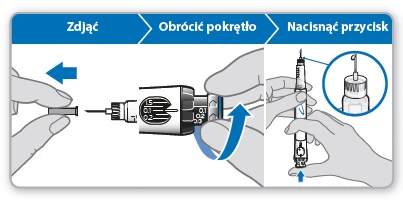
Loading the medicine dose allows removal of remaining air by expelling a small amount of liquid from the injector. The loaded dose is 0.1 mg and differs from the dose prescribed by your doctor or nurse. Perform this step only at the first use of the injector.
- Remove and discard the inner needle shield. Note: Do not touch the needle to avoid accidental needlestick.
- Ensure that the dose window displays 0.1 mg.
- Turn the grey knob in the direction indicated by the arrows until it stops clicking.
- Hold the injector with the needle pointing straight upwards.
- Press the blue injection button fully.
- Check whether liquid appears at the needle tip. If it does, the injector is ready for use. o If no liquid appears, repeat the steps described in the dose loading step once or twice. o If liquid still does not appear, do not use this injector. Contact your doctor or nurse for advice.
Step 7 Setting and preparing the dose
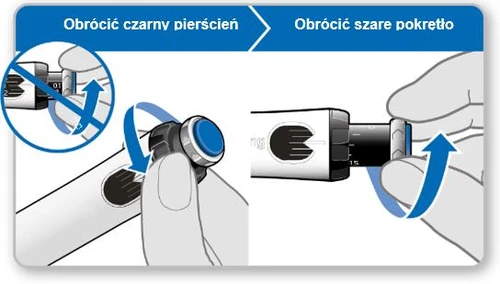
At the first use of the injector, the dose prescribed by your doctor or nurse will be set. There is no need to reset the dose until starting a new injector or unless advised by your doctor or nurse.
- Turn the black ring counterclockwise until the recommended dose aligns with the white indicator in the dose window. Be careful not to turn the grey knob. o If the selected dose does not align with the white indicator, turn the black ring in the opposite direction to set the correct dose value. Note: If you cannot turn the black ring, press the blue dose delivery button until it stops clicking. Then try setting the dose again. Remember that liquid will flow from the needle. Turn the grey knob in the direction indicated by the arrows until it stops clicking. Step 8 Checking the medicine dose
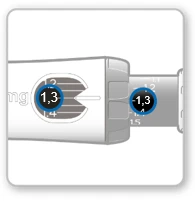
The selected dose value visible on the black plunger should align with the white indicator.
- Ensure that the dose value visible on the black plunger matches the value set in the dose window. o If these values are the same, the injector is ready for injection. o If the dose values do not match, ensure that the grey knob has been turned in the correct direction indicated by the arrows until it stops clicking.
Step 9 Injecting Genotropin 5.3 medicine
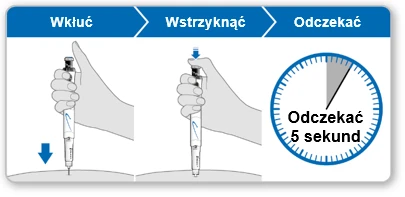
- Hold the injector over the injection site.
- Insert the needle straight into the skin.
- Press the blue injection button until it stops clicking.
- Wait a full 5 seconds to ensure the full dose of medicine is delivered. During this time, maintain light pressure on the blue injection button.
- After 5 seconds, remove the needle from the skin without tilting it sideways. Note: If a drop of liquid is visible at the injection site or on the needle tip, during the next injection, hold the blue injection button pressed longer before removing the needle from the skin. Step 10 Removing the needle
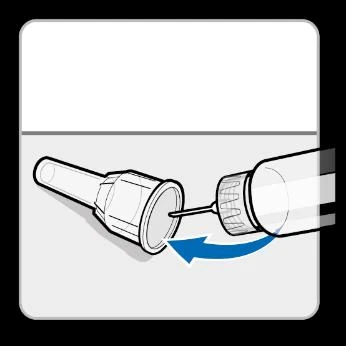
- Carefully place the outer needle shield over the needle. Note: Do not touch the needle to avoid accidental needlestick.
- Unscrew the needle using the outer shield.
- Dispose of the needle in an appropriate sharps container.
- Replace the white cap on the injector.
- Store the injector in the refrigerator until the next injection.
Regular (daily) use of the GoQuick injector
Step 1 Preparation
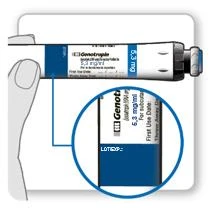
- Wash and dry your hands.
- Gather the following materials and place them on a clean, flat surface: o GoQuick injector with mixed medicine o new needle (not included with the set) o appropriate sharps container (not included with the set).
- Check the expiry date on the injector label. Do not use the injector if the expiry date has passed. Do not use the injector after 28 days from first use.
Step 2 Selecting the injection site
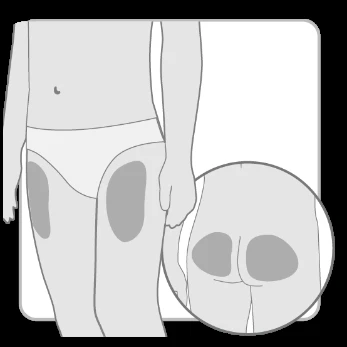
- Select and clean the injection site according to your doctor's or nurse's instructions. Choose a different site for each injection. Each subsequent injection should be administered at least 2 cm away from the previous one.
- Avoid bony, bruised, red, painful, or hardened areas, as well as areas of skin covered with scars or affected by disease. Step 3 Attaching a new needle
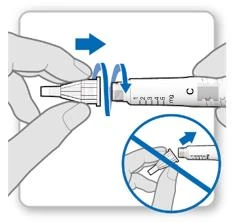
- Remove the white cap from the injector.
- Take a new needle and remove its paper seal.
- Gently press and then screw the needle onto the injector. Do not overtighten. Note: Be careful not to attach the needle at an angle. This may cause leakage.
- Remove both shields from the needle. Keep the outer shield to cover the needle after injection. Step 4 Loading the medicine dose
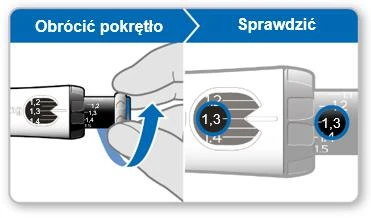
- Turn the grey knob in the direction indicated by the arrows until it stops clicking.
- The selected dose value visible on the black plunger should align with the white indicator.
- Ensure that the dose value visible on the black plunger matches the value set in the dose window. o If these values are the same, the injector is ready for injection. Note: If the prepared dose is smaller, this means the full dose of Genotropin 5.3 is not available in the injector. If the full dose is not available in the injector, follow the advice provided by your doctor or nurse, or contact them for guidance.
Step 5 Injecting Genotropin 5.3 medicine
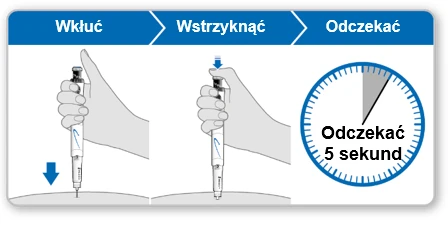
- Hold the injector over the injection site.
- Insert the needle straight into the skin.
- Press the blue injection button until it stops clicking.
- Wait a full 5 seconds to ensure the full dose of medicine is delivered. During this time, maintain light pressure on the blue injection button.
- After 5 seconds, remove the needle from the skin without tilting it sideways. Note: If a drop of liquid is visible at the injection site or on the needle tip, during the next injection, hold the blue injection button pressed longer before removing the needle from the skin. Step 6 Removing the needle
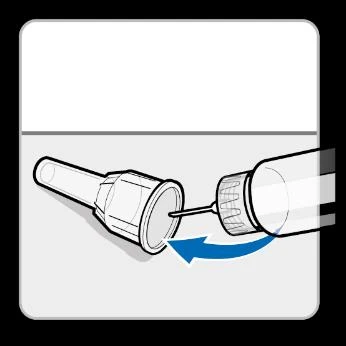
- Carefully place the outer needle shield over the needle. Note: Do not touch the needle to avoid accidental needlestick.
- Unscrew the needle using the shield.
- Dispose of the needle in an appropriate sharps container.
- Replace the white cap on the injector.
- Store the injector in the refrigerator until the next injection.
Using the protective needle cover (optional)
The protective needle cover is an optional accessory supplied separately, which allows hiding the needle during injection.
Attaching the protective needle cover:
The protective needle cover should be attached after completing step 5 (Setting up and using a new GoQuick injector) to avoid accidental needlestick.
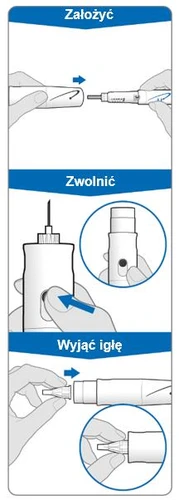
- Remove the black cap from the protective needle cover. o If the needle safety device protrudes, push it back into the protective needle cover until it clicks into place.
- Align the black logo on the protective needle cover with the blue logo on the injector. Gently push the protective needle cover onto the injector until it clicks.
- After completing step 6 (Setting up and using a new GoQuick injector), press the black button to release the safety device in the protective needle cover.
- Follow the instructions described in step 7 (Setting up and using a new GoQuick injector). To remove the needle with the protective needle cover attached:
- Place the outer needle shield on the end of the needle safety device.
- Using the outer needle shield, push the needle safety device until it locks into place.
- Using the shield, unscrew the needle and dispose of it in an appropriate sharps container.
- Leave the protective needle cover on the injector.
- Replace the black cap on the protective needle cover. Store the injector in the refrigerator. To remove the protective needle cover:
- First remove the needle, then gently pull the protective needle cover off the injector.
- Do not dispose of the protective needle cover. It can be reused with the next injector.
GENOTROPIN 12 GOQUICK INSTRUCTIONS FOR USE
Please read the entire instruction before using the GoQuick injector. If you have any questions about the recommended dose or treatment with Genotropin 12, please contact your doctor or nurse.
Information about the GoQuick injector
GoQuick is a pre-filled, multi-dose, single-use injector containing 12 mg of somatropin. It allows administration of Genotropin 12 in doses ranging from 0.3 mg to 4.5 mg. Each click of the black ring changes the dose by 0.15 mg. Genotropin 12 in the injector is mixed only once, at the first use of the injector. Cartridges are not replaceable. After emptying the injector, a new one must be used.
The injector is equipped with a dose memory. The dose is set once in the injector. Subsequently, each injection is delivered at the same set dose. This prevents exceeding the set dose.
Important information
- Do not mix the powder and liquid contained in the injector if there is no needle attached.
- The injector must not be stored with the needle attached. Genotropin 12 may leak from it, and air bubbles may form in the cartridge. Before preparing for storage, always remove the needle and attach the injector cap or the cap of the protective needle cover.
- Be careful not to drop the injector. If it is dropped and any part appears broken or damaged, do not use it. Contact your doctor or nurse to obtain a new injector. If the injector is dropped but is not damaged or broken, perform reloading of the dose according to the instructions in step 6 (Setting up and using a new GoQuick injector).
- Clean the injector with a damp cloth. Do not immerse it in water.
- Always use a new needle for each injection. Do not share needles for injectors.
- The remaining volume scale located on the side of the cartridge handle indicates the volume of Genotropin 12 remaining in the injector.
Storage and disposal
- Store the injector in the refrigerator (at 2°C to 8°C), in the outer packaging, to protect it from light. Do not freeze or expose to frost.
- Do not use the injector after the expiry date.
- After 28 days from mixing, dispose of the injector, even if some medicine remains.
- Information on storage of the GoQuick injector can be found in this leaflet, on its second page.
- Dispose of used injectors according to local regulations. If in doubt, consult your doctor or nurse.
Components of the GoQuick injector
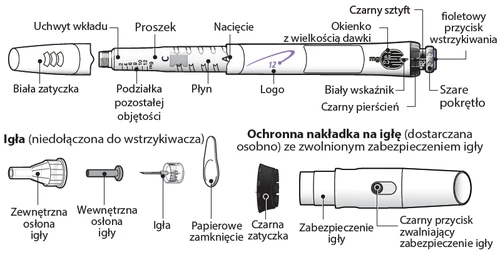
Needles are not included with the GoQuick injector. Needles up to 8 mm in length should be purchased at a pharmacy.
- Needles suitable for use with the GoQuick injector: 31 G or 32 G (Becton Dickinson and Company) 31 G or 32 G (Novo Nordisk) 32.5 G or 34 G (Terumo) Setting up and using a new GoQuick injector Step 1 Preparation
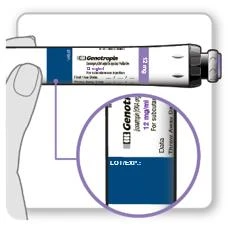
- Wash and dry your hands.
- Gather the following materials and place them on a clean, flat surface: o new GoQuick injector o new needle (not included with the set) o appropriate sharps container (not included with the set). Check the expiry date on the injector label. Do not use the injector if the expiry date has passed.
Step 2 Selecting the injection site
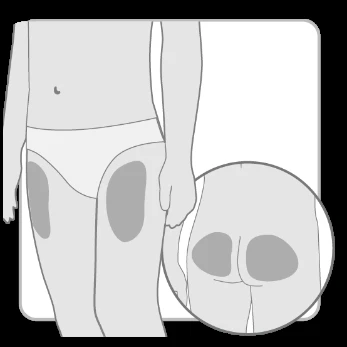
- Select and clean the injection site according to your doctor's or nurse's instructions. Choose a different site for each injection. Each subsequent injection should be administered at least 2 cm away from the previous one.
- Avoid bony, bruised, red, painful, or hardened areas, as well as areas of skin covered with scars or affected by disease. Step 3 Attaching a new needle
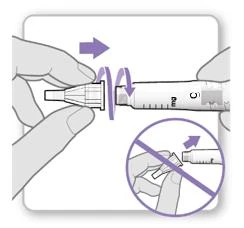
- Remove the white cap from the injector.
- Take a new needle and remove its paper seal.
- Gently press and then screw the needle onto the injector. Do not overtighten. Note: Be careful not to attach the needle at an angle. This may cause leakage.
- Leave both needle shields on the needle.
Step 4 Mixing Genotropin 12 medicine
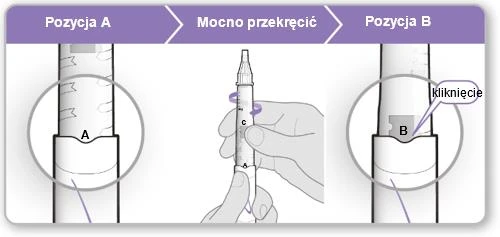
- Hold the injector with the needle pointing upwards and the letter “A” facing you.
- Firmly turn the cartridge handle until you feel a click, when the letter “B” aligns with the notch.
- Gently tilt the injector from side to side to facilitate complete dissolution of the powder. Do not shake. Shaking may damage the growth hormone.
- Check whether the liquid in the cartridge is clear and whether all the powder has dissolved. o If the liquid is cloudy or powder is visible, gently tilt the injector from side to side several more times. o If the liquid remains cloudy or powder is visible, do not use this injector and try again using a new one.
Step 5 Removing air from the injector
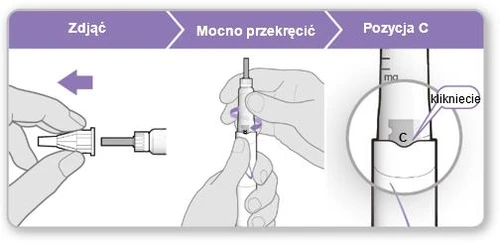
- Remove the outer needle shield. Keep it to secure the used needle after injection.
- Leave the inner needle shield in place. Note: After removing the outer shield, the inner needle shield should be visible. If it is not visible, try reattaching the needle.
- Hold the injector with the needle pointing upwards.
- Gently tap the cartridge to move trapped air to the top.
- Firmly turn the cartridge handle until you feel a click, when the letter “C” aligns with the notch. A small amount of liquid may appear around the inner needle shield. This is normal. Step 6 Loading the medicine dose
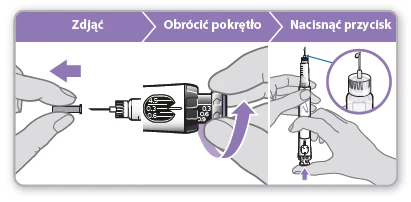
Loading the medicine dose allows removal of remaining air by expelling a small amount of liquid from the injector. The loaded dose is 0.3 mg and differs from the dose prescribed by your doctor or nurse. Perform this step only at the first use of the injector.
- Remove and discard the inner needle shield. Note: Do not touch the needle to avoid accidental needlestick.
- Ensure that the dose window displays 0.3 mg.
- Turn the grey knob in the direction indicated by the arrows until it stops clicking.
- Hold the injector with the needle pointing straight upwards.
- Press the violet injection button fully.
- Check whether liquid appears at the needle tip. If it does, the injector is ready for use. o If no liquid appears, repeat the steps described in the dose loading step once or twice. o If liquid still does not appear, do not use this injector. Contact your doctor or nurse for advice.
Step 7 Setting and preparing the dose
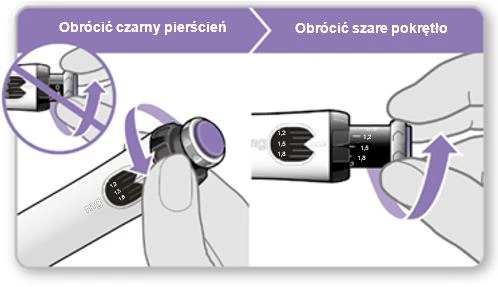
At the first use of the injector, the dose prescribed by your doctor or nurse will be set. There is no need to reset the dose until starting a new injector or unless advised by your doctor or nurse.
- Turn the black ring counterclockwise until the recommended dose aligns with the white indicator in the dose window. Be careful not to turn the grey knob. o If the selected dose does not align with the white indicator, turn the black ring in the opposite direction to set the correct dose value. Note: If you cannot turn the black ring, press the violet dose delivery button until it stops clicking. Then try setting the dose again. Remember that liquid will flow from the needle. Turn the grey knob in the direction indicated by the arrows until it stops clicking. Step 8 Checking the medicine dose
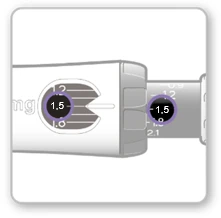
The selected dose value visible on the black plunger should align with the white indicator.
- Ensure that the dose value visible on the black plunger matches the value set in the dose window. o If these values are the same, the injector is ready for injection. o If the dose values do not match, ensure that the grey knob has been turned in the correct direction indicated by the arrows until it stops clicking.
Step 9 Injecting Genotropin 12 medicine
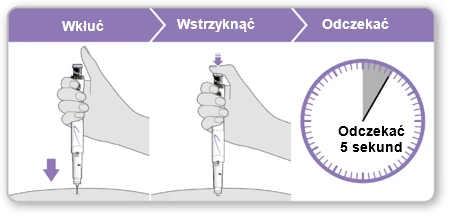
- Hold the injector over the injection site.
- Insert the needle straight into the skin.
- Press the violet injection button until it stops clicking.
- Wait a full 5 seconds to ensure the full dose of medicine is delivered. During this time, maintain light pressure on the violet injection button.
- After 5 seconds, remove the needle from the skin without tilting it sideways. Note: If a drop of liquid is visible at the injection site or on the needle tip, during the next injection, hold the violet injection button pressed longer before removing the needle from the skin. Step 10 Removing the needle
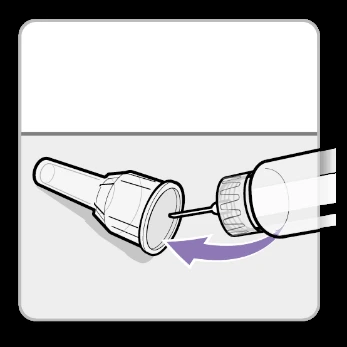
- Carefully place the outer needle shield over the needle. Note: Do not touch the needle to avoid accidental needlestick.
- Unscrew the needle using the outer shield.
- Dispose of the needle in an appropriate sharps container.
- Replace the white cap on the injector.
- Store the injector in the refrigerator until the next injection.
Regular (daily) use of the GoQuick injector
Step 1 Preparation
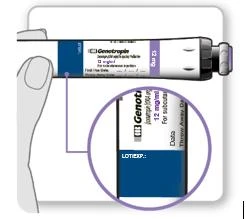
- Wash and dry your hands.
- Gather the following materials and place them on a clean, flat surface: o GoQuick injector with mixed medicine o new needle (not included with the set) o appropriate sharps container (not included with the set).
- Check the expiry date on the injector label. Do not use the injector if the expiry date has passed. Do not use the injector after 28 days from first use.
Step 2 Selecting the injection site
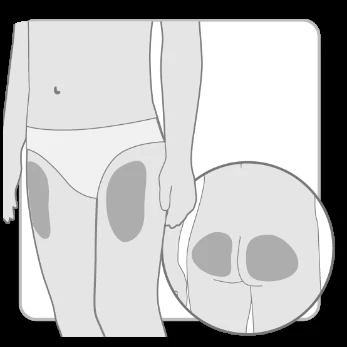
- Select and clean the injection site according to your doctor's or nurse's instructions. Choose a different site for each injection. Each subsequent injection should be administered at least 2 cm away from the previous one.
- Avoid bony, bruised, red, painful, or hardened areas, as well as areas of skin covered with scars or affected by disease.
Step 3 Attaching a new needle
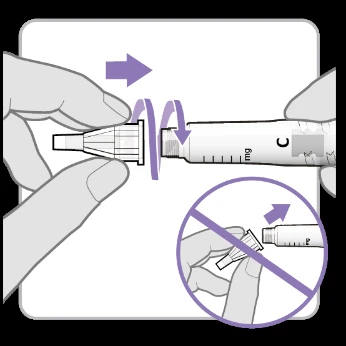
- Remove the white cap from the injector.
- Take a new needle and remove its paper seal.
- Gently press and then screw the needle onto the injector. Do not overtighten. Note: Be careful not to attach the needle at an angle. This may cause leakage.
- Remove both shields from the needle. Keep the outer shield to cover the needle after injection. Step 4 Loading the medicine dose
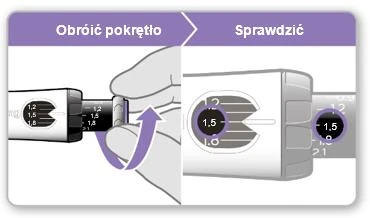
- Turn the grey knob in the direction indicated by the arrows until it stops clicking.
- The selected dose value visible on the black plunger should align with the white indicator.
- Ensure that the dose value visible on the black plunger matches the value set in the dose window. o If these values are the same, the injector is ready for injection. Note: If the prepared dose is smaller, this means the full dose of Genotropin 12 is not available in the injector. If the full dose is not available in the injector, follow the advice provided by your doctor or nurse, or contact them for guidance.
Step 5 Injecting Genotropin 12 medicine
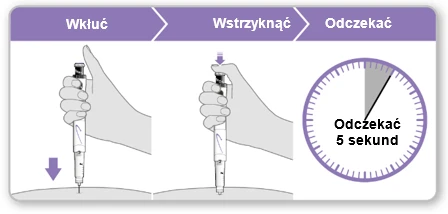
- Hold the injector over the injection site.
- Insert the needle straight into the skin.
- Press the violet injection button until it stops clicking.
- Wait a full 5 seconds to ensure the full dose of medicine is delivered. During this time, maintain light pressure on the violet injection button.
- After 5 seconds, remove the needle from the skin without tilting it sideways. Note: If a drop of liquid is visible at the injection site or on the needle tip, during the next injection, hold the violet injection button pressed longer before removing the needle from the skin. Step 6 Removing the needle
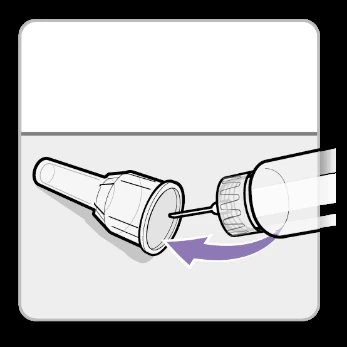
- Carefully place the outer needle shield over the needle. Note: Do not touch the needle to avoid accidental needlestick.
- Unscrew the needle using the shield.
- Dispose of the needle in an appropriate sharps container.
- Replace the white cap on the injector.
- Store the injector in the refrigerator until the next injection.
Using the protective needle cover (optional)
The protective needle cover is an optional accessory supplied separately, which allows hiding the needle during injection.
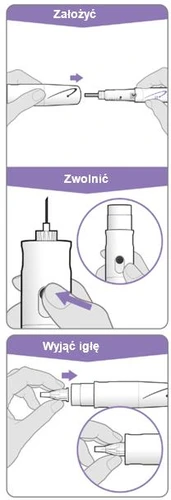
Attaching the protective needle cover:
The protective needle cover should be attached after completing step 5 (Setting up and using a new GoQuick injector) to avoid accidental needlestick.
- Remove the black cap from the protective needle cover. o If the needle safety device protrudes, push it back into the protective needle cover until it clicks into place.
- Align the black logo on the protective needle cover with the violet logo on the injector. Gently push the protective needle cover onto the injector until it clicks.
- After completing step 6 (Setting up and using a new GoQuick injector), press the black button to release the safety device in the protective needle cover.
- Follow the instructions described in step 7 (Setting up and using a new GoQuick injector).
To remove the needle with the protective needle cover attached:
- Place the outer needle shield on the end of the needle safety device.
- Using the outer needle shield, push the needle safety device until it locks into place.
- Using the shield, unscrew the needle and dispose of it in an appropriate sharps container.
- Leave the protective needle cover on the injector.
- Replace the black cap on the protective needle cover. Store the injector in the refrigerator. To remove the protective needle cover:
- First remove the needle, then gently pull the protective needle cover off the injector.
- Do not dispose of the protective needle cover. It can be reused with the next injector.
Package leaflet: information for the patient
GENOTROPIN 5.3, 5.3 mg (16 IU), powder and solvent for solution for injection
GENOTROPIN 12, 12 mg (36 IU), powder and solvent for solution for injection
Somatropinum
Please read this leaflet carefully before using this medicine, as it contains important information for you.
- Keep this leaflet, as you may need to read it again.
- If you have any further questions, please consult your doctor or pharmacist.
- This medicine has been prescribed for a specific individual. Do not pass it on to others. It may harm someone else, even if their symptoms are the same.
- If you experience any side effects, including any not listed in this leaflet, please inform your doctor or pharmacist. See section 4.
Contents of the leaflet
- What Genotropin is and what it is used for
- Important information before taking Genotropin
- How to use Genotropin
- Possible side effects
- How to store Genotropin
- Contents of the package and other information
1. What Genotropin is and what it is used for
Genotropin contains somatropin — human growth hormone produced in Escherichia coli bacterial cells by recombinant DNA technology. Somatropin is essential for normal growth in children. In adults with growth hormone deficiency, somatropin reduces fat tissue mass and increases muscle mass.
Genotropin is used in children:
- for growth disorders due to insufficient growth hormone secretion;
- for growth disorders associated with Turner syndrome (chromosomal abnormalities in girls);
- for growth disorders associated with chronic renal insufficiency;
- for growth disorders in small children born with low birth weight for gestational age (i.e., small for gestational age);
- for Prader-Willi syndrome, to improve growth and body composition.
Genotropin is used in adults as replacement therapy in individuals with severe growth hormone deficiency. Treatment may be initiated in adulthood or continued from childhood.
If you were treated with Genotropin during childhood, growth hormone levels should be evaluated after completion of growth. If severe growth hormone deficiency is confirmed, your doctor may recommend continuing treatment.
2. Important information before taking Genotropin
Before starting treatment with Genotropin, the diagnosis must be confirmed. Treatment should only be administered under the supervision of a physician experienced in this field.
When not to use Genotropin:
- if you are allergic to somatropin or any of the other ingredients of this medicine (listed in section 6);
- if you have active malignancy. Inform your doctor about any malignancy. Tumours must be inactive and anti-cancer therapy must be completed before starting Genotropin treatment;
- in children who have completed growth;
- if you have acute life-threatening conditions, complications after open-heart surgery, abdominal surgery, or major trauma, or acute respiratory failure, etc. Before planned surgery or during hospitalization, inform your doctor that you are taking growth hormone.
Warnings and precautions
Before starting Genotropin, discuss the following with your doctor or pharmacist:
- in patients with diabetes; after starting Genotropin, the dose of diabetes medication may need adjustment;
- if there are risk factors for diabetes (e.g., if you are overweight or have a family history of diabetes);
- in some patients, thyroid hormone replacement therapy may need to be initiated after starting Genotropin;
- in patients receiving thyroid hormones, dose adjustments of these medications may be necessary;
- if you are receiving glucocorticoid replacement therapy, you should have regular check-ups, as dose adjustments may be needed;
- if you start gaining weight (in children only);
- in case of severe or sudden headaches, visual disturbances, nausea and/or vomiting;
- if you experience symptoms of spinal curvature;
- if you develop worsening abdominal pain, inform your doctor;
- in individuals over 80 years of age, due to limited experience in treating this age group and increased susceptibility to side effects.
If treatment is related to chronic renal impairment, kidney function should be assessed before starting treatment; Genotropin should be discontinued after kidney transplantation.
In Prader-Willi syndrome, before starting and during treatment, your doctor should monitor for risk factors such as severe obesity, respiratory dysfunction or history of sleep apnoea, and undiagnosed respiratory infections. Your doctor may recommend a low-calorie diet and/or treat infections.
In patients with intrauterine growth retardation, other causes of growth disorders should be excluded before starting treatment. Your doctor will order a fasting insulin and glucose test before starting treatment and annually thereafter; also before starting treatment and twice yearly, your doctor will recommend measuring IGF-I (insulin-like growth factor) levels. Therapy should not be initiated in children with intrauterine growth retardation approaching puberty.
Genotropin and other medicines
Tell your doctor about all medicines you are currently taking, have recently taken, or plan to take.
Specifically inform your doctor if you are currently taking or have recently taken:
- oral estrogens or other sex hormones. Your doctor may recommend adjusting the dose of Genotropin or other medicines.
Pregnancy and breastfeeding
If you are pregnant or breastfeeding, suspect you may be pregnant, or are planning to become pregnant, consult your doctor or pharmacist before using this medicine.
Genotropin is not recommended for use in pregnant women or women planning to become pregnant in the near future.
Driving and using machines
Genotropin has no effect on the ability to drive or operate machinery.
Genotropin contains m-cresol
Genotropin contains m-cresol as an excipient, which may be associated with muscle inflammation. Report any muscle pain or excessive pain at the injection site to your doctor. If muscle inflammation occurs, your doctor will decide to switch to a product not containing m-cresol.
Genotropin contains sodium
This medicine contains less than 1 mmol (23 mg) of sodium per maximum daily dose, i.e., it is considered "sodium-free".
3. How to use Genotropin
Always use this medicine exactly as prescribed by your doctor. If in doubt, consult your doctor or pharmacist.
Your doctor will determine the dose individually for each patient.
Genotropin is administered subcutaneously. The injection site should be rotated to avoid skin changes. Follow your doctor's or nurse's instructions.
Growth disorders in children due to insufficient growth hormone secretion
Recommended dose: 0.025–0.035 mg/kg body weight per day or 0.7–1.0 mg/m² body surface area per day.
In children with Prader-Willi syndrome to accelerate growth and improve body composition
Recommended dose: 0.035 mg/kg body weight per day or 1.0 mg/m² body surface area per day.
Do not use a daily dose exceeding 2.7 mg/m² body surface area per day. Do not treat children growing less than 1 cm per year and who are nearing completion of growth.
Growth disorders in children associated with Turner syndrome
Recommended dose: 0.045–0.050 mg/kg body weight per day or 1.4 mg/m² body surface area per day.
Growth disorders associated with chronic renal insufficiency
Recommended dose: 0.045–0.050 mg/kg body weight per day or 1.4 mg/m² body surface area per day. If growth velocity is too low, dose increase may be necessary. Dose adjustment may be required after 6 months of treatment.
Growth disorders in small children born small for gestational age
Recommended dose: 0.035 mg/kg body weight per day (1 mg/m² body surface area per day). Treatment continues until final adult height is reached. Discontinue treatment if growth rate is too slow.
Adults with growth hormone deficiency
In patients continuing growth hormone therapy after childhood GH deficiency, the recommended dose to resume treatment is 0.2–0.5 mg per day. The dose should be gradually increased or decreased according to individual patient requirements based on IGF-I (insulin-like growth factor) levels.
In adults with acquired GH deficiency, treatment should start with a low dose: 0.15–0.3 mg per day. The dose is gradually increased based on serum IGF-I levels, efficacy, and side effects. The maximum daily dose rarely exceeds 1.0 mg per day. Use the lowest effective dose.
Women may require higher doses than men.
Natural hormone production decreases with age, so the dose may need to be reduced over time.
Dose adjustment should be monitored every 6 months.
In patients over 60 years of age, treatment should start with a dose of 0.1–0.2 mg per day and gradually increased according to individual requirements. Use the lowest effective dose. The maintenance dose in these patients rarely exceeds 0.5 mg per day.
Method of administration
Genotropin 5.3 in a dual-chamber cartridge is administered using the Genotropin Pen 5.3. The dual-chamber cartridge contains growth hormone and solvent.
Genotropin 12 in a dual-chamber cartridge is administered using the Genotropin Pen 12. The dual-chamber cartridge contains growth hormone and solvent.
Genotropin Pen: After inserting the dual-chamber cartridge, twist the Genotropin Pen. The growth hormone and solvent are automatically mixed. During preparation, DO NOT shake the solution.
DO NOT SHAKE!
Shaking may cause denaturation of the active substance, leading to loss of biological activity.
Please refer to the Genotropin Pen user instructions.
Overdose of Genotropin
If you inject too much Genotropin, contact your doctor. A single overdose affects blood glucose levels, which may become too low or too high. Symptoms may include trembling, sweating, drowsiness, fainting, and feeling "not yourself."
Missing a dose of Genotropin
Do not use a double dose to make up for a missed dose.
If you have any further questions about using this medicine, consult your doctor.
4. Possible side effects
Like all medicines, this medicine can cause side effects, although not everyone will experience them.
Very common (may affect more than 1 in 10 people)
Adults:
- Joint pain.
- Fluid retention (manifesting as swollen fingers or swollen wrists).
Common (may affect up to 1 in 10 people)
Children:
- Joint pain.
- Transient redness, itching, and pain at the injection site.
Adults:
- Numbness/tingling.
- Pain or burning sensation in hands or arms (known as carpal tunnel syndrome).
- Stiffness of arms and legs, muscle pain.
Uncommon (may affect up to 1 in 100 people)
Children:
- Leukaemia (reported in a small number of patients with growth hormone deficiency, some treated with Genotropin. However, there is no evidence that leukaemia incidence is increased in growth hormone-deficient patients without predisposing factors).
- Increased intracranial pressure (causing symptoms such as severe headache, visual disturbances, or vomiting).
- Numbness/tingling.
- Rash.
- Itching.
- Raised, itchy skin nodules.
- Muscle pain.
- Water retention (manifesting as swollen fingers or swollen wrists).
- Breast enlargement (gynaecomastia).
Adults:
- Breast enlargement (gynaecomastia).
Frequency not known (cannot be estimated from available data)
Adults and children:
- Type 2 diabetes.
- Facial swelling.
- Headache.
- Decreased blood cortisol levels.
Children:
- Stiffness of arms and legs.
Adults:
- Increased intracranial pressure (causing symptoms such as severe headache, visual disturbances, or vomiting).
- Rash.
- Itching.
- Raised, itchy skin nodules.
- Redness, itching, and pain at the injection site.
Antibodies against the injected growth hormone have been observed, but they do not appear to affect its efficacy.
Very rarely, inflammatory reactions in muscles around the injection site caused by m-cresol (excipient) have been observed. If confirmed by a doctor, use of a product not containing m-cresol is recommended.
Rotate injection sites to avoid skin changes such as lumps or nodules.
Since marketing authorization, rare cases of sudden death in patients with Prader-Willi syndrome treated with Genotropin have been reported. A causal relationship with Genotropin has not been established.
In children treated with growth hormone, cases of slipped capital femoral epiphysis and Legg-Calve-Perthes disease have been reported. A causal relationship with Genotropin has not been established.
Other side effects associated with growth hormone use may include increased blood glucose levels or decreased thyroid hormone levels in adults and children. This can be confirmed by your doctor, who may initiate appropriate treatment if necessary. Pancreatitis has been rarely reported in patients treated with growth hormone.
Reporting of side effects
If you experience any side effects, including any not listed in this leaflet, please inform your doctor or pharmacist. Side effects can be reported directly to the Department of Monitoring Adverse Drug Reactions of the Office for Registration of Medicinal Products, Medical Devices and Biocidal Products
Al. Jerozolimskie 181C
02-222 Warszawa
Tel.: + 48 22 49 21 301
Fax: + 48 22 49 21 309
Website: https://smz.ezdrowie.gov.pl
Side effects can also be reported to the Marketing Authorisation Holder or its representative.
Reporting side effects helps provide more information on the safety of this medicine.
5. How to store Genotropin
Keep the medicine out of sight and reach of children.
Do not use this medicine after the expiry date stated on the carton after “Expiry date (EXP)”. The expiry date refers to the last day of the stated month.
Store the medicine at 2°C - 8°C (in the refrigerator), do not freeze. The medicine may be stored below 25°C for one month. Store in the outer packaging to protect from light.
After reconstitution
The solution may be stored for 4 weeks at 2°C - 8°C (in the refrigerator), do not freeze. Store in the outer packaging to protect from light.
Do not dispose of medicines via wastewater or household waste. Ask your pharmacist how to dispose of medicines no longer needed. This helps protect the environment.
6. Contents of the package and other information
What Genotropin 5.3 contains
- The active substance is somatropin*. One cartridge contains 5.3 mg of somatropin*.
- Other ingredients are: glycine, mannitol, monosodium dihydrogen phosphate monohydrate (calculated as anhydrous), disodium hydrogen phosphate dodecahydrate (calculated as anhydrous) (see section 2 "Genotropin contains sodium"). The solvent contains m-cresol (see section 2 "Genotropin contains m-cresol"), mannitol, water for injections. After reconstitution, the concentration of somatropin is 5.3 mg/ml.
* produced in Escherichia coli bacterial cells by recombinant DNA technology.
What Genotropin 12 contains
- The active substance is somatropin*. One cartridge contains 12 mg of somatropin*.
- Other ingredients are: glycine, mannitol, monosodium dihydrogen phosphate monohydrate (calculated as anhydrous), disodium hydrogen phosphate dodecahydrate (calculated as anhydrous) (see section 2 "Genotropin contains sodium"). The solvent contains m-cresol (see section 2 "Genotropin contains m-cresol"), mannitol, water for injections. After reconstitution, the concentration of somatropin is 12 mg/ml.
* produced in Escherichia coli bacterial cells by recombinant DNA technology.
What the medicine looks like and contents of the pack
Genotropin is available in dual-chamber cartridges, in which one chamber contains the active substance as a white powder and the other chamber contains a clear solution serving as the solvent for the active substance.
Genotropin is available in a pack containing 1 or 5 dual-chamber cartridges.
Marketing Authorisation Holder:
Pfizer Europe MA EEIG
Boulevard de la Plaine 17
1050 Bruxelles
Belgium
Manufacturer:
Pfizer Manufacturing Belgium NV
Rijksweg 12
2870 Puurs-Sint-Amands
Belgium
For further information about this medicine, please contact the representative of the Marketing Authorisation Holder:
Pfizer Polska Sp. z o.o.
tel.: 22 335 61 00
Other sources of information
Detailed information about this medicine is available on the website of the Office for Registration of Medicinal Products, Medical Devices and Biocidal Products http://urpl.gov.pl