Gastrografin
Poland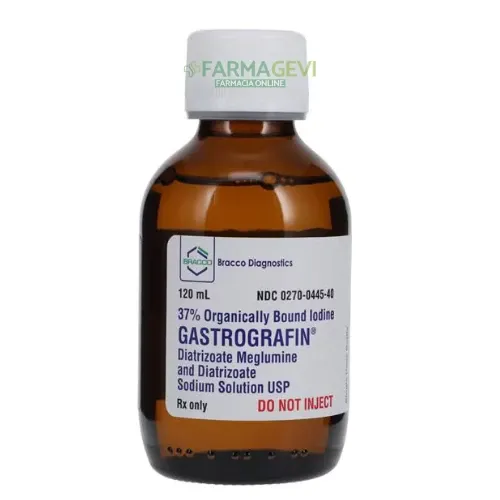
Table of Contents
Package leaflet: Information for the user
Warning! Keep the leaflet. Information on the immediate packaging is in a foreign language.
Gastrografin (660 mg + 100 mg)/ml oral and rectal solution
Meglumine amidotrizoate + Sodium amidotrizoate
Please read the entire leaflet carefully before use, as it contains
important information for the patient
- Keep this leaflet for future reference.
- Consult your doctor or pharmacist if you have any doubts.
- This medicine has been prescribed for a specific individual. Do not pass it on to others. This medicine may harm others, even if their symptoms are identical.
- If any adverse reactions occur, including any possible adverse reactions not listed in this leaflet, inform your doctor, pharmacist, or nurse. See section 4.
Table of contents of the leaflet:
- What Gastrografin is and what it is used for
- Important information before using Gastrografin
- How to use Gastrografin
- Possible side effects
- How to store Gastrografin
- Contents of the pack and other information
1. WHAT GASTROGRAFIN IS AND WHAT IT IS USED FOR
Gastrografin is a contrast agent used exclusively for diagnostic imaging in radiological examinations, including computed tomography (CT), of the gastrointestinal tract.
The medicine is available as a solution for oral intake or rectal administration. It facilitates visualisation of strictures, perforations, colonic distension, foreign bodies, tumours, etc.
Gastrografin is often used when barium enema or barium paste cannot be administered.
Sometimes, the medicine is used together with barium to enhance diagnostic efficacy.
Gastrografin may also be used in the treatment of meconium ileus.
Gastrografin facilitates differentiation between the intestines and adjacent anatomical structures and enables assessment of morphological changes in the pancreas.
2. IMPORTANT INFORMATION BEFORE USING GASTROGRAFIN
When not to use undiluted GASTROGRAFIN
- in patients with reduced blood volume (e.g. patients who are dehydrated due to severe diarrhoea, vomiting, in newborns, infants, or children), because complications associated with low blood volume may be particularly dangerous;
- in patients at risk of the medicinal product entering the respiratory tract, because aspiration into the airways may cause serious respiratory complications, even fatal outcomes.
Warnings and precautions
Before starting treatment with GASTROGRAFIN, consult your doctor:
- if you are allergic (hypersensitive) to GASTROGRAFIN or any other ingredient of this medicinal product (see section 6 Package contents and other information);
- if you have or have had allergies (e.g. high fever, urticaria) or asthma;
- if you have previously experienced reactions to iodine-containing contrast agents;
- if hyperthyroidism or goitre (enlarged thyroid gland) is present or suspected, because iodine-containing contrast agents may induce hyperthyroidism or precipitate a thyrotoxic crisis (a severe complication associated with hyperthyroidism);
- if you have heart or circulatory diseases;
- in patients who are in very poor general health.
You should inform your doctor if any of the above situations apply. Your doctor will decide whether the examination can be performed. Before administering GASTROGRAFIN, your doctor may order tests to assess thyroid function and may prescribe antithyroid drugs (thyroid function inhibitors).
Your doctor will order thyroid function tests in newborns who have been exposed to GASTROGRAFIN, both during fetal life and after birth, because excessive iodine dose may cause hypothyroidism, which may require treatment.
After administration of GASTROGRAFIN, pseudoallergic reactions, including severe ones, affecting the cardiovascular system, respiratory system or skin, may occur. Delayed reactions occurring several hours or days after administration are also possible (see section 4 "Possible side effects").
Other medicines and GASTROGRAFIN
You should inform your doctor about all medicines you have recently taken, including those obtained without a prescription.
Particular caution is required when using GASTROGRAFIN concomitantly with the following medicinal products:
- interleukins;
- radioactive substances used in diagnosis and treatment of the thyroid gland.
Your doctor will decide on their use.
GASTROGRAFIN with food and drink
Before starting the examination, bowel evacuation is recommended. Your doctor will inform you if this is necessary.
Pregnancy and breastfeeding
Inform your doctor if you are pregnant or suspect you may be pregnant, because GASTROGRAFIN should be used with caution in pregnant women.
Inform your doctor if you are breastfeeding or intend to breastfeed. Your doctor will decide whether breastfeeding can continue.
Driving and operating machinery
There is no information available regarding the effects of GASTROGRAFIN on the ability to drive or operate machinery.
GASTROGRAFIN contains between 224.40 and 374.00 mg of sodium (the main component of table salt) per dose (60–100 ml). This corresponds to 11.2–18.7% of the maximum recommended daily dietary sodium intake for adults.
GASTROGRAFIN in combination with barium sulphate contains 112.20 mg of sodium (the main component of table salt) per dose (30 ml). This corresponds to 5.5% of the maximum recommended daily dietary sodium intake for adults.
3. HOW TO USE GASTROGRAFIN
GASTROGRAFIN is intended for oral administration or rectal enema. The dose of GASTROGRAFIN is determined by the doctor and depends on the patient's age and the type of X-ray examination.
GASTROGRAFIN must not be administered by injection.
Detailed information on dosage and administration is provided at the end of this leaflet.
Use of a higher than recommended dose of GASTROGRAFIN
Overdose with GASTROGRAFIN is unlikely. In case of overdose, the doctor will treat the symptoms. This may include intravenous rehydration and electrolyte replacement.
4. POSSIBLE ADVERSE REACTIONS
Like any medicine, Gastrografin can cause adverse reactions, although not everyone experiences them.
Adverse reactions are usually mild to moderate and transient. Severe and life-threatening reactions have also been reported, including death. The most commonly reported adverse reactions are: vomiting, nausea, diarrhoea.
The following adverse reactions are listed below grouped according to their frequency:
- Common adverse reactions: occurring in more than 1 in 100 but less than 1 in 10 patients,
- Rare adverse reactions: occurring in less than 1 in 1,000 but more than 1 in 10,000 patients.
- Unknown: frequency cannot be determined from available data.
The following adverse reactions have been observed:
| Common Vomiting Nausea Diarrhea | Rare Pseudoallergic reactions, including severe cases (shock) Hyperthyroidism Disturbances in water and electrolyte balance Disturbances in consciousness Headache Dizziness Cardiac arrest Rapid heartbeat (tachycardia) Shock Decreased blood pressure Breathing difficulties (bronchospasm) Medication entering the respiratory tract (aspiration) Pulmonary edema following aspiration Aspiration pneumonia Dilation or perforation in the gastrointestinal tract Abdominal pain Blisters on the oral mucosa Severe skin reactions with intense redness Skin peeling Large blisters Urticaria Rash Itching Skin redness Facial swelling Fever Sweating | Not known Hypothyroidism |
As with other contrast agents, pseudoallergic reactions have been reported, including severe reactions (shock), which may require immediate medical intervention. The initial signs of a severe reaction may include: mild swelling of the face, lips, tongue, throat, cough, itching, runny nose, sneezing, and urticaria.
Inform your doctor or medical staff if any of the above symptoms occur or if you experience difficulty breathing.
Delayed reactions may occur several hours or days after administration of Gastrografin.
Gastrointestinal disorders
Gastrografin may cause diarrhea, which resolves after intestinal evacuation. In patients with small intestine inflammation, transient worsening of symptoms may occur. In cases of constipation, prolonged contact with the intestinal mucosa may lead to mucosal erosion and intestinal necrosis.
If any of these symptoms worsen or if any other adverse effects occur, including any possible adverse effects not listed in this leaflet, consult your doctor or radiologist.
Reporting of adverse reactions
If any adverse effects occur, including any not listed in this leaflet, inform your doctor, pharmacist, or nurse. Adverse reactions can also be reported directly to the Department of Monitoring Adverse Drug Reactions, Office for Registration of Medicinal Products, Medical Devices and Biocidal Products
Al. Jerozolimskie 181C
02-222 Warsaw
Tel: + 48 (22) 49 21 301
Fax: + 48 (22) 49 21 309
Website: https://smz.ezdrowie.gov.pl
Reporting adverse reactions helps to provide more information on the safety of the medicinal product.
5. HOW TO STORE GASTROGRAFIN
Do not store above 25°C.
Protect from light and X-radiation.
Keep the medicine out of sight and reach of children.
Do not use this medicine after the expiry date stated on the container. The expiry date refers to the last day of the specified month.
The contents of the bottle should be used within 72 hours of opening.
Medicines should not be disposed of via wastewater or household waste. Ask your pharmacist how to dispose of medicines no longer required. Such measures help protect the environment.
6. PACK CONTENTS AND OTHER INFORMATION
What Gastrografin contains
- The active substances in this medicinal product are: sodium amidotrizoate and meglumine amidotrizoate.
- Other ingredients are: sodium hydroxide, disodium edetate, sodium saccharin, polysorbate 80, star anise essential oil, purified water.
What Gastrografin looks like and contents of the pack
- Gastrografin is a clear, colourless or pale yellow solution.
- Pack sizes available: 1 bottle of 100 ml; 5 bottles of 100 ml; 10 bottles of 100 ml.
For more detailed information, please contact the Marketing Authorisation Holder or the Parallel Importer.
Marketing Authorisation Holder in Greece, country of export:
Bayer Hellas ABEE
Sorou 18-20
15 125 Marousi
Athens, Greece
Manufacturer:
Berlimed S.A.
Calle Francisco Alonso (Pg Ind Santa Rosa) 7
28806 Alcala De Henares
Spain
Parallel Importer:
Delfarma Sp. z o.o.
ul. Św. Teresy od Dzieciątka Jezus 111
91-222 Łódź
Repackaged in:
Delfarma Sp. z o.o.
ul. Św. Teresy od Dzieciątka Jezus 111
91-222 Łódź
Marketing Authorisation Number in Greece, country of export: 26988/14-7-1995
29753/13-05-2005
41340/05/06-09-2006
65584/30-9-2010
Parallel Import Authorisation Number: 906/12
Information intended exclusively for medical professionals:
Drugs for the treatment of hypersensitivity reactions, as well as emergency resuscitation measures, should be readily available.
- Thyroid dysfunction
In patients with diagnosed or suspected hyperthyroidism, thyroid function testing and/or administration of antithyroid drugs should be considered prior to administration of Gastrografin, as iodine-containing contrast agents may impair thyroid function, exacerbate or induce hyperthyroidism, or trigger a thyroid storm.
In neonates, especially preterm infants, who have been exposed to Gastrografin both in utero and during the neonatal period, monitoring of thyroid function is recommended, as excess iodine exposure may cause hypothyroidism, which may require treatment.
-
Barium sulfate
If Gastrografin is used in combination with barium sulfate preparations, contraindications, warnings, and potential adverse reactions associated with these agents should be taken into account. -
Gastrointestinal system
Prolonged retention of Gastrografin in the gastrointestinal tract (e.g., due to constipation or intestinal stasis) may lead to tissue damage, bleeding, or intestinal necrosis. -
Hydration
Due to the hyperosmolality of Gastrografin, which may cause dehydration and electrolyte imbalances, adequate hydration and electrolyte balance should be ensured and maintained in patients.- Interactions
-
Drugs
Prior treatment with interleukin-2 (even up to several weeks before) is associated with an increased risk of delayed reactions following administration of Gastrografin. -
Effect on laboratory test results
Diagnosis and treatment of thyroid disorders using radioactive iodine isotopes may be impaired for up to several weeks after administration of iodine-containing contrast agents, due to reduced uptake of the radioisotope.- Preclinical safety data
Preclinical data obtained from conventional systemic toxicity, genotoxicity, reproductive toxicity, local tolerance, and contact sensitization studies revealed no specific hazard for humans.
- Preclinical safety data
-
Route of administration
Gastrografin must not be administered intravenously due to the presence of excipients (flavoring agents, lubricants).
Due to its high osmotic pressure and tendency to be absorbed in the intestines, Gastrografin should not be administered to neonates, infants, and young children in doses higher than recommended. In neonates and infants, contrast agents with low osmolality are safer than the high-osmolality Gastrografin.
Oral administration
The dose of contrast agent depends on the type of examination and patient's age.
Adults and children aged 10 years and older:
- Gastric imaging: 60 mL
- Serial gastrointestinal examinations: 100 mL
In elderly and debilitated patients, dilution of the agent with an equal volume of water is recommended.
Children:
- Children (up to 10 years of age): 15 mL to 30 mL of solution (may be diluted with twice the volume of water).
- Neonates, infants, and younger children: 15 mL to 30 mL of solution (diluted with three times the volume of water).
Computed tomography (CT):
0.5 L to 1.5 L of Gastrografin solution at a concentration of approximately 3% (30 mL of Gastrografin solution per 1 L of water).
Rectal administration (including treatment of uncomplicated meconium ileus)
Adults:
Up to 500 mL of diluted Gastrografin solution (diluted with 3 to 4 times the volume of water).
Children:
- Children (up to 5 years): up to 500 mL of Gastrografin solution (diluted with 5 times the volume of water).
- Children (over 5 years): up to 500 mL of Gastrografin solution (diluted with 4 to 5 times the volume of water).
Dose in combination with barium sulfate
Adults and children aged 10 years and older:
Add approximately 30 mL of Gastrografin to the usual dose of barium sulfate.
Children:
In addition to the usual dose of barium sulfate:
- Children (up to 5 years): 2 mL to 5 mL of Gastrografin per 100 mL of barium sulfate suspension,
- Children (5 to 10 years): 10 mL of Gastrografin per 100 mL of barium sulfate suspension.
If necessary (e.g., in case of pyloric spasm or stenosis), the dose of Gastrografin may be further increased.
Instructions for use
Gastrografin has a tendency to crystallize at temperatures of 7°C. This phenomenon is reversible upon gentle warming and shaking, and does not affect the efficacy or stability of the product.
Any unused product or waste material should be disposed of in accordance with local regulations within 72 hours of first opening.
Additional information on the use of Gastrografin can be found in section 3 of the package leaflet.