Fostimon
Poland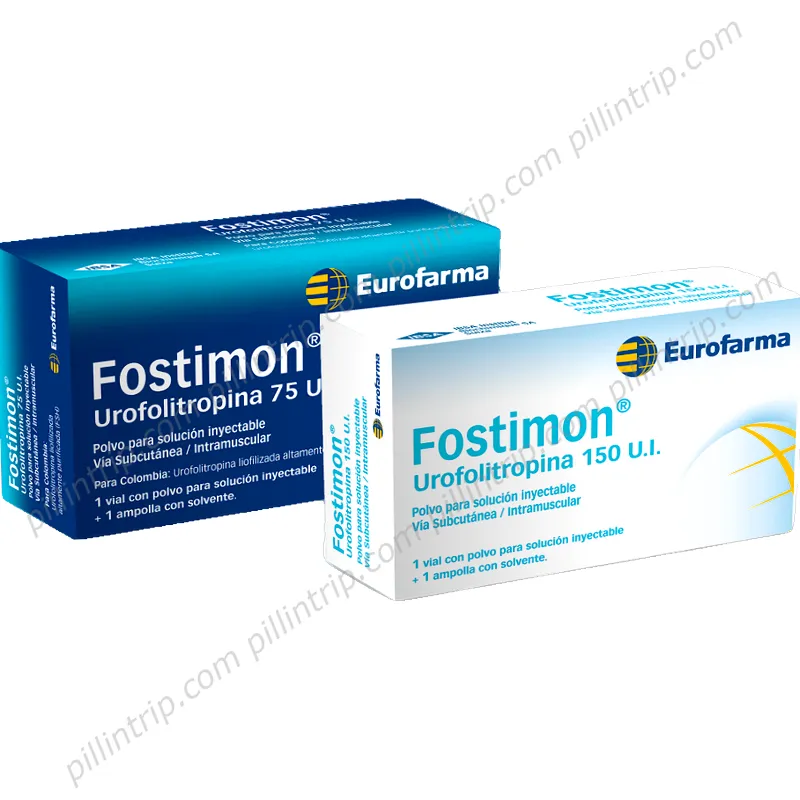
Table of Contents
- Package leaflet: Information for the patient
- 1. What Fostimon is and what it is used for
- 2. Important information before using Fostimon
- 3. How to use Fostimon
- 4. Possible adverse reactions
- 5. How to store Fostimon
- 6. Package contents and other information
- Package leaflet: information for the patient
- 1. What Fostimon is and what it is used for
- 2. Important information before using Fostimon
- 3. How to use Fostimon
- 4. Possible side effects
- 5. How to store Fostimon
- 6. Contents of the pack and other information
Package leaflet: Information for the patient
FOSTIMON 75 IU/vial + 1 ml solvent
powder and solvent for solution for injection
(Urofollitropinum)
Please read this leaflet carefully before using the medicine, as it contains important information for the patient.
- Keep this leaflet, as you may need to read it again.
- If you have any further questions, please consult your doctor, pharmacist, or nurse.
- This medicine has been prescribed for a specific individual. Do not pass it on to others. It may harm them even if their symptoms are the same.
- If you experience any adverse reactions, including any not listed in this leaflet, inform your doctor, pharmacist, or nurse. See section 4.
Leaflet contents:
- What Fostimon is and what it is used for
- Important information before using Fostimon
- How to use Fostimon
- Possible side effects
- How to store Fostimon
- Contents of the pack and other information
1. What Fostimon is and what it is used for
Fostimon is used to stimulate ovulation in women who have not responded to clomiphene citrate treatment.
It is used to induce the development of multiple follicles (and consequently multiple oocytes) in women undergoing infertility treatment.
Fostimon consists of a powder in a vial and a solvent in an ampoule, which are mixed to prepare an injectable solution. Urofollitropin is purified human follicle-stimulating hormone (FSH), belonging to a group of medicines called gonadotropins.
Fostimon must be used under strict medical supervision.
Indications for Fostimon:
- Anovulation (including polycystic ovarian syndrome, PCOS) in women who have not responded to clomiphene citrate treatment.
- Multiple follicular stimulation in patients undergoing assisted reproductive technology (ART), such as in vitro fertilization (IVF), gamete intrafallopian transfer (GIFT), and zygote intrafallopian transfer (ZIFT).
2. Important information before using Fostimon
The patient and her partner will be evaluated for infertility before starting treatment.
When not to use Fostimon:
Do not use Fostimon in the following cases:
- If the patient is allergic to FSH or to any of the other ingredients of this medicine (listed in section 6),
- Ovarian enlargement or ovarian cysts not related to polycystic ovary syndrome,
- Unexplained vaginal bleeding,
- Ovarian, uterine or breast cancer,
- Tumors of the hypothalamus or pituitary gland.
Fostimon is also contraindicated if an adequate response to treatment cannot be achieved due to:
- Primary ovarian failure,
- Congenital malformations of the genital organs preventing a normal pregnancy,
- Uterine fibroids preventing a normal pregnancy.
Warnings and precautions
Treatment increases the risk of developing ovarian hyperstimulation syndrome (OHSS) (see "Possible adverse reactions").
The use of hCG is not recommended if OHSS occurs; in such cases, sexual intercourse should be avoided, even with mechanical contraception, for at least 4 days.
In patients treated with Fostimon for assisted reproduction and ovulation induction, multiple pregnancies are more common compared to natural conception.
In women treated with FSH, the rate of miscarriage is higher than in the general population. Ectopic pregnancy also occurs more frequently.
Although there have been no reports of allergic reactions after administration of Fostimon, patients should inform their doctor of any allergic reactions experienced after using similar medicines.
Before starting treatment, the causes of infertility should be diagnosed and any contraindications to pregnancy should be ruled out. In particular, hypothyroidism, adrenal insufficiency, hyperprolactinemia, and tumors of the pituitary or hypothalamus should be excluded. Appropriate treatment should be initiated if necessary.
The occurrence of congenital abnormalities may be slightly more frequent after ART than after natural conception. This is likely due to differences in parental characteristics (e.g. maternal age, sperm characteristics) and multiple pregnancies.
In women with known risk factors for thromboembolism, such as family history, significant obesity (BMI > 30 kg/m²), or thrombophilia, there may be an increased risk of venous or arterial thromboembolism during treatment with gonadotropins. In these women, the benefits and risks of gonadotropin administration should be carefully weighed.
This medicine is derived from human urine. The risk of transmitting infectious agents that could cause infection or disease cannot be completely excluded, but is very limited due to production processes that include viral removal steps, particularly for HIV, Herpesvirus, and Papillomavirus.
There have been no reports of viral contamination.
Interaction of Fostimon with other medicines
Inform your doctor or pharmacist about any medicines you are currently taking, have recently taken, or might take in the future.
Pregnancy and breastfeeding
Fostimon must not be used during pregnancy or breastfeeding.
The medicine contains less than 1 mmol (23 mg) of sodium per 1 ml of reconstituted solution, meaning the medicine is considered "sodium-free". The sodium content of the diluent supplied with the pack should also be taken into account.
3. How to use Fostimon
This medicine should always be used exactly as directed by your doctor. If you have any doubts, consult your doctor.
Absence of ovulation (including polycystic ovary syndrome, PCOS) in women who did not respond to clomiphene citrate treatment.
The usual starting dose is 75 IU to 150 IU of FSH (Fostimon) per day. This dose may be increased, if necessary, by 37.5 IU to 75 IU at intervals of 7 or preferably 14 days, in order to achieve an appropriate response.
The maximum daily dose of FSH usually does not exceed 225 IU.
If, after 4 weeks of treatment, your doctor does not observe an appropriate response, treatment should be discontinued. In the next cycle, your doctor will prescribe a higher starting dose.
If the response to treatment is satisfactory (adequate follicular development), a single injection of another medicine (hCG) will be administered to induce final maturation of the follicle and release of the egg cell. This injection should be given 24 to 48 hours after the last injection of Fostimon. Sexual intercourse should take place on the day of hCG injection and the following day.
If the response to treatment is too strong, treatment will be stopped and hCG will not be administered (see "Possible side effects"). In the next treatment cycle, your doctor will recommend a lower starting dose.
Multiple follicular stimulation in patients undergoing assisted reproductive technology (ART), such as in vitro fertilization (IVF), gamete intrafallopian transfer (GIFT), and zygote intrafallopian transfer (ZIFT).
The choice of dose and method of administration will be determined by your doctor.
How to administer Fostimon:
Fostimon is administered by subcutaneous or intramuscular injection. Each vial is for single use only. The solution should be injected immediately after preparation.
After receiving appropriate instructions from the doctor and following training, the patient may self-administer the injections.
First, the doctor should:
- allow the patient to practice subcutaneous injections
- show the sites where injections can be given
- demonstrate how to prepare the solution for injection
- explain how to prepare the correct dose of the medicine
Before self-injecting Fostimon, carefully read the following instructions: How to prepare and inject Fostimon
The solution must be prepared immediately before injection using the diluent (0.9% sodium chloride solution in water for injection) supplied with each package of Fostimon.
To prepare the solution, ensure a clean working area; wash your hands thoroughly before beginning. It is very important that your hands and all materials used to prepare the solution are clean.
Lay out all necessary materials on a clean surface:
- two antiseptic swabs (not included in the package)
- one vial containing Fostimon powder
- one ampoule of diluent
- one syringe (not included in the package)
- one needle for reconstituting the solution (not included in the package)
- one fine needle for subcutaneous injections (not included in the package)
Preparing the solution
Open the ampoule of diluent containing the clear liquid:
The ampoule of diluent has a coloured mark – break the ampoule at this point. First, gently tap the top of the ampoule to ensure all liquid flows down. Firmly press the top and snap the ampoule at the marked spot. Carefully set aside the opened ampoule.
Withdraw the diluent from the ampoule:
Attach the needle to the syringe. Hold the syringe in one hand, hold the previously opened ampoule of diluent with the other, insert the needle into the ampoule, and withdraw all the diluent. Carefully set aside the syringe, taking care not to touch the needle.
Prepare the solution for injection:
1 – Remove the aluminium cap from the vial containing Fostimon powder and disinfect the rubber stopper of the vial with an antiseptic swab.
2 – Take the syringe and gently inject the diluent into the vial of powder through the rubber stopper.
3 – Gently roll the vial between your hands until the powder is completely dissolved. Be careful not to create foam.
4 – Once the powder is dissolved (this usually happens immediately), slowly draw the solution back into the syringe.
If your doctor has prescribed a subcutaneous injection of more than one vial of Fostimon at the same time, slowly inject the solution from the first vial into the next vial containing powder and repeat the above steps until the prescribed dose is obtained. Up to 3 vials of Fostimon can be dissolved in 1 ml of diluent.
Subcutaneous injection of the solution
-
Remove the thicker needle from the syringe and replace it with the fine needle for injection.
-
Now check for safety: all air bubbles must be removed from the syringe by holding the syringe with the needle pointing upwards, gently tapping the syringe to make air bubbles rise to the top, then gently and very slowly pushing the plunger until a drop of solution appears at the tip of the needle.
-
Adjust the amount of Fostimon in the syringe to the dose prescribed by your doctor.
-
Your doctor or nurse should show you where to inject the solution (e.g., abdomen, thigh). Disinfect the skin area with an antiseptic swab. Firmly pinch the skin with two fingers and insert the needle at a 45º angle. Inject the solution subcutaneously as instructed by your doctor. Do not inject directly into a vein. Inject gently and slowly by lightly pressing the syringe plunger. Then firmly remove the needle and wipe the injection site with an antiseptic swab using circular motions.
Disposal of all used materials:
Any unused medicine and all waste materials must be disposed of according to local regulations (after injection, needles and empty ampoules should be placed in an appropriate sharps container).
Use of more than the recommended dose of Fostimon
The effects of overdosage with Fostimon are unknown, but ovarian hyperstimulation syndrome may be expected (see Side Effects). If more Fostimon has been administered than prescribed, consult your doctor or pharmacist immediately.
Missed dose of Fostimon
Do not administer a double dose to make up for a missed dose.
4. Possible adverse reactions
Like any medicine, Fostimon may cause adverse reactions, although not everyone experiences them.
If ovarian hyperstimulation syndrome occurs, which initially presents as abdominal pain in the lower abdomen, nausea, vomiting and weight gain, the patient should be examined by a doctor as quickly as possible.
The frequency of adverse reactions is defined as follows: very common (≥ 1/10), common (≥ 1/100 to < 1/10), uncommon (≥ 1/1,000 to < 1/100), rare (≥ 1/10,000 to < 1,000), very rare (< 1/10,000), and not known (frequency cannot be estimated from the available data).
| MedDRA system organ classification | Very common | Common | Uncommon | Rare | Not known |
| Endocrine disorders | Hyperthyroidism | ||||
| Psychiatric disorders | Mood disorders | ||||
| Nervous system disorders | Headache | Lethargy, dizziness | |||
| Respiratory, thoracic and mediastinal disorders | Dyspnoea, epistaxis | ||||
| Gastrointestinal disorders | Constipation, bloating | Nausea, abdominal pain, dyspepsia | |||
| Skin and subcutaneous tissue disorders | Flush, pruritus | ||||
| Renal and urinary disorders | Urinary bladder inflammation | ||||
| Reproductive system and breast disorders | Ovarian hyperstimulation syndrome | Breast enlargement, breast pain, hot flushes | |||
| General disorders and administration site conditions | Pain | Fatigue | |||
| Investigations | Extended bleeding time |
Reactions at the injection site (pain, redness, and bruising) have been observed rarely.
In rare cases, arterial thrombosis with embolism has been associated with treatment using
menotropins/placental gonadotropins.
The occurrence of miscarriages during gonadotropin therapy is comparable to the rate of miscarriages
in women with other fertility disorders. A slightly higher incidence of ectopic pregnancy and multiple
pregnancy has been observed.
Reporting of adverse reactions
If any adverse reactions occur, including any adverse reactions not listed in this leaflet, inform your
doctor or pharmacist. Adverse reactions can be reported directly to the Department of Monitoring Adverse Drug Reactions of the Office for Registration of Medicinal Products, Medical Devices and Biocidal Products
Al. Jerozolimskie 181 C
02-222 Warsaw
Tel.: + 48 22 49 21 301
Fax: + 48 22 49 21 309
Website: https://smz.ezdrowie.gov.pl
Reporting adverse reactions allows the collection of additional information on the safety of the medicinal product.
5. How to store Fostimon
- Keep the medicine out of the sight and reach of children.
- Store below 25°C.
- Do not use Fostimed after the expiry date stated on the packaging. The expiry date is given as month/year. The expiry date refers to the last day of the stated month.
- Use immediately after preparing the solution.
- Do not use this medicine if the solution is not clear.
Medicines must not be disposed of via wastewater or household waste. Ask your pharmacist how to dispose of medicines no longer required. These measures will help protect the environment.
6. Package contents and other information
What Fostimon contains
The active substance is urofollitropin, 75 IU/vial
Other components of the medicine are
Powder:
monohydrate lactose
Solvent:
Water for injections,
Sodium chloride
What Fostimon looks like and contents of the pack
1 vial and 1 ampoule or 10 vials and 10 ampoules in a cardboard box.
Alternatively, the medicinal product may contain solvent in a pre-filled syringe.
Marketing Authorisation Holder
IBSA FARMACEUTICI ITALIA S.R.L.
VIA MARTIRI DI CEFALONIA 2
26900 LODI
Italy
Importer
IBSA FARMACEUTICI ITALIA S.R.L.
VIA MARTIRI DI CEFALONIA 2
26900 LODI
Italy
Imed Poland Sp. z o.o.
ul. Puławska 314
02-819 Warszawa
For further information about this medicine, please contact the local representative of the Marketing Authorisation Holder:
IBSA Poland Sp. z o.o.
Al. Jana Pawła II 29, 00-867 Warszawa
00-078 Warszawa
tel.: +48 22 653 68 60
Package leaflet: information for the patient
FOSTIMON 75 IU/vial + 1 ml solvent
powder and solvent for solution for injection
(Urofollitropinum)
Please read all of this leaflet carefully before use, as it contains important information for the patient.
- Keep this leaflet, as you may need to read it again.
- If you have any further questions, please ask your doctor, pharmacist or nurse.
- This medicine has been prescribed for a specific individual. Do not pass it on to others. This medicine may harm other people, even if their symptoms are the same.
- If you experience any adverse effects, including any not listed in this leaflet, tell your doctor, pharmacist or nurse. See section 4.
Leaflet contents:
- What Fostimon is and what it is used for
- Important information before using Fostimon
- How to use Fostimon
- Possible side effects
- How to store Fostimon
- Package contents and other information
1. What Fostimon is and what it is used for
Fostimon is used to stimulate ovulation in women who have not responded to clomiphene citrate treatment.
It is used to achieve the development of multiple follicles (and therefore multiple oocytes) in women undergoing infertility treatment.
Fostimon consists of a powder in a vial and solvent in a pre-filled syringe, which are used to prepare a solution for injection. Urofollitropin is a purified human follicle-stimulating hormone belonging to a group of medicines called gonadotrophins.
Fostimon must be used under strict medical supervision.
Indications for Fostimon:
- Anovulation (including polycystic ovarian syndrome, PCOS) in women who have not responded to clomiphene citrate treatment.
- Multiple follicular stimulation in patients undergoing assisted reproductive technology (ART), such as in vitro fertilisation (IVF), gamete intrafallopian transfer (GIFT), and zygote intrafallopian transfer (ZIFT).
2. Important information before using Fostimon
The patient and her partner will be evaluated for infertility before starting treatment.
When not to use Fostimon:
Do not use Fostimon in the following cases:
- If you are allergic to FSH or any of the other ingredients of this medicine (listed in section 6),
- Ovarian enlargement or ovarian cysts unrelated to polycystic ovarian syndrome,
- Unexplained vaginal bleeding,
- Ovarian, uterine or breast cancer,
- Tumours of the hypothalamus or pituitary gland. Fostimon is also contraindicated if an adequate response to treatment cannot be achieved due to:
- primary ovarian failure,
- congenital abnormalities of the reproductive organs that prevent normal pregnancy,
- uterine fibroids that prevent normal pregnancy.
Warnings and precautions
Treatment increases the risk of developing ovarian hyperstimulation syndrome (OHSS) (see “Possible side effects”).
The use of hCG is not recommended if OHSS occurs; in such cases, sexual intercourse should be avoided, even with mechanical contraception, for at least 4 days.
In patients treated with Fostimon for ovulation stimulation in assisted reproduction, multiple pregnancies are more common compared to natural conception.
In women treated with FSH, the rate of miscarriage is higher than in the general population. Ectopic pregnancy is also more frequent.
Although there are no reports of allergic reactions after using Fostimon, inform your doctor if you have experienced allergic reactions after using similar medicines.
Before starting treatment, the causes of infertility should be diagnosed and any contraindications to pregnancy ruled out. In particular, thyroid dysfunction, adrenal insufficiency, hyperprolactinaemia, and tumours of the pituitary or hypothalamus should be excluded. Appropriate treatment should be initiated.
The incidence of congenital abnormalities may be slightly higher after ART than after natural conception. This is probably due to differences in parental characteristics (e.g. maternal age, sperm characteristics) and multiple pregnancies.
In women with known risk factors for thromboembolic events, such as family history, significant obesity (BMI > 30 kg/m²), or thrombophilia, there may be an increased risk of venous or arterial thromboembolism during treatment with gonadotrophins. In these women, the benefits and risks of administering gonadotrophins should be carefully weighed.
This medicine is derived from human urine. The risk of transmitting infectious agents that may cause infection or disease cannot be completely excluded, but is very limited due to production methods that remove viruses, particularly HIV, Herpesvirus, and Papillomavirus.
There are no reports of viral contamination.
Fostimon and other medicines
Tell your doctor or pharmacist about any medicines you are currently using, have recently used, or plan to use.
Pregnancy and breastfeeding
Fostimon must not be used during pregnancy or breastfeeding.
The medicine contains less than 1 mmol (23 mg) of sodium per 1 ml of reconstituted solution, meaning the medicine is considered “sodium-free”. The sodium content of the solvent supplied with the pack should be taken into account.
3. How to use Fostimon
This medicine should always be used exactly as prescribed by your doctor. If in doubt, consult your doctor.
Anovulation (including polycystic ovarian syndrome, PCOS) in women who have not responded to clomiphene
citrate treatment.
The usual starting dose is 75 IU to 150 IU of FSH (Fostimon) per day. This dose may be increased, if necessary, by 37.5 IU to 75 IU at intervals of 7 or preferably 14 days, to achieve an appropriate response.
The maximum daily dose of FSH usually does not exceed 225 IU.
If no appropriate response is observed after 4 weeks of treatment, treatment should be discontinued. In the next treatment cycle, your doctor will prescribe a higher starting dose.
If the response to treatment is satisfactory (appropriate follicular development), a single injection of another medicine (hCG) will be administered to induce final maturation of the follicle and release of the oocyte. This injection should be given 24 to 48 hours after the last Fostimon injection. Sexual intercourse should be performed on the day of hCG injection and the following day.
If the response to treatment is too strong, treatment will be discontinued and hCG will not be administered (see “Possible side effects”). In the next treatment cycle, your doctor will recommend a lower starting dose.
Multiple follicular stimulation in patients undergoing assisted reproductive technology (ART), such as in vitro
fertilisation (IVF), gamete intrafallopian transfer (GIFT), and zygote intrafallopian transfer (ZIFT).
The choice of dose and method of administration will be determined by your doctor.
How to administer Fostimon:
Fostimon is administered by subcutaneous or intramuscular injection. Each vial is for single use only. The solution should be injected immediately after preparation.
After receiving appropriate instructions from the doctor and following training, the patient may self-administer the injections.
The doctor should first:
- allow the patient to practice subcutaneous injections
- show the sites where injections can be given
- demonstrate how to prepare the injection solution
- explain how to prepare the correct dose of the medicine
Before self-administering Fostimon, carefully read the following instructions.
How to prepare and inject Fostimon
The solution must be prepared immediately before injection using the solvent (0.9% sodium chloride solution in water for injections) supplied with each Fostimon pack.
Prepare a clean area; wash hands thoroughly before beginning. It is very important that hands and all materials used to prepare the solution are clean.
Lay out all necessary materials on a clean surface:
- two swabs soaked in disinfectant (not included in the pack)
- one vial containing Fostimon powder
- one pre-filled syringe with solvent
- one needle for preparing the injection solution
- one thin needle for subcutaneous injections
a) Preparing the injection solution using the syringe containing the solvent
- Remove the cap from the pre-filled syringe containing solvent and attach the needle intended for preparing the solution (longer needle). Place the pre-filled syringe aside carefully without touching the needle.
- Remove the aluminium cap from the vial containing powder, then disinfect the rubber stopper with an alcohol-soaked swab.
- Slowly inject the entire contents of the pre-filled syringe into the vial with powder through the rubber stopper. The pre-filled syringe is equipped with a safety device preventing accidental plunger removal, while facilitating handling.
- Once the powder is completely dissolved (this usually occurs immediately), draw the solution back into the pre-filled syringe. The solution must be clear and free of residue.
If your doctor has prescribed subcutaneous injection of more than one vial of Fostimon at once, slowly inject the solution from the first vial into the next vial containing powder and repeat the above steps until the recommended dose is obtained. Up to 3 vials of Fostimon can be dissolved in 1 ml of solvent.
b) Subcutaneous injection
Your doctor will advise which body area to inject (abdomen or thigh). - Remove the needle used for preparing the solution and attach the thinner, shorter needle for subcutaneous injection.
Warning: remove all air bubbles from the pre-filled syringe with solution; to do this, gently tap the syringe held with the needle pointing upwards (so that all air bubbles rise to the top of the syringe), then slowly push the plunger until a small drop of solution appears at the tip of the needle. - Wipe the skin around the injection site (approximately 4–5 cm) with a disinfectant swab.
- Pinch the skin with your fingers and insert the needle at a 45° angle.
- To check whether the needle is correctly placed, gently try to pull back the plunger of the pre-filled syringe. If the needle is correctly positioned, the plunger will move with difficulty. If blood appears in the pre-filled syringe, it means the needle has punctured a small blood vessel. In this case, remove the needle and press a disinfectant swab to the site. Discard the pre-filled syringe and start again using a new vial of Fostimon and a new sterile syringe.
- If the needle is correctly placed, slowly and steadily inject the contents of the pre-filled syringe by pressing the plunger.
- Remove the needle quickly and press a swab to the injection site. Gently massage the injection site to facilitate absorption of the medicine into subcutaneous tissue. It is recommended not to change the injection site frequently. However, do not inject into the same site more than once per month.
Disposal of all used materials:
All unused medicine and waste must be disposed of according to local regulations (after injection, needles and empty pre-filled syringes should be placed in an appropriate container).
Use of more than the recommended dose of Fostimon
The effects of Fostimon overdose are unknown, but ovarian hyperstimulation syndrome may be expected (see Side effects). If you have used more Fostimon than prescribed, consult your doctor or pharmacist.
Missing a dose of Fostimon
Do not use a double dose to make up for a missed dose.
4. Possible side effects
Like all medicines, Fostimon can cause side effects, although not everyone will experience them.
If ovarian hyperstimulation syndrome occurs, the first signs of which are lower abdominal pain, nausea, vomiting and weight gain, the patient should be examined by a doctor as soon as possible.
The frequency of side effects is categorised as follows: very common (≥ 1/10), common (≥ 1/100 to <1/10), uncommon (≥ 1/1000 to <1/100), rare (≥ 1/10,000 to <1/1000), very rare (<1/10,000), and not known (frequency cannot be estimated from available data).
| MedDRA System Organ Class | Very common | Common | Uncommon | Rare | Not known |
| Endocrine disorders | Hyperthyroidism | ||||
| Psychiatric disorders | Mood disorders | ||||
| Nervous system disorders | Headache | Lethargy, dizziness | |||
| Respiratory, thoracic and mediastinal disorders | Dyspnoea, nosebleeds | ||||
| Gastrointestinal disorders | Constipation, bloating | Nausea, abdominal pain, dyspepsia | |||
| Skin and subcutaneous tissue disorders | Flush, pruritus | ||||
| Renal and urinary disorders | Cystitis | ||||
| Reproductive system and breast disorders | Ovarian hyperstimulation syndrome | Breast enlargement, breast pain, hot flushes | |||
| General disorders and administration site conditions | Pain | Fatigue | |||
| Investigations | Extended bleeding time |
Injection site reactions (pain, redness and bruising) have been observed rarely.
In rare cases, arterial thrombosis with embolism has been associated with treatment using
menotropins/placental gonadotropins.
The rate of miscarriage during gonadotropin therapy is comparable to that observed in women with other fertility disorders. A slightly higher incidence of ectopic pregnancy and multiple pregnancy has been observed.
Reporting of adverse reactions
If any adverse reactions occur, including any adverse reactions not listed in this leaflet, inform your doctor or pharmacist. Adverse reactions can be reported directly to the Department of Monitoring of Adverse Drug Reactions of the Office for Registration of Medicinal Products, Medical Devices and Biocidal Products
Al. Jerozolimskie 181 C
02-222 Warsaw
Phone: +48 22 49 21 301
Fax: +48 22 49 21 309
Website: https://smz.ezdrowie.gov.pl
Reporting adverse reactions enables continued monitoring of the safety of the medicinal product.
5. How to store Fostimon
- Keep this medicine out of the sight and reach of children.
- Store below 25°C.
- Do not use Fostimon after the expiry date stated on the container. The expiry date is given as month/year and refers to the last day of that month.
- Use immediately after reconstitution.
- Do not use this medicine if the solution is not clear.
Medicines should not be disposed of via wastewater or household waste. Ask your pharmacist how to dispose of medicines no longer required. These measures will help protect the environment.
6. Contents of the pack and other information
What Fostimon contains
The active substance is urofollitropin 75 IU/vial.
Other components of Fostimon are
Powder:
monohydrate lactose
Solvent:
Water for injections,
Sodium chloride
What Fostimon looks like and contents of the pack
1 vial and 1 ampoule-syringe or 10 vials and 10 ampoule-syringes in a cardboard box.
Alternatively, the medicinal product may contain solvent in an ampoule.
Marketing Authorisation Holder
IBSA FARMACEUTICI ITALIA S.R.L.
VIA MARTIRI DI CEFALONIA 2
26900 LODI
Italy
Importer
IBSA FARMACEUTICI ITALIA S.R.L.
VIA MARTIRI DI CEFALONIA 2
26900 LODI
Italy
Imed Poland Sp. z o.o.
ul. Puławska 314
02-819 Warsaw
For further information about this medicinal product, please contact the local representative of the Marketing Authorisation Holder:
IBSA Poland Sp. z o.o.
Al. Jana Pawła II 29, 00-867 Warsaw
00-078 Warsaw
Tel.: +48 22 653 68 60