Flectorgo
Poland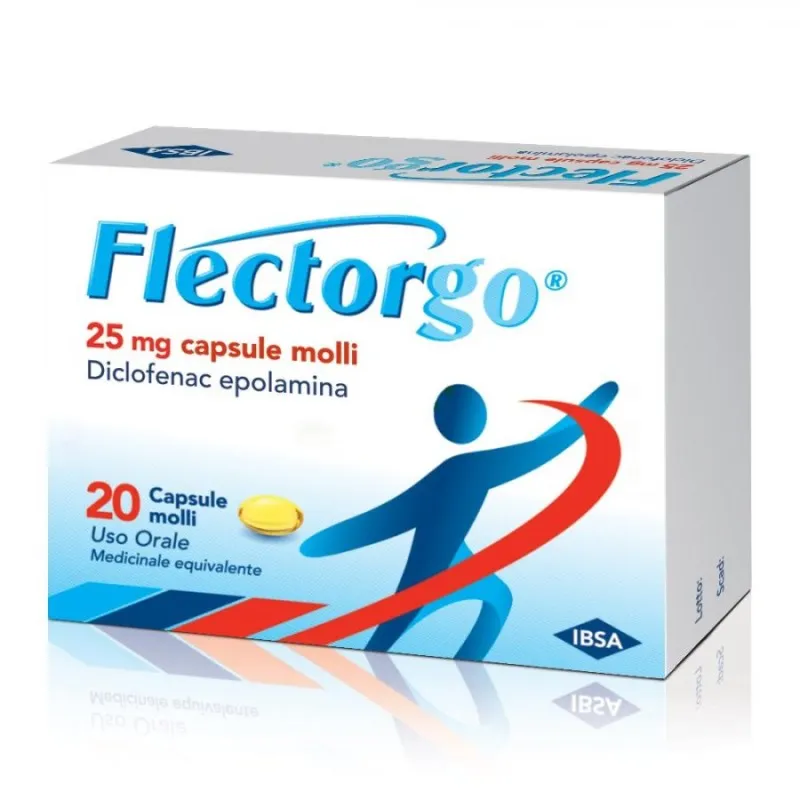
Table of Contents
Package leaflet: Information for the user
Flectorgo, 12.5 mg, soft capsules
Flectorgo, 25 mg, soft capsules
Diclofenac epolamine
Please read all of this leaflet carefully before taking this medicine because it contains
important information for you.
- Keep this leaflet as you may need to read it again.
- If you have any further questions, please ask your doctor or pharmacist.
- This medicine has been prescribed for you personally. Do not pass it on to others. It may harm individuals even if their symptoms are the same as yours.
- If you experience any side effects, including any not listed in this leaflet, please inform your doctor or pharmacist. See section 4.
Leaflet contents:
- What Flectorgo is and what it is used for
- What you need to know before taking Flectorgo
- How to take Flectorgo
- Possible side effects
- How to store Flectorgo
- Contents of the pack and other information
1. What Flectorgo is and what it is used for
Flectorgo contains the active substance diclofenac epolamine.
Flectorgo belongs to a group of medicines called non-steroidal anti-inflammatory drugs (NSAIDs). It is a pain-relieving medicine that can also reduce inflammation and swelling.
Flectorgo is used for the short-term relief of pain in the following conditions:
mild to moderate pain (rheumatic pain, muscle pain, dental pain, menstrual pain, and headache).
2. Important information before taking Flectorgo
When NOT to take Flectorgo:
- if the patient is allergic to: diclofenac or any of the other ingredients of this medicine (listed in section 6); or to diclofenac, acetylsalicylic acid, or any other non-steroidal anti-inflammatory drug (NSAID);
- if the patient currently has a peptic ulcer or duodenal ulcer (intestinal ulcer), gastrointestinal bleeding, or perforation;
- if the patient has unexplained blood disorders;
- if the patient has previously experienced gastrointestinal bleeding or perforation related to prior treatment with NSAIDs;
- if the patient has had two or more episodes of peptic ulcer or gastrointestinal bleeding (including vomiting blood, passing blood during defecation, presence of fresh blood in stool, or black, tarry stools);
- if the patient has been diagnosed with heart disease and/or cerebrovascular disease, e.g. if they have had a myocardial infarction, stroke, transient ischemic attack, or obstruction of blood vessels in the heart or brain, or undergone surgery to unblock coronary vessels or had vascular stents implanted to bypass blockages;
- if the patient has or has had circulatory disorders (peripheral arterial disease);
- if the patient has severe renal, hepatic, or cardiac insufficiency;
- if the patient is pregnant beyond the sixth month (see also "Pregnancy, breastfeeding and fertility");
- if the patient is under 14 years of age.
If any of the above situations apply, inform your doctor or pharmacist.
Warnings and precautions
Before starting Flectorgo, discuss with your doctor or pharmacist if:
- the patient suspects they may be allergic to diclofenac, acetylsalicylic acid, or any other NSAID, or to any of the other ingredients of Flectorgo. Symptoms of hypersensitivity include facial and lip swelling (angioedema), difficulty breathing, chest pain, nasal discharge, rash, or any other allergic-type reactions;
- the patient currently has or has previously had gastrointestinal disorders, including ulcerative colitis or Crohn’s disease;
- the patient is elderly;
- the patient has kidney or liver impairment;
- the patient suffers from porphyria;
- the patient has blood or coagulation disorders;
- the patient has ever had asthma;
- the patient is breastfeeding;
- the patient has angina, blood clots, high blood pressure, elevated cholesterol or triglyceride levels;
- the patient has diabetes;
- the patient smokes;
- the patient has recently undergone surgery;
- the patient is at risk of dehydration (e.g. due to vomiting or diarrhea);
- the patient has recently undergone or is scheduled for stomach or gastrointestinal surgery, as Flectorgo may impair intestinal wound healing after surgery. In such cases, Flectorgo may not be suitable for the patient.
- Since Flectorgo has anti-inflammatory properties, its active substance may mask signs of infection. If the patient feels unwell and requires medical attention, they must inform the doctor about taking Flectorgo.
Cardiovascular disease
Medicines such as Flectorgo may slightly increase the risk of myocardial infarction ("heart attack") or stroke. The risk is higher when higher doses are used or the medicine is taken for a prolonged period. Do not exceed the recommended dose or duration of treatment.
Before using Flectorgo, inform your doctor:
- if the patient smokes,
- if the patient has diabetes,
- if the patient has angina, blood clots, high blood pressure, or elevated cholesterol or triglyceride levels.
Adverse effects can be minimized by using the lowest effective dose for the shortest necessary duration.
Children and adolescents
Children and adolescents under 14 years of age must not take Flectorgo (see also "When NOT to take Flectorgo").
Flectorgo and other medicines
Inform your doctor or pharmacist about all medicines currently or recently taken, as well as any medicines the patient plans to take.
Before starting Flectorgo, consult a doctor if the patient is taking any of the following medicines:
- Digoxin (a heart medication), phenytoin (used to treat epilepsy), or lithium (used to treat psychiatric disorders). Flectorgo may increase blood levels of these substances.
- Diuretics and antihypertensive medicines (diuretics and blood pressure-lowering drugs). Flectorgo may reduce the effectiveness of these medicines.
- Potassium-sparing diuretics (certain diuretics). Flectorgo may increase blood potassium levels.
- Medicines used to treat heart failure and high blood pressure (ACE inhibitors and angiotensin II antagonists). Flectorgo may reduce the effectiveness of these medicines and increase the risk of kidney dysfunction.
- Anticoagulants such as warfarin. Like other NSAIDs, Flectorgo may enhance the effect of these medicines.
- Oral antidiabetic medicines. Dose adjustment of antidiabetic medicines may be necessary in some cases. Blood glucose levels should be monitored as a precaution.
- Other NSAIDs (used to treat pain and inflammation, e.g. ibuprofen, COX-2 inhibitors, and aspirin) or medicines containing glucocorticoids. Flectorgo increases the risk of gastric and intestinal ulcers and gastrointestinal bleeding.
- Antiplatelet agents such as acetylsalicylic acid (aspirin) and certain antidepressants (selective serotonin reuptake inhibitors, SSRIs). These may increase the risk of gastrointestinal bleeding.
- Cyclosporine and tacrolimus (medicines used to prevent transplant rejection, but also used in rheumatic diseases or severe skin conditions). NSAIDs may enhance the nephrotoxic effects of cyclosporine and tacrolimus.
- Methotrexate. Taking Flectorgo within 24 hours before or after methotrexate may increase methotrexate blood levels and lead to increased adverse effects.
- Medicines used to treat gout containing sulfinpyrazone or voriconazole. These may delay the elimination of Flectorgo, potentially leading to higher Flectorgo concentrations in the body and increased adverse effects.
- Colestipol and cholestyramine. These may delay or reduce the absorption of Flectorgo. It is recommended to take Flectorgo at least one hour before or 4 to 6 hours after taking these medicines.
- Quinolones (a type of antibiotic). Isolated cases of seizures have been reported.
- Cardiac glycosides: Concurrent use with NSAIDs may exacerbate heart failure, reduce renal filtration, and increase serum glycoside levels.
- Mifepristone: Do not use NSAIDs within 8–12 days after mifepristone administration, as NSAIDs may reduce the effectiveness of mifepristone.
Flectorgo and alcohol
Do not drink alcohol while taking Flectorgo. Alcohol may worsen possible adverse effects of Flectorgo, especially fatigue and dizziness, and may increase the risk of gastrointestinal side effects.
Pregnancy, breastfeeding and fertility
If the patient is pregnant, breastfeeding, suspects she may be pregnant, or is planning to become pregnant, she should consult a doctor or pharmacist before using this medicine.
Pregnancy
If the patient becomes pregnant while taking Flectorgo, inform the doctor immediately. Do not use Flectorgo during the last three months of pregnancy, as it may harm the unborn child or cause complications during delivery. Flectorgo may cause kidney and heart problems in the unborn child. It may increase the risk of bleeding in both mother and child and may delay or prolong labor. During the first six months of pregnancy, Flectorgo should not be used unless the doctor considers it absolutely necessary. If treatment is required during this period or when trying to conceive, the lowest possible dose should be used for the shortest possible duration. From week 20 of pregnancy, Flectorgo may cause kidney dysfunction in the unborn child if used for longer than a few days. This may lead to low levels of amniotic fluid (oligohydramnios) or narrowing of a blood vessel (ductus arteriosus) in the fetal heart. If treatment is required for longer than a few days, the doctor may recommend additional monitoring.
Breastfeeding
Flectorgo should not be taken during breastfeeding, as it may harm the infant. Inform the doctor if the patient is breastfeeding.
Fertility
Flectorgo belongs to a group of medicines (NSAIDs) that may affect female fertility. This effect is reversible after stopping the medicine. Therefore, Flectorgo is not recommended for women who are trying to become pregnant, have difficulty conceiving, or are undergoing fertility investigations.
Driving and operating machinery
While taking Flectorgo, adverse effects such as visual disturbances, dizziness, dry mouth, excessive drowsiness, or other central nervous system disturbances may occur. These effects may be intensified by alcohol. Patients experiencing these adverse effects should not drive or operate machinery.
This medicine contains up to 8.02 mg and 10.07 mg of sorbitol per capsule of 12.5 mg and 25 mg, respectively.
The medicine contains less than 1 mmol (23 mg) of sodium per dosage unit, i.e. the medicine is considered "sodium-free".
3. How to take Flectorgo
The capsules should be swallowed whole with water.
To ensure the most effective action of the medicine, the capsules should be taken on an empty stomach.
Adults and children aged 14 years and older:
It is important to use the lowest effective dose that controls pain and not to take Flectorgo for longer than necessary.
This medicine should always be taken exactly as described in the patient information leaflet or as directed by a doctor or pharmacist. If in doubt, consult a doctor or pharmacist.
Flectorgo, 12.5 mg
Initially, take 1 or 2 soft capsules, then if needed, take 1 or 2 soft capsules every 4 to 6 hours. Under no circumstances should more than 6 soft capsules (75 mg) be taken within 24 hours.
Flectorgo, 25 mg
Initially, take 1 soft capsule, then if needed, take 1 soft capsule every 4 to 6 hours. Under no circumstances should more than 3 soft capsules (75 mg) be taken within 24 hours.
Flectorgo should not be taken for longer than 3 days. If symptoms persist or worsen, consult a doctor.
Taking more Flectorgo than recommended
If the patient accidentally takes more medicine than recommended, contact a doctor immediately or go to the nearest hospital emergency department, taking the medicine packaging with you. Medical help may be required.
Missing a dose of Flectorgo
If a dose is missed, take it as soon as remembered. If it is almost time for the next dose, skip the missed dose and take the next capsule at the usual time. Do not take a double dose to make up for a missed one.
4. Possible side effects
Like all medicines, this medicine can cause side effects, although not everyone will experience them.
Some side effects may be serious.
Stop taking Flectorgo immediately and tell your doctor if the patient experiences any of the
following symptoms:
- severe pain in the upper abdomen, nausea, vomiting;
- vomiting blood or material that looks like coffee grounds, black stools, or blood in the stool;
- allergic reactions such as skin rash, itching, bruising, appearance of red painful areas on the skin, skin peeling or blistering;
- wheezing or shortness of breath (bronchospasm), difficulty swallowing, collapse;
- swelling of the face, lips, hands or fingers;
- yellowing of the skin or eyes (jaundice);
- persistent sore throat or high fever, unusual bleeding or bruising;
- unexpected change in the amount and/or appearance of urine;
- onset of mild cramps and tenderness in the abdominal area shortly after starting treatment with Flectorgo, followed by rectal bleeding or bloody diarrhoea usually occurring within 24 hours of the onset of abdominal pain (frequency unknown, cannot be estimated from available data).
Tell your doctor immediately if any of the following symptoms occur:
- chest pain, which may be a sign of a potentially serious allergic reaction called Kounis syndrome.
Medicines such as Flectorgo may increase the risk of heart attack ("myocardial infarction") or stroke.
The following adverse reactions have also been reported:
Common (affects up to 1 in 10 people)
- Headache, dizziness
- Nausea, vomiting, diarrhoea, indigestion (dyspepsia), abdominal pain, bloating, loss of appetite
- Skin rash and itching
Uncommon (affects up to 1 in 100 people)
- Increased liver enzyme activity in blood
Rare (affects up to 1 in 1,000 people)
- Hypersensitivity, anaphylactic and anaphylactoid reactions (severe allergic reactions, including low blood pressure and shock)
- Allergic swelling, including facial swelling (angioedema)
- Drowsiness
- Airway narrowing (asthma), including shortness of breath (dyspnoea)
- Gastritis, gastric or duodenal ulcer (with or without bleeding or perforation)
- Hepatitis, jaundice
- Urticaria (hives)
- Oedema (fluid retention)
Very rare (affects up to 1 in 10,000 people)
- Disorders of red and white blood cell production
- Disorientation, depression, insomnia, nightmares, irritability, psychotic disorders
- Sensory disturbances (paraesthesia), memory impairment, seizures or convulsions, anxiety, tremor, non-infectious meningitis, taste disturbances
- Visual disturbances, blurred or double vision
- Tinnitus, hearing disturbances
- Palpitations, chest pain, weakening of the heart muscle (heart failure)
- High blood pressure (hypertension), vasculitis (inflammation of blood vessels)
- Pneumonitis
- Inflammation of the large intestine (colitis), including bleeding or exacerbation of Crohn’s disease or ulcerative colitis, constipation
- Inflammation of the mucous membrane of the mouth, glossitis, oesophageal injury, development of diaphragm-like strictures in the intestines, pancreatitis
- Liver failure
- Skin rash (including eruptions and blisters), photosensitivity, small areas of bleeding under the skin, severe skin reactions such as blistering rash (e.g. Stevens-Johnson syndrome, toxic epidermal necrolysis/Lyell’s syndrome), alopecia (hair loss)
- Acute kidney dysfunction (renal failure), blood in urine (haematuria), protein in urine (proteinuria), nephrotic syndrome (fluid retention and excretion of large amounts of protein in urine), kidney tissue damage (interstitial nephritis, renal papillary necrosis)
Reporting of side effects
If any side effects occur, including any side effects not listed in this leaflet, tell your doctor or pharmacist. Side effects can be reported directly to:
Department of Monitoring Adverse Drug Reactions
Office for Registration of Medicinal Products, Medical Devices and Biocidal Products
Al. Jerozolimskie 181 C
02-222 Warsaw
Tel.: +48 22 49 21 301
Fax: +48 22 49 21 309
Website: https://smz.ezdrowie.gov.pl
Side effects can also be reported to the marketing authorisation holder.
Reporting side effects helps provide more information on the safety of this medicine.
5. How to store Flectorgo
- Keep this medicine out of the sight and reach of children.
- Do not use this medicine after the expiry date stated on the carton and blister after "Expiry date (EXP)". The expiry date refers to the last day of the stated month.
- Store below 25°C.
- Store in the original packaging to protect from light and moisture.
6. Contents of the pack and other information
What Flectorgo contains
The active substance is diclofenac epolamine.
Flectorgo 12.5 mg:
Each soft capsule of Flectorgo contains diclofenac in the form of diclofenac epolamine at a dose of
15.38 mg, equivalent to 12.5 mg of diclofenac potassium.
Flectorgo 25 mg:
Each soft capsule of Flectorgo contains diclofenac in the form of diclofenac epolamine at a dose of
30.76 mg, equivalent to 25 mg of diclofenac potassium.
Other components are:
Capsule contents:
Macrogol 600, anhydrous glycerol, purified water
Capsule shell:
Gelatin, anhydrous glycerol, partially dehydrated liquid sorbitol (E 420),
hydroxypropylbetadex, sodium hydroxide, purified water.
What Flectorgo looks like and contents of the pack
Flectorgo 12.5 mg:
Transparent, yellowish, oval gelatin soft capsule approximately 0.8 cm in size containing a slightly sticky solution.
Flectorgo 25 mg:
Transparent, yellowish, oval gelatin soft capsule approximately 1 cm in size containing a slightly sticky solution.
The soft capsules are packed in blisters.
Pack sizes:
Flectorgo 12.5 mg: 10, 20, 30 or 40 soft capsules.
Flectorgo 25 mg: 10, 20 or 30 soft capsules.
Not all pack sizes may be marketed.
Marketing Authorisation Holder
IBSA Farmaceutici Italia S.r.l.
Via Martiri di Cefalonia 2,
26900 Lodi, Italy
Importer
IBSA Farmaceutici Italia srl
Via Martiri di Cefalonia, 2
26900 Lodi
Italy