Fibrovein
Poland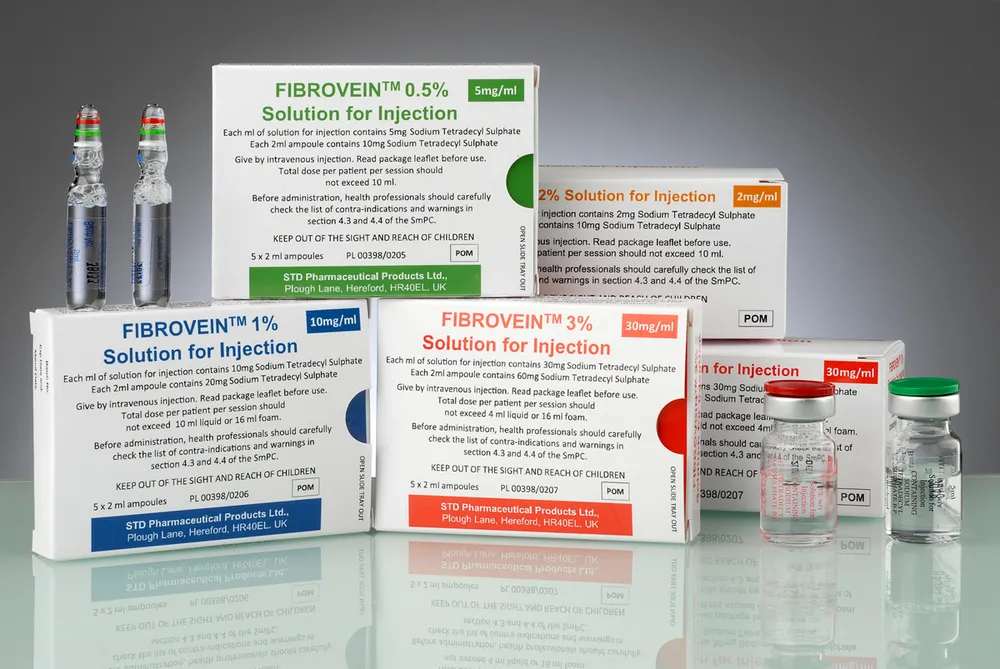
Table of Contents
- Patient Information Leaflet
- 1. What Fibrovein is and what it is used for
- 2. Important information before using Fibrovein
- 3. How to use Fibrovein
- 4. Possible adverse reactions
- 5. How to store Fibrovein
- 6. Contents of the pack and other information
- Information intended exclusively for medical professionals:
Patient Information Leaflet
Fibrovein, 0.2%, 0.5%, 1%, and 3%, solution for injection
Sodium tetradecyl sulfate
Please read all of this leaflet carefully before using this medicine, as it contains
important information for you.
Keep this leaflet, as you may need to read it again.
If you have any further questions, please consult your doctor or nurse.
If you experience any serious adverse reactions, including any adverse reactions not listed in this leaflet, inform your doctor or nurse immediately.
See section 4.
Contents of the leaflet
- What Fibrovein is and what it is used for
- What you need to know before using Fibrovein
- How to use Fibrovein
- Possible side effects
- How to store Fibrovein
- Contents of the pack and other information
1. What Fibrovein is and what it is used for
Fibrovein contains the active substance sodium tetradecyl sulfate.
Fibrovein is available in various concentrations and is used in the treatment of varicose veins, as well as large, medium, and small dilated blood vessels and spider veins.
The active substance belongs to a group of medicines known as sclerosing agents. Sclerosing agents are chemical substances which, when injected into a diseased vein, cause swelling of its inner lining and adhesion of its walls. Blood flow through the vein becomes impossible, and eventually fibrosis (scar tissue formation) occurs. After several weeks, the vein usually becomes no longer visible.
Fibrovein is intended for use in adults only.
2. Important information before using Fibrovein
When not to use Fibrovein:
- if the patient has hypersensitivity to sodium tetradecyl sulfate or to any of the other components of this medicine (listed in section 6), or if the patient has an allergic condition;
- if the patient is unable to walk for any reason or is seriously ill;
- if the patient is at risk of developing blood clots in the venous system due to:
- a hereditary blood disorder, e.g. thrombophilia;
- use of hormonal contraceptives or hormone replacement therapy;
- significant obesity;
- smoking;
- prolonged immobilization;
- if the patient has recently experienced blood clots in superficial or deep veins or in the lungs;
- if the patient has recently undergone surgery;
- if the patient has varicose veins caused by pelvic or abdominal tumours, unless the tumour has been removed;
- if the patient has an uncontrolled systemic disease such as diabetes, hyperthyroidism, asthma, blood abnormalities, blood infection, or recent skin disorders or breathing difficulties;
- if the patient has swelling or redness of the skin, warm or tender to touch (phlebitis);
- if the patient has any infection;
- if the patient has a progressive tumour;
- if the patient has been diagnosed with incompetent deep venous valves;
- if the patient has arterial embolism;
- if the patient has acute inflammation of leg veins (acute phlebitis);
- if the patient has a symptomatic heart defect (only in the case of foam sclerosant administration).
Warnings and precautions
Before starting treatment with Fibrovein, discuss with the doctor if:
the patient is allergic to any foods or medicines, or has any other allergies; prior to administration, the patient should consult the doctor so that a test dose may be administered 24 hours before further treatment;
the patient has previously experienced blood clots in superficial or deep veins or in the lungs;
the patient has a symptomatic heart defect (in case of foam sclerosant administration).
the patient has migraines;
if the patient has venous disorders in the legs, associated with a chronic condition causing tissue swelling (lymphoedema). Fibrovein may increase local pain and inflammation for several days or weeks;
the patient has previously suffered from pulmonary hypertension;
the patient has experienced a transient ischaemic attack (TIA), stroke, or serious cerebrovascular event;
the patient has been diagnosed with arterial or venous disease (atherosclerosis);
the patient has been diagnosed with thrombosis and inflammation of arteries and veins in hands and feet (Buerger's disease);
the patient has breathing difficulties controlled by medication (asthma).
Fibrovein must be administered only by a physician, and, if permitted by national guidelines, may be administered under physician supervision by appropriately trained medical personnel experienced in venous anatomy and familiar with proper injection technique. Prior to injection, the physician may assess the patient's venous valve function.
Before the procedure, the physician will ask the patient several questions about their health and provide information about potential adverse effects associated with the procedure.
During treatment
The physician will monitor the patient during and after sclerotherapy for hypersensitivity reactions (redness, itching, coughing) or neurological symptoms (visual disturbances, migraines, tingling or numbness).
The physician will advise the patient to attend a follow-up visit.
Children and adolescents
The safety and efficacy of Fibrovein in children and adolescents have not been established.
Fibrovein and other medicines
If the patient is taking hormonal contraceptives (so-called "the pill") or using hormone replacement therapy, she may be at increased risk of developing venous thrombosis (see “When not to use Fibrovein”). Inform the doctor or nurse.
Inform the doctor or nurse about all medicines currently or recently taken, as well as any medicines the patient plans to take, including those available without a prescription.
Pregnancy and breastfeeding
The patient must inform the doctor if:
she is pregnant or suspects she may be pregnant;
she plans to become pregnant;
she is breastfeeding.
The safety of Fibrovein during pregnancy has not been established. Fibrovein should not be used in pregnant women unless clearly necessary. The physician will decide whether Fibrovein treatment is appropriate for the patient.
It is unknown whether Fibrovein passes into breast milk. If the patient is breastfeeding, the physician will decide whether Fibrovein is appropriate for her.
Driving and operating machinery
After administration of Fibrovein, to reduce the risk of inflammation and skin discolouration, the physician may recommend appropriate leg bandaging and/or wearing compression stockings, which may affect the ability to drive.
Fibrovein contains sodium, potassium and benzyl alcohol
This medicine contains:
less than 1 mmol (23 mg) of sodium per vial/ampoule, meaning the medicine is considered "sodium-free";
less than 1 mmol (39 mg) of potassium per vial/ampoule, meaning the medicine is considered "potassium-free";
40 mg of benzyl alcohol in each 2 ml ampoule or 100 mg of benzyl alcohol in each 5 ml vial, equivalent to 20 mg/ml. Benzyl alcohol may cause allergic reactions. In case of pregnancy, breastfeeding, or liver or kidney disease, consult a doctor or pharmacist. This is because large amounts of benzyl alcohol may accumulate in the body, potentially causing adverse effects (so-called "metabolic acidosis").
3. How to use Fibrovein
Do not attempt to self-administer injections of Fibrovein. Treatment must always be performed by an experienced physician trained in the proper techniques of injection administration.
The treatment involves very careful and slow injection of the medicinal product using the finest needles available, directly into the diseased veins, thereby enabling removal of blood from them. The medicinal product may be manually mixed using two syringes and a three-way tap to create a mixture with air and produce a foam, which will assist in removing blood from larger veins. In such cases, the medicinal product must be administered by a physician trained in the proper techniques of producing and administering the medicinal product in foam form.
In the treatment of invisible varicose veins of the lower limbs and for foam sclerotherapy, the procedure should be performed under ultrasound (USG) guidance.
The physician will decide which concentration of Fibrovein to use and which areas to treat. Recommended doses:
Adults and elderly patients
- from 0.1 ml to 2 ml of Fibrovein per injection. The physician may administer up to a maximum of 10 ml of the three lower concentrations of Fibrovein, but no more than 4 ml when using the highest concentration.
Due to limitations regarding the maximum daily dose of sclerosing agent, it may be necessary to repeat the procedure several times.
After completion of treatment with Fibrovein, follow the physician's instructions. The physician may recommend appropriate bandaging of the legs and/or wearing compression stockings to reduce the risk of inflammation and skin discoloration.
If you have any further doubts regarding the use of this medicinal product, consult your physician or nurse.
4. Possible adverse reactions
Like all medicines, this medicine can cause adverse reactions, although not everyone will experience them.
Serious adverse reactions may occur. Treatment with Fibrovein must be discontinued immediately
and you should contact your doctor or go to the nearest hospital emergency department
if any of the following symptoms occur:
Uncommon (may occur in up to 1 in 100 people)
- Blood clots in deep veins (deep vein thrombosis, most likely caused by the underlying disease). Symptoms include pain, swelling and tenderness in one leg (usually in the calf), severe pain in the affected area, increased warmth of the skin at the site of the clot or redness of the skin, particularly at the back of the leg below the knee.
Rare (may occur in up to 1 in 1,000 people)
- Localized necrosis of skin tissue or, less frequently, nerves. Symptoms include pain, skin discoloration (redness), swelling or fluid accumulation, blisters on the skin (which may be filled with clear fluid or blood), dark red, purple or black skin color, abnormal sensations (tingling, pricking, burning), numbness or loss of sensation.
Very rare (may occur in up to 1 in 10,000 people)
- The most serious adverse reaction is a severe allergic reaction (anaphylactic shock), which may cause difficulty breathing or a sudden drop in blood pressure leading to a feeling of fainting or loss of consciousness. Anaphylactic shock is rare but may be fatal; therefore, appropriate treatment must be administered immediately if it occurs.
- Arterial blockage caused by a blood clot, which may lead to:
o stroke or interruption of blood flow to the brain or eye (transient ischaemic attack).
Symptoms may include weakness, numbness or paralysis of the face, arm or leg,
usually on one side of the body, slurred or distorted speech or difficulty
understanding others, blindness in one or both eyes or double vision.
o pulmonary embolism. Symptoms may include sudden shortness of breath, sudden sharp chest
pain which may worsen during deep breathing or coughing, rapid heartbeat or increased
respiratory rate.
To protect patients from this very rare adverse reaction, this medicine must not be used in patients
who have an increased risk of developing blood clots in veins and arteries (risk of thrombosis).
- Circulatory failure. Symptoms may include feeling tired, dizziness, fainting, chest pain, shortness of breath, weakness, dizziness, vomiting and palpitations.
- Tissue necrosis following intra-arterial injection. Symptoms may vary depending on the amount of medicine injected, the injection site and how quickly medical help is received. They may range from pain without long-term damage to loss of large areas of tissue, including the foot, which may necessitate amputation of the limb.
Other adverse reactions that may occur include:
Very common (may occur in more than 1 in 10 people):
- Superficial phlebitis.
Common (may occur in up to 1 in 10 people)
- Pain or burning (short-term at the injection site);
- Skin pigmentation;
- Dilation of subcutaneous capillaries at the injection site (so-called matting).
Uncommon (may occur in up to 1 in 100 people):
- Local allergic or non-allergic skin reactions, e.g. redness, itching, rash or swelling;
- Visual disturbances;
- Migraine.
Rare (may occur in up to 1 in 1,000 people):
- Cough, shortness of breath, feeling of pressure or tightness in the chest;
- Burning, tingling, pricking or itching of the skin;
- Headache, feeling of fainting;
- Disorientation, dizziness, loss of consciousness.
Very rare (may occur in up to 1 in 10,000 people):
- Fever, hot flushes, red itchy skin (urticaria);
- Nausea, vomiting, diarrhoea, sensation of a swollen or enlarged tongue, dryness of the mouth;
- Phlebitis.
Reporting of adverse reactions
If any adverse reactions occur, including any not listed in this leaflet, inform your doctor or nurse.
Adverse reactions can be reported directly to the Department of Monitoring Adverse Drug Reactions
of the Office for Registration of Medicinal Products, Medical Devices and Biocidal Products,
Al. Jerozolimskie 181 C, 02-222 Warsaw, Tel.: +48 22 49 21 301, Fax: +48 22 49 21 309,
Website: https://smz.ezdrowie.gov.pl
Adverse reactions can also be reported to the marketing authorization holder.
Reporting adverse reactions helps to provide more information on the safety of the medicine.
5. How to store Fibrovein
Keep this medicine out of sight and reach of children.
There are no special storage temperature requirements for this medicine.
- Do not freeze.
- Store vials and ampoules in the outer packaging to protect from light.
- Do not use this medicine after the expiry date stated on the cardboard box following: "Expiry date (EXP)". The expiry date refers to the last day of the stated month.
For single use only. The contents of the container should be used immediately after opening.
Any unused product must be discarded.
Medicines must not be disposed of via the sewage system or in household waste. Ask your pharmacist how to dispose of medicines no longer required. Such measures help protect the environment.
6. Contents of the pack and other information
What Fibrovein contains
The active substance is sodium tetradecyl sulfate.
For the 0.2% concentration:
Each ml of injection solution contains 2 mg of sodium tetradecyl sulfate.
Each 5 ml vial contains 10 mg of sodium tetradecyl sulfate.
For the 0.5% concentration:
Each ml of injection solution contains 5 mg of sodium tetradecyl sulfate.
Each 2 ml ampoule contains 10 mg of sodium tetradecyl sulfate.
For the 1% concentration:
Each ml of injection solution contains 10 mg of sodium tetradecyl sulfate.
Each 2 ml ampoule contains 20 mg of sodium tetradecyl sulfate.
For the 3% concentration:
Each ml of injection solution contains 30 mg of sodium tetradecyl sulfate.
Each 2 ml ampoule contains 60 mg of sodium tetradecyl sulfate.
Each 5 ml vial contains 150 mg of sodium tetradecyl sulfate.
The other ingredients are: benzyl alcohol (20 mg/ml), disodium phosphate dodecahydrate, potassium dihydrogen phosphate, water for injections, sodium hydroxide (for pH adjustment). See section 2, "Fibrovein contains sodium and potassium."
What Fibrovein looks like and contents of the pack
Fibrovein is a solution for injection supplied in glass ampoules or vials. The solution is clear, colourless, sterile, and free from visible solid particles.
Fibrovein, 0.2%: pack contains 2, 5 or 10 vials of 5 ml each.
Fibrovein, 0.5%: pack contains 5 ampoules of 2 ml each.
Fibrovein, 1%: pack contains 5 ampoules of 2 ml each.
Fibrovein, 3%: pack contains 5 ampoules of 2 ml each or 2, 5 or 10 vials of 5 ml each.
Not all pack sizes may be marketed.
Marketing Authorisation Holder and Manufacturer:
Marketing Authorisation Holder:
STD Pharmaceutical (Ireland) Limited
Block 1, Blanchardstown Corporate Park, Ballycoolen Road, Blanchardstown, Dublin 15
D15 AKK1, Ireland
+353 1588 6916
Manufacturer:
Medipha Sante
Les Fjords-Immeuble Oslo
19 Avenue de Norvege
91953 Courtaboeuf CEDEX
France
Chemische Fabrik Kreussler & Co. GmbH
Rheingaustrasse 87-93
65203 Wiesbaden,
Germany
This medicinal product is authorised for marketing in the European Economic Area countries under the following names:
Bulgaria, Czech Republic, France, Germany, Fibrovein
Ireland, Netherlands, Poland, Romania
Austria, Spain Veinfibro
Other sources of information:
Detailed information about this medicinal product is available on the website of the Office for Registration of Medicinal Products, Medical Devices and Biocidal Products
www.urpl.gov.pl
Information intended exclusively for medical professionals:
Fibrovein, 0.2%, solution for injection
Fibrovein, 0.5%, solution for injection
Fibrovein, 1%, solution for injection
Fibrovein, 3%, solution for injection
Additional information regarding this product is available in the Summary of Product Characteristics (SmPC).
Dosage and administration
Dosage
The medicinal product Fibrovein is intended for intravenous use only. Depending on the size and severity of venous lesions, different concentrations are required. Spider veins should be treated only with the 0.2% concentration, and reticular veins with the 0.5% concentration. The 1% concentration is most effective for small and medium varicose veins, while the 3% concentration is indicated for larger venous lesions. The size of non-visible varicose veins should be determined under ultrasound (USG) guidance.
The sclerosing agent should be administered intravenously in small, equal portions along the course of the diseased vein. Fibrovein at concentrations of 0.2% and 0.5% should be administered in liquid form. Fibrovein at concentrations of 1% and 3% may be administered either as a liquid sclerosant or as a mixture of the sclerosant with air (foam formulation), according to the description provided in the table below. The goal of the procedure is to achieve optimal destruction of the vessel walls using the sclerosant at the minimal effective concentration required for successful treatment. Excessively high concentrations of the medicinal product may lead to tissue necrosis or other complications.
Adults
| Concentration | Standard dose for intravenous injection at defined treatment sites | Maximum total dose per procedure | ||
| Liquid | Foam* | Liquid | Foam* | |
| Fibrovein, 0.2% and 0.5% | 0.1 to 1.0 ml | Not applicable | 10 ml | Not applicable |
| Fibrovein, 1% | 0.1 to 1.0 ml | 0.5 to 2.0 ml | 10 ml | 16 ml |
| Fibrovein, 3% | 0.5 to 2.0 ml | 0.5 to 2.0 ml | 4 ml | 16 ml |
*Sum of fluid and air volume
In cases where particular caution is advised, it is recommended to perform a sensitivity test by
administering to the patient 0.25 to 0.5 ml of the medicinal product Fibrovein and observing the patient for
several hours, followed by administration of a second or higher dose.
The procedure often requires repetition (on average, the patient requires 2 to 4 additional procedures)
due to the limited dose that can be applied during a single procedure. To protect the patient
against an allergic reaction, at the beginning of each procedure it is recommended to administer a small test dose
of the medicinal product Fibrovein.
Fibrovein, 1% and 3% solution for injection
When administering the sclerosant in foam form
Foam intended for treatment of larger veins can be prepared using the medicinal product
Fibrovein at concentrations of 1% and 3%. The foam must be prepared immediately before administration. It must be
administered to the patient by a physician adequately trained in the proper techniques
of producing and administering the medicinal product in foam form. Ideally, foam sclerotherapy
should be performed under ultrasound (USG) guidance.
Fibrovein, 0.2% solution for injection
For spider veins, the smallest possible needles (e.g., 30 G) should be used for injection, and the medicinal product
should be injected slowly to allow blood to be displaced from the treated venous vessels. The treatment of spider veins may also employ the so-called air-block technique, involving additional injection of air.
Elderly patients
There are no special dosing recommendations.
Children and adolescents
The safety and efficacy of the medicinal product Fibrovein in children and adolescents have not been established. Lack of data.
Method of administration
Below are instructions for preparing the foam. The method described is the Tessari technique. Other techniques (e.g., DSS, Easyfoam, Sterivein) may also be used.
Strict aseptic conditions must be maintained when preparing the Fibrovein medicinal product for administration.
Fibrovein is intended for single use and parenteral administration. After opening
the vial or ampoule, the product should be used immediately, and any unused solution should be discarded.
Visual inspection for the presence of solid particles should be performed before use. If
the solution contains solid particles, it must not be used.
Ideally, foam sclerotherapy should be performed under ultrasound (USG) control. In such cases,
the product must be administered by a physician adequately trained in the proper
techniques of producing and administering the medicinal product in foam form.
Pharmaceutical incompatibilities
This medicinal product must not be mixed with heparin.
Do not mix this medicinal product with other medicinal products, as compatibility studies have not been performed.
Special warnings and precautions
Fibrovein must be administered exclusively by a physician; however, if national guidelines permit, it may be administered under physician supervision by appropriately qualified medical personnel who have experience in venous system anatomy, diagnosis and treatment of venous diseases, and knowledge of proper injection techniques.
Allergic reactions, including anaphylactic shock, have been reported; therefore, the physician administering this product should be prepared to initiate anti-shock treatment.
During the procedure, the physician must have immediate access to emergency resuscitation equipment.
Due to the need for special caution, the patient should be treated in a hospital setting.
Serious local adverse effects, including tissue necrosis, may occur following extravasation; therefore, particular care must be taken during needle insertion, and the minimal effective dose should be injected at each injection site. The solution should be injected slowly.
Particular care must be taken to avoid intra-arterial injection, as this may cause tissue necrosis, potentially leading to limb amputation.
Special caution is required when administering injections into the foot and above and below the malleolus (malleolus) due to the risk to one of the arteries. Compression should be applied when treating smaller veins, as the likelihood of pigmentation may be greater if extravasation occurs at the injection site.
Foam preparation and injection procedure
General recommendations
Foam quality depends on specific conditions:
Concentration of the product: Foam can be prepared only using sodium tetradecyl sulfate
at concentrations from 1% to 3%.
Ratio of fluid to air: Usually, this ratio is 1 volume of liquid to 3 to 4 volumes of air.
Number of transfers between syringes: The physician should follow the recommended number of transfers specific to each technique.
Macroscopic consistency of the foam: The foam quality should be checked outside the syringe before administration. The foam should be uniform, soft, and cohesive, without visible large bubbles.
If the foam contains large bubbles, it should be discarded and a new foam prepared.
Total foam preparation time: Foam preparation should take approximately 10 seconds from the first to the last transfer of liquid between syringes.
Maximum time between foam preparation and injection: The sclerosant foam must be used within sixty seconds after preparation. After sixty seconds, any unused foam remnants must be discarded. If needed, additional foam should be prepared.
Foam preparation (Tessari technique)
Strict aseptic conditions must be maintained during foam preparation.
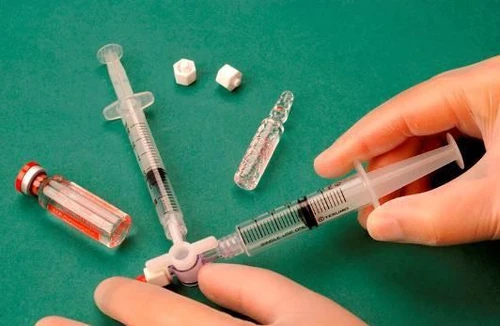
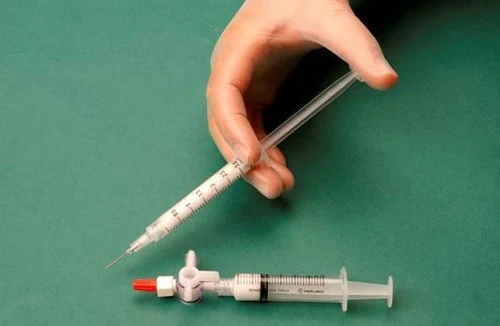
To prepare the foam, 1 ml of liquid sclerosant is drawn into one sterile syringe and 3 ml or 4 ml of sterile air into a second sterile syringe. Air should be drawn into the syringe through a 0.2 μm sterilizing filter, ensuring its sterility. The syringes are connected using a sterile three-way tap/connector (Fig. 1). Use of Luer Lock syringes and eye protection is recommended during foam preparation. Connecting a syringe with a Luer slip fitting to a three-way tap under pressure may fail, leading to uncontrolled leakage of the product.
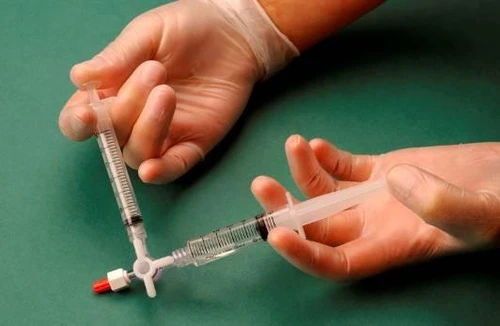
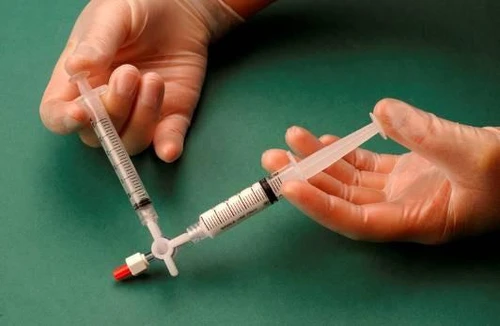
After connecting the syringes, the sclerosant/air mixture is dynamically transferred approximately 20 times between the syringes through the three-way connector until a uniform, smooth consistency foam is obtained (Figs. 2 and 3).
The syringe containing the foam is then disconnected from the connector and immediately used for intravenous puncture, through which the foam is administered into the vessel (Fig. 4).
The sclerosant foam must be used within sixty seconds after preparation. After sixty seconds, any unused foam remnants must be discarded. If needed, additional foam should be prepared.
Foam quality should be checked before administration. The foam should have a uniform consistency, be white in color, and not contain visible large bubbles.
Excipients
This medicinal product contains:
less than 1 mmol (23 mg) of sodium per vial/ampoule, meaning the medicine is considered "sodium-free".
less than 1 mmol (39 mg) of potassium per vial/ampoule, meaning the medicine is considered "potassium-free".
40 mg of benzyl alcohol in each 2 ml ampoule or 100 mg of benzyl alcohol in each 5 ml vial, equivalent to 20 mg/ml. Benzyl alcohol may cause allergic reactions. It may cause metabolic acidosis in cases of pregnancy, breastfeeding, or liver or kidney disease.