Epistatus
Poland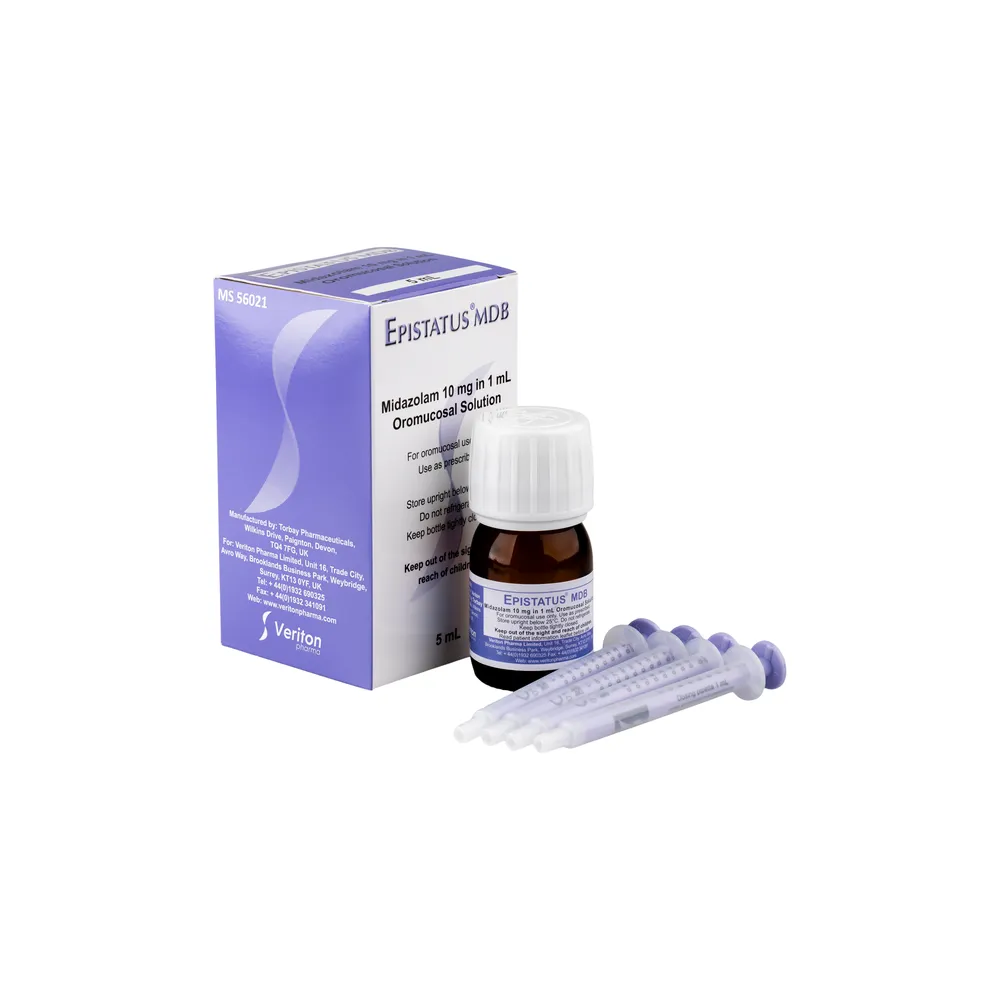
Table of Contents
Package leaflet: Information for the user
Epistatus, 2.5 mg, oral solution
Epistatus, 5 mg, oral solution
Epistatus, 7.5 mg, oral solution
Epistatus, 10 mg, oral solution
Midazolam
Please read all of this leaflet carefully before using this medicine, because it contains
important information for you.
- Keep this leaflet. You may need to read it again.
- If you have any further questions, ask your doctor or pharmacist.
- This medicine has been prescribed for a specific individual. Do not pass it on to others. It may harm them even if their symptoms are the same.
- If you experience any adverse reactions, including any not listed in this leaflet, tell your doctor or pharmacist. See section 4.
Contents of the leaflet
- What Epistatus is and what it is used for
- What you need to know before using Epistatus
- How to use Epistatus
- Possible side effects
- How to store Epistatus
- Contents of the pack and other information
1. What Epistatus is and what it is used for
Epistatus contains the active substance midazolam, which belongs to a group of medicines called benzodiazepines.
Epistatus is used to stop prolonged, acute seizures in infants, young children, children, and adolescents aged from 3 months up to but not including 18 years.
In infants aged 3 to 6 months, this medicine should be used only in a hospital setting where monitoring and resuscitation equipment are available (see section Warnings and precautions for use for more information).
This medicine may be administered only by parents or caregivers when the child has been diagnosed with epilepsy. The treating physician should provide parents or caregivers with instructions on how to administer Epistatus and what to do if the seizure does not stop (see also section “How to use Epistatus”).
2. Important information before using Epistatus
When not to give Epistatus
- if the patient is allergic to midazolam, other benzodiazepines (such as diazepam or nitrazepam) or any of the other ingredients of this medicine (listed in section 6);
- if the patient has a condition called myasthenia (which causes muscle weakness);
- if the patient has significant breathing difficulties (Epistatus may worsen breathing problems);
- if the patient has sleep apnoea syndrome (which causes frequent breathing interruptions during sleep);
- if the patient has severe liver function disorders.
Warnings and precautions
Before starting treatment with Epistatus, discuss with a doctor or pharmacist if the patient:
- has a lung disease causing breathing problems, as this medicine may worsen breathing;
- has kidney, liver or heart problems;
- is taking other sedative medicines and feels very weak, exhausted or lacks energy, as this medicine affects the central nervous system (CNS);
- regularly drinks large amounts of alcohol or has had problems with alcohol abuse in the past (see section “Epistatus contains ethanol (alcohol)”);
- regularly takes medicines for non-medical purposes or has had problems with drug abuse in the past.
This medicine may affect the patient's memory after administration (temporary memory loss).
Parents or caregivers should carefully monitor patients after administration of this medicine. See also
section 4 (“Possible side effects”).
Since delayed severe breathing problems (such as slower or weaker breathing than expected) cannot be ruled out in younger children, infants aged 3 months up to but not including 6 months should only be treated in a hospital setting where vital functions can be monitored and resuscitation equipment is available.
If in doubt whether any of the above situations apply to the patient, consult a doctor or pharmacist before administering this medicine.
Children and adolescents
This medicine must not be given to children under 3 months of age, as there is insufficient information available for this age group.
Epistatus and other medicines
Tell the doctor or pharmacist about all medicines currently taken or recently taken by the patient, as well as any medicines the patient plans to take. If in doubt whether any medicine taken by the patient may negatively affect the use of Epistatus, consult a doctor or pharmacist.
This is very important, as taking more than one medicine at the same time may increase or reduce the effects of these medicines.
The effect of Epistatus may be increased by medicines such as:
- antiepileptic drugs (used to treat epilepsy), e.g. phenytoin;
- antibiotics, e.g. erythromycin, clarithromycin;
- antifungal medicines, e.g. ketoconazole, voriconazole, fluconazole, itraconazole, posaconazole;
- medicines used to treat stomach and duodenal ulcers, e.g. cimetidine, ranitidine and omeprazole;
- medicines used to treat high blood pressure, e.g. diltiazem, verapamil;
- some medicines used to treat HIV and AIDS, e.g. saquinavir, lopinavir + ritonavir combination;
- opioid painkillers (very strong pain-relieving medicines), e.g. fentanyl;
- medicines used to reduce blood fat levels, e.g. atorvastatin;
- medicines used to treat nausea, e.g. nabilone;
- sleeping medicines (medicines that cause sleep);
- sedative antidepressants (medicines used to treat depression that cause drowsiness);
- sedatives (medicines that calm the patient);
- anaesthetics (used to relieve pain);
- antihistamines (used to treat allergies).
The effect of Epistatus may be reduced by medicines such as:
- rifampicin (used to treat tuberculosis);
- xanthines (used to treat asthma);
- St. John's wort (a herbal medicine). Its use should be avoided in patients taking Epistatus.
Epistatus may also increase the effect of certain muscle relaxants, e.g. baclofen (causing increased drowsiness). This medicine may also inhibit the effect of certain other medicines, e.g. levodopa (a medicine used to treat Parkinson's disease).
Concomitant use of Epistatus and opioids (contained in very strong painkillers, replacement therapy medicines and some cough medicines) increases the risk of drowsiness, breathing difficulties (respiratory depression), coma and may even be life-threatening.
For this reason, concomitant use should only be considered when other treatment options are not feasible.
However, if a doctor prescribes Epistatus to be used together with opioids, the dose and duration of concomitant treatment should be limited.
Inform the doctor about all opioid medicines being taken and strictly follow the doctor’s dosing instructions. Consider informing friends or family members about the above-mentioned subjective and objective symptoms. Contact a doctor if these symptoms occur.
Epistatus contains a small amount of alcohol and therefore must not be given together with disulfiram.
Consult a doctor or pharmacist for information on which medicines should be avoided during treatment with Epistatus.
Procedures
If the patient will receive inhalational anaesthesia (products administered during breathing) during a surgical procedure or dental treatment, it is important to inform the doctor or dentist that the patient is taking Epistatus.
Epistatus with food, drink and alcohol
Do not drink alcohol while taking Epistatus. Alcohol may enhance the sedative effect of Epistatus and cause increased drowsiness.
Do not drink grapefruit juice while taking Epistatus. Grapefruit juice may enhance the sedative effect of Epistatus and cause increased drowsiness.
Pregnancy, breastfeeding and fertility
Pregnancy
If the patient is pregnant, suspects she may be pregnant or is planning to become pregnant, she should consult a doctor before using this medicine.
Midazolam may be used during pregnancy if necessary. Frequent administration of Epistatus during the last 3 months of pregnancy or during labour may cause problems in the newborn baby, such as: irregular heartbeat, hypothermia (low body temperature), weak sucking reflex, breathing difficulties and low muscle tone.
Breastfeeding
Inform the doctor if the patient is breastfeeding. Although small amounts of Epistatus may pass into breast milk, discontinuation of breastfeeding may not be necessary. The doctor will decide whether the patient should temporarily stop breastfeeding after administration of Epistatus.
Driving and using machines
Epistatus has a marked influence on the ability to drive and operate machinery.
Epistatus may cause drowsiness, forgetfulness or impair concentration and coordination in the patient. These effects may interfere with performing skilled tasks such as driving a vehicle, cycling or operating machinery. After administration of this medicine, the patient should not drive, cycle or operate machinery until full recovery of abilities.
Consult a doctor if further information is needed.
Epistatus contains maltitol
If the patient has previously been diagnosed with intolerance to certain sugars, the patient should contact a doctor before taking this medicine.
Epistatus contains ethanol (alcohol)
Epistatus 2.5 mg, oral solution
This medicine contains 49 mg of alcohol (ethanol) per dose. The amount of alcohol in a dose of this medicine is equivalent to less than 1 mL of beer or 1 mL of wine.
Epistatus 5 mg, oral solution
This medicine contains 99 mg of alcohol (ethanol) per dose. The amount of alcohol in a dose of this medicine is equivalent to less than 3 mL of beer or 1 mL of wine.
Epistatus 7.5 mg, oral solution
This medicine contains 148 mg of alcohol (ethanol) per dose. The amount of alcohol in a dose of this medicine is equivalent to less than 4 mL of beer or 2 mL of wine.
Epistatus 10 mg, oral solution
This medicine contains 197 mg of alcohol (ethanol) per dose. The amount of alcohol in a dose of this medicine is equivalent to less than 5 mL of beer or 2 mL of wine.
The small amount of alcohol in this medicine will not cause noticeable effects.
Epistatus contains sodium
This medicine contains less than 1 mmol (23 mg) of sodium per dose, i.e. the medicine is considered “sodium-free”.
3. How to administer Epistatus
This medicine should always be used as directed by the physician. If in doubt, consult the
physician or pharmacist. The patient's attending physician should provide parents or
caregivers with instructions on how to administer Epistatus and what to do if the seizure does not stop.
Epistatus is intended for oral mucosal administration only, meaning it should be applied exclusively inside the mouth.
Care should be taken during administration to avoid the risk of choking in the patient.
Depending on the child's age, the following doses from the package labeled with a specific colored label should be administered:
| Age | Dose | Marked package color |
| From 3 to 6 months in hospital settings | 2.5 mg (0.25 mL) | yellow |
| from 6 months to below 1 year | 2.5 mg (0.25 mL) | yellow |
| from 1 year to below 5 years | 5 mg (0.5 mL) | blue |
| from 5 years to below 10 years | 7.5 mg (0.75 mL) | violet |
| from 10 years to below 18 years | 10 mg (1 mL) | orange |
The dose is the entire contents of one oral syringe. Do not administer more than one dose without
prior medical advice.
For infants aged 3 to 6 months, treatment should be carried out exclusively in a hospital setting,
where monitoring and access to resuscitation equipment are available.
After administration of Epistatus, patients should remain under the supervision of a caregiver who
should stay with the patient.
Epistatus must not be injected intravenously or intramuscularly. A needle must not be attached to
the syringe.
Preparation of the medicine for administration
If the patient is having a seizure, allow the body to move freely and do not attempt to restrain the
patient's movements. The patient should only be moved if they are in danger due to surrounding
objects or obstacles—for example, if the patient is near a roadway, open body of water, hot kitchen
appliances, fire, or sharp objects.
Protect the patient's head with something soft, such as a pillow or the caregiver's knee.
How to administer this medicine
Ask your doctor, pharmacist, or nurse to show you how to take or administer this medicine. If you
have any doubts, contact your doctor, pharmacist, or nurse.
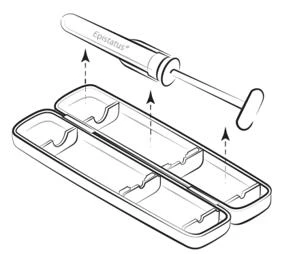
Step 1
Pull the tamper-evident plastic side tab,
open the packaging, and remove the
syringe.
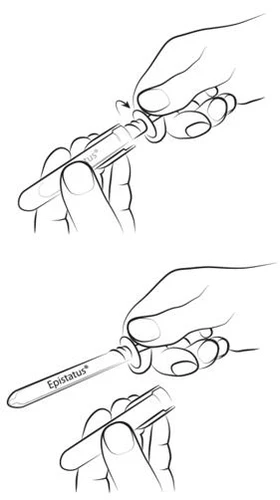
Step 2
Holding the syringe by the transparent
handles, unscrew the amber protective
cap counterclockwise and remove it.
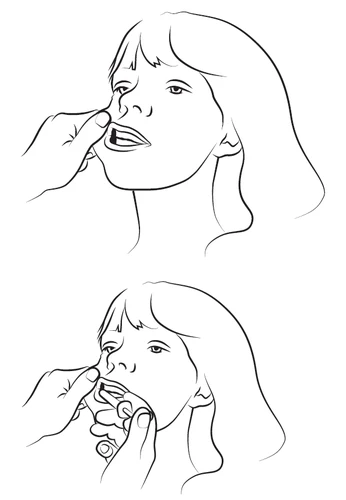
Step 3
Using your index finger and thumb, gently
press and pull the patient's cheek. Place
the tip of the syringe in the back of the
space between the inner cheek and lower
gum (buccal cavity).
Step 4
Slowly administer approximately half of
the solution volume into the buccal cavity
on one side of the mouth, then slowly
administer the remainder on the other side
by pressing the syringe plunger until it
stops. If it is particularly difficult to insert
the syringe into the mouth on one side, the
entire dose should be administered on one
side of the mouth over 4–5 seconds. Safely
discard the syringe and cap.
What to do if the patient's condition does not improve
Call emergency medical services immediately—if seizures do not stop shortly after administration
of Epistatus.
Follow the instructions provided by the treating physician.
Do not administer a second dose of Epistatus without explicit medical instruction.
What to do if the patient's condition improves, but the seizure recurs
Call emergency medical services immediately.
Do not administer a second dose of Epistatus without explicit medical instruction.
Provide the empty syringe of the administered medicine to the emergency medical team or doctor
so they know which medicine and what dose was given.
Administration of a higher than recommended dose of Epistatus
Call emergency medical services immediately.
Symptoms that may occur after administration of an excessive dose of Epistatus:
- drowsiness, fatigue, feeling of exhaustion,
- confusion or disorientation,
- loss of motor coordination,
- decreased muscle strength,
- low blood pressure—this may cause dizziness and feeling faint,
- breathing difficulties.
Keep the used syringe of the administered medicine to show it to the emergency medical team or
doctor.
If you have any further doubts regarding the use of this medicine, consult your doctor or
pharmacist.
4. Possible adverse reactions
Like all medicines, this medicine can cause adverse reactions, although not everyone will experience them.
Serious adverse reaction
Seek immediate medical advice or call an ambulance immediately
if any of the following adverse reactions occur:
- Severe breathing difficulties, e.g. slow or shallow breathing, or blue lips (cyanosis). In very rare cases, breathing may stop completely.
- Cardiac arrest (heart stops beating), which is very rare. Symptoms include loss of consciousness associated with absence of pulse.
- Swelling of the face, lips, tongue or throat, making swallowing or breathing difficult, or pale skin, weak and rapid pulse, or feeling faint. These may indicate a serious allergic reaction.
Other adverse reactions
Common adverse reactions (may affect up to 1 in 10 people):
- Drowsiness or loss of consciousness, muscle spasms and muscle tremor (involuntary muscle shaking), reduced alertness, headache, dizziness;
- Nausea and vomiting;
- Fatigue.
Uncommon adverse reactions (may affect up to 1 in 100 people):
- Agitation, hallucinations (seeing and sometimes also hearing things that are not really there);
- Transient memory loss;
- Rash, urticaria (raised, itchy rash), itching.
Very rare adverse reactions (may affect up to 1 in 10,000 people):
- Aggression, difficulties with muscle coordination, physical assault;
- Seizure (convulsion), restlessness;
- Low blood pressure, slow heart rate or redness of the face and neck (flushing);
- Shortness of breath;
- Constipation;
- Dry mouth;
- Hiccups.
Adverse reactions with unknown frequency (frequency cannot be estimated from available data):
- Irritability, confusion, hostility, euphoria (excessive feeling of happiness or excitement);
- Thrombosis (blood clotting or formation of clots in certain parts of the circulatory system), laryngospasm (spasm of the vocal cords causing breathing difficulty and noisy respiration).
Reporting of adverse reactions
If any adverse reactions occur, including any adverse reactions not listed in this leaflet, inform your doctor or pharmacist. Adverse reactions can be reported directly to the Department of Monitoring Adverse Drug Reactions of the Office for Registration of Medicinal Products, Medical Devices and Biocidal Products, Al. Jerozolimskie 181C, 02-222 Warsaw, phone: +48 22 492 13 01, fax: +48 22 492 13 09, website: https://smz.ezdrowie.gov.pl .
Adverse reactions can also be reported to the marketing authorization holder.
Reporting adverse reactions helps to provide more information on the safety of this medicine.
5. How to store Epistatus
Keep this medicine out of the sight and reach of children.
Do not use this medicine after the expiry date stated on the label and on the container, following:
EXP. The expiry date refers to the last day of the stated month.
Do not store above 25°C.
Do not store in a refrigerator or freeze.
Store in the original packaging to protect from light.
Do not use this medicine if the syringe is damaged or if the solution is not clear (e.g. if cloudiness or white particles are visible).
Medicines must not be disposed of in household waste. Ask your pharmacist how to dispose of medicines no longer required. Such measures help protect the environment.
6. Contents of the pack and other information
What Epistatus contains
- The active substance is midazolam (in the form of midazolam maleate). Each filled oral syringe (0.25 mL) contains 2.5 mg of midazolam. Each filled oral syringe (0.5 mL) contains 5 mg of midazolam. Each filled oral syringe (0.75 mL) contains 7.5 mg of midazolam. Each filled oral syringe (1 mL) contains 10 mg of midazolam.
- The other ingredients are: anhydrous ethanol, sodium saccharin, glycerol, purified water, sodium hydroxide (for pH adjustment), and liquid maltitol.
What Epistatus looks like and contents of the pack
Epistatus is a clear, colourless to pale yellow solution. Epistatus is available in a 1 mL clear, colourless, plastic, single-use (needle-free) oral syringe, pre-filled (no need for a needle), with a transparent amber plastic protective cap, in various fill volumes. Each syringe contains a single dose of 0.25 mL, 0.5 mL, 0.75 mL, or 1 mL of the medicinal product.
Each oral syringe is supplied in an individual sealed package within a polypropylene container.
Epistatus 2.5 mg, oral solution: yellow label on the syringe, yellow container.
Epistatus 5 mg, oral solution: blue label on the syringe, blue container.
Epistatus 7.5 mg, oral solution: purple label on the syringe, purple container.
Epistatus 10 mg, oral solution: orange label on the syringe, orange container.
Marketing Authorisation Holder and Manufacturer
Marketing Authorisation Holder
SERB SA
Avenue Louise 480
1050 Brussels
Belgium
Tel. +48 22 307 03 61
Manufacturer/Importer
MoNo chem-pharm Produkte GmbH, Leystraße 129, 1-1200 Vienna, Austria
This medicinal product is authorised in the Member States of the European Economic Area and in the United Kingdom (Northern Ireland) under the following names:
Denmark Epistatus 2.5 mg/5 mg/7.5 mg/10 mg
Mundhulevæske, opløsning
Finland Epistatus 2.5 mg/5 mg/7.5 mg/10 mg
Liuos suuonteloon
Sweden Epistatus
Slovenia Epistatus 2.5 mg, 5 mg, 7.5 mg, 10 mg
oralna raztopina
Norway Epistatus
Germany Epistatus 2.5 mg/5 mg/7.5 mg/10 mg
Lösung zur Anwendung in der Mundhöhle
Greece Epistatus 2.5 mg/5 mg/7.5 mg/10 mg
Στοματικό διάλυμα
Ireland Epistatus 2.5 mg/5 mg/7.5 mg/10 mg
Oromucosal Solution
Italy Epistatus
Poland Epistatus
Hungary Epistatus 2.5 mg/5 mg/7.5 mg/10 mg
szájnyálkahártyán alkalmazott oldat
Portugal Epistatus 2.5 mg/5 mg/7.5 mg/10 mg
solução bucal
Austria Epistatus 2.5 mg/5 mg/7.5 mg/10 mg
Lösung zur Anwendung in der Mundhöhle
United Kingdom (Northern Ireland) Epistatus 2.5 mg/5 mg/7.5 mg/10 mg
oromucosal solution