Elitasone
Poland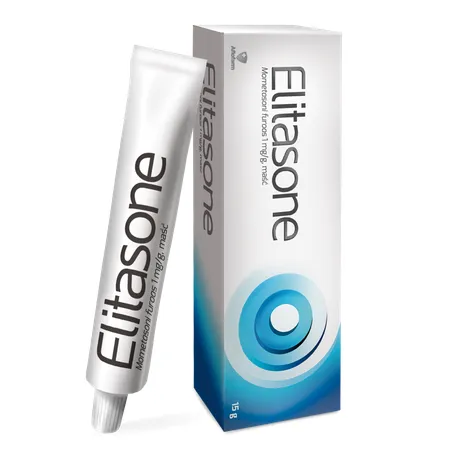
Table of Contents
Package leaflet: Information for the patient
Elitasone, 1 mg/g, ointment
Mometasone furoate
Please read this leaflet carefully before using the medicine, as it contains
important information for the patient.
- Keep this leaflet, so that you can read it again if necessary.
- If you have any questions, please consult your doctor or pharmacist.
- This medicine has been prescribed for a specific individual. Do not pass it on to others. The medicine may harm another person, even if their symptoms are the same.
- If you experience any adverse reactions, including any not listed in this leaflet, inform your doctor or pharmacist. See section 4.
Table of contents:
- What Elitasone is and what it is used for
- Important information before using Elitasone
- How to use Elitasone
- Possible side effects
- How to store Elitasone
- Contents of the pack and other information
1. What Elitasone is and what it is used for
Elitasone contains the active substance mometasone furoate. Mometasone furoate is a medicine belonging to the group of corticosteroids with potent activity.
Elitasone is an ointment for topical application to the skin. When applied locally, it exerts anti-inflammatory, antipruritic, and vasoconstrictive effects.
Indications
Elitasone is indicated for the relief of inflammatory and pruritic manifestations of skin diseases such as psoriasis, atopic dermatitis, or contact dermatitis.
Elitasone can be used in adults and children over 2 years of age.
2. Important information before using Elitasone
When not to use Elitasone:
- if the patient is allergic to the active substance (mometasone furoate) or to other corticosteroids, or to any of the other ingredients of this medicine (listed in section 6);
- in acne vulgaris, rosacea;
- in perioral dermatitis;
- in bacterial infections (e.g. impetigo, pyoderma), viral infections (e.g. chickenpox, herpes simplex, shingles) or fungal infections of the skin;
- in post-vaccination reactions (redness, swelling, pain at the site of vaccination);
- in cutaneous tuberculosis;
- in syphilitic skin lesions;
- in anal or genital itching;
- in diaper dermatitis (irritation of the skin in contact with diapers);
- under occlusive dressings;
- in children under 2 years of age.
Warnings and precautions
Before starting treatment with Elitasone, discuss the following warnings with your doctor.
- If itching, burning, or redness of the skin occurs at the site of application of Elitasone, contact your doctor immediately.
- This medicine should be used with particular caution in patients with psoriasis, as topical corticosteroids may cause a relapse of the disease.
- Do not use the medicine over a large area of skin or for prolonged periods, because corticosteroids may be absorbed into the body and systemic adverse effects of corticosteroids may occur (see section 4: Possible side effects).
- Use on the face is not recommended due to the risk of dermatitis (resembling acneiform eruptions), perioral dermatitis, skin atrophy or acne.
- After applying Elitasone ointment to the skin, do not cover the area with an occlusive dressing (especially plastic film, adhesive bandages, diapers), as this increases drug absorption, which may lead to systemic adverse effects. To minimize the risk of adverse effects, use the smallest effective amount of medicine needed to control symptoms.
- Do not stop treatment abruptly without consulting your doctor. Sudden discontinuation of the medicine may result in intense redness, burning, and stinging pain (so-called "rebound effect").
- If a skin infection develops at the site of application of Elitasone, the doctor should initiate appropriate treatment.
- Do not apply the medicine to open wounds or mucous membranes, into or around the eyes.
- Avoid contact with the eyes. In case of accidental contact with the eyes, rinse thoroughly with running water.
- The medicine may be used on the armpits and groin areas only when absolutely necessary, as absorption is greater in these areas, increasing the risk of systemic adverse effects.
- Elitasone may mask, activate, or worsen symptoms of existing infections.
Children
Do not use in children under 2 years of age.
In children over 2 years of age, the medicine should be used only under strict medical supervision.
Prolonged use of corticosteroids may interfere with growth and development in children.
Elitasone and other medicines
Inform your doctor or pharmacist about all medicines you are currently taking or have recently taken, as well as any medicines you plan to take.
Do not administer varicella (chickenpox) vaccines during treatment with Elitasone. If other vaccinations are required, inform the doctor that you are using Elitasone.
Elitasone may enhance the effects of immunosuppressive medicines and reduce the effects of immunomodulatory medicines.
Pregnancy and breastfeeding
If you are pregnant, think you may be pregnant, are planning to become pregnant, or are breastfeeding, consult your doctor or pharmacist before using this medicine.
During pregnancy, Elitasone should be used only if your doctor decides that the benefits of treatment outweigh the risks to the mother or fetus. Do not use the medicine over a large area of skin or for prolonged periods. The medicine may be harmful to the fetus.
Do not use the medicine during breastfeeding, as it passes into breast milk.
The safety of using the medicine in pregnant or breastfeeding women has not been established.
Driving and operating machinery
Elitasone has no effect or negligible effect on the ability to drive and operate machinery.
The medicine contains propylene glycol monostearate
The medicine contains alcohol (propylene glycol monostearate) 40 mg per 1 g of ointment.
Propylene glycol may cause skin irritation.
3. How to use Elitasone
This medicine should always be used as directed by a physician. In case of doubts, consult a
doctor or pharmacist.
This medicine is intended for topical application to the skin.
Use of the medicine is recommended in cases of dry, scaly, and cracked skin lesions.
Adults and children over 2 years of age
Apply a thin layer of ointment to the affected area of skin, usually once daily.
Children
Do not use in children under 2 years of age.
In children over 2 years of age, the medicine should be used only under strict medical supervision. Do
not apply to large areas of skin.
Use of a higher than recommended dose of Elitasone
If more than the recommended amount of Elitasone has been used, contact a doctor immediately.
Symptoms of overdose may include edema, elevated arterial blood pressure, increased blood glucose
(hyperglycemia), glucose in urine (glucosuria), reduced immunity, and Cushing's syndrome (characteristic features include moon face, rounded trunk, and thin limbs).
Elitasone used in children at high doses or over large skin areas may cause disturbances in growth and development and adrenal cortex insufficiency.
Missed dose of Elitasone
Apply the ointment as soon as possible, then continue with the next dose at the usual time. Do not
use a double dose to make up for a missed dose.
Stopping treatment with Elitasone
Do not discontinue treatment without consulting a doctor.
Do not stop treatment abruptly, as this may cause a recurrence of the disease, especially if the medicine
has been used long-term. The following symptoms may occur: severe redness, burning, and stinging pain.
The doctor will recommend gradually reducing the dose and increasing the interval between doses.
If you have any further doubts regarding the use of this medicine, consult your doctor.
4. Possible adverse reactions
Like all medicines, this medicine can cause adverse reactions, although not everybody gets them.
Not very common (occur in 1 to 10 people in 1,000):
- irritation;
- perioral dermatitis;
- dermatitis at the site of application (contact dermatitis);
- skin depigmentation (loss of skin pigment, resulting in pale, milky-white patches on the skin);
- excessive hair growth;
- skin striae (stretch marks);
- skin maceration (softening of the skin; the epidermis becomes swollen, whitish, moist, and may peel);
- miliaria (sweat rash);
- secondary skin infections (skin infections occurring during treatment).
Rare (occur in 1 to 10 people in 10,000):
- tingling or pricking sensation;
- folliculitis (inflammation of hair follicles, presenting as pustules or inflammatory nodules around hair shafts);
- burning sensation;
- itching;
- acneiform skin changes (skin lesions resembling acne);
- atrophic skin changes.
Very rare (occur in less than 1 person in 10,000):
- dilation of small blood vessels (telangiectasia, commonly known as "spider veins").
When the medicine is applied over a large area of skin, used for prolonged periods, or used under occlusive dressings, systemic absorption may occur, leading to generalised corticosteroid-related adverse effects.
Additional adverse reactions in children
Children (due to their higher skin surface area to body weight ratio compared to adults) are more susceptible to adverse reactions. Cases of intracranial hypertension (increased cerebrospinal fluid pressure) have been reported in children treated with topical corticosteroids. This condition is characterised by bulging of the fontanelle, headache, and bilateral optic disc swelling (papilledema). In addition, growth and developmental disorders may occur in children.
If any of the above symptoms occur, contact a doctor immediately.
Reporting of adverse reactions
If any adverse reactions occur, including any not listed in this leaflet, inform your doctor or pharmacist.
Adverse reactions can be reported directly to the Department of Monitoring Adverse Drug Reactions at the Office for Registration of Medicinal Products, Medical Devices and Biocidal Products
Jerozolimskie Avenue 181C, 02-222 Warsaw
Phone: +48 22 49 21 301
Fax: +48 22 49 21 309
Website: https://smz.ezdrowie.gov.pl
Adverse reactions can also be reported to the marketing authorisation holder.
Reporting adverse reactions helps provide more information on the safety of this medicine.
5. How to store Elitasone
Keep the medicine out of sight and reach of children.
Store below 25°C. Do not store in the refrigerator or freeze.
Do not use this medicine after the expiry date stated on the tube and the carton. The expiry date refers to the last day of the stated month.
Shelf life after first opening of the tube: 3 months.
Medicines must not be disposed of via wastewater or household waste. Ask your pharmacist how to dispose of medicines no longer in use. This will help protect the environment.
6. Contents of the pack and other information
What Elitasone contains
- The active substance is: mometasone furoate. 1 g of the ointment contains 1 mg of mometasone furoate.
- The other ingredients are: propylene glycol monostearate, hexylene glycol, diluted phosphoric acid, white wax, white petroleum.
What Elitasone looks like and contents of the pack
Elitasone is a white ointment.
The medicine is packed in an aluminium tube containing 15 g, 30 g, or 50 g of ointment, placed in a cardboard box.
Marketing Authorisation Holder and Manufacturer
Aflofarm Farmacja Polska Sp. z o.o.
ul. Partyzancka 133/151,
95-200 Pabianice,
tel. (42) 22-53-100