Dopegyt
Poland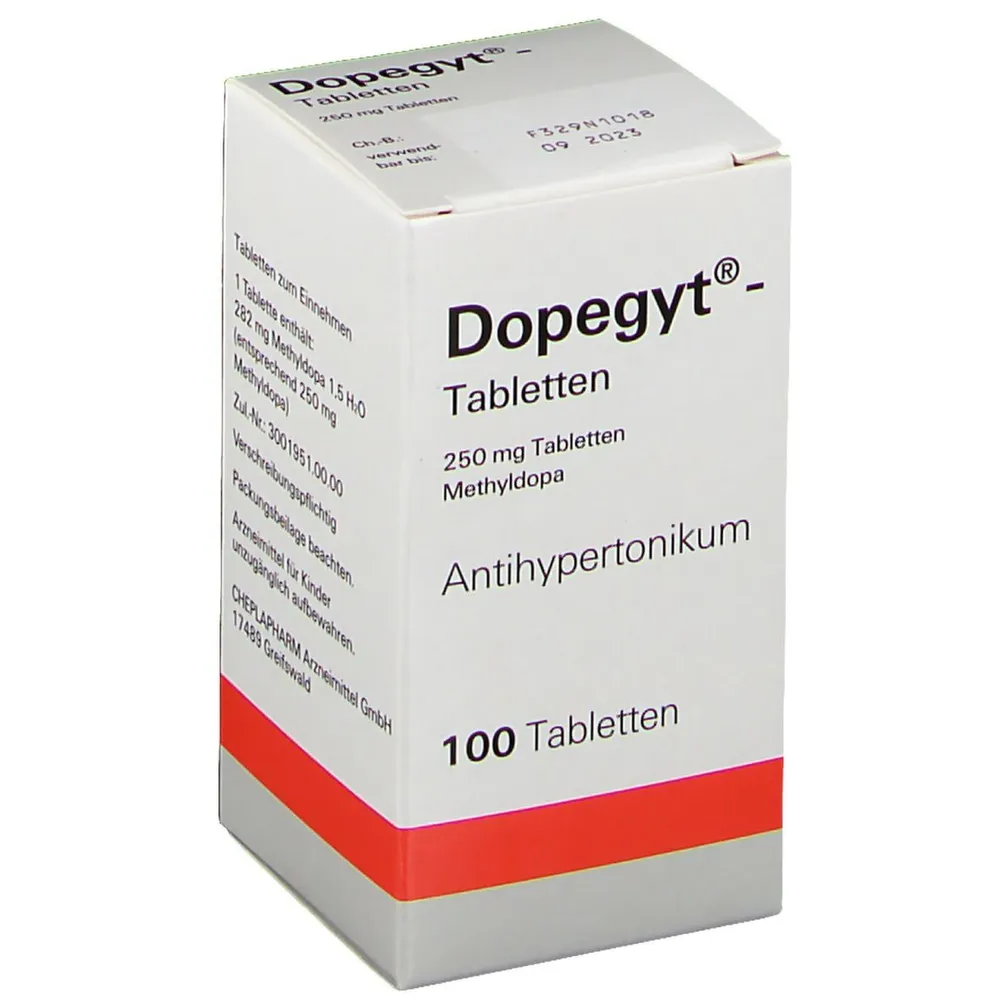
Table of Contents
Patient Information Leaflet
Warning! Keep this leaflet, information on the immediate packaging in foreign languages
Dopegyt
250 mg, tablets
Methyldopum
Please read this leaflet carefully before taking the medicine, as it contains
important information for the patient.
- Keep this leaflet so that you can read it again if necessary.
- If you have any questions, please consult your doctor, pharmacist, or nurse.
- This medicine has been prescribed for a specific individual. Do not pass it on to others. It may harm other people, even if their symptoms are the same.
- If you experience any adverse reactions, including any adverse reactions not listed in this leaflet, inform your doctor or pharmacist. See section 4.
Table of Contents:
- What Dopegyt is and what it is used for
- Important information before taking Dopegyt
- How to take Dopegyt
- Possible side effects
- How to store Dopegyt
- Contents of the pack and other information
1. What Dopegyt is and what it is used for
The active substance in Dopegyt is methyldopa, which is a centrally-acting antihypertensive agent.
Dopegyt is used in the treatment of hypertension.
2. Important information before using Dopegyt
When not to use Dopegyt
- if the patient is allergic to methyldopa or any of the other ingredients of this medicine (listed in section 6),
- if the patient has active liver disease (e.g. acute hepatitis, cirrhosis of the liver),
- if the patient has a history of methyldopa-induced liver disease,
- if the patient is concurrently taking medicines called MAO inhibitors used to treat depression (e.g. moclobemide), Parkinson's disease or Alzheimer's disease (e.g. selegiline),
- if the patient has depression,
- if the patient has a pheochromocytoma (a specific type of adrenal gland tumour).
Warnings and precautions
Before starting treatment with Dopegyt, discuss this with your doctor or pharmacist.
- Inform your doctor if you have had liver disease in the past, abnormal liver function tests, or kidney disease, as dose reduction may be necessary in such cases.
- If you or a close relative has been diagnosed with a specific metabolic disorder (hepatic porphyria), inform your doctor, as methyldopa should be used with special caution in such cases.
- During treatment – particularly when doses above 1000 mg are used and especially after 6–12 months of therapy – laboratory abnormalities (positive direct Coombs test) may occur in 10–20% of patients. Less than 5% of these patients may develop haemolytic anaemia (anaemia caused by premature destruction of red blood cells). Therefore, blood count and direct Coombs test should be checked before starting treatment and then every 6–12 months during treatment. Symptoms of anaemia may include: pallor, weakness, jaundice. If such symptoms occur, stop taking this medicine immediately and consult your doctor. If these symptoms are caused by methyldopa, Dopegyt must never be used again.
- As a hypersensitivity reaction to methyldopa, liver cell damage may occur, sometimes even severe. Therefore, during the first 6–12 weeks of treatment, liver function tests should be performed at intervals recommended by your doctor, and whenever fever of unknown origin or jaundice occurs. If fever, jaundice or worsening of liver function test results occur, treatment must be stopped immediately. If liver damage is caused by methyldopa, Dopegyt must never be used again.
- Very rarely, haematopoietic disorders (reduction in white blood cells and platelets) may occur during treatment. If oral ulcers, sore throat, small red haemorrhagic spots on the body, tarry stools, blood in urine, or unusual or difficult-to-control bleeding occur, stop taking this medicine and consult your doctor. These symptoms usually resolve spontaneously after discontinuation of the drug.
- Some patients may experience oedema and weight gain. These symptoms usually resolve with diuretic treatment. Consult your doctor if these symptoms worsen despite diuretic therapy or if shortness of breath (difficulty breathing) or easy fatigability occurs, as discontinuation of the drug may be necessary.
- If undergoing dialysis, an additional dose of the medicine may be required after dialysis, as methyldopa is removed from the body during dialysis.
- Inform your doctor about treatment with Dopegyt before blood transfusion, general anaesthesia, and diagnostic tests for a specific type of adrenal gland tumour (pheochromocytoma).
- Consult your doctor if you have vascular brain damage or involuntary movements, as discontinuation of Dopegyt may be necessary.
Dopegyt and other medicines
Tell your doctor or pharmacist about all medicines you are currently taking or have recently taken, as well as any medicines you plan to take.
Dopegyt must not be taken together with MAO inhibitors (e.g. moclobemide used to treat depression, or selegiline used to treat Parkinson's disease or Alzheimer's disease).
Some medicines may weaken the antihypertensive effect of Dopegyt, and their concomitant use requires special caution and careful medical monitoring:
- medicines containing adrenaline, ephedrine, or pseudoephedrine used to treat colds, cough, and asthma,
- certain medicines used for depression (e.g. imipramine, amitriptyline),
- medicines used to treat certain psychiatric disorders (e.g. chlorpromazine, trifluoperazine),
- oral iron supplements (ferrous gluconate and ferrous sulphate reduce methyldopa absorption),
- medicines used to relieve fever and pain (e.g. piroxicam, diclofenac, naproxen),
- estrogens (preparations containing female sex hormones).
Concomitant use of Dopegyt and the following medicines may enhance the blood pressure-lowering effect of Dopegyt:
- other antihypertensive medicines,
- general anaesthetic agents.
Concomitant use of methyldopa and the following medicines may mutually alter their therapeutic effects, and therefore requires special caution:
- lithium (used in the treatment of psychiatric disorders),
- levodopa (used in the treatment of Parkinson's disease),
- alcohol and medicines used to treat anxiety, insomnia, or allergies,
- anticoagulant medicines (e.g. acenocoumarol); concomitant use increases the risk of bleeding,
- bromocriptine (reduces the release of prolactin and growth hormone in the body, used in diseases where lower levels of these substances are required),
- haloperidol (used in psychiatric disorders).
Dopegyt with food and alcohol
During treatment, consumption of alcoholic beverages should be avoided. Tablets may be taken either before or after meals.
Pregnancy and breastfeeding
During pregnancy and while breastfeeding, or if pregnancy is suspected or planned, consult your doctor before using this medicine.
Although no clear teratogenic effects have been reported, fetal harm cannot be excluded.
Therefore, Dopegyt should not be used during pregnancy unless the expected benefits outweigh the potential risks.
Methyldopa passes into breast milk, and therefore nursing mothers should not use this medicine unless recommended by a doctor after careful assessment of benefits and risks.
Driving and operating machinery
This medicine may cause transient sedative symptoms, especially at the beginning of treatment and during dose escalation. If sedative symptoms occur, do not perform tasks requiring attention, such as driving vehicles or operating machinery.
Dopegyt contains sodium
This medicine contains less than 1 mmol (23 mg) of sodium per tablet, i.e. it is considered "sodium-free".
3. How to use Dopegyt
This medicine should always be taken exactly as directed by your doctor or pharmacist. If you have any doubts,
consult your doctor or pharmacist.
Tablets may be taken before or after meals.
Recommended dosage:
Adults
The recommended initial dose for the first two days is 250 mg 2–3 times daily. Your doctor may
gradually increase or decrease the initial dose – depending on the degree of blood pressure reduction –
with intervals of no less than two days. Initially, it is recommended to increase the evening dose.
The recommended maintenance dose is 500–2000 mg per day, divided into 2–4 doses. The maximum
daily dose is 3 g. After 2 or 3 months of treatment, tolerance to the medicine may develop. Your doctor
may then decide whether it is necessary to add a diuretic or increase the dose of methyldopa.
Elderly patients
In elderly patients, treatment should be started at the lowest possible dose, not exceeding 250 mg per day.
Your doctor may gradually increase or decrease the dose, depending on the degree of blood pressure
reduction, with intervals of no less than two days, up to a maximum dose of 2000 mg, which should not
be exceeded.
Use in children and adolescents
In children and adolescents, the recommended initial dose is 10 mg/kg body weight per day, given in
2–4 divided doses. If necessary, your doctor may gradually increase the daily dose at intervals of no
less than two days until an appropriate response to treatment is achieved. The maximum dose is
65 mg/kg body weight per day, up to a maximum of 3 g per day.
Use in patients with renal impairment
Your treating doctor will adjust the dose according to the degree of renal impairment. In mild renal
impairment, the dosing interval should be extended to 8 hours; in moderate renal impairment, to 8–12
hours; and in severe renal impairment, to 12–14 hours.
Since methyldopa is removed during dialysis, a supplementary dose of 250 mg is recommended after
dialysis treatment.
If you feel that the effect of Dopegyt is too strong or too weak, talk to your doctor or pharmacist.
Taking more Dopegyt than recommended
If you take more Dopegyt than recommended, contact your doctor immediately or go to the
emergency room of your nearest hospital. Bring this leaflet and any remaining tablets with you to show
the doctor.
Symptoms of overdose: low blood pressure, marked drowsiness, weakness, slow heart rate, dizziness,
constipation, abdominal bloating, gas, diarrhea, nausea, vomiting.
Missing a dose of Dopegyt
Do not take a double dose to make up for a missed dose. Taking a double dose will not compensate for
the missed dose and may increase the risk of overdose.
Stopping Dopegyt
Usually, blood pressure returns within 48 hours after stopping treatment to the level observed before
treatment was started, without a rebound effect. However, treatment should not be stopped prematurely,
as blood pressure may rise.
If you have any further questions about the use of this medicine, consult your doctor or pharmacist.
4. Possible adverse reactions
Like any medicine, this medicine can cause adverse reactions, although not everyone will experience them.
At the beginning of treatment and during dose escalation, transient sedative effects,
transient headache or weakness may occur.
If any of the following symptoms occur, stop taking the medicine
Dopegyt and contact your doctor or go to the emergency department of the nearest hospital:
- swelling of the lips or throat causing difficulty in swallowing or breathing,
- collapse.
These are very serious but very rare adverse reactions. If they occur, they may indicate a significant
allergic reaction to Dopegyt. Immediate medical assistance or hospitalization may then be necessary.
Urticaria may also be a sign of an allergic reaction. In such a case, discontinue the medicine immediately and consult your doctor for advice regarding further treatment. If urticaria is severe and widespread, seek immediate medical attention to avoid serious complications.
If any of the following symptoms occur, contact your doctor immediately:
- pale skin, weakness,
- signs of infection: fever, sore throat, mouth ulcers,
- small red hemorrhagic spots all over the body, tarry stools or blood in the urine,
- unusual or prolonged bleeding,
- yellowish discoloration of the eyes and skin, dark urine,
- severe fatigue,
- chest pain (angina) occurring more frequently and lasting longer than usual,
- shortness of breath (difficulty breathing), leg swelling, weight gain,
- blisters on the skin, peeling skin.
These symptoms may indicate blood and lymphatic system disorders, may suggest hypersensitivity reactions or heart failure, and may be life-threatening. Serious consequences can be avoided provided the doctor's recommendations are followed, recommended laboratory tests are performed, and medical advice is sought immediately if any of the above symptoms occur.
The following adverse reactions may occur:
Very common (may affect more than 1 in 10 people):
- positive Coombs test (a blood test detecting causes of anemia) (see section 4, Warnings and precautions).
Very rare (may affect up to 1 in 10,000 people):
- myocarditis (inflammation of the heart muscle),
- pericarditis (inflammation of the tissue surrounding the heart),
- parkinsonism (tremor, shuffling gait with short, accelerated steps, muscle weakness),
- pancreatitis,
- hepatitis (liver inflammation),
- chest pain occurring more frequently and lasting longer than usual (worsening angina),
- slow heart rate,
- heart failure,
- edema,
- weight gain.
Frequency not known (cannot be estimated from available data):
- vasculitis (inflammation of blood vessels),
- a disorder that may affect various systems, often characterized by skin inflammation (e.g. butterfly-shaped rash),
- increased prolactin levels in blood,
- breast enlargement in men,
- milk discharge from mammary glands outside the breastfeeding period,
- absence of menstruation,
- facial nerve palsy (weakness or paralysis of muscles on one side of the face),
- psychiatric disorders,
- involuntary movements,
- symptoms of cerebrovascular disorder (difficulty speaking, visual disturbances, weakness in arms and legs, especially on one side of the body),
- psychiatric disorders such as nightmares,
- usually transient mild psychosis and depression,
- dizziness,
- numbness or tingling,
- decreased libido,
- low blood pressure and slow heart rate, possibly leading to fainting,
- drop in blood pressure upon standing, causing dizziness, lightheadedness or fainting,
- nasal mucosa congestion,
- colitis (inflammation of the large intestine),
- vomiting,
- diarrhea,
- sialadenitis (inflammation of the salivary glands),
- pain or black tongue,
- nausea,
- constipation,
- abdominal pain,
- bloating,
- dry mouth,
- abnormal liver function test results,
- eczema or lichen,
- mild joint pain with or without joint swelling,
- muscle pain,
- impotence,
- ejaculation disorders,
- increased blood urea nitrogen concentration.
Reporting of adverse reactions
If any adverse reactions occur, including any not listed in this leaflet, inform your doctor or pharmacist. Adverse reactions can be reported directly to the Department of Monitoring Adverse Drug Reactions at the Office for Registration of Medicinal Products, Medical Devices and Biocidal Products
Al. Jerozolimskie 181C, 02-222 Warsaw
Tel.: + 48 22 49 21 301
Fax: + 48 22 49 21 309
Website: https://smz.ezdrowie.gov.pl .
Reporting adverse reactions helps to provide more information on the safety of the medicine.
5. How to store Dopegyt
Keep this medicine out of sight and reach of children.
Store below 25°C.
Store in the original bottle to protect from light.
Do not use this medicine after the expiry date stated on the packaging. The expiry date refers to the last day of the stated month.
Medicines must not be disposed of via wastewater or household waste. Ask your pharmacist how to dispose of medicines no longer required. Such measures help protect the environment.
6. Contents of the pack and other information
What Dopegyt contains
The active substance is methyldopa. Each tablet contains 250 mg of methyldopa.
Other components are: ethylcellulose, magnesium stearate, maize starch, stearic acid
95%, talc.
What Dopegyt looks like and contents of the pack
White or greyish-white, round, flat tablet with bevelled edges and a circular engraving
DOPEGYT on one side. The tablet is free from physical defects and mechanical
contamination.
50 tablets in a brown glass bottle with a PE cap with a tamper-evident ring and a
cushion, packed in a cardboard box.
For further information, please contact the responsible party or the parallel importer.
Marketing Authorisation Holder in the Czech Republic, the country of export:
Egis Pharmaceuticals PLC
Keresztúri út 30-38
1106 Budapest
Hungary
Manufacturer:
Egis Pharmaceuticals PLC
Mátyás király u. 65,
9900 Körmend,
Hungary
Parallel importer:
Medezin Sp. z o.o.
ul. Zbąszyńska 3
91-342 Łódź
Repackaged in:
Medezin Sp. z o.o.
ul. Zbąszyńska 3
91-342 Łódź
Number of Marketing Authorisation in the Czech Republic, the country of export: 58/256/70-S/C
Number of Parallel Import Authorisation: 250/24