Dopamine hydrochloride wzf 4%
Poland
Table of Contents
- Package leaflet: Information for the patient
- 1. What Dopaminum hydrochloricum WZF 1% and Dopaminum hydrochloricum WZF 4% are and what they are used for
- 2. Important information before using Dopaminum hydrochloricum WZF 1%
- 3. How to use Dopaminum hydrochloricum WZF 1% and Dopaminum hydrochloricum WZF 4%
- 4. Possible adverse reactions
- 5. How to store Dopaminum hydrochloricum WZF 1% and Dopaminum hydrochloricum WZF 4%
- 6. Contents of the pack and other information
- Information intended exclusively for medical professionals:
Package leaflet: Information for the patient
DOPAMINUM HYDROCHLORICUM WZF 1%, 10 mg/ml, solution for infusion
DOPAMINUM HYDROCHLORICUM WZF 4%, 40 mg/ml, solution for infusion
Dopamini hydrochloridum
Please read this leaflet carefully before using the medicine, as it contains important information for the patient.
- Keep this leaflet for future reference.
- If you have any doubts, please consult your doctor, pharmacist, or nurse.
- This medicine has been prescribed for a specific individual. Do not pass it on to others. The medicine may harm others, even if their symptoms are the same.
- If any adverse reactions occur, including any not listed in this leaflet, inform your doctor, pharmacist, or nurse. See section 4.
Table of contents of the leaflet
- What Dopaminum hydrochloricum WZF 1% and Dopaminum hydrochloricum WZF 4% are and what they are used for
- Important information before use of Dopaminum hydrochloricum WZF 1% and Dopaminum hydrochloricum WZF 4%
- How to use Dopaminum hydrochloricum WZF 1% and Dopaminum hydrochloricum WZF 4%
- Possible adverse reactions
- How to store Dopaminum hydrochloricum WZF 1% and Dopaminum hydrochloricum WZF 4%
- Contents of the package and other information
1. What Dopaminum hydrochloricum WZF 1% and Dopaminum hydrochloricum WZF 4% are and what they are used for
Dopaminum hydrochloricum WZF 1% and Dopaminum hydrochloricum WZF 4% contain dopamine as the active substance. Dopamine causes constriction of peripheral blood vessels, increases blood pressure, and stimulates cardiac function.
This effect of dopamine is utilized when administered intravenously in life-threatening conditions known as shock, characterized by a sudden drop in blood pressure and reduced blood flow through body tissues.
Shock may result from myocardial infarction, trauma, blood infection (sepsis), cardiac surgery, or acute exacerbation of chronic heart failure (symptoms: shortness of breath, swelling of lower limbs, fatigue, chest pain and tightness).
Dopamine is also used in shock leading to kidney failure.
2. Important information before using Dopaminum hydrochloricum WZF 1%
and Dopaminum hydrochloricum WZF 4%
When not to use Dopaminum hydrochloricum WZF 1% and Dopaminum hydrochloricum WZF 4%:
- if the patient is allergic to dopamine or any of the other ingredients of this medicine (listed in section 6);
- if the patient has a phaeochromocytoma (a tumour located in the glands situated above the kidneys);
- if the patient has severe heart rhythm disorders, specifically ventricular fibrillation or very rapid heart rate (referred to as uncontrolled tachyarrhythmias).
Warnings and precautions
Before starting treatment with Dopaminum hydrochloricum WZF 1% and Dopaminum hydrochloricum WZF 4%, this should be discussed with the doctor.
Dopamine is administered by anaesthesiologists or physicians specialized in intensive care.
The doctor will exercise particular caution when using dopamine and will take appropriate measures:
- if the patient has reduced circulating blood volume (hypovolaemia);
- if the patient has diabetes;
- if the patient has renal or hepatic insufficiency;
- if the patient has or has previously had vascular diseases manifested by cyanosis and cold extremities (e.g. atherosclerosis, Raynaud's disease, arterial embolism, diabetic vasculitis, or Buerger's disease). Patients with these conditions should inform their doctor, if their medical condition allows.
During dopamine administration, the doctor will monitor the patient for adverse effects, particularly those affecting the heart and kidneys.
If blood pressure increases and the patient's condition improves during treatment, the doctor will gradually reduce the dopamine dose to avoid a sudden drop in blood pressure.
Dopamine may be used in children over 12 years of age.
Dopaminum hydrochloricum WZF 1%, Dopaminum hydrochloricum WZF 4% and other medicines
Inform the doctor about all medicines currently or recently used by the patient, as well as any medicines the patient intends to use, if possible and if the patient's condition allows.
The following medicines may affect the action of dopamine:
- monoamine oxidase inhibitors (antidepressants), e.g. moclobemide, selegiline, especially if these medicines have been taken within the last 2 weeks;
- tricyclic antidepressants, e.g. amitriptyline;
- antihypertensive medicines belonging to the class known as beta-blockers, such as propranolol or metoprolol;
- migraine medicines belonging to ergotamine derivatives;
- medicines used to lower blood pressure, e.g. guanethidine;
- the antiepileptic medicine phenytoin;
- diuretics, e.g. furosemide, amiloride, triamterene.
Cyclopropane, isoflurane, or halothane (medicines used during surgery) should not be administered with dopamine.
Pregnancy, breastfeeding and fertility
Dopamine is used in life-threatening conditions. The decision to use this medicine during pregnancy or breastfeeding will be made by the doctor.
There are no data available regarding the effect of dopamine on fertility in women and men.
Driving and operating machinery
Not applicable – the medicine is used in life-threatening conditions.
Dopaminum hydrochloricum WZF 1% and Dopaminum hydrochloricum WZF 4% contain sodium metabisulphite and sodium
Due to the presence of sodium metabisulphite, Dopaminum hydrochloricum WZF 1% and Dopaminum hydrochloricum WZF 4% may rarely cause severe hypersensitivity reactions and bronchospasm.
Dopaminum hydrochloricum WZF 1% contains 3.17 mg of sodium (main component of table salt) per 5 ml ampoule. This corresponds to 0.16% of the maximum recommended daily dietary sodium intake for adults.
Dopaminum hydrochloricum WZF 4% contains 12.27 mg of sodium (main component of table salt) per 5 ml ampoule. This corresponds to 0.61% of the maximum recommended daily dietary sodium intake for adults.
Dopaminum hydrochloricum WZF 1% and Dopaminum hydrochloricum WZF 4% must be diluted before administration – see section “Information intended exclusively for healthcare professionals”. The sodium content from the diluent should be taken into account when calculating the total sodium content in the prepared diluted solution. For precise information on the sodium content of the solution used for dilution, refer to the product characteristics of the diluent used.
In patients with impaired renal function and in patients who need to control sodium intake in their diet, the sodium content in the final product for administration should be considered.
3. How to use Dopaminum hydrochloricum WZF 1% and Dopaminum hydrochloricum WZF 4%
Dopaminum hydrochloricum WZF 1% and Dopaminum hydrochloricum WZF 4% are administered exclusively by medical personnel.
- The dosage is determined by the physician. The dose used depends on the patient's age, body weight, and general health status.
- The medicine is administered after prior dilution, slowly by intravenous infusion (using appropriate equipment with controlled infusion rate).
- During dopamine administration, medical personnel monitor heart function, blood pressure, and urine output to assess the patient's response to the medicine.
Use of a higher than recommended dose of Dopaminum hydrochloricum WZF 1% and Dopaminum hydrochloricum WZF 4%
Dopamine is administered by medical personnel, therefore it is unlikely that a patient will receive more medicine than intended.
If a higher than recommended dose of dopamine is administered, excessive elevation of blood pressure may occur. In such a case, the physician will initiate appropriate treatment, i.e. reduce the dose or temporarily interrupt dopamine infusion until the patient's condition improves. If no improvement occurs, the physician will administer a medicine called phentolamine.
4. Possible adverse reactions
Like all medicines, this medicine can cause adverse reactions, although not everyone experiences them.
Most commonly occurring are:
- headaches;
- irregular, accelerated or slowed heartbeat, chest pain (so-called angina), palpitations, decreased blood pressure, narrowing of blood vessels (which may lead to limb ischemia or increased blood pressure);
- shortness of breath;
- nausea, vomiting.
Less commonly occurring are:
- goosebumps causing hair erection;
- pupil dilation;
- very slow heartbeat, changes in electrocardiogram (EKG) readings, increased blood pressure;
- limb ischemia, which may lead to necrotic changes known as limb gangrene, especially in patients with pre-existing vascular disease (symptoms: pain in fingers or toes).
High blood nitrogen levels (azotemia) may occur.
Tissue necrosis may occur due to dopamine leakage into surrounding tissues of the vein through which the medicine is administered (called extravasation).
In rare cases, ventricular cardiac arrhythmias, which were fatal, have been reported.
Reporting of adverse reactions
If any adverse reactions occur, including any not listed in this leaflet, inform your doctor, pharmacist, or nurse. Adverse reactions can be reported directly to the Department of Monitoring Adverse Drug Reactions at the Office for Registration of Medicinal Products, Medical Devices and Biocidal Products
Al. Jerozolimskie 181C
02-222 Warsaw
Phone: +48 22 49 21 301
Fax: +48 22 49 21 309
Website: https://smz.ezdrowie.gov.pl
Adverse reactions can also be reported to the marketing authorization holder.
Reporting adverse reactions helps provide more information on the safety of this medicine.
5. How to store Dopaminum hydrochloricum WZF 1% and Dopaminum hydrochloricum WZF 4%
Store ampoules in the outer packaging to protect from light, at a temperature below 25°C. Do not freeze.
Keep the medicine out of the sight and reach of children.
Do not use this medicine after the expiry date stated on the carton and on the ampoule. The expiry date refers to the last day of the stated month.
The marking on the packaging following the abbreviation EXP indicates the expiry date, and the abbreviation Lot indicates the batch number.
Medicines must not be disposed of via wastewater or household waste. Ask your pharmacist how to dispose of medicines no longer required. This will help protect the environment.
6. Contents of the pack and other information
What Dopaminum hydrochloricum WZF 1% contains
- The active substance is dopamine hydrochloride. Each ml contains 10 mg of dopamine hydrochloride.
- The other ingredients are: sodium metabisulfite, disodium edetate, water for injections.
What Dopaminum hydrochloricum WZF 4% contains
- The active substance is dopamine hydrochloride. Each ml contains 40 mg of dopamine hydrochloride.
- The other ingredients are: sodium metabisulfite, disodium edetate, water for injections.
What Dopaminum hydrochloricum WZF 1% and Dopaminum hydrochloricum WZF 4% look like and contents of the pack
Dopaminum hydrochloricum WZF 1% and Dopaminum hydrochloricum WZF 4% are colourless or slightly yellowish, clear liquids.
The medicines are packed in cardboard boxes containing 10 ampoules of 5 ml each.
Marketing Authorisation Holder and Manufacturer
Zakłady Farmaceutyczne POLPHARMA S.A.
ul. Pelplińska 19, 83-200 Starogard Gdański
tel. +48 22 364 61 01
Information intended exclusively for medical professionals:
DOPAMINUM HYDROCHLORICUM WZF 1%, 10 mg/ml, infusion solution
DOPAMINUM HYDROCHLORICUM WZF 4%, 40 mg/ml, infusion solution
Dopamini hydrochloridum
Preparation and administration instructions for Dopaminum hydrochloricum WZF 1% and
Dopaminum hydrochloricum WZF 4%
- The medicinal product must be administered intravenously by infusion after prior dilution.
- Administer into a large vein or central venous system to minimize the risk of extravasation.
- The products should be diluted under controlled and validated aseptic conditions with 5% glucose solution or 0.9% NaCl solution. To prepare the infusion solution, mix 100 mg – 800 mg of dopamine hydrochloride with diluent (5% glucose solution or 0.9% NaCl solution) to obtain a final volume of 250 ml. The resulting solution contains 400 micrograms – 3200 micrograms of dopamine hydrochloride per 1 ml. Dilution should be prepared in glass, polyethylene (LDPE), or polypropylene (PP) containers. After dilution with 0.9% NaCl solution or 5% glucose solution, chemical and physical stability has been demonstrated for 24 hours at 25°C. From a microbiological standpoint, the prepared solution should be used immediately. If not used immediately, the user is responsible for the conditions and duration of storage. If necessary, the prepared solution may be stored for up to 24 hours at 25°C, provided it was prepared under controlled and validated aseptic conditions. Any solution not used within 24 hours must be discarded. The prepared solution does not require protection from light.
- Dopamine should not be mixed with alkaline solutions, e.g., sodium bicarbonate, as it loses its activity under such conditions.
Instructions for opening the ampoule
Before opening the ampoule, ensure that all the solution is in the lower part of the ampoule.
Gently shake the ampoule or tap it with a finger to facilitate the flow of the solution downward.
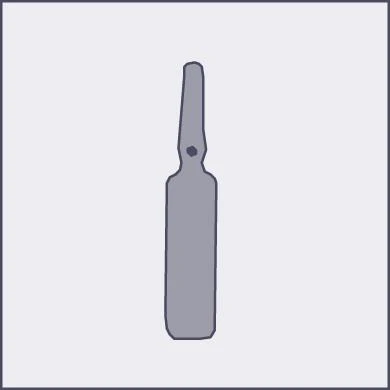
Each ampoule has a colored dot (see Figure 1) indicating the score line located beneath it.
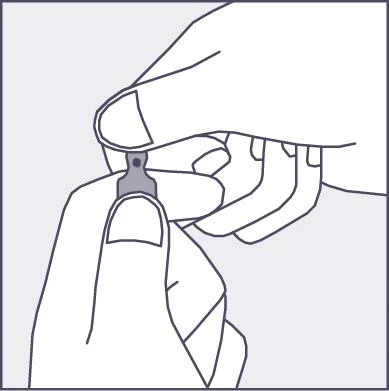
- To open the ampoule, hold it vertically in both hands, with the colored dot facing toward you – see Figure 2. The upper part of the ampoule should be gripped so that the thumb is positioned above the colored dot.
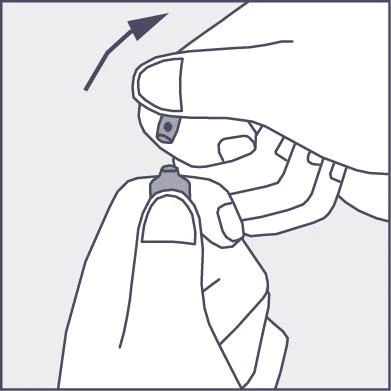
- Press in the direction of the arrow shown in Figure 3. The ampoules are intended for single use only and should be opened immediately before use. Any unused portion of the medicinal product must be destroyed in accordance with applicable regulations.
Figure 1 Figure 2 Figure 3
Precautions for the use of Dopaminum hydrochloricum WZF 1%,
Dopaminum hydrochloricum WZF 4%
- Hypovolemia should be corrected before administering dopamine.
- The medicinal product should be administered after dilution into a large vein or central venous system to minimize the risk of extravasation. Do not administer intra-arterially or as bolus injections. In case of extravasation, the treatment of choice to prevent necrotic changes is infiltration of the site with phentolamine solution (5 mg to 10 mg in 10 to 15 ml of 0.9% sodium chloride solution) using a fine subcutaneous injection needle.
- Discontinuation of the infusion should be gradual to prevent the occurrence of hypotension.
- Patients with vascular diseases (e.g., atherosclerosis, Raynaud's disease, arterial occlusion, vasculitis in diabetes mellitus, Buerger's disease) should be carefully monitored for changes in skin color or temperature of the extremities.
- In the event of ischemia due to vasoconstriction, consider continuing dopamine administration, as necrotic changes may occur. This condition may be reversed by reducing the dopamine dose or discontinuing administration. To counteract ischemia, 5 mg to 10 mg of phentolamine may be administered intravenously.
- If symptoms such as increased diastolic pressure or a marked decrease in pulse pressure (indicative of vasoconstriction) occur, the dopamine dose should be reduced and the patient carefully monitored.
- Careful monitoring is recommended when administering dopamine to patients with renal or hepatic impairment.
- During dopamine administration, arterial blood pressure, heart rate, and urine output should be monitored.
Dosage
Adults, elderly patients, children over 12 years of age:
Initially by infusion at 1 μg/kg body weight/min to 5 μg/kg body weight/min.
The dose may then be increased every 10 to 30 minutes by 1 to 5 μg/kg body weight/min, up to a maximum of 20–50 μg/kg body weight/min. The average dose used in patients is 20 μg/kg body weight/min.
Doses above 50 μg/kg body weight/min are used in advanced circulatory failure.
In patients with severe, treatment-resistant chronic circulatory failure: initiate treatment at a dose of 0.5 μg/kg body weight/min to 2 μg/kg body weight/min, then increase the dose by 1 to 3 μg/kg body weight/min to enhance diuresis.
Children under 12 years of age:
The safety and efficacy of dopamine in children have not been established.