Digoxin teva
Poland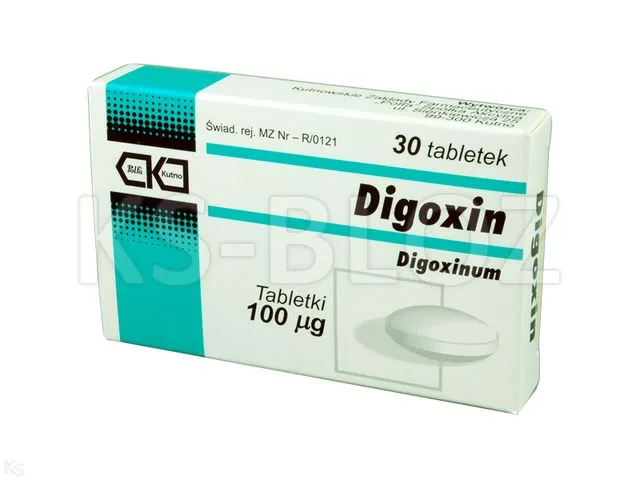
Table of Contents
DIGOXIN TEVA, 100 µg, tablets
DIGOXIN TEVA, 250 µg, tablets
Digoxinum
Please read the package leaflet carefully before using this medicine, as it contains
important information for the patient.
- Keep this leaflet, as you may need to read it again.
- If you have any questions, please consult your doctor or pharmacist.
- This medicine has been prescribed for a specific individual. Do not share it with others. This medicine may harm others, even if their symptoms are similar.
- If you experience any adverse reactions, including those not listed in this leaflet, inform your doctor or pharmacist. See section 4.
Leaflet contents:
- What Digoxin Teva is and what it is used for
- Important information before taking Digoxin Teva
- How to take Digoxin Teva
- Possible side effects
- How to store Digoxin Teva
- Contents of the pack and other information
1. WHAT DIGOXIN TEVA IS AND WHAT IT IS USED FOR
Digoxin Teva contains an active substance called digoxin. Digoxin belongs to a group of medicines known as cardiac glycosides. This medicine reduces the heart rate while simultaneously increasing the force of contraction of the heart muscle. It also affects smooth and skeletal muscles, renal tubules, and vagus nerve centers.
Indications
- Atrial fibrillation with rapid ventricular response.
- Advanced heart failure.
2. IMPORTANT INFORMATION BEFORE USING DIGOXIN TEVA
When not to use Digoxin Teva
if the patient is allergic to the active substance or to any of the other ingredients
of this medicine (listed in section 6);
if the patient has arrhythmia caused by poisoning with cardiac glycosides
- if the patient has ventricular tachycardia and ventricular fibrillation
- if the patient has hypertrophic cardiomyopathy
- if the patient has idiopathic subvalvular aortic stenosis
- if the patient has prolonged atrioventricular conduction time (second- or third-degree atrioventricular block)
- if the patient is in the early phase of myocardial infarction
- if the patient is in the acute phase of myocarditis
- if the patient has sick sinus syndrome
- if the patient has pre-excitation syndrome (Wolff-Parkinson-White syndrome)
Warnings and precautions
Before starting treatment with Digoxin Teva, discuss with your doctor if:
- the patient has recently suffered a heart attack,
- the doctor has detected low levels of potassium and/or magnesium in the blood,
- the doctor has detected high levels of calcium in the blood,
- the patient has been diagnosed with heart-related disorders due to vitamin B deficiency (beriberi disease),
- the patient has been diagnosed with kidney, lung, thyroid or digestive disorders.
If in doubt about any of the above conditions, the patient should
contact a doctor or pharmacist. The doctor will decide whether the dose should be adjusted,
or whether the medicine should be discontinued and replaced with another.
During treatment, the doctor should recommend regular liver and kidney function tests
and monitor ECG.
Digoxin Teva and other medicines
Inform your doctor or pharmacist about all medicines currently used, recently used,
or planned for use.
- Diuretics – hydrochlorothiazide, spironolactone, amiloride, and furosemide – when used concomitantly with digoxin, may cause a significant drop in blood pressure, reduced cardiac output, increased total peripheral vascular resistance, and tachycardia. Spironolactone may significantly increase digoxin concentration.
- Angiotensin-converting enzyme inhibitors (e.g. captopril) increase left ventricular ejection fraction and reduce the number of ventricular extrasystoles. Captopril increases serum digoxin concentration.
- Arteriolar vasodilators (losartan, prazosin, dihydralazine) reduce digoxin concentration.
- Serum digoxin concentration may be increased when macrolide antibiotics (e.g. clarithromycin), tetracyclines, or propafenone are used concomitantly.
- Calcium, especially when administered rapidly intravenously, may cause severe arrhythmias in patients treated with digitalis glycosides. Increased calcium levels in blood, regardless of cause, predispose to digoxin toxicity. Decreased calcium levels reduce the effect of digitalis glycosides.
- In hypothyroidism, the requirement for digitalis glycosides is reduced.
- Antiarrhythmic drugs: quinidine and quinine reduce creatinine clearance and volume of distribution of digoxin; procainamide eliminates ventricular arrhythmias induced by cardiac glycosides; quinidine, calcium channel blockers (verapamil, diltiazem), captopril, gentamicin, carvedilol, amiodarone, and spironolactone increase digoxin concentration; amiodarone, diltiazem, and verapamil additionally inhibit atrioventricular conduction.
- Sympathomimetics used together with digoxin may increase the risk of arrhythmias.
- Concurrent use of digitalis glycosides with calcium channel blockers (e.g. verapamil, diltiazem, nifedipine) may lead to increased digoxin concentration.
- Diuretics or drugs that reduce potassium levels enhance the toxic effects of digoxin.
- Erythromycin, tetracyclines, indomethacin, and propafenone may enhance digoxin absorption.
- Potassium salts taken together with digoxin may lead to increased potassium levels in blood.
- Cholestyramine, colestipol, and antacids reduce digoxin absorption and shorten its serum half-life by approximately 50%.
- Plasma digoxin concentration may be reduced during concomitant use of certain cytostatics, phenytoin, metoclopramide, penicillamine, or herbal medicines containing St. John's wort (Hypericum perforatum).
- Clarithromycin enhances digoxin toxicity.
- Inform your doctor if the patient is taking a medicine containing enzalutamide (used in the treatment of prostate cancer). This medicine may affect digoxin assay results.
Digoxin Teva with food and drink
It is best to take the medicine before meals. However, if taking the medicine on an empty stomach causes stomach discomfort, it may be taken during a meal. In this case, avoid consuming high-fiber foods (bran, wholemeal bread), as they may reduce the absorption of the medicine into the blood.
Pregnancy and breastfeeding
If the patient is pregnant or breastfeeding, suspects she may be pregnant, or is planning to become pregnant, she should consult a doctor or pharmacist before using this medicine. Digoxin Teva may be used during pregnancy only if, in the opinion of the doctor, the benefit to the mother outweighs the potential risk to the fetus.
Digoxin passes into breast milk in small concentrations. Caution is necessary when administering this medicine to breastfeeding women.
Driving and operating machinery
Digoxin Teva does not impair psycho-physical performance, unless adverse effects such as dizziness or visual disturbances occur.
Important information about some ingredients of Digoxin Teva
Digoxin Teva contains monohydrate lactose. If the patient has previously been diagnosed with intolerance to certain sugars, the patient should contact a doctor before taking this medicine.
3. HOW TO USE DIGOXIN TEVA
This medicine should always be taken exactly as prescribed by your doctor or pharmacist.
If you have any doubts, consult your doctor or pharmacist.
Digoxin Teva should be taken strictly according to your doctor's instructions. It is usually taken once daily.
It is recommended to take the medicine at regular intervals (e.g. at the same time each day).
The digoxin dosage is individually determined by the doctor for each patient, depending on the indication, age, body weight, renal function, and serum electrolyte levels.
During treatment, the doctor may adjust the dosage depending on the patient's response to the medicine.
If there is a discrepancy between the expected and observed effect, the doctor may modify the dosage based on clinical symptoms and serum drug concentrations. Monitoring digoxin blood levels may be helpful in managing therapy and diagnosing overdose.
Serum digoxin concentrations below 0.8 ng/ml very rarely cause toxic symptoms. In approximately 2/3 of patients with signs of digoxin toxicity, serum concentrations exceed 2 ng/ml. Concentrations greater than 3 ng/ml almost always lead to symptoms of poisoning.
Adults
Digoxin treatment is initiated with a loading dose.
In rapid loading, the initial dose is 500 µg to 750 µg.
This is followed by doses of 125 µg to 375 µg every 6–8 hours until a total loading dose of 750 µg to 1500 µg has been administered within the first 24 hours. The loading dose depends on body weight and is typically 10 µg to 15 µg/kg body weight per day, divided into 2–3 doses given every 6–8 hours.
In slow loading, 250 µg to 750 µg per day is administered, which in patients with normal renal function achieves steady-state concentrations within 6–7 days.
The usual maintenance dose is 250 µg once or twice daily. In patients under 60 years of age with normal renal function, the maintenance dose required to achieve therapeutic serum concentrations is usually 375 µg; between 60 and 80 years of age – 250 µg digoxin per day.
Use in children and adolescents
Daily dosage in children is determined according to age and body weight and is administered in 3–4 divided doses.
Infants and children up to 2 years of age
- Loading dose: 20 to 35 µg/kg body weight
- Maintenance dose: 5 to 9 µg/kg body weight (25%–35% of the loading dose)
Children aged 2 to 12 years
- Loading dose: 10 to 15 µg/kg body weight
- Maintenance dose: 3 to 5 µg/kg body weight
Patients with renal impairment
Dosage should be adjusted according to creatinine clearance.
Creatinine clearance (ml/min) Maintenance dose
50 – 59 188 – 375 µg per day
20 – 49 125 – 250 µg per day
< 20 125 µg per day or every 48 hours
Taking more Digoxin Teva than prescribed
Symptoms
The following symptoms of digoxin toxicity may occur: weakness, loss of appetite, nausea, vomiting, diarrhoea, yellow vision (xanthopsia), double vision, dizziness and headache, mental and motor agitation, confusion, disorientation, anxiety, visual hallucinations, hypotension, slowed or accelerated heart rate, and cardiac arrhythmias. In acute poisoning, serum calcium levels are high, whereas in chronic poisoning, serum potassium levels are low. Acute poisoning occurs more frequently in children than in adults.
Action
If you have taken more than the prescribed dose, seek immediate medical advice.
In treating digoxin poisoning, the doctor may recommend gastric lavage with activated charcoal in acute cases. Cholestyramine, atropine or ipratropium bromide, lidocaine or phenytoin, beta-blockers, potassium preparations may be administered, and in some cases, temporary electrical cardiac pacing may be used.
Missing a dose of Digoxin Teva
Do not take a double dose to make up for a missed dose of Digoxin Teva.
Stopping Digoxin Teva treatment
Do not discontinue the medicine abruptly, as heart disease symptoms may worsen. Consult your doctor if you intend to stop taking Digoxin Teva.
If you feel the medicine's effect is too strong or too weak, consult your doctor.
If you have any further questions about the use of this medicine, consult your doctor or pharmacist.
4. POSSIBLE ADVERSE REACTIONS
Like all medicines, this medicine can cause adverse reactions, although not everyone experiences them.
Adverse reactions usually occur if the dose of the medicine taken by the patient is too high.
In such a case, the doctor should adjust the dose.
You must inform your doctor immediately if:
- You experience palpitations, chest pain, shortness of breath, or excessive sweating. These may be symptoms of a serious heart disorder caused by arrhythmia.
Other adverse reactions that should be reported to the doctor include:
Common (more than 1 in 100 patients, but less than 1 in 10 patients)
- Slow or irregular heartbeat
- Indigestion, nausea
- Skin rash with urticaria
- Drowsiness, dizziness
- Visual disturbances (blurred vision or yellow-colored vision)
Uncommon (more than 1 in 1,000 patients, but less than 1 in 100 patients)
- Depression
Rare (less than 1 in 10,000 patients)
- Thrombocytopenia (reduced number of blood platelets)
- Loss of appetite
- Abdominal pain caused by intestinal ischemia or damage
- Headache
- Psychiatric disorders (psychosis, apathy, disorientation)
- Feeling of fatigue, weakness, general malaise
- Enlargement of breast glands in men (gynecomastia)
- Heart rhythm disorders
The medicine Digoxin Teva may very rarely cause severe irregular heartbeat. The doctor should
recommend regular monitoring tests to ensure that Digoxin Teva is working properly.
Reporting of adverse reactions
If any adverse reactions occur, including those not listed in this leaflet, inform your doctor or pharmacist. Adverse reactions can be reported
directly to the Department of Monitoring Adverse Drug Reactions of the Office for Registration of Medicinal Products, Medical Devices and Biocidal Products
Al. Jerozolimskie 181C, 02-222 Warsaw
Tel.: + 48 22 49 21 301
Fax: + 48 22 49 21 309
Website: https://smz.ezdrowie.gov.pl
Adverse reactions can also be reported to the marketing authorization holder.
By reporting adverse reactions, additional information on the safety of the medicine can be collected.
5. HOW TO STORE DIGOXIN TEVA
Store below 25°C.
Keep in a place inaccessible and out of sight of children.
Do not use this medicine after the expiry date stated on the packaging. The expiry date refers to the last day of the stated month.
Medicines must not be disposed of via wastewater or household waste. Ask your pharmacist how to dispose of medicines no longer required. Such measures help protect the environment.
6. CONTENTS OF THE PACKAGE AND OTHER INFORMATION
What Digoxin Teva contains
- The active substance is digoxin.
- The other ingredients are: lactose monohydrate, microcrystalline cellulose, colloidal anhydrous silica, talc, magnesium stearate.
What Digoxin Teva looks like and contents of the pack
- Digoxin Teva, 100 µg, tablets
- White, round tablets with a smooth surface.
- Digoxin Teva, 250 µg, tablets
- White, convex tablets with a smooth surface and a break line on one side.
1 blister containing 30 tablets (30 tablets) in a cardboard box.
Marketing Authorisation Holder and Manufacturer
Marketing Authorisation Holder
Teva Pharmaceuticals Polska Sp. z o.o.
ul. Emilii Plater 53
00-113 Warsaw
tel.: (22) 345 93 00
Manufacturer
Teva Operations Poland Sp. z o.o.
ul. Mogilska 80
31-546 Kraków