Dicuno
Poland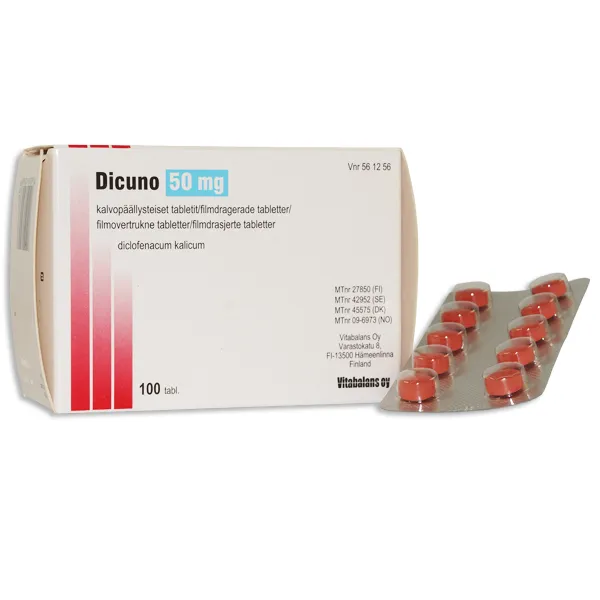
Table of Contents
- 1. What Dicuno is and what it is used for
- 2. Important information before taking Dicuno
- When not to take Dicuno
- Warnings and precautions
- Dicuno and other medicines
- Pregnancy, breastfeeding, and fertility
- Driving and operating machinery
- 3. How to use Dicuno
- 4. POSSIBLE ADVERSE REACTIONS
- 5. How to store Dicuno
- 6. Contents of the packaging and other information
Dicuno, 50 mg, coated tablets
Diclofenacum kalicum
Please read the entire leaflet before taking this medicine.
- Keep this leaflet so that you can read it again if necessary.
- Consult your doctor or pharmacist if you have any further questions.
- This medicine has been prescribed for a specific individual. Do not pass it on to others. It may harm someone else, even if their symptoms are the same.
- If any side effects worsen or if you experience any side effects not listed in this leaflet, inform your doctor or pharmacist.
Contents of the leaflet:
- What Dicuno is and what it is used for
- Important information before taking Dicuno
- How to take Dicuno
- Possible side effects
- How to store Dicuno
- Contents of the pack and other information
1. What Dicuno is and what it is used for
Dicuno belongs to a group of medicines known as non-steroidal anti-inflammatory drugs (NSAIDs). It has anti-inflammatory, analgesic, and antipyretic properties.
Dicuno is used for symptomatic treatment of mild to moderate acute pain, including acute migraine pain.
2. Important information before taking Dicuno
When not to take Dicuno
- If the patient is allergic to the active substance or to any of the other ingredients of this medicine (listed in section 6).
- If the patient currently has or has had a gastric or duodenal ulcer.
- If the patient currently has or has had gastrointestinal bleeding or perforation related to previous use of pain-relieving medicines (NSAIDs).
- If the patient has an increased tendency to bleed.
- If the patient has severe liver function disorders.
- If the patient has porphyria (a metabolic disorder).
- If the patient has been diagnosed with heart disease and/or cerebrovascular disease, e.g., after myocardial infarction, stroke, transient ischemic attack (TIA), arterial embolism in the heart or brain, or following vascular revascularization or bypass surgery.
- If the patient has current or previous circulatory disorders (peripheral vascular disease).
- If the patient has severe kidney disease.
- During the last 3 months of pregnancy.
- If the patient suspects allergy to diclofenac, acetylsalicylic acid, ibuprofen, or any other NSAID, or to any of the other ingredients of Dicuno (listed at the end of this leaflet). Symptoms of hypersensitivity include facial and lip swelling (angioedema), difficulty breathing, chest pain, nasal congestion, rash, or any other allergic-type reactions.
Warnings and precautions
The risk of adverse effects can be minimized by using the lowest effective dose for the shortest duration necessary. Using higher than recommended doses increases the risk of adverse effects. This also means avoiding concomitant use of different NSAIDs at the same time.
Consult a doctor before taking Dicuno if the patient has or has had any of the following conditions:
- Inflammatory bowel disease (ulcerative colitis, Crohn’s disease).
- Asthma, heart disease, liver or kidney disease.
- Chronic obstructive pulmonary disease or chronic respiratory tract inflammation (conditions causing airway narrowing and reduced oxygen flow, leading to shortness of breath).
- Nasal mucosal inflammation.
- Systemic lupus erythematosus (SLE) (a connective tissue disease).
- Urticaria or angioedema (recurrent localized swelling).
- Conditions causing increased bleeding tendency.
- Hepatic porphyria (a metabolic disorder).
- If the patient has ever experienced severe skin rash, skin peeling, blistering, or oral ulcers after taking Dicuno or other pain-relieving medicines.
Before taking diclofenac, inform your doctor:
- If the patient smokes.
- If the patient has diabetes.
- If the patient has angina, blood clots, hypertension, elevated cholesterol, or elevated triglycerides.
Elderly patients are at increased risk of adverse effects associated with advancing age.
Serious skin reactions associated with NSAIDs are very rare. Discontinue Dicuno immediately if any skin rash or mucosal changes occur and contact your doctor.
Avoid using this medicine during chickenpox.
Immediately discontinue Dicuno and consult a doctor if any of the following symptoms occur (angioedema): facial, tongue, or throat swelling, difficulty swallowing, urticaria, or breathing difficulties.
Medicines such as Dicuno may increase the risk of myocardial infarction or stroke. This increased risk is more likely with high doses and long-term treatment. Do not exceed the recommended dose or duration of treatment.
Gastrointestinal bleeding may occur at any time during treatment, with or without warning symptoms. These complications may have more serious consequences in elderly patients. If gastrointestinal problems or signs of gastrointestinal bleeding occur, such as blood in stool, black stools, or vomiting blood, stop taking Dicuno and contact your doctor immediately.
Inform your doctor before taking Dicuno if the patient has recently undergone or is scheduled for stomach or gastrointestinal surgery, as Dicuno may impair intestinal wound healing after surgery.
Long-term use of various painkillers for headache may lead to worsening headaches. If this occurs or is suspected, treatment should be discontinued.
Like other anti-inflammatory medicines, Dicuno may mask symptoms and signs of infection.
Dicuno may reduce white blood cell count, thereby decreasing resistance to infections. If infections occur with symptoms such as fever and significant deterioration in general health, or fever with local infection signs such as throat or mouth ulcers or urinary tract problems, seek immediate medical advice. Your doctor may recommend blood tests to monitor for possible reduction in white blood cells (agranulocytosis).
It is important to inform your doctor about taking this medicine.
Dicuno and other medicines
Inform your doctor or pharmacist about all medicines currently taken, recently taken, or planned for use.
The following medicines may interact with Dicuno, for example:
- Anticoagulants (warfarin, ticlopidine, acetylsalicylic acid, heparin, etc.).
- Methotrexate (an anticancer and immunosuppressive agent).
- Medicines used to treat diabetes (excluding insulin).
- Lithium (used in the treatment of manic-depressive psychosis).
- Selective serotonin reuptake inhibitors (used for depression).
- Digoxin (used in the treatment of heart disease).
- Tacrolimus (used in transplantation and eczema treatment).
- Cyclosporine (used during transplantation, in the treatment of acute psoriasis and rheumatism).
- Antihypertensive medicines (beta-blockers, angiotensin II receptor antagonists, ACE inhibitors).
- Diuretics (medicines stimulating urine production and used to lower blood pressure).
- Quinolone antibiotics (used to treat urinary tract infections).
- Zidovudine (used in HIV infection treatment).
- Corticosteroids (used to treat inflammatory diseases).
- Colestipol and cholestyramine (used to lower high blood lipid levels). These medicines may be used with Dicuno provided they are taken with a several-hour interval.
- Fluconazole (used to treat fungal infections).
- Rifampicin (antibiotics used in tuberculosis treatment).
- Carbamazepine (used in epilepsy).
- Barbiturates (sedatives).
- Diazepam (a calming medicine).
- Pentoxifylline (a vasodilator).
- Phenytoin (used in epilepsy treatment).
Do not take different pain-relieving medicines simultaneously without prior consultation with a doctor or pharmacist.
Pregnancy, breastfeeding, and fertility
If the patient is pregnant or breastfeeding, suspects she may be pregnant, or plans to have a child, she should consult her doctor or pharmacist before taking this medicine.
Pregnancy
Do not take Dicuno if the patient is in the last 3 months of pregnancy, as it may harm the unborn child or cause problems during delivery. Dicuno may lead to kidney and heart problems in the unborn child. It may increase the tendency to bleeding in both mother and child and may delay or prolong labor.
Dicuno should not be used during the first 6 months of pregnancy unless strictly prescribed by a doctor. If treatment is necessary during this period or when trying to conceive, the lowest possible dose should be used for the shortest possible time.
If Dicuno is taken by women beyond 20 weeks of pregnancy for more than a few days, it may cause kidney problems in the unborn child, leading to low levels of amniotic fluid surrounding the baby (oligohydramnios) or narrowing of the ductus arteriosus in the baby’s heart. If treatment longer than a few days is required, additional fetal monitoring should be recommended.
Breastfeeding
Diclofenac passes into breast milk. Therefore, Dicuno should not be used during breastfeeding to avoid adverse effects in the newborn.
Fertility
Diclofenac may impair fertility. Inform your doctor if you plan to become pregnant or if you have difficulty becoming pregnant.
Driving and operating machinery
If the patient experiences dizziness, drowsiness, fatigue, or visual disturbances while taking Dicuno, he or she should refrain from driving and operating machinery.
Dicuno contains the colouring agent Carmoisine A (E 124)
Dicuno 50 mg tablets contain the colouring agent Carmoisine A (E 124), which may cause allergic reactions.
3. How to use Dicuno
Always use Dicuno exactly as directed by your doctor. If you have any doubts about the dosage, consult your doctor or pharmacist.
Mild to moderate pain
Adults (>18 years and elderly): the usual dose is 25–50 mg taken up to 3 times daily. The maximum recommended daily dose is 150 mg.
Migraine attacks
Adults (>18 years and elderly): 50 mg at the onset of migraine headache symptoms. If pain relief is insufficient within two hours after the first dose, a second 50 mg dose may be taken. If necessary, further 50 mg doses may be taken every 4–6 hours, not exceeding a total daily dose of 150 mg.
The tablets should be taken with liquid. Do not take the tablets during meals or immediately after meals. Tablets may be divided into equal doses.
Dicuno must not be used in children and adolescents under 18 years of age.
Taking more Dicuno than recommended
If you take more Dicuno than recommended, or if a child takes the medicine by mistake, contact your doctor immediately or go to a hospital for advice on possible risks and necessary actions.
Symptoms of overdose include nausea, vomiting, abdominal pain, gastrointestinal bleeding, diarrhoea, dizziness, drowsiness, headache, tinnitus, restlessness, hallucinations, convulsions in children (including myoclonic convulsions), loss of consciousness, effects on kidneys and liver, potential overproduction of acid in the body (metabolic acidosis), and tendency to develop oedema.
Additionally, low blood pressure, respiratory depression, and blue discoloration of the skin and lips may occur.
If you forget to take Dicuno
Do not take a double dose to make up for a missed dose.
If you have any further questions about the use of this medicine, consult your doctor or pharmacist.
4. POSSIBLE ADVERSE REACTIONS
Like all medicines, this medicine can cause adverse reactions, although not everyone experiences them.
Some adverse reactions may be serious
You must immediately stop taking Dicuno and inform your doctor if any of the following adverse reactions occur:
- Agranulocytosis (symptoms: fever, sore throat, painful oral ulcers, anal ulceration, reduced immune response, susceptibility to bacterial infections).
- Stevens-Johnson syndrome and toxic epidermal necrolysis (life-threatening skin diseases causing rash, desquamation, and mucosal ulceration).
- Hypersensitivity reactions (airway constriction and obstruction, urticaria, anaphylactic shock with hypotension).
- Chest pain, which may be a symptom of a potentially severe allergic reaction called Kounis syndrome.
- You should stop taking Dicuno and immediately consult a doctor if symptoms of angioedema occur, such as swelling of the face, tongue, or throat, difficulty swallowing, urticaria, and breathing difficulties.
- Mild painful abdominal cramps and tenderness occurring soon after starting Dicuno, followed by rectal bleeding or bloody diarrhoea, usually within 24 hours of the onset of abdominal pain (frequency unknown – cannot be estimated from available data).
- Severe allergic skin reaction, which may manifest as extensive red and (or) dark patches, skin swelling, blisters, and itching (generalized fixed bullous drug eruption).
Other possible adverse reactions:
Common (may occur in 1 in 10 people):
- Abdominal pain
- Nausea
- Vomiting
- Diarrhoea
- Digestive problems
- Loss of appetite
- Excess gas
- Headache
- Dizziness
- Rash
- Elevated liver function tests
- Dizziness
Rare (may occur in 1 in 1,000 people):
- Eczema, erythema
- Hypersensitivity reactions (airway constriction and obstruction, urticaria, anaphylactic shock with hypotension)
- Gastritis, gastrointestinal bleeding or ulcers (may present with blood in stool or vomit)
- Liver function disorders (including hepatitis with or without jaundice)
- Fatigue
- Asthma (with dyspnoea, shortness of breath)
- Fluid retention leading to body swelling
Very rare (may occur in 1 in 10,000 people):
- Skin blisters
- Reduction in certain blood cells (red blood cells, platelets, and neutrophils)
- Sudden swelling of the skin and mucous membranes (angioedema)
- Disorientation, depression, insomnia, nightmares, irritability, disturbances in perception of reality
- Burning or prickling sensation of the skin without visible physical effects (paraesthesia), memory disturbances, seizures, restlessness, involuntary muscle movements (tremor), taste disturbances, stroke
- Vision disturbances (blurred vision, double vision) and hearing disturbances (reduced hearing, tinnitus)
- Effects on the heart and blood vessels (such as palpitations, chest pain, heart failure, myocardial infarction)
- High blood pressure
- Vasculitis
- Pneumonitis
- Colitis, constipation, inflammation of the tongue, mouth, or oesophagus
- Pancreatitis
- Inflammation of the meninges (meningitis)
- Acute liver failure
- Hair loss
- Photosensitivity
- Acute kidney failure
- Effects on the kidneys (which may lead to reduced or stopped urine production and blood in urine)
Particularly severe skin infections may occur in cases of chickenpox.
Frequency unknown (cannot be estimated from available data):
- Allergic skin reaction, which may present as round or oval red areas with skin swelling, blisters, and itching (erythema multiforme). In affected areas, the skin may also become darker, which may persist after the lesions have healed. Upon re-administration of the medicine, erythema multiforme usually reappears in the same locations.
Reporting of adverse reactions
If any adverse reactions occur, including any possible adverse reactions not listed in this leaflet, inform your doctor or pharmacist. Adverse reactions can be reported directly to:
Department of Monitoring Adverse Reactions of Medicinal Products
Office for Registration of Medicinal Products, Medical Devices and Biocidal Products
Al. Jerozolimskie 181C
PL-02 222 Warsaw
Tel.: +48 22 49 21 301
Fax: +48 22 49 21 309
Website: https://smz.ezdrowie.gov.pl
Adverse reactions can also be reported to the marketing authorization holder.
Reporting adverse reactions helps provide more information on the safety of this medicine.
5. How to store Dicuno
Do not store above 25°C. Keep in a place out of sight and reach of children.
Do not use this medicine after the expiry date stated on the packaging and blister after EXP.
The expiry date refers to the last day of the month indicated.
Medicines must not be disposed of via wastewater or household waste. Ask your pharmacist what to do with medicines no longer required. This will help protect the environment.
6. Contents of the packaging and other information
What Dicuno contains
The active substance is 50 mg of diclofenac potassium.
Other ingredients of the medicine are microcrystalline cellulose, calcium hydrogen phosphate dihydrate,
pregelatinized maize starch, sodium croscarmellose, colloidal anhydrous silica, magnesium stearate, polyvinyl alcohol,
macrogol, talc, titanium dioxide (E 171), red iron oxide (E 172), yellow iron oxide (E 172).
Dicuno 50 mg also contains the colouring agent carmine red A (E 124).
What Dicuno looks like and contents of the pack
What the Dicuno tablet looks like:
Dicuno 50 mg: Tablets are reddish-brown, round, biconvex, with a score line on one side.
Diameter is 10 mm.
Pack sizes:
Dicuno 50 mg: 30, 50 or 100 tablets.
Marketing Authorisation Holder and Manufacturer
Vitabalans Oy
Varastokatu 8
FI-13500 Hämeenlinna
FINLAND
Tel.: +358 3 615 600
Fax.: +358 3 618 3130
This medicinal product is authorised in the European Economic Area countries under the following names:
Dicuno 50 mg (CZ, DK, EE, FI, LT, LV, NO, PL, SE, SI, SK)
Diclotin 50 mg (DE)
2025-10-24